
Industries
Why hospitality employees leave and how to understand why
Hotel, restaurant and banquet staff leave for reasons that vary by department and season. How to ask what sits behind the first answer and act on it.
8 min readRead articleA paragliding or aerial adventure operator flies paying guests with tandem pilots, ground crew and launch staff. Lives depend on pilot judgement, equipment checks and weather calls, so certification, rest and a no-pressure culture come first.

Not sure what you need? Tell us about your business in six short steps and we will come to the first meeting prepared.
Share your requirementsA paragliding or aerial adventure operator takes guests on tandem flights, zipline runs, parasailing or similar rides from a launch site, usually in hill country, over a lake or on a coast. The crew has tandem pilots, launch and landing crew who prepare gliders and lines, a driver who carries guests and equipment up and down, a desk person who takes bookings, waivers and payments, and a photo or video person. Pilots often work as independents with their own gliders, or on a daily fee, and the best ones are in demand all season. Wind, cloud and thermals decide whether flights run, so the day can start at dawn and end early or be cancelled. Guests are nervous, excited and sometimes pushing to fly. Safety is central, yet pressure from queues, revenue and impatient customers is real. See also HR for hospitality businesses. People matters centre on pilot competence, rest, ground crew skill and decisions made without commercial pressure.
These are the places the people side of this kind of business tends to give way. The rest of this page works through them.
HR here has to work for each of these groups, not only the office. The set-up below is written with all of them in mind.
GullyHR runs talent acquisition for permanent roles in paragliding and aerial adventure operators. For each role we agree the job description with you, find and screen candidates against it, and support the offer through to joining. Tell us the role and the number of people, and we start there.
We recruit permanent employees. We do not supply contract or temporary staff.
Every business interviews, but few have a written process that works the same way for every role and every interviewer. GullyHR designs yours, from the role brief to the offer, trains your managers to run it, and can run it for you on the roles you hand us.
We agree what the role must deliver, the must-have and nice-to-have skills, and how each will be scored.
Screening call, assessment, interview rounds and decision points, sized to the role and the number of people you hire.
Structured questions for each role family and a rating guide, so two interviewers judge the same answer the same way.
A short briefing for your managers on what to ask, what to avoid and how to give a clear yes or no.
Who approves, how the offer is made, and how candidates are kept informed from first call to joining.
A queue of guests and a day of lost revenue push towards flying in marginal wind, and the pilot's judgement is tested.
Whether a pilot is an employee, a daily-fee flyer or a partner with his own wing is decided by habit, and responsibilities blur.
Many flights a day, carrying a wing uphill and repeated landings tire people, and rest is unplanned.
Pilot licences, tandem ratings and training dates are tracked in memory, and gaps are found at the wrong moment.
Launch staff who check lines, harnesses and guest fit are paid little and trained on the job.
Wings, lines and harnesses are inspected by feel, and records of use and repair are incomplete.
Good flying weather lasts a few months, and the rest of the year has no work for pilots and crew.
A near miss or a hard landing is discussed at tea and forgotten, so lessons are not recorded.
Start with the topics that matter most here: Health, Safety and Wellbeing; Policies, Compliance and Governance; Learning and Development. Then work through the rest. Each topic is written for hospitality, not in general.
Induction, records, incident reporting and follow-through.
Policies a manager can apply, and obligations with owners and dates.
Training planned from need rather than from the calendar.
How many people, in which roles, by when — and what they will cost.
Structure, reporting lines and who is allowed to decide what.
Requisition to joining, the same way every time.
A first day that is the same for the fifth joiner as the first.
Records, attendance, leave and the day-to-day HR that must simply work.
Salary structure, payroll inputs and a month that closes on time.
Goals, reviews and ratings that hold up in a conversation.
Named backups for the roles that cannot be vacant.
Communication, recognition and the conditions people actually work in.
Two routes — one for complaints, one for conduct — kept separate.
Who leaves, when, why — and which of them mattered.
Resignation to relieving letter, in a defined order.
Records that survive people, and approvals that do not queue.
A short monthly pack management actually reads.
An HR function that runs the same way every month.
The pieces a paragliding and aerial adventure operators business puts in place, in an order that makes each easier. Open any card for the detail.
How each pilot is engaged, who owns equipment, who decides on flying and what each party is accountable for.
How each pilot is engaged, who owns equipment, who decides on flying and what each party is accountable for. Confirm the terms with a qualified professional and record them in your policy set.
A rule that the pilot or chief pilot decides, with no penalty for cancelling, and a script for guests.
A rule that the pilot or chief pilot decides, with no penalty for cancelling, and a script for guests. See health and safety.
Ratings, medical checks, training dates and renewal reminders for every pilot and crew member.
Ratings, medical checks, training dates and renewal reminders for every pilot and crew member. See employee information.
A limit on flights per day, rest breaks and days off in peak weeks.
A limit on flights per day, rest breaks and days off in peak weeks. The shift and leave rules show the format.
Checklists for gear, harness fit, briefing guests and launch signals, with sign-off before solo duty.
Checklists for gear, harness fit, briefing guests and launch signals, with sign-off before solo duty. The learning plan can record it.
Each week, near misses and lessons recorded, with actions agreed, without blame.
Each week, near misses and lessons recorded, with actions agreed, without blame. See grievance and discipline for fair handling.
Before changing anything, find out what is true today. These checks take an afternoon and tell you which of the topics above to start with.
Share your requirementsConfirm with a qualified professional. What applies to you depends on your business, your state and your arrangements, and it changes. This page describes practice. It does not state a legal position.
The services below fit this kind of business best. Each starts by recording where you stand, and every later report compares against that. We do not promise outcomes.
A safety culture where weather calls are protected from sales pressure.
Formal ground crew training and tracked pilot currency.
Written terms for pilot engagement, equipment and responsibilities.
Flight limits, rest and day-off rules for peak weeks.
Start with a free conversation, or see the paid HR Diagnostic.
Understand the business, its workforce, current processes and HR challenges.
Find the missing, weak, inconsistent or person-dependent processes.
Create the structure, processes, policies, SOPs, dashboards and systems needed.
Help HR and department managers actually adopt the new system.
Digitise repetitive and approval-based workflows where it is worth doing.
Track hiring, attendance, employee cost, performance, training and attrition.
Strengthen the people-management system continuously, not once.
From the GullyHR blog: one on HR in hospitality, and one on each of the topics this page points to.

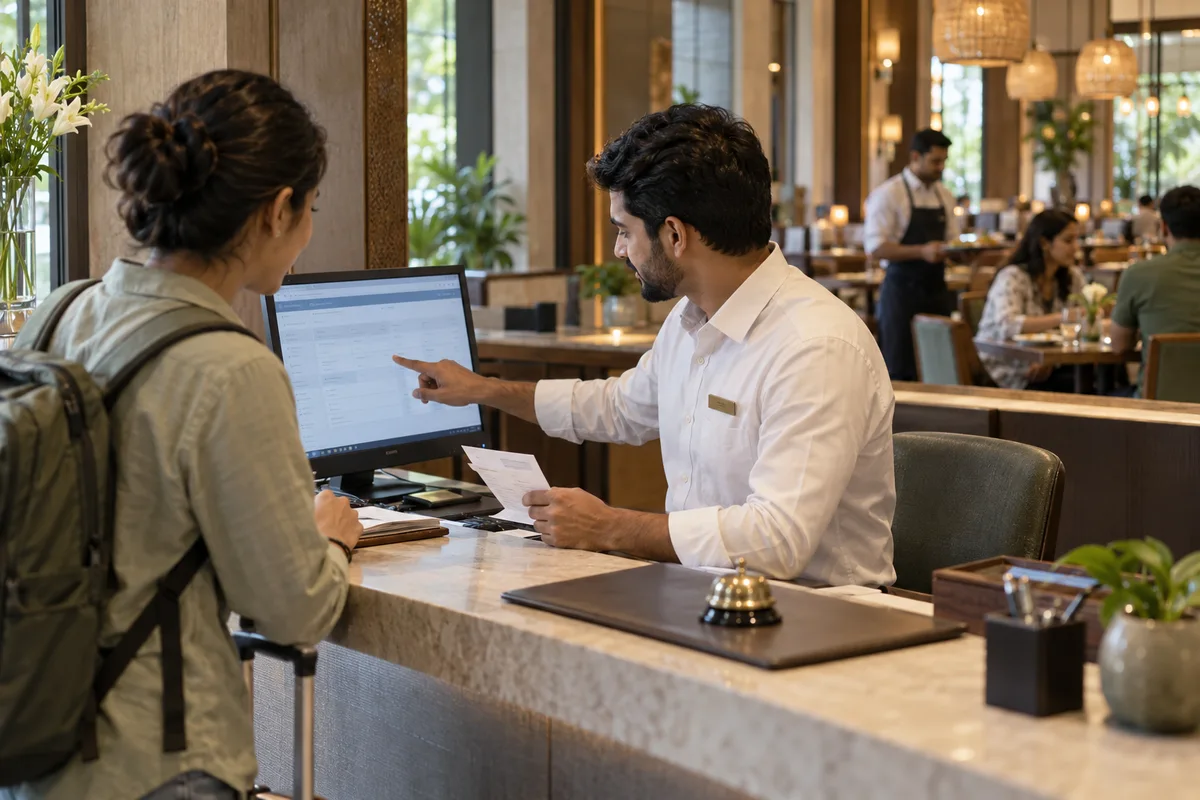
Hotel, restaurant and banquet staff leave for reasons that vary by department and season. How to ask what sits behind the first answer and act on it.
8 min readRead article
A shift, weekly and monthly safety routine for rubber plants that names who checks platen guards, mill trip bars, autoclave doors, burst-test cages and slings, and who acts on near misses.
7 min readRead article
How an India head can sort a global parent's HR policies into apply, adapt or replace, write an India addendum with advisers, and keep headquarters on side.
7 min readRead article
A founder's guide to hiring freshers and running a first-year programme: campus or open drives, a screening round, a training plan by quarter, mentors and checkpoints.
6 min readRead articleMore on the GullyHR blog.
The pilot or chief pilot, without commercial pressure and with no penalty for cancelling. Make this clear to sales and to guests in writing.
Decide whether they are employees, daily-fee flyers or partners, and set out equipment, insurance and responsibility terms. Confirm with a qualified professional.
Set a daily flight limit, rest breaks and days off in peak weeks, and track them. Listen when a pilot says no.
Keep a register with dates and reminders, review it monthly and block duty if something is out of date.
Use checklists for equipment, harness fit and signals, supervised practice and sign-off before solo duty.
We would look at how pilots are engaged, who makes weather decisions and how currency and rest are tracked. A pilot terms note with a licence register is a likely opener. We set out scope, timing and fee in writing afterwards, so you decide what goes ahead.
All 143 business types in hospitality · Find another business type
Tell us what is slowing your team down. We’ll help you find a practical way forward, starting with a conversation.