
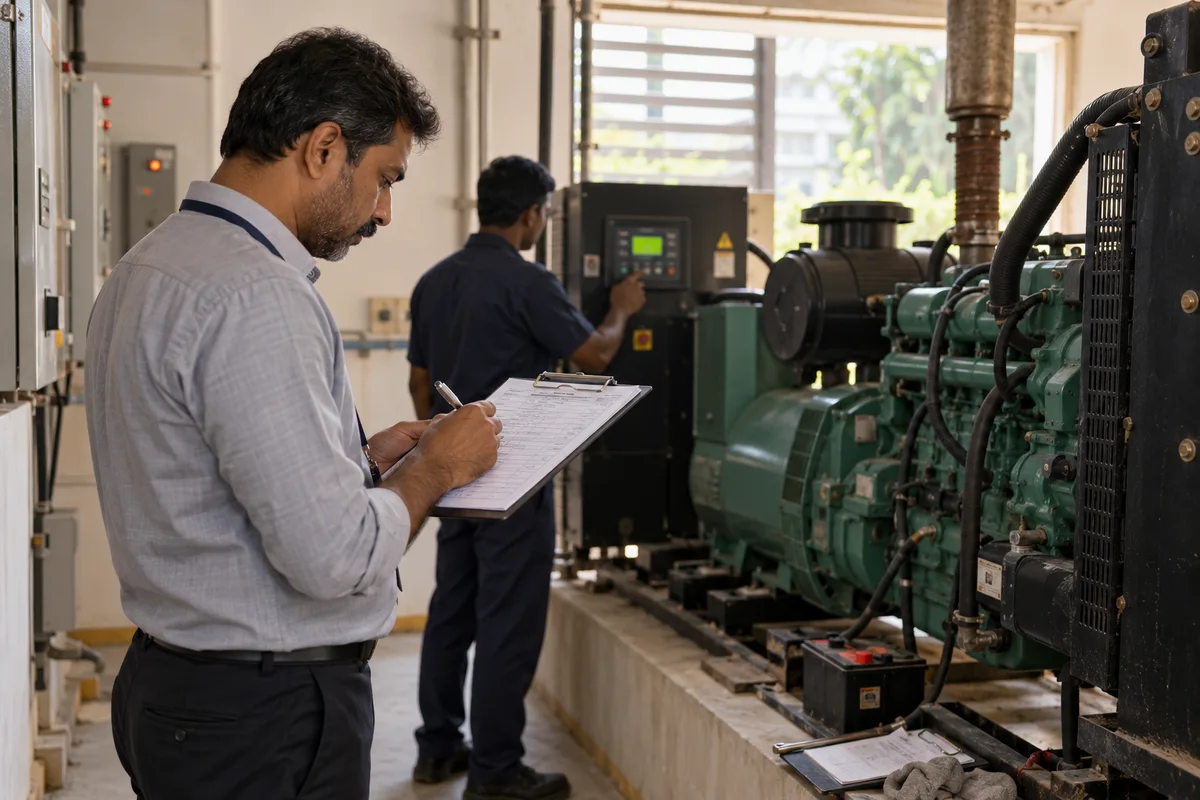




Why facility management staff leave and how to understand why
Housekeeping, technician and security staff at client sites leave for reasons head office rarely hears. How to ask, what to look for and how to act on it.
7 min readRead articleA home and office automation firm installs smart lighting, locks, sensors, cameras and controls. Its people must combine electrical work, software setup and a good manner in clients' spaces. The owner needs skilled installers and reliable after-sales cover.

Not sure what you need? Tell us about your business in six short steps and we will come to the first meeting prepared.
Share your requirementsA home and office automation company designs and installs smart switches, lighting, curtains, door locks, cameras, access control and sound systems for apartments, villas and offices. Work spans electrical wiring, networking, device configuration and app set-up. Installers often work in finished homes where a scratch on a wall is a complaint. The firm also sells maintenance and calls come at all hours, since a client's lights or locks failing is urgent. Product knowledge changes as new brands arrive. The team includes a few skilled programmers and many general electricians. The owner depends on a handful of people who know each client's system, and losing one means losing that memory. See also HR for facility management.
These are the places the people side of this kind of business tends to give way. The rest of this page works through them.
HR here has to work for each of these groups, not only the office. The set-up below is written with all of them in mind.
GullyHR runs talent acquisition for permanent roles in home and office automation. For each role we agree the job description with you, find and screen candidates against it, and support the offer through to joining. Tell us the role and the number of people, and we start there.
We recruit permanent employees. We do not supply contract or temporary staff.
Every business interviews, but few have a written process that works the same way for every role and every interviewer. GullyHR designs yours, from the role brief to the offer, trains your managers to run it, and can run it for you on the roles you hand us.
We agree what the role must deliver, the must-have and nice-to-have skills, and how each will be scored.
Screening call, assessment, interview rounds and decision points, sized to the role and the number of people you hire.
Structured questions for each role family and a rating guide, so two interviewers judge the same answer the same way.
A short briefing for your managers on what to ask, what to avoid and how to give a clear yes or no.
Who approves, how the offer is made, and how candidates are kept informed from first call to joining.
Settings, passwords and scenes live with a programmer, and his leaving makes the next call hard.
Wiring is done in one way and set-up in another, and the join is where faults occur.
Dust, scratches and late hours cause complaints that undo a good job.
A client's lock or lights failing in the evening needs a fast answer from a small team.
A brand is added to the catalogue before anyone has been trained on it.
The client gets an app and a quick walk-through, then calls again for basic help.
Camera views, door logs and passwords are seen by many people on the team.
Wiring is done by temporary teams who do not know the standard.
Start with the topics that matter most here: HR Technology and Automation; Learning and Development; HR Operations and Governance. Then work through the rest. Each topic is written for facility management, not in general.
Records that survive people, and approvals that do not queue.
Training planned from need rather than from the calendar.
An HR function that runs the same way every month.
How many people, in which roles, by when — and what they will cost.
Structure, reporting lines and who is allowed to decide what.
Requisition to joining, the same way every time.
A first day that is the same for the fifth joiner as the first.
Records, attendance, leave and the day-to-day HR that must simply work.
Salary structure, payroll inputs and a month that closes on time.
Goals, reviews and ratings that hold up in a conversation.
Named backups for the roles that cannot be vacant.
Communication, recognition and the conditions people actually work in.
Two routes — one for complaints, one for conduct — kept separate.
Policies a manager can apply, and obligations with owners and dates.
Induction, records, incident reporting and follow-through.
Who leaves, when, why — and which of them mattered.
Resignation to relieving letter, in a defined order.
A short monthly pack management actually reads.
The pieces a home and office automation business puts in place, in an order that makes each easier. Open any card for the detail.
A standard sheet with devices, rooms, scenes, credentials stored securely and photos of wiring, held by the company not a person.
A standard sheet with devices, rooms, scenes, credentials stored securely and photos of wiring, held by the company not a person. See HR documentation.
Pair an electrician with a programmer on each project so each understands the other's side.
Pair an electrician with a programmer on each project so each understands the other's side. The learning and development process can plan it.
Floor and wall protection, cleaning up, timings and behaviour, briefed before every job.
Floor and wall protection, cleaning up, timings and behaviour, briefed before every job. The onboarding process supports it.
A rota of on-call people, a clear scope for after-hours calls and rest the next day.
A rota of on-call people, a clear scope for after-hours calls and rest the next day. See the attendance process.
A product is added only after a named person has been trained and has done a test install.
A rule on who may see cameras and logs, with a record of access and a signed confidentiality note.
Before changing anything, find out what is true today. These checks take an afternoon and tell you which of the topics above to start with.
Share your requirementsConfirm with a qualified professional. What applies to you depends on your business, your state and your arrangements, and it changes. This page describes practice. It does not state a legal position.
The services below fit this kind of business best. Each starts by recording where you stand, and every later report compares against that. We do not promise outcomes.
Installation sheets and confidentiality notes that outlast any one person.
Cross-training and product readiness before launch.
On-call rosters for support with rest the next day.
Site conduct and product basics in the first week.
Start with a free conversation, or see the paid HR Diagnostic.
Understand the business, its workforce, current processes and HR challenges.
Find the missing, weak, inconsistent or person-dependent processes.
Create the structure, processes, policies, SOPs, dashboards and systems needed.
Help HR and department managers actually adopt the new system.
Digitise repetitive and approval-based workflows where it is worth doing.
Track hiring, attendance, employee cost, performance, training and attrition.
Strengthen the people-management system continuously, not once.
From the GullyHR blog: one on HR in facility management, and one on each of the topics this page points to.

Housekeeping, technician and security staff at client sites leave for reasons head office rarely hears. How to ask, what to look for and how to act on it.
7 min readRead article

A simple timesheet routine for IT services teams: a short form, daily entry, light approval and a month-end lock that finance can bill from.
6 min readRead article
A founder's guide to hiring freshers and running a first-year programme: campus or open drives, a screening round, a training plan by quarter, mentors and checkpoints.
6 min readRead article
Every growing company reaches a point where the founder approving everything stops being speed and starts being the bottleneck. Twelve signs it has happened, and what to fix first.
9 min readRead articleMore on the GullyHR blog.
Document each project to a standard, store credentials securely and have a second person shadow set-ups. Review documentation at project close.
Define what counts as urgent, rota a few people, pay an allowance and give rest next day. Let the client know the hours in the contract.
That camera feeds, logs and passwords are private, may be seen only for a job, and must never be shared or stored on personal phones.
Brief teams before each job, use floor and wall protection, keep the site clean and ask the client to sign a short completion note.
After a named person is trained, a test installation is done and a support note is written. Selling it first hurts both client and staff.
We would ask who holds each client's settings, how support is rostered and how site conduct is briefed. A good opening project is an installation sheet and a support rota. Scope is written down for you to accept or change.
All 56 business types in facility management · Find another business type
See all HR topics for facility management, or another industry.
Tell us what is slowing your team down. We’ll help you find a practical way forward, starting with a conversation.