


















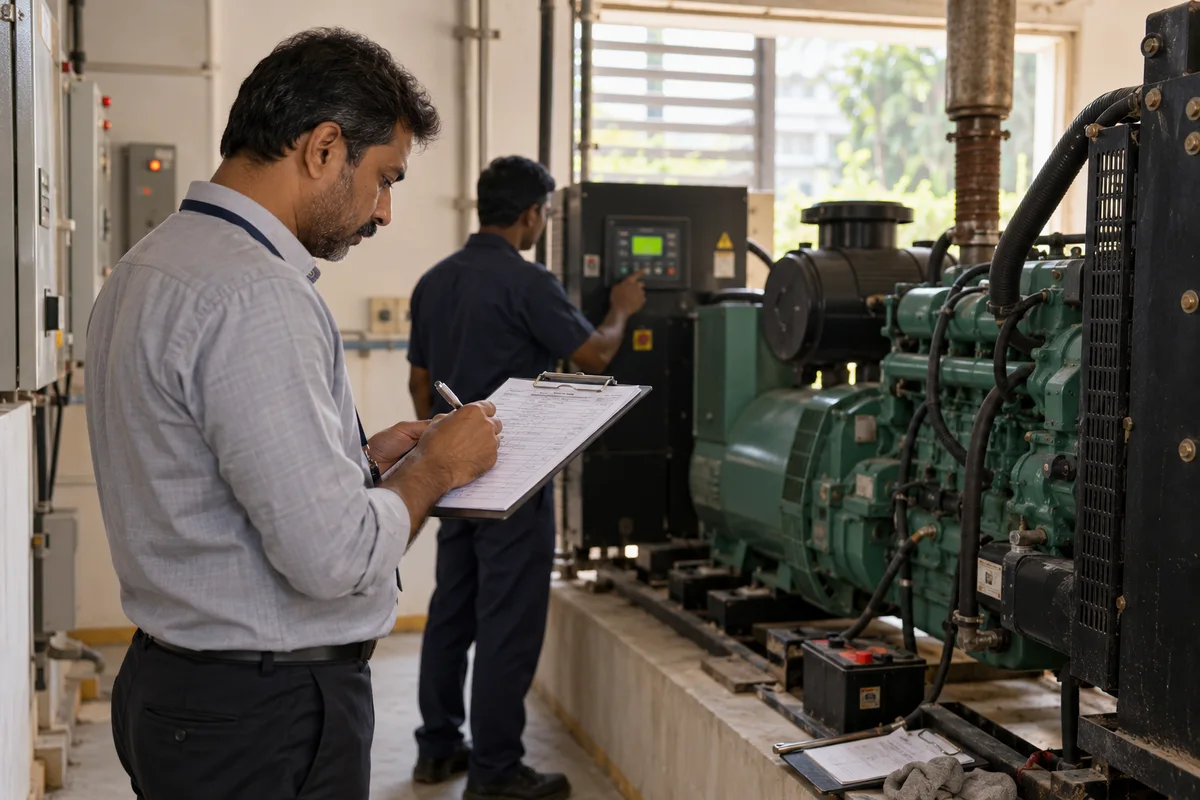

Why facility management staff leave and how to understand why
Housekeeping, technician and security staff at client sites leave for reasons head office rarely hears. How to ask, what to look for and how to act on it.
7 min readRead articleAn electrical contractor lives on the quality of its wiremen and the trust of its supervisors. Skills are learnt on site, safety is personal, and one careless day can cost a customer, a limb or a licence.

Not sure what you need? Tell us about your business in six short steps and we will come to the first meeting prepared.
Share your requirementsAn electrical contracting firm sends crews to homes, apartment blocks, shops, offices and small factories for wiring, fittings, repairs, panel work and fault finding. Jobs differ widely: a night call to a tripped board, a month of conduit in a new flat, a yearly maintenance round. Crews are usually one skilled electrician with one or two helpers, and the foreman visits several sites in a day. Skills are learnt by watching, and a trained electrician is hard to replace. Customers trust the person who comes in, not the company name. See the facility management sector and the home services hub for what these firms share.
These are the places the people side of this kind of business tends to give way. The rest of this page works through them.
HR here has to work for each of these groups, not only the office. The set-up below is written with all of them in mind.
Nobody has measured who can read a drawing, trace a fault or finish a conduit run cleanly, so pay and promotion follow familiarity.
A helper copies the nearest electrician, including shortcuts with isolation and testing, and nobody has written what the safe way is.
One person checks work at five places in a day, so quality problems surface when the customer finds them.
Some are paid per day, some monthly and some by the point, which makes comparison and fairness arguments constant.
A wrong cable size or a missed connection means a return visit, and it is unclear who should bear the cost or learn from it.
They take the customer relationship with them and quote lower without overheads, so the firm loses its best earners.
Start with the topics that matter most here: Learning and Development; Health, Safety and Wellbeing; Recruitment and Talent Acquisition. Then work through the rest. Each topic is written for facility management, not in general.
Training planned from need rather than from the calendar.
Induction, records, incident reporting and follow-through.
Requisition to joining, the same way every time.
How many people, in which roles, by when — and what they will cost.
Structure, reporting lines and who is allowed to decide what.
A first day that is the same for the fifth joiner as the first.
Records, attendance, leave and the day-to-day HR that must simply work.
Salary structure, payroll inputs and a month that closes on time.
Goals, reviews and ratings that hold up in a conversation.
Named backups for the roles that cannot be vacant.
Communication, recognition and the conditions people actually work in.
Two routes — one for complaints, one for conduct — kept separate.
Policies a manager can apply, and obligations with owners and dates.
Who leaves, when, why — and which of them mattered.
Resignation to relieving letter, in a defined order.
Records that survive people, and approvals that do not queue.
A short monthly pack management actually reads.
An HR function that runs the same way every month.
The pieces a electricians business puts in place, in an order that makes each easier. Open any card for the detail.
A ladder from helper to wireman to electrician to senior, with tasks such as reading a single line diagram, earthing checks and panel termination at each step.
What this coversHideA ladder from helper to wireman to electrician to senior, with tasks such as reading a single line diagram, earthing checks and panel termination at each step. See compensation benchmarking.
One page on isolation, testing before touch, tools, protective gear and who to call, taught at joining and repeated before each big job.
What this coversHideOne page on isolation, testing before touch, tools, protective gear and who to call, taught at joining and repeated before each big job. The health, safety and wellbeing work builds on it.
A limit on sites per foreman, a checklist for each job type and a rule for which jobs get a second pair of eyes before handover.
What this coversHideA limit on sites per foreman, a checklist for each job type and a rule for which jobs get a second pair of eyes before handover.
Define whether each grade is daily, monthly or per point, and what overtime and travel add, so comparisons are possible.
What this coversHideDefine whether each grade is daily, monthly or per point, and what overtime and travel add, so comparisons are possible.
A short job sheet with names, scope and handover signature, so rework can be traced to a cause and learnt from.
What this coversHideA short job sheet with names, scope and handover signature, so rework can be traced to a cause and learnt from.
Before changing anything, find out what is true today. These checks take an afternoon and tell you which of the topics above to start with.
Share your requirementsConfirm with a qualified professional. What applies to you depends on your business, your state and your arrangements, and it changes. This page describes practice. It does not state a legal position.
The services below fit this kind of business best. Each starts by recording where you stand, and every later report compares against that. We do not promise outcomes.
A skills grid for wiremen and electricians that shows who can do what, and where only one person can.
A site safety routine that new helpers learn properly and crews follow without reminders.
A hiring route for skilled electricians and trainable helpers, with a simple practical trial.
Grades and pay bands set against nearby contractors, so daily and monthly staff can be compared.
Start with a free conversation, or see the paid HR Diagnostic.
Understand the business, its workforce, current processes and HR challenges.
Find the missing, weak, inconsistent or person-dependent processes.
Create the structure, processes, policies, SOPs, dashboards and systems needed.
Help HR and department managers actually adopt the new system.
Digitise repetitive and approval-based workflows where it is worth doing.
Track hiring, attendance, employee cost, performance, training and attrition.
Strengthen the people-management system continuously, not once.
From the GullyHR blog: one on HR in facility management, and one on each of the topics this page points to.

Housekeeping, technician and security staff at client sites leave for reasons head office rarely hears. How to ask, what to look for and how to act on it.
7 min readRead article

Plastics training dies when it waits for a free Saturday. Tie it to mould changes, purges and cold starts, use one-point lessons and a visible skill ladder, and protect it in peak months.
7 min readRead article
A shift, weekly and monthly safety routine for rubber plants that names who checks platen guards, mill trip bars, autoclave doors, burst-test cages and slings, and who acts on near misses.
7 min readRead article
Sources beyond the neighbouring gate for setters, turners, inspectors and leak test hands, plus a one-hour bench trial built from your own rejected parts.
7 min readRead articleMore on the GullyHR blog.
Ask for a short practical task such as reading a drawing and marking a circuit, then talk through a past fault. References from earlier employers help, though the trial tells you more about how the person works.
Either can work if the rule is written and fair. Many firms keep daily rates for helpers and monthly pay with allowances for seniors, so seniors feel secure and juniors can earn more in busy weeks.
Teach it on site at joining, repeat before risky jobs, let foremen stop work and treat near misses as information. Habits spread when seniors follow the rule themselves every day.
Offer a path to lead a crew, pay for skill, and keep customer contact and quotations in the company. Some will still leave. A good parting and an agreed way of working together keeps the door open.
It depends on the job type and site, so set it per job and write it down. More hands do not help if the electrician spends the day supervising instead of working.
We would ask for your last few return visits, how foremen spread across sites and what your helpers are told about safety. A task-based grade ladder with a one-page site safety routine is a natural first piece, and scope is written for your approval.
All 7 business types in home services & maintenance · Find another business type
See all HR topics for facility management, or another industry.
Tell us what is slowing your team down. We’ll help you find a practical way forward, starting with a conversation.
