


















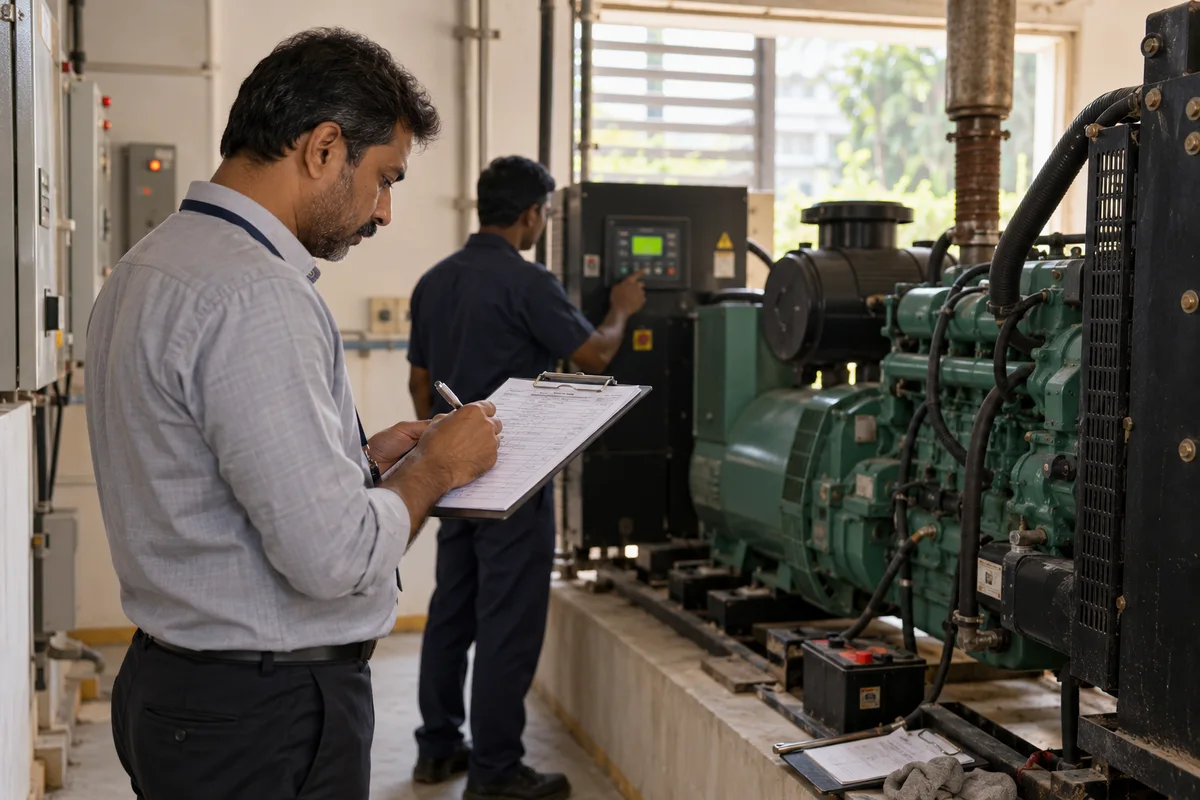

Why facility management staff leave and how to understand why
Housekeeping, technician and security staff at client sites leave for reasons head office rarely hears. How to ask, what to look for and how to act on it.
7 min readRead articleAn appliance repair company fixes washing machines, refrigerators, microwaves and more across many brands. Technicians must know a lot, wait for parts and still leave the customer satisfied, often on a second visit.

Not sure what you need? Tell us about your business in six short steps and we will come to the first meeting prepared.
Share your requirementsAn appliance repair company works on washing machines, refrigerators, microwaves, geysers, chimneys and small kitchen equipment, either as a brand's authorised service partner or as an independent shop. Technicians visit homes with a bag of tools and a few common parts, diagnose the fault and either fix it or order a part and come back. Calls come by phone, app and brand dispatch, so a coordinator sits between the customer and the technician. Skills vary by product and brand, and new models arrive each year. The facility management sector and the home services hub cover what these firms share.
These are the places the people side of this kind of business tends to give way. The rest of this page works through them.
HR here has to work for each of these groups, not only the office. The set-up below is written with all of them in mind.
A part is ordered, the technician returns later, and the customer remembers the first visit as a failure unless it was explained well.
Only one person knows a certain make of washing machine, so calls pile onto him and his days run long.
A wrong address or missing fault detail from the desk meets a technician who says the call was badly taken.
A customer says the technician was careless, and there is no record of what was found, said or charged.
Authorised work pays per call under a brand's terms, and technicians feel the firm keeps too much while the firm feels the technician wastes calls.
A newcomer opens a machine, tries parts and learns at the customer's expense, which costs both parts and trust.
Start with the topics that matter most here: HR Analytics and Management Reporting; Employee Relations; Compensation, Payroll and Benefits. Then work through the rest. Each topic is written for facility management, not in general.
A short monthly pack management actually reads.
Two routes — one for complaints, one for conduct — kept separate.
Salary structure, payroll inputs and a month that closes on time.
How many people, in which roles, by when — and what they will cost.
Structure, reporting lines and who is allowed to decide what.
Requisition to joining, the same way every time.
A first day that is the same for the fifth joiner as the first.
Records, attendance, leave and the day-to-day HR that must simply work.
Goals, reviews and ratings that hold up in a conversation.
Training planned from need rather than from the calendar.
Named backups for the roles that cannot be vacant.
Communication, recognition and the conditions people actually work in.
Policies a manager can apply, and obligations with owners and dates.
Induction, records, incident reporting and follow-through.
Who leaves, when, why — and which of them mattered.
Resignation to relieving letter, in a defined order.
Records that survive people, and approvals that do not queue.
An HR function that runs the same way every month.
The pieces a appliance repair companies business puts in place, in an order that makes each easier. Open any card for the detail.
A simple sheet showing who can handle which appliance and brand, so calls go to the right person.
What this coversHideA simple sheet showing who can handle which appliance and brand, so calls go to the right person. See competency and talent management.
A booking form with fault, model, address, preferred time and previous visit history, so the technician arrives informed.
What this coversHideA booking form with fault, model, address, preferred time and previous visit history, so the technician arrives informed.
What was found, what was done, what part is needed and when the technician will return, shared with the customer on the spot.
What this coversHideWhat was found, what was done, what part is needed and when the technician will return, shared with the customer on the spot.
A workshop stage with practice units before supervised home visits, signed off task by task.
What this coversHideA workshop stage with practice units before supervised home visits, signed off task by task.
Explain how per-call rates are set, what is deducted and why, so the pay is not a mystery.
What this coversHideExplain how per-call rates are set, what is deducted and why, so the pay is not a mystery.
Before changing anything, find out what is true today. These checks take an afternoon and tell you which of the topics above to start with.
Share your requirementsConfirm with a qualified professional. What applies to you depends on your business, your state and your arrangements, and it changes. This page describes practice. It does not state a legal position.
The services below fit this kind of business best. Each starts by recording where you stand, and every later report compares against that. We do not promise outcomes.
A monthly view of repeat visits, complaints and calls per technician, so patterns are visible early.
A fair route for customer complaints against a technician, with facts recorded and a response that is consistent.
A trainee route that moves from the workshop to supervised homes before solo visits.
Pay and recognition that reflect brand knowledge, first-visit fixes and customer feedback.
Start with a free conversation, or see the paid HR Diagnostic.
Understand the business, its workforce, current processes and HR challenges.
Find the missing, weak, inconsistent or person-dependent processes.
Create the structure, processes, policies, SOPs, dashboards and systems needed.
Help HR and department managers actually adopt the new system.
Digitise repetitive and approval-based workflows where it is worth doing.
Track hiring, attendance, employee cost, performance, training and attrition.
Strengthen the people-management system continuously, not once.
From the GullyHR blog: one on HR in facility management, and one on each of the topics this page points to.

Housekeeping, technician and security staff at client sites leave for reasons head office rarely hears. How to ask, what to look for and how to act on it.
7 min readRead article

Six numbers, one page, same format each month. What they are, how to define them so they mean the same thing twice, and what each one tells you.
8 min readRead article
An employee brings you a complaint about their supervisor. What happens next should not depend on who is in the room. A grievance procedure a small company can actually run.
8 min readRead article
How to design incentives for operators, setters and inspectors in fastener, gear, spring and valve units so that accepted lots, not piece counts, earn the bonus.
7 min readRead articleMore on the GullyHR blog.
Find out why. It may be a lack of training, difficult parts supply or poor pay per call for that brand. Fix the reason, then plan practice and pairing instead of forcing the visit.
The desk offers a slot based on the technician's plan, and the technician confirms the day before. A shared view of the schedule cuts missed visits and arguments between the two.
Record each visit, explain the fault and the next step to the customer, and follow up by phone. Complaints fall when customers feel informed, even when a part is delayed.
Both have a place. Experienced people start sooner but may bring habits you do not want, while trainees cost more time but learn your way. Use a workshop stage to bring them up.
Sit down with a sample call and show what the brand pays, what the firm deducts and what the technician receives. Plain arithmetic ends most suspicion, even when the numbers are not welcome.
We would look at your repeat-visit count, who handles which brands and how the desk takes calls. A skills record by product with a standard closing report is a natural first piece, and scope goes into writing for your approval.
All 7 business types in home services & maintenance · Find another business type
See all HR topics for facility management, or another industry.
Tell us what is slowing your team down. We’ll help you find a practical way forward, starting with a conversation.
