
Industries
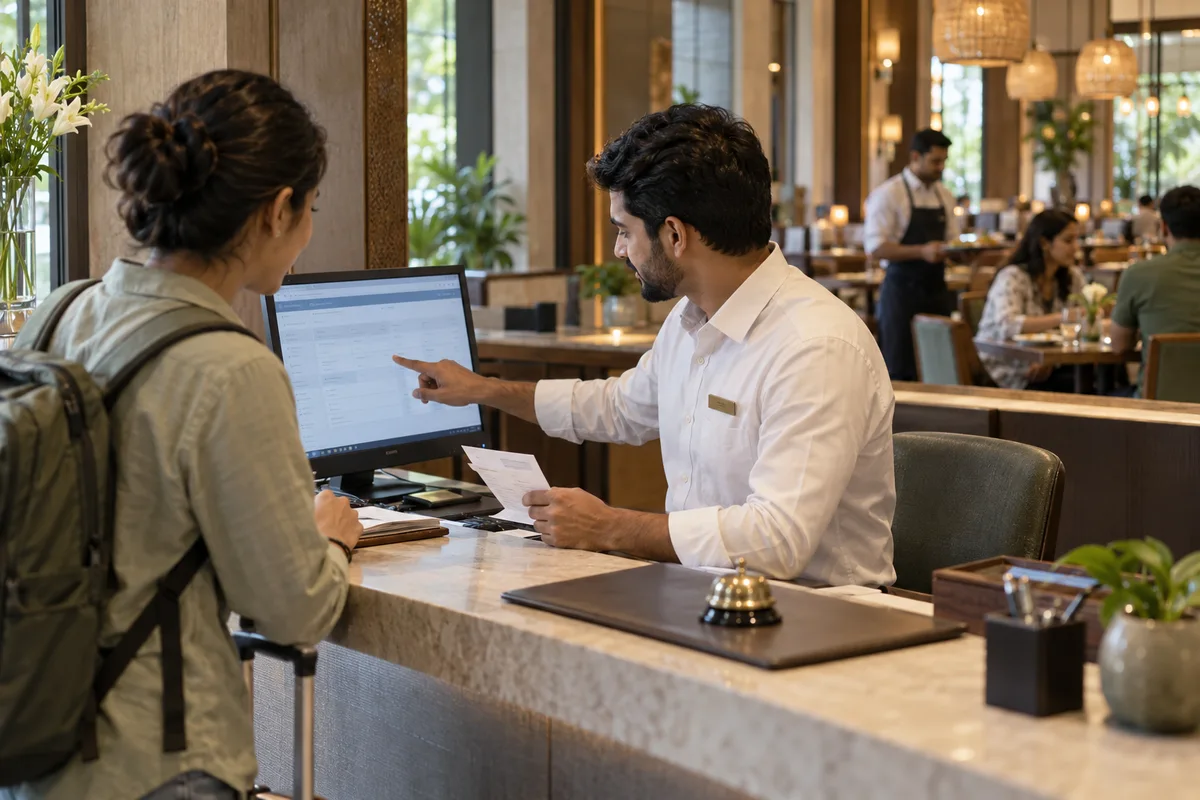
Why hospitality employees leave and how to understand why
Hotel, restaurant and banquet staff leave for reasons that vary by department and season. How to ask what sits behind the first answer and act on it.
8 min readRead articleA food truck runs a kitchen, a counter and a business from a vehicle with a crew of two to five. Events, pitches and late hours drive the work, and every person needs to cook, serve, clean and handle cash.
Not sure what you need? Tell us about your business in six short steps and we will come to the first meeting prepared.
Share your requirementsA food truck is a fitted vehicle or trailer that sells prepared food at a fixed pitch, near offices, markets or beaches, or at events such as concerts, fairs and weddings. The crew is tiny: a cook who runs the grill or fryer, a helper at the counter, someone who handles billing, and a driver who may also load stock and clean. Often the owner is on board. Work starts with prep in a base kitchen, then travel, setup, service and cleanup, and ends late at night. Cooking space is cramped, hot and close to gas and oil. Revenue depends on the pitch, the weather and permissions, and some days are cancelled at short notice. For the sector overview see HR for hospitality businesses. With such small teams, one person leaving or one injury changes the day, so clear duties, safety and dependable cover matter more than complex policies.
These are the places the people side of this kind of business tends to give way. The rest of this page works through them.
HR here has to work for each of these groups, not only the office. The set-up below is written with all of them in mind.
GullyHR runs talent acquisition for permanent roles in food trucks. For each role we agree the job description with you, find and screen candidates against it, and support the offer through to joining. Tell us the role and the number of people, and we start there.
We recruit permanent employees. We do not supply contract or temporary staff.
Every business interviews, but few have a written process that works the same way for every role and every interviewer. GullyHR designs yours, from the role brief to the offer, trains your managers to run it, and can run it for you on the roles you hand us.
We agree what the role must deliver, the must-have and nice-to-have skills, and how each will be scored.
Screening call, assessment, interview rounds and decision points, sized to the role and the number of people you hire.
Structured questions for each role family and a rating guide, so two interviewers judge the same answer the same way.
A short briefing for your managers on what to ask, what to avoid and how to give a clear yes or no.
Who approves, how the offer is made, and how candidates are kept informed from first call to joining.
A crew of three cooks, serves, bills and cleans, and when someone is absent no one knows who covers which task.
Gas cylinders, hot oil and cramped space make burns and cuts common, and first aid is a kit under the seat.
Prep at noon, service till midnight and cleanup after leave little rest, and drivers drive tired.
A rejected stall, rain or a police move cancels a day, and the question of pay for the crew stays unanswered.
Cash, UPI and tips are collected by whoever is at the counter, and tallies at close are argued.
Fairs and weddings need extra helpers who do not know the menu, the truck or the owner's standards.
If the cook leaves, the recipe, the taste and the regular customers can go with him.
Driving a loaded truck at night with gas on board has rules that nobody wrote, from speed to licence checks.
Start with the topics that matter most here: Organisation Design; Health, Safety and Wellbeing; Policies, Compliance and Governance. Then work through the rest. Each topic is written for hospitality, not in general.
Structure, reporting lines and who is allowed to decide what.
Induction, records, incident reporting and follow-through.
Policies a manager can apply, and obligations with owners and dates.
How many people, in which roles, by when — and what they will cost.
Requisition to joining, the same way every time.
A first day that is the same for the fifth joiner as the first.
Records, attendance, leave and the day-to-day HR that must simply work.
Salary structure, payroll inputs and a month that closes on time.
Goals, reviews and ratings that hold up in a conversation.
Training planned from need rather than from the calendar.
Named backups for the roles that cannot be vacant.
Communication, recognition and the conditions people actually work in.
Two routes — one for complaints, one for conduct — kept separate.
Who leaves, when, why — and which of them mattered.
Resignation to relieving letter, in a defined order.
Records that survive people, and approvals that do not queue.
A short monthly pack management actually reads.
An HR function that runs the same way every month.
The pieces a food trucks business puts in place, in an order that makes each easier. Open any card for the detail.
What the cook, counter person and driver do at prep, travel, service and cleanup, and who covers whom.
What the cook, counter person and driver do at prep, travel, service and cleanup, and who covers whom. See role records for how to keep them.
Gas checks, fire extinguisher use, burns first aid, speed and licence rules and a log kept in the truck.
Gas checks, fire extinguisher use, burns first aid, speed and licence rules and a log kept in the truck. See health and safety.
A rule for rain, permission loss and event cancellations, told at hiring.
A rule for rain, permission loss and event cancellations, told at hiring. The policy set can hold it.
One person bills, one counts at close, a tip split and a signed tally.
One person bills, one counts at close, a tip split and a signed tally. Cover it in the shift and leave rules or notes.
A menu sheet, setup steps, hygiene rules and a quick briefing before an event.
A menu sheet, setup steps, hygiene rules and a quick briefing before an event. See onboarding.
Quantities, steps and suppliers for key items, so the taste does not depend on one cook.
Quantities, steps and suppliers for key items, so the taste does not depend on one cook.
Before changing anything, find out what is true today. These checks take an afternoon and tell you which of the topics above to start with.
Share your requirementsConfirm with a qualified professional. What applies to you depends on your business, your state and your arrangements, and it changes. This page describes practice. It does not state a legal position.
The services below fit this kind of business best. Each starts by recording where you stand, and every later report compares against that. We do not promise outcomes.
Gas, fire, burns and road safety for a cramped mobile kitchen.
Written rules on cancelled days, cash handling and conduct.
A quick briefing for event helpers and new crew.
Rotas, rest days and late-hour limits for a tiny crew.
Start with a free conversation, or see the paid HR Diagnostic.
Understand the business, its workforce, current processes and HR challenges.
Find the missing, weak, inconsistent or person-dependent processes.
Create the structure, processes, policies, SOPs, dashboards and systems needed.
Help HR and department managers actually adopt the new system.
Digitise repetitive and approval-based workflows where it is worth doing.
Track hiring, attendance, employee cost, performance, training and attrition.
Strengthen the people-management system continuously, not once.
From the GullyHR blog: one on HR in hospitality, and one on each of the topics this page points to.

Hotel, restaurant and banquet staff leave for reasons that vary by department and season. How to ask what sits behind the first answer and act on it.
8 min readRead article
A founder's guide to building job grades, titles and billing levels for a growing IT services firm, with a step-by-step method and a grade description outline.
6 min readRead article
A shift, weekly and monthly safety routine for rubber plants that names who checks platen guards, mill trip bars, autoclave doors, burst-test cages and slings, and who acts on near misses.
7 min readRead article
How an India head can sort a global parent's HR policies into apply, adapt or replace, write an India addendum with advisers, and keep headquarters on side.
7 min readRead articleMore on the GullyHR blog.
Decide a rule for rain, permission loss and cancellations, tell the crew at hiring and apply it evenly. Confirm pay treatment with a qualified professional.
Check gas and fire gear regularly, train everyone on burns and spills, set speed and licence rules for drivers and keep a log. Replace faulty items quickly.
Write recipes and prep, train a helper on top items and review the cook's pay and role. Do not rely on one person.
Split billing and counting, note UPI and cash separately and sign a tally at close. It protects honest staff.
Give a menu sheet, setup steps and hygiene rules before the event, and pair them with an experienced crew member.
We would look at who covers whom, what safety routines exist and what happens on cancelled days. A task card and a cancelled-day rule is a likely opener. We set out scope, timing and fee in writing afterwards, so you decide what goes ahead.
All 143 business types in hospitality · Find another business type
Tell us what is slowing your team down. We’ll help you find a practical way forward, starting with a conversation.