















Industries
Why logistics employees leave and how to understand why
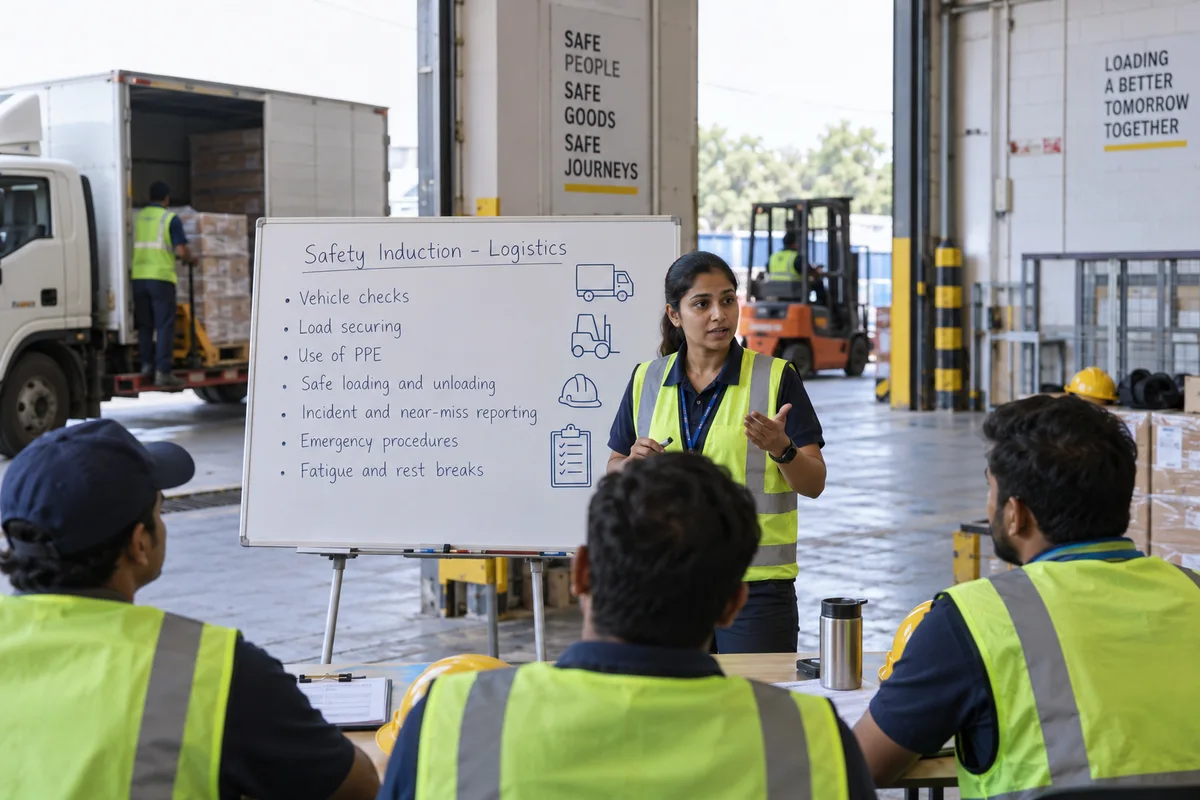
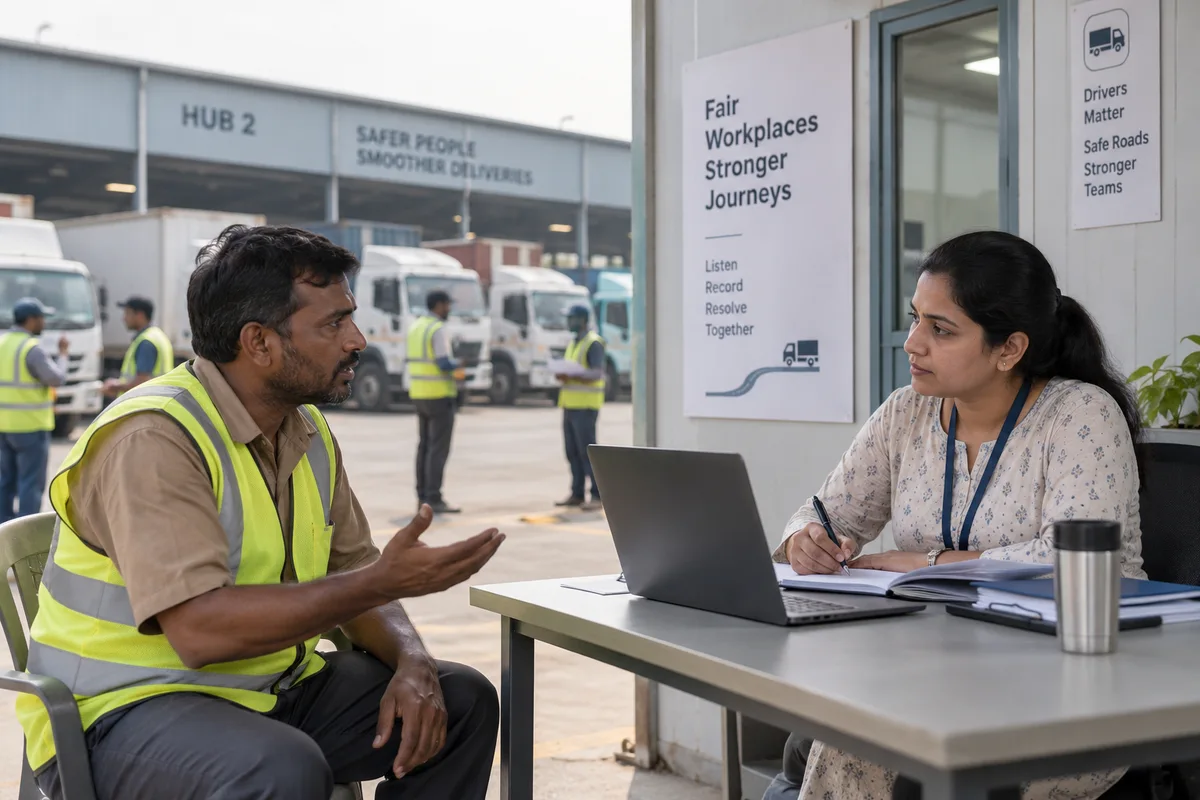
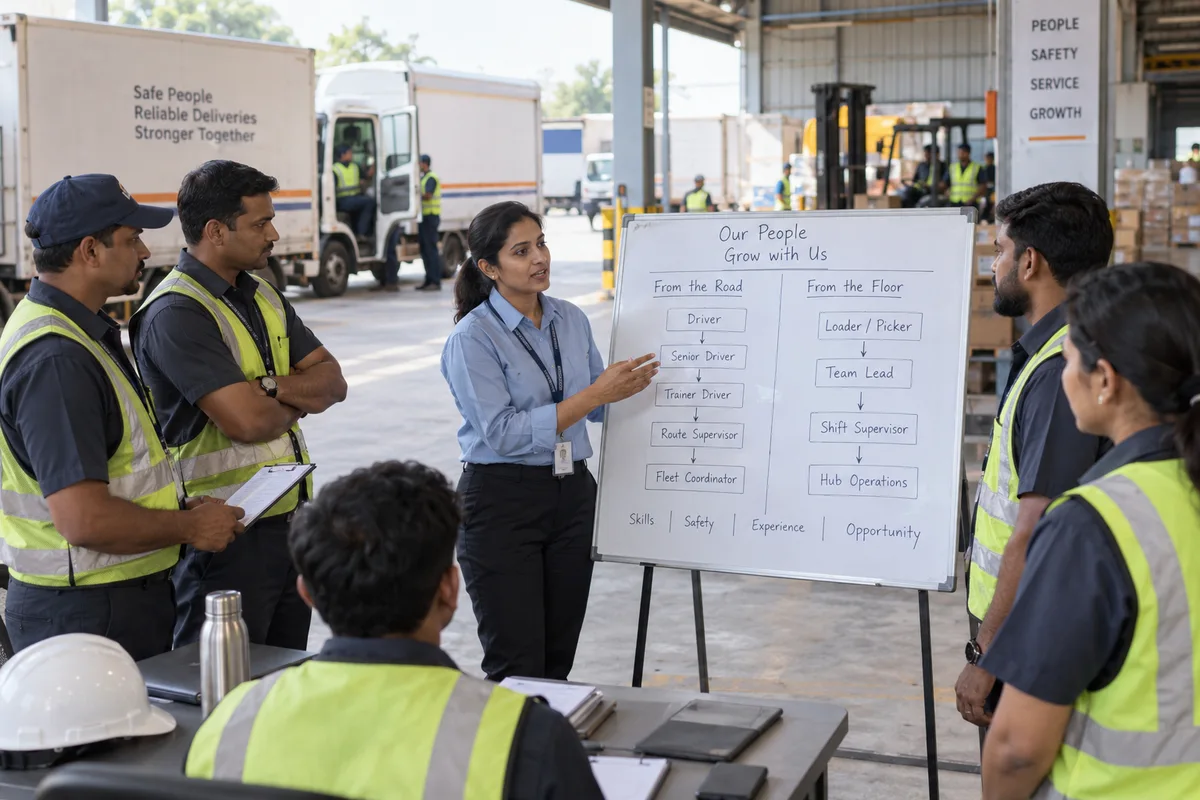
Drivers, warehouse staff and delivery teams often leave without a conversation. How to understand why, from routes and rosters to pay and supervisors.
7 min readRead articleA moving company sends crews into customers' homes and offices to pack, lift and carry. Trust, care with belongings and physical safety decide its name, and crews are often casual, mobile and hard to supervise.

Not sure what you need? Tell us about your business in six short steps and we will come to the first meeting prepared.
Share your requirementsA moving company packs household or office goods, loads them, drives them to a new place, unloads and sets up. Work comes in bursts: month ends, school transfers and corporate relocations. A job usually has a supervisor, a team of packers and loaders, a driver and a helper, and sometimes a vehicle from a hired fleet. Crews work in customers' homes, handle fragile and valuable goods and carry heavy items up stairs. Customers judge the company by politeness, care and honesty. Damage, missing items and slow delivery bring claims. Many crew members are casual or paid by the job, which makes training, supervision and loyalty difficult. Back, hand and foot injuries are common, and safe lifting is rarely taught well. See also HR for logistics and transportation.
These are the places the people side of this kind of business tends to give way. The rest of this page works through them.
HR here has to work for each of these groups, not only the office. The set-up below is written with all of them in mind.
GullyHR runs talent acquisition for permanent roles in moving companies. For each role we agree the job description with you, find and screen candidates against it, and support the offer through to joining. Tell us the role and the number of people, and we start there.
We recruit permanent employees. We do not supply contract or temporary staff.
Every business interviews, but few have a written process that works the same way for every role and every interviewer. GullyHR designs yours, from the role brief to the offer, trains your managers to run it, and can run it for you on the roles you hand us.
We agree what the role must deliver, the must-have and nice-to-have skills, and how each will be scored.
Screening call, assessment, interview rounds and decision points, sized to the role and the number of people you hire.
Structured questions for each role family and a rating guide, so two interviewers judge the same answer the same way.
A short briefing for your managers on what to ask, what to avoid and how to give a clear yes or no.
Who approves, how the offer is made, and how candidates are kept informed from first call to joining.
People hired for a day pack by habit, and breakages follow.
Crew members work in private homes and a rude word or missing item hurts the name.
Without clear records, supervisors and crew argue over who damaged what.
Stairs, furniture and cartons lead to strains, and workers hide pain to keep jobs.
Month-end jobs stack up and crews run late, tired and short-handed.
Per-job pay encourages speed over care and encourages skipping breaks.
The estimate said one thing, the actual load another, and the crew is blamed.
On a long trip, a driver decides what to tell the customer, with little guidance.
Start with the topics that matter most here: Learning and Development; Health, Safety and Wellbeing; Employee Relations. Then work through the rest. Each topic is written for logistics and transportation, not in general.
Training planned from need rather than from the calendar.
Induction, records, incident reporting and follow-through.
Two routes — one for complaints, one for conduct — kept separate.
How many people, in which roles, by when — and what they will cost.
Structure, reporting lines and who is allowed to decide what.
Requisition to joining, the same way every time.
A first day that is the same for the fifth joiner as the first.
Records, attendance, leave and the day-to-day HR that must simply work.
Salary structure, payroll inputs and a month that closes on time.
Goals, reviews and ratings that hold up in a conversation.
Named backups for the roles that cannot be vacant.
Communication, recognition and the conditions people actually work in.
Policies a manager can apply, and obligations with owners and dates.
Who leaves, when, why — and which of them mattered.
Resignation to relieving letter, in a defined order.
Records that survive people, and approvals that do not queue.
A short monthly pack management actually reads.
An HR function that runs the same way every month.
The pieces a moving companies business puts in place, in an order that makes each easier. Open any card for the detail.
Standard methods for fragile, electrical and furniture items, with practice.
Standard methods for fragile, electrical and furniture items, with practice. See learning and development.
A checklist and photos signed by customer and supervisor, so damage disputes use facts.
A checklist and photos signed by customer and supervisor, so damage disputes use facts.
Dress, language, privacy and respect for homes, with consequences explained.
Dress, language, privacy and respect for homes, with consequences explained. See HR policy packages.
A mix of job pay, quality and no-damage recognition, not speed alone.
A mix of job pay, quality and no-damage recognition, not speed alone. See compensation benchmarking.
A pool of regulars and trained casuals, with job limits per crew.
A pool of regulars and trained casuals, with job limits per crew.
Lifting technique, equipment, rest and injury reporting without blame.
Lifting technique, equipment, rest and injury reporting without blame. See workplace health, safety and wellbeing.
Before changing anything, find out what is true today. These checks take an afternoon and tell you which of the topics above to start with.
Share your requirementsConfirm with a qualified professional. What applies to you depends on your business, your state and your arrangements, and it changes. This page describes practice. It does not state a legal position.
The services below fit this kind of business best. Each starts by recording where you stand, and every later report compares against that. We do not promise outcomes.
Packing and lifting training that reduces breakage and injury.
A conduct code for work in customers' homes.
Safe lifting, rest and injury reporting.
Pay designs that reward care as well as speed.
Start with a free conversation, or see the paid HR Diagnostic.
Understand the business, its workforce, current processes and HR challenges.
Find the missing, weak, inconsistent or person-dependent processes.
Create the structure, processes, policies, SOPs, dashboards and systems needed.
Help HR and department managers actually adopt the new system.
Digitise repetitive and approval-based workflows where it is worth doing.
Track hiring, attendance, employee cost, performance, training and attrition.
Strengthen the people-management system continuously, not once.
From the GullyHR blog: one on HR in logistics and transportation, and one on each of the topics this page points to.

Drivers, warehouse staff and delivery teams often leave without a conversation. How to understand why, from routes and rosters to pay and supervisors.
7 min readRead article
A founder's guide to hiring freshers and running a first-year programme: campus or open drives, a screening round, a training plan by quarter, mentors and checkpoints.
6 min readRead article
A shift, weekly and monthly safety routine for rubber plants that names who checks platen guards, mill trip bars, autoclave doors, burst-test cages and slings, and who acts on near misses.
7 min readRead article
An employee brings you a complaint about their supervisor. What happens next should not depend on who is in the room. A grievance procedure a small company can actually run.
8 min readRead articleMore on the GullyHR blog.
Train packing methods, use proper materials, record condition at pickup and review each claim for its cause.
Steady work, fair and prompt pay, safe equipment, respect and a path to supervisor.
A short code, a briefing before each job, supervisor presence and customer feedback after.
Make reporting easy, give first aid, keep records and review causes. Ask a qualified professional about legal obligations.
Mix job pay with a quality element so speed is not the only reward.
We would join a job and ask crews about training, injuries and pay, then look at damage claims. A fitting first task is a conduct code with packing training and a condition record. Scope and fees are written down after we talk.
All 51 business types in logistics and transportation · Find another business type
See all HR topics for logistics and transportation, or another industry.
Tell us what is slowing your team down. We’ll help you find a practical way forward, starting with a conversation.