
HR Management Solutions for Logistics and Transportation
Build HR for a workforce that is rarely in one place — drivers on the road, warehouse teams on shift, field staff across cities.

Not sure what you need? Tell us about your business in six short steps and we will come to the first meeting prepared.
Share your requirementsLogistics businesses employ people who are almost never at head office. Drivers, loaders, warehouse operatives, delivery executives, supervisors and hub teams work across locations and hours, and attendance, licences and safety records are the operational backbone.
- Plan
- Hire
- Onboard
- Manage
- Develop
- Perform
- Engage
- Retain
- Exit
- Improve
When HR processes are weak, you may see
- Driver shortage and turnover
- Licence and document expiry unnoticed
- Attendance across hubs and vehicles
- Delivery-executive churn
- Warehouse shift coverage gaps
- Overtime and trip-allowance disputes
- Safety and accident records incomplete
- Contract manpower with no central record
- No consolidated view across locations
We help logistics businesses build hiring, attendance and compliance-readiness processes that work across a distributed workforce.
Who we work with
Adapted to fleet size, hub network, warehouse operations and the mix of own and contracted manpower.
- Logistics Companies
- Transportation Companies
- Fleet Operators
- Courier Companies
- Warehousing Companies
- Supply Chain Companies
- Freight Forwarders
- Third-Party Logistics Companies
- School Transport Companies
- Employee Transport Companies
Roles we help you hire in logistics and transportation
GullyHR runs talent acquisition for permanent roles in logistics and transportation. For each role we agree the job description with you, find and screen candidates against it, and support the offer through to joining. Tell us the role and the number of people, and we start there.
- Fleet supervisors
- Accounts and billing staff
- Hub sorters and loaders
- Chauffeurs
- Corporate account managers
- Helpers and cleaners
- Tour escorts
- Operations managers
- Delivery executives
- Customer care executives
- Branch managers
- Trip planners and dispatchers
- Workshop mechanics
- Captains and first officers
- Cabin crew and flight attendants
- Flight operations and dispatch officers
- Ramp handlers and ground staff
- Charter sales and account managers
- Aircraft brokers
- Safety, quality and documentation staff
- Sales executives and key account managers
- Field service engineers
- Workshop and overhaul technicians
- Spare parts and stores staff
- Rental fleet coordinators
- Operators deployed at customer sites
- Service coordinators and call desk staff
- Workshop and service managers
Job descriptions for this sector
We recruit permanent employees. We do not supply contract or temporary staff.
We set up the interview and hiring process for logistics and transportation
Every business interviews, but few have a written process that works the same way for every role and every interviewer. GullyHR designs yours, from the role brief to the offer, trains your managers to run it, and can run it for you on the roles you hand us.
1. Role brief and scorecard
We agree what the role must deliver, the must-have and nice-to-have skills, and how each will be scored.
2. Stages and sequence
Screening call, assessment, interview rounds and decision points, sized to the role and the number of people you hire.
3. Question bank and scoring
Structured questions for each role family and a rating guide, so two interviewers judge the same answer the same way.
4. Interviewer readiness
A short briefing for your managers on what to ask, what to avoid and how to give a clear yes or no.
5. Offer and follow-up
Who approves, how the offer is made, and how candidates are kept informed from first call to joining.
Businesses we work with in logistics and transportation
The same sector looks different from the inside of each kind of business. These pages are written for one kind at a time.
Taxi, Cab & Passenger Transport6About this group →
Vehicle Rental & Leasing6About this group →
Freight & Logistics Transport6About this group →
Other business types6
HR topics for logistics and transportation
The same areas, written for this sector rather than in general.
HR Strategy and Workforce Planning
How many people, in which roles, by when — and what they will cost.

Organisation Design
Structure, reporting lines and who is allowed to decide what.
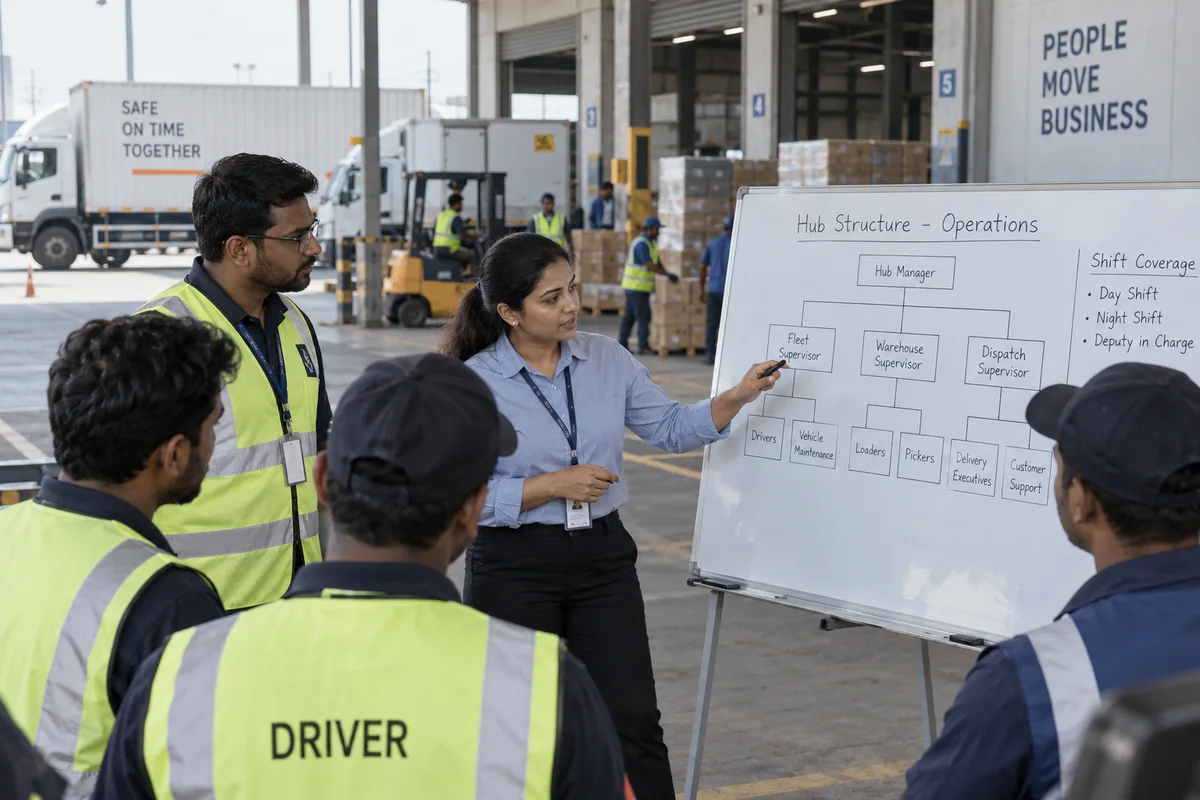
Recruitment and Talent Acquisition
Requisition to joining, the same way every time.
Onboarding and Probation
A first day that is the same for the fifth joiner as the first.
Employee Administration
Records, attendance, leave and the day-to-day HR that must simply work.

Compensation, Payroll and Benefits
Salary structure, payroll inputs and a month that closes on time.

Performance Management
Goals, reviews and ratings that hold up in a conversation.

Learning and Development
Training planned from need rather than from the calendar.
Career and Succession Management
Named backups for the roles that cannot be vacant.
Employee Engagement and Experience
Communication, recognition and the conditions people actually work in.
Employee Relations
Two routes — one for complaints, one for conduct — kept separate.
Policies, Compliance and Governance
Policies a manager can apply, and obligations with owners and dates.

Health, Safety and Wellbeing
Induction, records, incident reporting and follow-through.
Retention and Attrition Management
Who leaves, when, why — and which of them mattered.
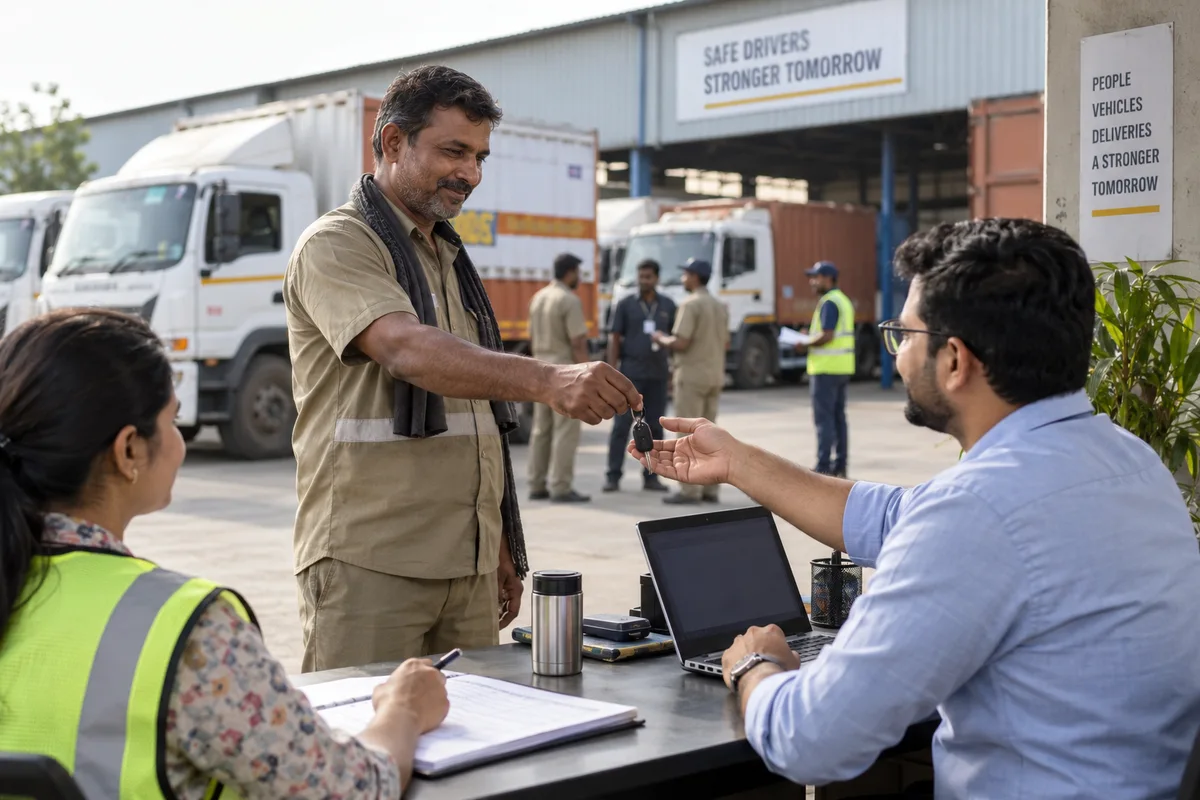
Exit and Alumni Management
Resignation to relieving letter, in a defined order.
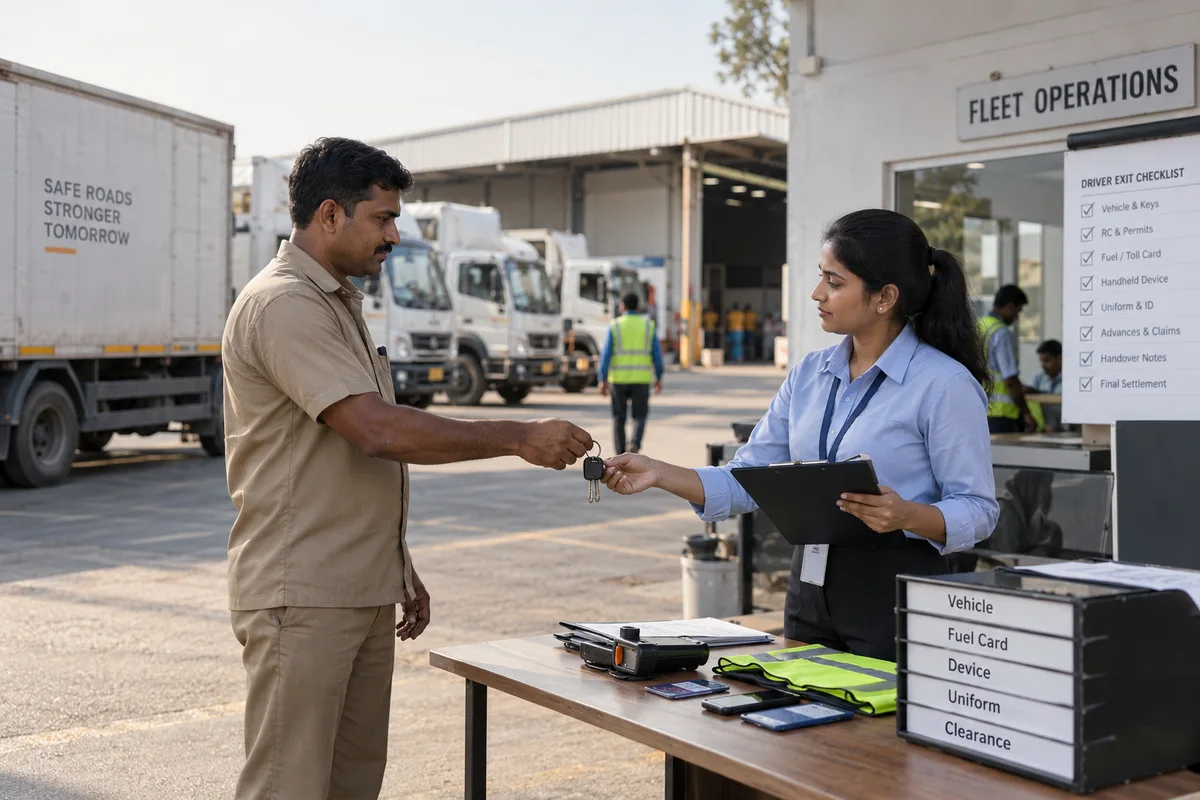
HR Technology and Automation
Records that survive people, and approvals that do not queue.
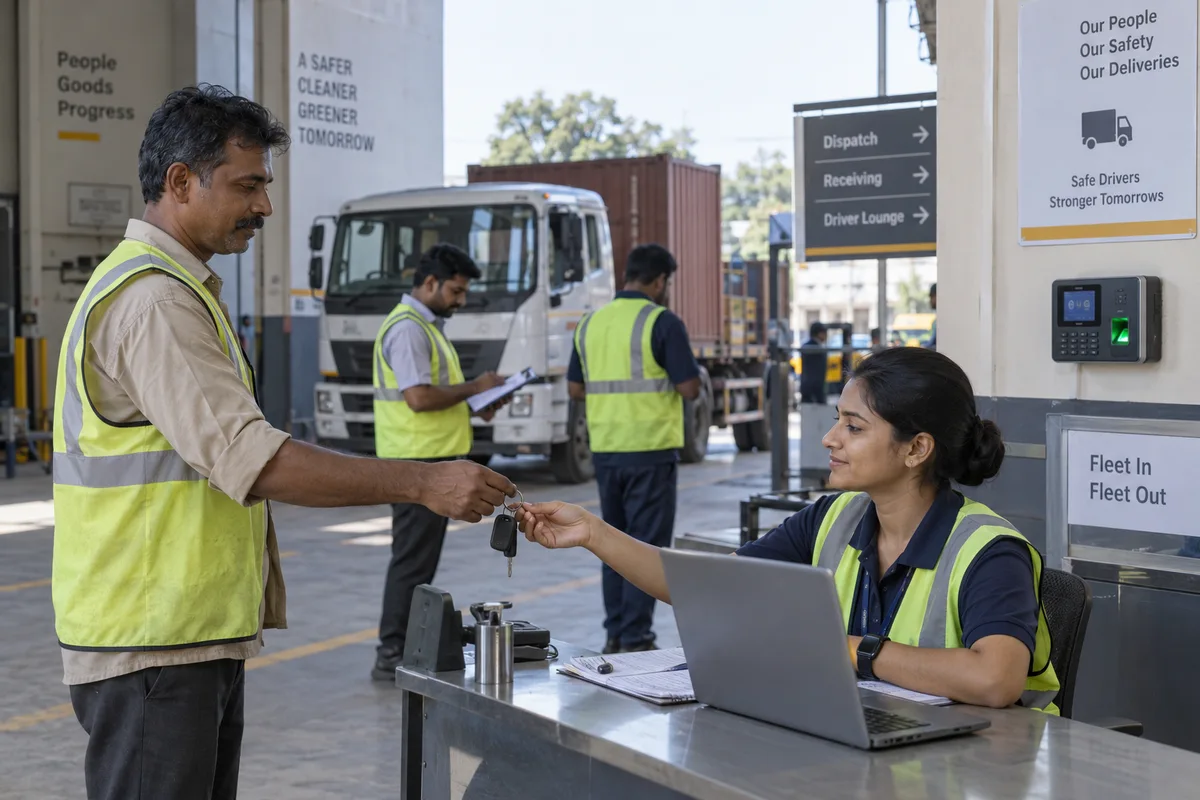
HR Analytics and Management Reporting
A short monthly pack management actually reads.

HR Operations and Governance
An HR function that runs the same way every month.

What the HR system covers
Most businesses take a few of these at a time, in an order decided by what is costing them most. Open any area to see what it includes.
Hub, Fleet and Warehouse Structure
Who supervises a workforce that is spread out.
What this coversHideOpen the full page →
Hub, Fleet and Warehouse Structure
Who supervises a workforce that is spread out.
Operations
- Drivers
- Loaders
- Delivery Executives
- Warehouse Operatives
- Pickers and Packers
- Forklift Operators
- Hub Supervisors
- Fleet Supervisors
Support
- Operations Managers
- Transport Planning
- Maintenance
- Stores
- Safety
- Customer Service
- HR
- Finance
- Admin
- Organisation structure
- Hub and branch structure
- Supervisor authority
- Reporting lines
- Approval matrix
- Staffing norms by hub
Driver Hiring and Licence Records
The single most critical record in the business.
What this coversHideOpen the full page →
Driver Hiring and Licence Records
The single most critical record in the business.
- Driver requisition
- Licence verification at hiring
- Licence category and validity
- Licence expiry tracking and alerts
- Medical fitness records
- Background verification
- Driving assessment
- Induction and route familiarisation
- Badge and permit records where applicable
Warehouse Shift Rosters
Coverage against volume, not against headcount.
What this coversHideOpen the full page →
Warehouse Shift Rosters
Coverage against volume, not against headcount.
- Volume-linked manning
- Shift patterns
- Peak and seasonal staffing
- Weekly off rotation
- Relief and standby
- Overtime sanction
- Shift swaps
- Roster publishing
- Leave replacement
- Volume forecast
- Staffing plan
- Roster
- Approval
- Attendance
- Overtime
- Payroll input
Distributed Attendance
Attendance where there is no single gate.
What this coversHideOpen the full page →
Distributed Attendance
Attendance where there is no single gate.
- Hub attendance capture
- Mobile attendance for field staff
- Trip-based attendance for drivers
- Biometric at warehouses
- Missed punch regularisation
- Overtime rules
- Night-shift rules
- Attendance cut-off
- Multi-location consolidation
Trip Allowances and Payroll
Allowances that are computed, not negotiated.
What this coversHideOpen the full page →
Trip Allowances and Payroll
Allowances that are computed, not negotiated.
- Wage structure by role
- Trip allowance
- Night halt allowance
- Distance-linked payments where used
- Overtime computation
- Incentive schemes
- Advances and recovery
- Deductions
- Payroll cut-off
- Full-and-final settlement
Safety and Incident Records
A workforce operating vehicles and equipment.
What this coversHideOpen the full page →
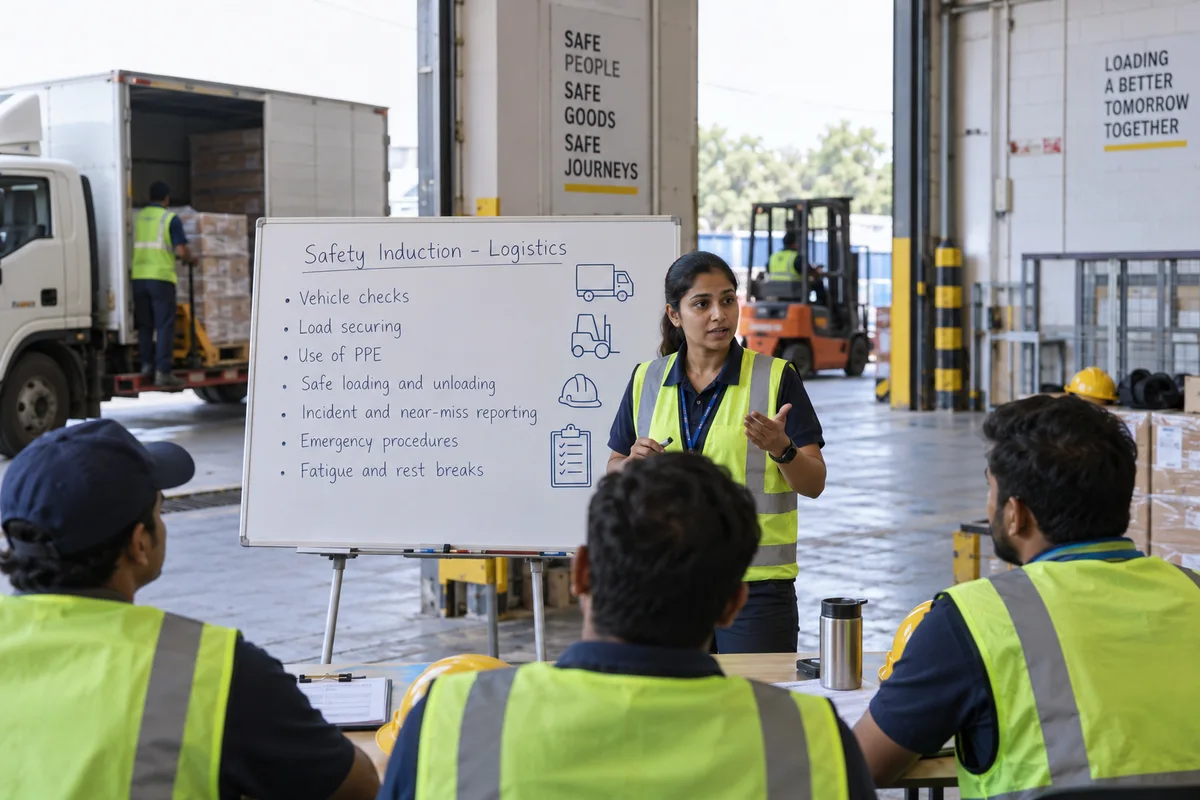
Safety and Incident Records
A workforce operating vehicles and equipment.
- Safety induction
- Vehicle safety briefing
- Material-handling training
- Protective equipment issue and records
- Accident reporting
- Near-miss reporting
- Investigation process
- Corrective action tracking
- Fatigue and duty-hour practice
- Emergency procedures
Contract Manpower Oversight
The loaders and helpers who are not on your payroll.
What this coversHideOpen the full page →
Contract Manpower Oversight
The loaders and helpers who are not on your payroll.
- Contractor register
- Manpower register by contractor
- Hub-wise deployment
- Attendance reconciliation
- Induction and safety records
- Document verification
- Invoice vs attendance check
- Contract renewal tracking
Drivers and delivery
- Trips completed
- On-time delivery
- Attendance
- Accidents and violations
- Fuel and vehicle care
- Customer complaints
- Cash handling accuracy
Warehouse
- Throughput per shift
- Picking accuracy
- Damage rate
- Safety observance
- Attendance
- Housekeeping
- Training completion
Frontline Attrition
Turnover here directly interrupts service.
What this coversHideOpen the full page →
Frontline Attrition
Turnover here directly interrupts service.
- Attrition by role and hub
- First-90-day attrition
- Supervisor-wise turnover
- Driver-specific attrition
- Exit reasons
- Replacement time
- Stay interviews
- Retention actions
- Rehire pool
Logistics HR Dashboard
Manning, licences and safety across the network.
What this coversHideOpen the full page →
Logistics HR Dashboard
Manning, licences and safety across the network.
- Headcount by hub and role
- Own vs contract manpower
- Staffing against volume
- Driver availability
- Licence expiry pending
- Attendance and absenteeism
- Overtime cost
- Attrition by hub
- Accidents and incidents
- Open vacancies
- Employee cost per shipment
Driver and Field Exit
Exits where the assets and documents are on the road.
What this coversHideOpen the full page →
Driver and Field Exit
Exits where the assets and documents are on the road.
A driver resignation is an asset recovery problem as much as an HR one, and the assets are rarely at head office when the notice arrives.
- Vehicle return location and condition check
- Vehicle documents, permits and keys recovered
- Fuel card and toll tag deactivated immediately
- Handheld device, scanner and phone returned
- Trip advances, expenses and detention claims reconciled
- Route knowledge handed to the replacement or supervisor
- Pending consignments and PODs accounted for
- Licence and endorsement record closed
Deactivating the fuel card and toll tag on the last working day, rather than when somebody notices, is the single most common gap and the easiest to close.
- Notice received
- Vehicle and documents recovered
- Cards deactivated
- Advances reconciled
- Route handed over
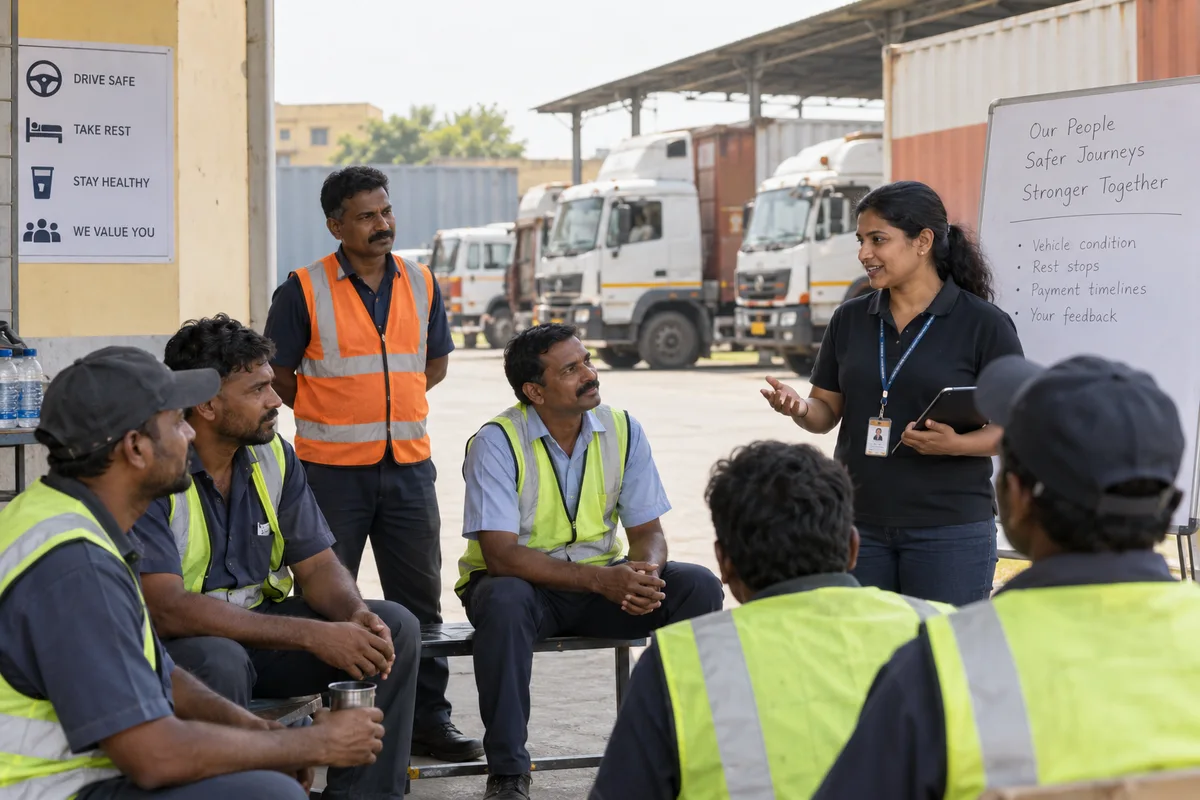
Engaging Drivers and Distributed Teams
People who are rarely at any office, including yours.
What this coversHideOpen the full page →
Engaging Drivers and Distributed Teams
People who are rarely at any office, including yours.
A driver's experience of the employer is the trip sheet, the advance, and the person who answers when something goes wrong at midnight. Engagement here is operational, not cultural.
- Trip planning that allows realistic rest
- Advance and expense settlement without chasing
- Someone reachable when a breakdown or detention happens
- Vehicle condition and maintenance responsiveness
- Halt and rest facilities on regular routes
- Detention and waiting time compensated predictably
- Recognition for safety and on-time performance
- Route allocation perceived as fair
Route allocation fairness is the most frequently raised grievance and is usually invisible to head office, because it is decided informally by whoever builds the roster.
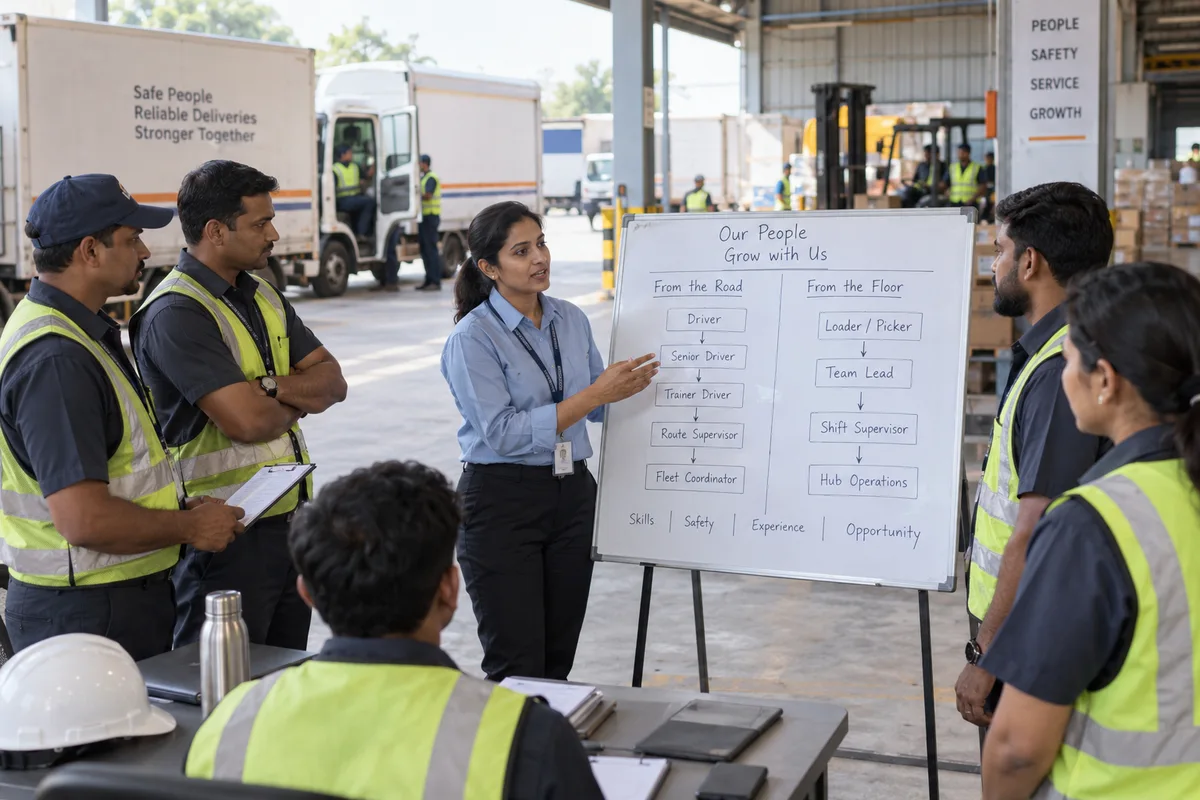
Progression From the Road and the Floor
Career routes for drivers and warehouse teams.
What this coversHideOpen the full page →
Progression From the Road and the Floor
Career routes for drivers and warehouse teams.
Drivers and warehouse staff are rarely offered a visible future, which is a significant contributor to attrition in a sector that competes largely on availability of people.
From the road
- Driver to senior or trainer driver
- Route supervision and fleet coordination
- Safety and compliance roles
- Hub and transport operations
From the floor
- Associate to team lead to shift supervisor
- Inventory, quality and dispatch specialisms
- Warehouse to hub management
Trainer-driver and safety roles are the most effective routes available. They retain experienced drivers, use knowledge that would otherwise leave, and improve the performance of everyone they touch.
Systems for People Who Are Never in the Office
Drivers, hubs and field staff on one record.
What this coversHideOpen the full page →
Systems for People Who Are Never in the Office
Drivers, hubs and field staff on one record.
Logistics HR technology has to reach people on the road. A system that requires someone to come to an office to do anything will not be used by the majority of the workforce.
- Mobile attendance with location capture for field and hub staff
- Driver licence, endorsement and medical records with expiry alerts
- Trip advance and expense settlement without paper
- Vehicle and asset issue tracked against the individual
- Hub-wise and route-wise headcount visibility
- Roster and duty allocation published to a phone
- Multi-location statutory record keeping
Licence and endorsement expiry tracking is the safety-relevant capability. Discovering a lapsed licence during an enforcement check is avoidable with an alert and a record.
- Record held centrally
- Expiry alerted early
- Duty allocation validated
- Compliance evidenced
Onboarding Drivers and Hub Staff
Documents, licences and a first trip that goes well.
What this coversHideOpen the full page →
Onboarding Drivers and Hub Staff
Documents, licences and a first trip that goes well.
Driver onboarding is document-heavy and safety-critical, and the induction has to happen before the first trip rather than during the first quiet week.
- Licence, endorsement and medical verification before first duty
- Vehicle familiarisation and condition check process
- Route, trip sheet and documentation process
- Advance, expense and claim process explained
- Handheld device, fuel card and asset issue recorded
- Safety, fatigue and incident reporting induction
- Supervised first trips before independent duty
- Probation reviewed against safety and adherence, not only delivery
Supervised first trips are the highest-return induction investment in the sector, and the one most often compressed when the fleet is short.
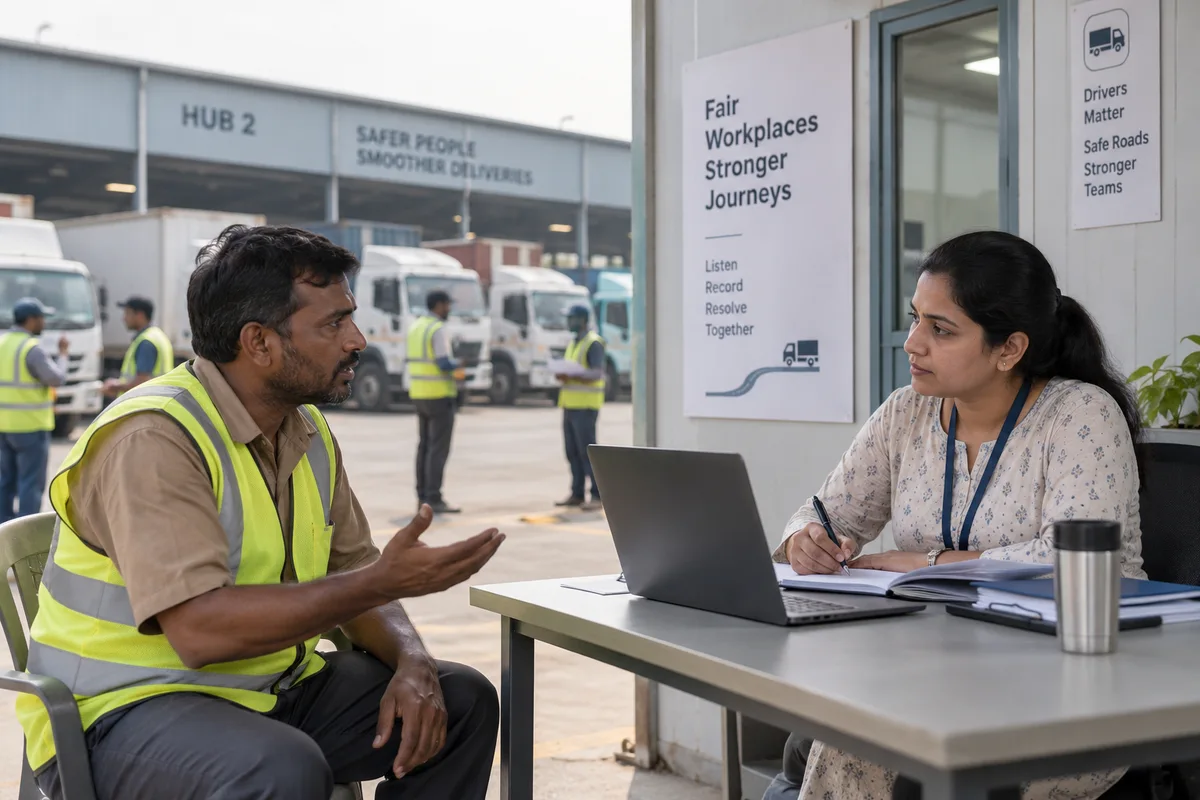
Relations With a Workforce on the Road
Where people are rarely present to raise anything.
What this coversHideOpen the full page →
Relations With a Workforce on the Road
Where people are rarely present to raise anything.
A driver with a grievance is usually four hundred kilometres away and off-duty. If raising something requires attending an office, most issues are never raised and surface as resignation.
- Grievance route reachable by phone, from anywhere
- Route allocation and duty fairness disputes handled consistently
- Detention, advance and expense disagreements resolved quickly
- Incident and accident handling separated from disciplinary process
- Consistency across hubs and locations
- Supervisor and hub capability in early resolution
- Contractor and attached-vehicle drivers handled correctly
- Central record across hubs
Separating incident handling from disciplinary process matters more here than almost anywhere. Where every accident is treated as misconduct, reporting stops and the business loses its safety information.
HR Operations Across Hubs
A function serving people who are rarely present.
What this coversHideOpen the full page →
HR Operations Across Hubs
A function serving people who are rarely present.
Logistics HR operations serve drivers on the road and hub teams on shift across many locations, and almost none of them can attend an office to complete anything.
- Hub-level HR ownership with central standards
- Fully mobile joiner, exit and document processes
- Driver document and licence renewal tracking as a core process
- Advance and expense settlement with a stated service level
- Payroll input discipline across hubs
- Statutory records maintained per establishment
- Consolidated and hub-level headcount reporting
- Internal review of records on a stated cycle
Licence and document renewal tracking belongs in HR operations rather than in fleet, because the consequence of a lapse falls on the employee and the employer together.
Recruiting Drivers and Hub Teams
A permanent shortage and a fast-moving market.
What this coversHideOpen the full page →
Recruiting Drivers and Hub Teams
A permanent shortage and a fast-moving market.
Driver recruitment runs against a structural shortage. Candidates have options, decisions are made quickly, and a slow process loses people between interview and joining.
- Licence, endorsement and experience verified early, not at joining
- Fast decision and offer turnaround, measured in days
- Pay, route pattern and home time stated honestly upfront
- Referral programme from existing drivers as a primary channel
- Medical and document requirements handled in parallel, not sequentially
- Hub and warehouse hiring run as a distinct process
- Source and channel effectiveness tracked
- Early attrition analysed by hub and by supervisor
Driver referral is consistently the highest-quality channel in the sector and the most under-invested, because it requires paying existing drivers for something the business assumes it can get free.
Training Drivers and Hub Teams
Development for people who are rarely present.
What this coversHideOpen the full page →
Training Drivers and Hub Teams
Development for people who are rarely present.
Logistics training has to reach drivers between trips and hub staff between shifts, which rules out most conventional delivery formats.
- Safety and defensive driving as the core programme
- Vehicle handling, load securing and inspection training
- Fatigue awareness and incident reporting
- Documentation and process training for trip discipline
- Customer interaction training for delivery-facing roles
- Hub team training on handling, scanning and safety
- Supervisor capability at hub level
- Trainer-driver roles used to deliver and retain experience
Using experienced drivers as trainers solves two problems at once - it delivers training in a format drivers accept and retains people who would otherwise have no progression route.
Logistics and Transportation HR maturity assessment
Each area is scored on the same five-level scale, so management can see where HR stands today and what to improve first.
Request a logistics HR audit- 1
No defined process
Activities happen differently each time.
- 2
Informal, person dependent
Processes exist but depend heavily on individual employees.
- 3
Documented
Processes and responsibilities are written down.
- 4
Implemented and measured
Processes are followed and performance is measured.
- 5
Automated and continuously improved
Technology-enabled, measured and improved deliberately.
What you receive
Depending on the engagement. Scope and sequence are agreed after the audit.
- HR Audit
- HR Gap Analysis
- HR Improvement Roadmap
- Organisation Structure
- Manpower Plan
- Job Descriptions
- KRA and KPI Framework
- Competency Framework
- Recruitment Process
- Onboarding Framework
- Attendance and Leave Process
- Performance Management System
- Training Framework
- Employee Engagement Framework
- Retention Plan
- HR Policy Manual
- Employee Handbook
- HR SOPs
- HR Forms
- HR Templates
- HR Calendar
- HR Dashboard
- HR MIS
- HR Automation Roadmap
- HRMS Implementation Framework
Our HR transformation approach
- 1
Assess
Understand the business, its workforce, current processes and HR challenges.
- 2
Identify gaps
Find the missing, weak, inconsistent or person-dependent processes.
- 3
Design
Create the structure, processes, policies, SOPs, dashboards and systems needed.
- 4
Implement
Help HR and department managers actually adopt the new system.
- 5
Automate
Digitise repetitive and approval-based workflows where it is worth doing.
- 6
Measure
Track hiring, attendance, employee cost, performance, training and attrition.
- 7
Improve
Strengthen the people-management system continuously, not once.
Build an HR function that keeps operations moving
A strong logistics HR function helps the business:
- Keep hubs and vehicles manned
- Track licences before they expire
- Reduce driver and delivery churn
- Control overtime cost
- Document safety properly
- Bring contract manpower into view
- Standardise across hubs
- Cut replacement hiring time
- See the whole network in one report
- Support new hubs and routes
Build a better HR system for your network
Whether you run a fleet, a warehouse or a hub network, we can help build HR that works across a distributed workforce.
Looking for a different sector? See all industries.