















Industries
Why logistics employees leave and how to understand why
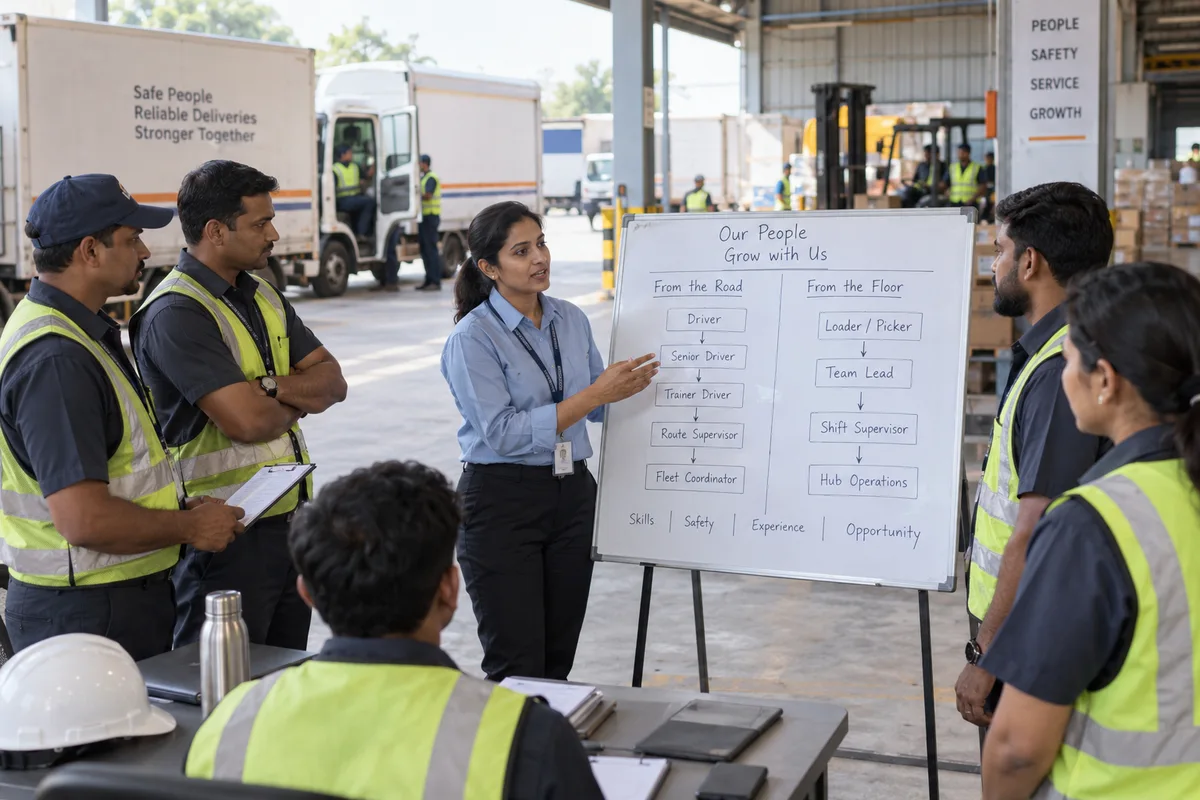
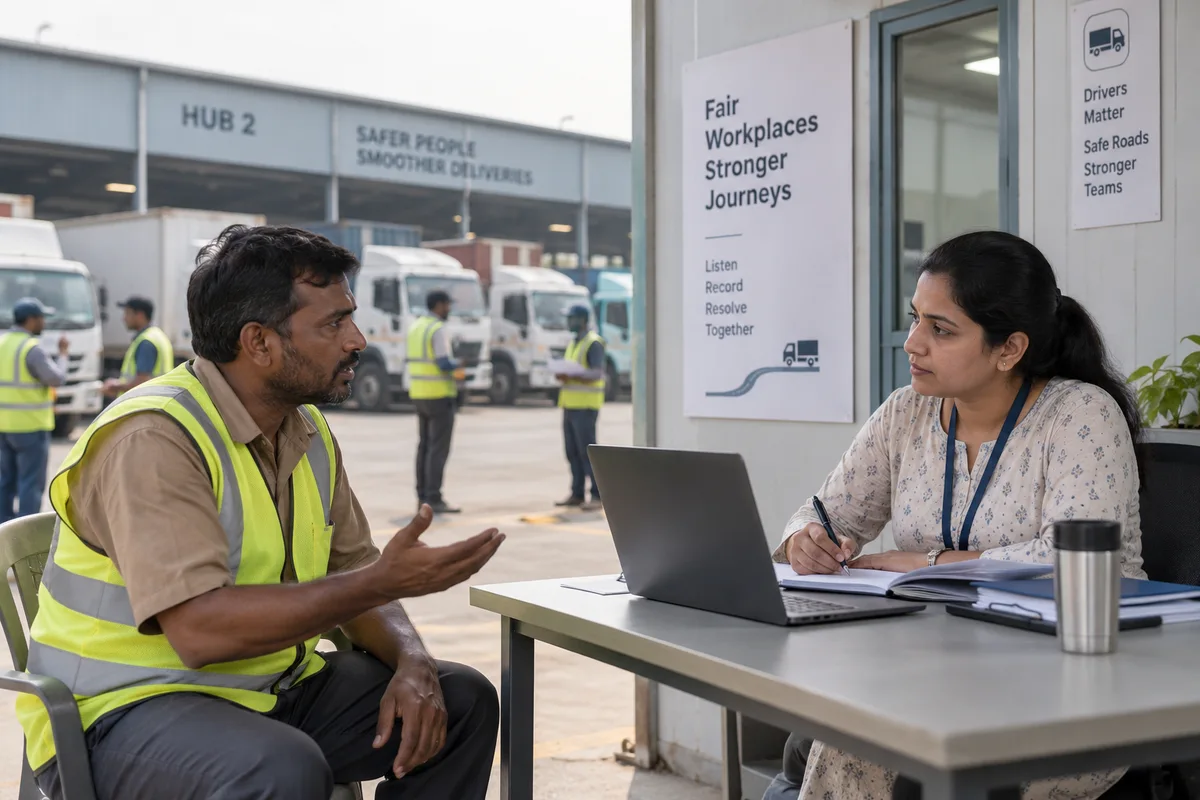
Drivers, warehouse staff and delivery teams often leave without a conversation. How to understand why, from routes and rosters to pay and supervisors.
7 min readRead articleA freight forwarder moves goods for others by sea, air and road, and sells paperwork, timing and problem-solving. Documentation staff, sales executives and operations teams must meet cut-offs and keep exporters calm when shipments slip.

Not sure what you need? Tell us about your business in six short steps and we will come to the first meeting prepared.
Share your requirementsA freight forwarding company arranges shipments for exporters and importers: booking space with shipping lines or airlines, preparing documents, coordinating customs clearance and trucking, and tracking cargo. Teams are split into sales, pricing, operations, documentation, customs liaison, accounts and a small field group at ports or airports. Work follows cut-off times, and one missing document can delay a container. Staff handle many files at once and talk to customers, carriers, transporters and officials. Knowledge is learnt on the job: terms of trade, document sets, port practice and customer habits. Good documentation staff and experienced operations executives are hard to replace. Field staff work long and uneven hours near ports. See also HR for logistics and transportation.
These are the places the people side of this kind of business tends to give way. The rest of this page works through them.
HR here has to work for each of these groups, not only the office. The set-up below is written with all of them in mind.
GullyHR runs talent acquisition for permanent roles in freight forwarding companies. For each role we agree the job description with you, find and screen candidates against it, and support the offer through to joining. Tell us the role and the number of people, and we start there.
We recruit permanent employees. We do not supply contract or temporary staff.
Every business interviews, but few have a written process that works the same way for every role and every interviewer. GullyHR designs yours, from the role brief to the offer, trains your managers to run it, and can run it for you on the roles you hand us.
We agree what the role must deliver, the must-have and nice-to-have skills, and how each will be scored.
Screening call, assessment, interview rounds and decision points, sized to the role and the number of people you hire.
Structured questions for each role family and a rating guide, so two interviewers judge the same answer the same way.
A short briefing for your managers on what to ask, what to avoid and how to give a clear yes or no.
Who approves, how the offer is made, and how candidates are kept informed from first call to joining.
Late documents and rushed filing lead to corrections, charges and unhappy customers.
Only some staff know the document sets, port habits and customer quirks.
A rate or transit time promised by sales cannot always be delivered by operations.
People at ports and airports wait for long hours with little rest or clarity.
Long payment cycles with exporters pressure accounts and sales staff.
Competitors offer more to experienced executives who know customers.
New joiners learn by shadowing, and mistakes follow when seniors are busy.
Shipping peaks bring long days and weekend work with little notice.
Start with the topics that matter most here: Learning and Development; Employee Administration; Retention and Attrition Management. Then work through the rest. Each topic is written for logistics and transportation, not in general.
Training planned from need rather than from the calendar.
Records, attendance, leave and the day-to-day HR that must simply work.
Who leaves, when, why — and which of them mattered.
How many people, in which roles, by when — and what they will cost.
Structure, reporting lines and who is allowed to decide what.
Requisition to joining, the same way every time.
A first day that is the same for the fifth joiner as the first.
Salary structure, payroll inputs and a month that closes on time.
Goals, reviews and ratings that hold up in a conversation.
Named backups for the roles that cannot be vacant.
Communication, recognition and the conditions people actually work in.
Two routes — one for complaints, one for conduct — kept separate.
Policies a manager can apply, and obligations with owners and dates.
Induction, records, incident reporting and follow-through.
Resignation to relieving letter, in a defined order.
Records that survive people, and approvals that do not queue.
A short monthly pack management actually reads.
An HR function that runs the same way every month.
The pieces a freight forwarding companies business puts in place, in an order that makes each easier. Open any card for the detail.
Required documents, owners and cut-off timings per product type.
Required documents, owners and cut-off timings per product type. See HR documentation.
From booking basics to document sets to port practice, with sign-offs.
From booking basics to document sets to port practice, with sign-offs. See learning and development.
A short handoff meeting before each quote, and a feedback loop on promises met or missed.
A short handoff meeting before each quote, and a feedback loop on promises met or missed.
Shift plans, transport, waiting-area facilities and clear contacts for escalation.
Shift plans, transport, waiting-area facilities and clear contacts for escalation. See attendance, shift and leave.
Extra cover, rest rules and temporary help prepared early, with fair recognition afterwards.
Extra cover, rest rules and temporary help prepared early, with fair recognition afterwards.
Shared files, second contacts and notes for each customer, so one exit does not remove the relationship.
Shared files, second contacts and notes for each customer, so one exit does not remove the relationship.
Before changing anything, find out what is true today. These checks take an afternoon and tell you which of the topics above to start with.
Share your requirementsConfirm with a qualified professional. What applies to you depends on your business, your state and your arrangements, and it changes. This page describes practice. It does not state a legal position.
The services below fit this kind of business best. Each starts by recording where you stand, and every later report compares against that. We do not promise outcomes.
A training path from booking basics to document sets and port practice.
Checklists and role descriptions that put knowledge on paper.
Field and peak-season rosters that allow rest.
Recognition and retention for experienced executives.
Start with a free conversation, or see the paid HR Diagnostic.
Understand the business, its workforce, current processes and HR challenges.
Find the missing, weak, inconsistent or person-dependent processes.
Create the structure, processes, policies, SOPs, dashboards and systems needed.
Help HR and department managers actually adopt the new system.
Digitise repetitive and approval-based workflows where it is worth doing.
Track hiring, attendance, employee cost, performance, training and attrition.
Strengthen the people-management system continuously, not once.
From the GullyHR blog: one on HR in logistics and transportation, and one on each of the topics this page points to.

Drivers, warehouse staff and delivery teams often leave without a conversation. How to understand why, from routes and rosters to pay and supervisors.
7 min readRead article
A founder's guide to hiring freshers and running a first-year programme: campus or open drives, a screening round, a training plan by quarter, mentors and checkpoints.
6 min readRead article
Payroll says one joining date, the personal file says another and the manager remembers a third. How to establish a single trustworthy employee record and keep it that way.
7 min readRead article
What really keeps mobile app and web developers in a small firm: stay conversations, growth paths, fair release rules and a risk sheet an owner can use this month.
6 min readRead articleMore on the GullyHR blog.
Use checklists by trade lane, a second-person check before filing and a monthly review of error types.
Use a structured path with sign-offs, supervised files and a buddy, instead of shadowing alone.
Have sales and operations agree on realistic transit and cut-off notes, and review missed promises together.
Provide rest points, transport, clear escalation contacts and fair rostering of long waits.
Pay checked against the market, recognition, a path to team lead roles and workload that is shared during peaks.
We would sit with documentation and operations for a day and look at corrections, cut-off misses and who knows what. A fitting first task is document checklists with a training path. Scope and fees are written after we talk.
All 51 business types in logistics and transportation · Find another business type
See all HR topics for logistics and transportation, or another industry.
Tell us what is slowing your team down. We’ll help you find a practical way forward, starting with a conversation.