
















Why construction and real estate employees leave and how to understand why
Site engineers, supervisors, crews and sales teams leave for different reasons. How to ask what shaped their decision and act on it between projects.
8 min readRead articleA structural contractor builds the frame of a building: footings, columns, slabs and beams. This is how to run people when gangs, concrete pours and steel work all depend on tight sequence and strict checks.

Not sure what you need? Tell us about your business in six short steps and we will come to the first meeting prepared.
Share your requirementsA structural contractor builds the skeleton of a building, usually under a main builder. The team includes site engineers, quantity surveyors, planners, foremen and safety staff, with gangs of bar benders, carpenters for shuttering, masons, concrete pump crews, scaffolders and labourers, often through labour suppliers. The work follows a strict cycle of reinforcement, formwork, checking, pour and curing. Pour days run long and cannot be stopped midway. Gangs live in camps and move between floors and projects. Quality checks before a pour are critical, because errors are buried in concrete. Heights, falling materials and heavy lifting make injuries severe. Payment depends on measured work, which causes disputes. For the wider sector, read HR for construction and real estate.
These are the places the people side of this kind of business tends to give way. The rest of this page works through them.
HR here has to work for each of these groups, not only the office. The set-up below is written with all of them in mind.
GullyHR runs talent acquisition for permanent roles in structural contractors. For each role we agree the job description with you, find and screen candidates against it, and support the offer through to joining. Tell us the role and the number of people, and we start there.
We recruit permanent employees. We do not supply contract or temporary staff.
Every business interviews, but few have a written process that works the same way for every role and every interviewer. GullyHR designs yours, from the role brief to the offer, trains your managers to run it, and can run it for you on the roles you hand us.
We agree what the role must deliver, the must-have and nice-to-have skills, and how each will be scored.
Screening call, assessment, interview rounds and decision points, sized to the role and the number of people you hire.
Structured questions for each role family and a rating guide, so two interviewers judge the same answer the same way.
A short briefing for your managers on what to ask, what to avoid and how to give a clear yes or no.
Who approves, how the offer is made, and how candidates are kept informed from first call to joining.
Once concrete is ordered, the crew works until it is finished, often into the night, without a planned rest rule.
Reinforcement and formwork are inspected in a hurry, and a missed error is locked into the building.
Open edges, unfinished slabs and flimsy scaffolds send workers falling, and rescue plans are rare.
Gangs paid by weight of steel or area of shuttering rush quality, and disputes follow measurement.
The contractor knows the leader, not the workers, so a leader's quarrel takes the whole gang away.
Gangs live in crowded temporary shelters with poor water, toilets and cooking arrangements, and illness spreads.
Striking time is judged by habit, not by a recorded check, and an early removal is dangerous.
One engineer inspects steel, formwork and mix while managing the gang, and mistakes follow.
Start with the topics that matter most here: Health, Safety and Wellbeing; HR Operations and Governance; Employee Administration. Then work through the rest. Each topic is written for construction and real estate, not in general.
Induction, records, incident reporting and follow-through.
An HR function that runs the same way every month.
Records, attendance, leave and the day-to-day HR that must simply work.
How many people, in which roles, by when — and what they will cost.
Structure, reporting lines and who is allowed to decide what.
Requisition to joining, the same way every time.
A first day that is the same for the fifth joiner as the first.
Salary structure, payroll inputs and a month that closes on time.
Goals, reviews and ratings that hold up in a conversation.
Training planned from need rather than from the calendar.
Named backups for the roles that cannot be vacant.
Communication, recognition and the conditions people actually work in.
Two routes — one for complaints, one for conduct — kept separate.
Policies a manager can apply, and obligations with owners and dates.
Who leaves, when, why — and which of them mattered.
Resignation to relieving letter, in a defined order.
Records that survive people, and approvals that do not queue.
A short monthly pack management actually reads.
The pieces a structural contractors business puts in place, in an order that makes each easier. Open any card for the detail.
A schedule with crew sizes, relief shifts, meals, transport and a stopping plan agreed with the engineer.
A schedule with crew sizes, relief shifts, meals, transport and a stopping plan agreed with the engineer. Link it to shift steps.
A checklist for steel, cover, formwork, props and services signed by two people before concrete is ordered.
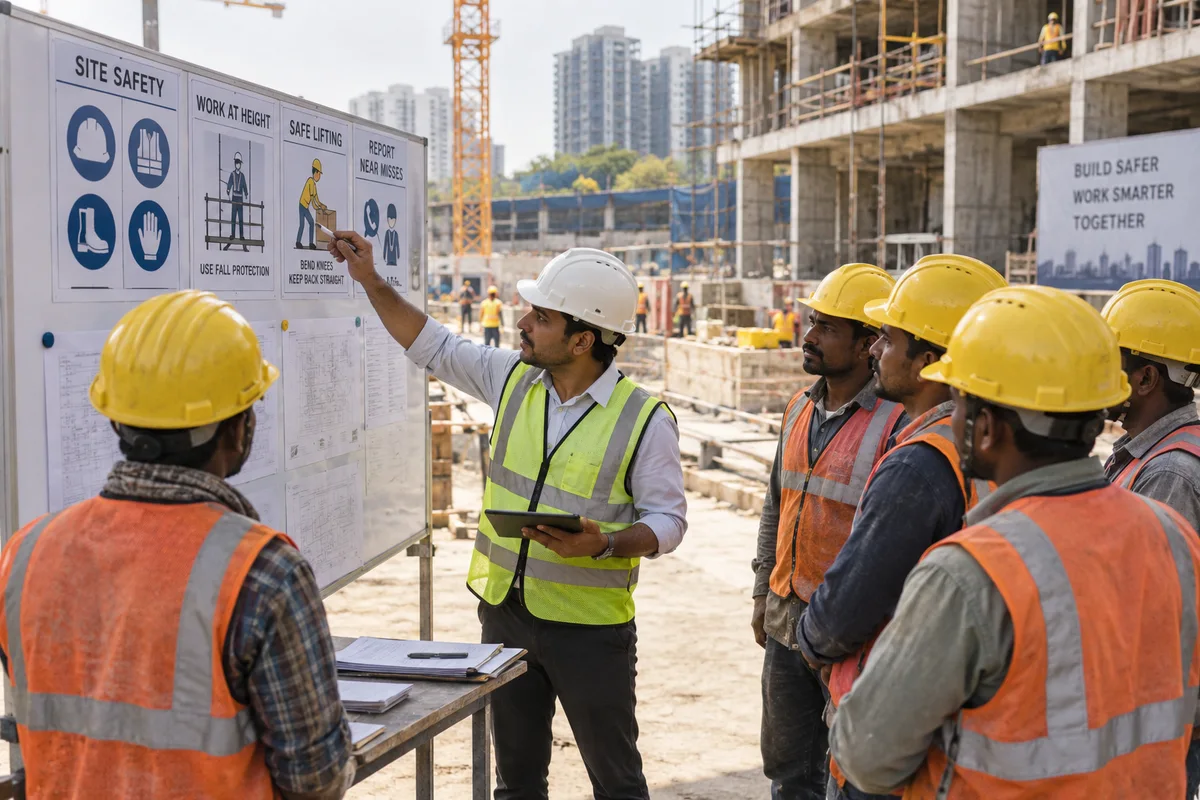
Edge guards, safe access, harnesses and a rescue plan on every floor, checked daily.
Edge guards, safe access, harnesses and a rescue plan on every floor, checked daily. See safety steps.
A jointly signed measurement sheet and a fixed payment date to avoid long arguments.
A jointly signed measurement sheet and a fixed payment date to avoid long arguments. Align with payroll steps.
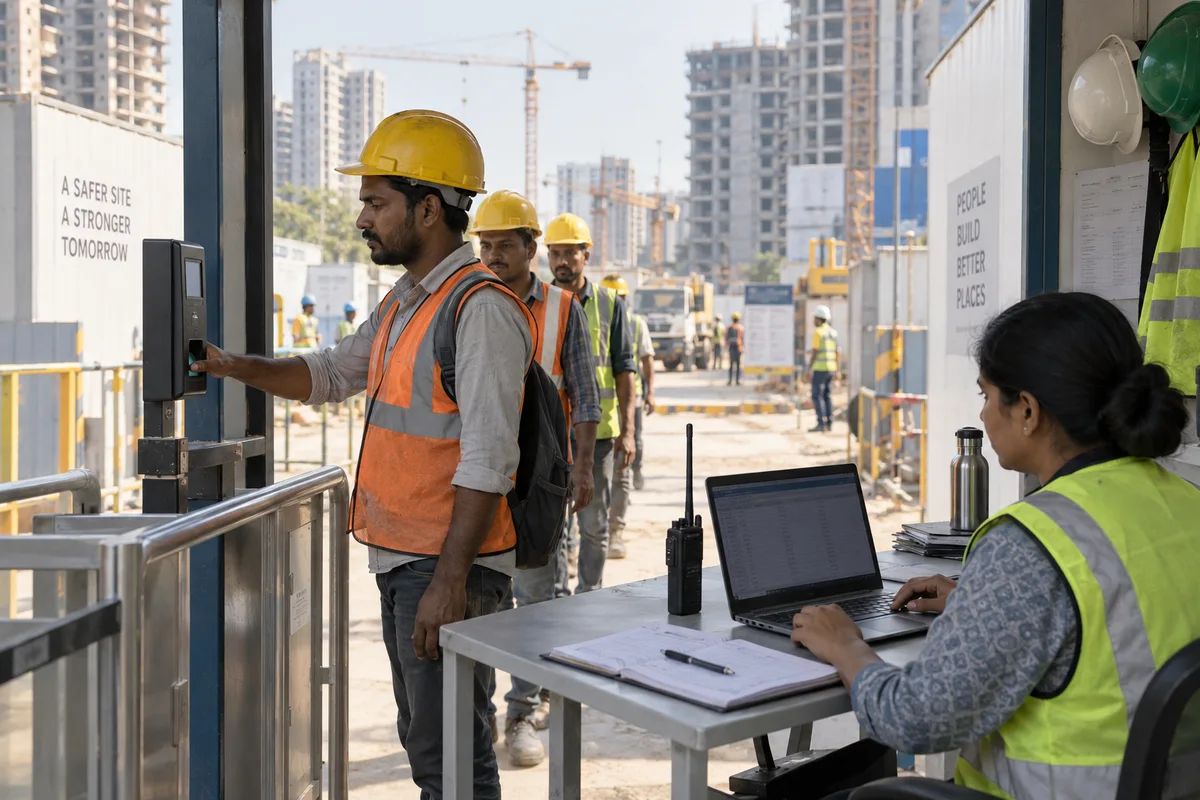
Name, trade, gang, gang leader and dates, kept in employee records, so the company knows who works for it.
Clean water, toilets, ventilation and a basic first aid corner, inspected weekly with a record.
Before changing anything, find out what is true today. These checks take an afternoon and tell you which of the topics above to start with.
Share your requirementsConfirm with a qualified professional. What applies to you depends on your business, your state and your arrangements, and it changes. This page describes practice. It does not state a legal position.
The services below fit this kind of business best. Each starts by recording where you stand, and every later report compares against that. We do not promise outcomes.
Edge protection, scaffold checks and camp conditions for frame work.
Relief shifts and rest rules for long pour days.
Measurement and payment dates that stop disputes from becoming stoppages.
A register of gang members and leaders on site.
Start with a free conversation, or see the paid HR Diagnostic.
Understand the business, its workforce, current processes and HR challenges.
Find the missing, weak, inconsistent or person-dependent processes.
Create the structure, processes, policies, SOPs, dashboards and systems needed.
Help HR and department managers actually adopt the new system.
Digitise repetitive and approval-based workflows where it is worth doing.
Track hiring, attendance, employee cost, performance, training and attrition.
Strengthen the people-management system continuously, not once.
From the GullyHR blog: one on HR in construction and real estate, and one on each of the topics this page points to.

Site engineers, supervisors, crews and sales teams leave for different reasons. How to ask what shaped their decision and act on it between projects.
8 min readRead article

A shift, weekly and monthly safety routine for rubber plants that names who checks platen guards, mill trip bars, autoclave doors, burst-test cages and slings, and who acts on near misses.
7 min readRead article
Every growing company reaches a point where the founder approving everything stops being speed and starts being the bottleneck. Twelve signs it has happened, and what to fix first.
9 min readRead article
Payroll says one joining date, the personal file says another and the manager remembers a third. How to establish a single trustworthy employee record and keep it that way.
7 min readRead articleMore on the GullyHR blog.
Rules depend on law and the work. Confirm with a qualified professional, plan relief shifts, rest and meals in advance and do not rely on endurance.
At least two people, usually the site engineer and a supervisor or quality person, using a written checklist.
Guard edges and openings, provide safe access and harnesses, inspect scaffolds daily and keep a rescue plan.
Measure jointly on a fixed schedule, sign the sheet and pay on a known date.
Record every worker, speak with them directly on safety and pay, and keep a second leader ready.
Clean water, toilets, ventilation, safe cooking arrangements and first aid. Confirm legal requirements with a qualified professional.
All 109 business types in construction and real estate · Find another business type
See all HR topics for construction and real estate, or another industry.
Tell us what is slowing your team down. We’ll help you find a practical way forward, starting with a conversation.