
HR Management Solutions for Construction and Real Estate
Build HR for a workforce that moves — between sites, between projects, and between your payroll and a contractor's.

Not sure what you need? Tell us about your business in six short steps and we will come to the first meeting prepared.
Share your requirementsConstruction and real estate businesses run two different workforces at once: a corporate and sales organisation that behaves like an office, and a site workforce that mobilises, works to a project schedule and demobilises.
- Plan
- Hire
- Onboard
- Manage
- Develop
- Perform
- Engage
- Retain
- Exit
- Improve
When HR processes are weak, you may see
- Site manpower not matching schedule
- Contractor labour with no central record
- Site attendance disputes
- Safety incidents poorly documented
- Sales incentive disputes
- Engineer and site staff turnover
- Mobilisation delays on new projects
- No consolidated headcount across projects
- Statutory records scattered by site
We help construction and real estate businesses build HR that works across corporate, sales and site, and travels from project to project.
Who we work with
Adapted to project type, number of active sites, and the mix of own staff, contractor labour and sales teams.
- Real Estate Developers
- Builders
- Construction Companies
- Infrastructure Companies
- Civil Contractors
- Interior Design Companies
- Architecture Firms
- MEP Contractors
- Property Management Companies
- Facility Management Companies
- Real Estate Agencies
- Property Consultants
Roles we help you hire in construction and real estate
GullyHR runs talent acquisition for permanent roles in construction and real estate. For each role we agree the job description with you, find and screen candidates against it, and support the offer through to joining. Tell us the role and the number of people, and we start there.
- Site supervisors
- Safety officers
- Project managers and site engineers
- Quality checkers
- Helpers and apprentices
- Installation technicians
- Estimators and measurement staff
- Project coordinators
- Crew leaders
- Estimators and site surveyors
- Office and billing staff
- Site supervisors and foremen
- Showroom and sales consultants
- Project managers
- Batching and mixer operators
- Yard supervisors
- Broker and channel partner coordinators
- Accounts and collection staff
- Formwork and shuttering carpenters
- Planning and scheduling engineers
- Camp and transport coordinators
- Project accountants and billing staff
- Site engineers and supervisors
- Customer relations and handover staff
- Planners and quantity surveyors
- Supervisors and foremen
- Storekeepers and site administrators
- Subcontractor gangs
Job descriptions for this sector
We recruit permanent employees. We do not supply contract or temporary staff.
We set up the interview and hiring process for construction and real estate
Every business interviews, but few have a written process that works the same way for every role and every interviewer. GullyHR designs yours, from the role brief to the offer, trains your managers to run it, and can run it for you on the roles you hand us.
1. Role brief and scorecard
We agree what the role must deliver, the must-have and nice-to-have skills, and how each will be scored.
2. Stages and sequence
Screening call, assessment, interview rounds and decision points, sized to the role and the number of people you hire.
3. Question bank and scoring
Structured questions for each role family and a rating guide, so two interviewers judge the same answer the same way.
4. Interviewer readiness
A short briefing for your managers on what to ask, what to avoid and how to give a clear yes or no.
5. Offer and follow-up
Who approves, how the offer is made, and how candidates are kept informed from first call to joining.
Businesses we work with in construction and real estate
The same sector looks different from the inside of each kind of business. These pages are written for one kind at a time.
Construction Materials8About this group →
Real Estate Developer Types7About this group →
Construction Contractors7About this group →
Infrastructure & Engineering Contractors6About this group →
Other business types29
HR topics for construction and real estate
The same areas, written for this sector rather than in general.
HR Strategy and Workforce Planning
How many people, in which roles, by when — and what they will cost.

Organisation Design
Structure, reporting lines and who is allowed to decide what.

Recruitment and Talent Acquisition
Requisition to joining, the same way every time.

Onboarding and Probation
A first day that is the same for the fifth joiner as the first.

Employee Administration
Records, attendance, leave and the day-to-day HR that must simply work.

Compensation, Payroll and Benefits
Salary structure, payroll inputs and a month that closes on time.

Performance Management
Goals, reviews and ratings that hold up in a conversation.

Learning and Development
Training planned from need rather than from the calendar.

Career and Succession Management
Named backups for the roles that cannot be vacant.

Employee Engagement and Experience
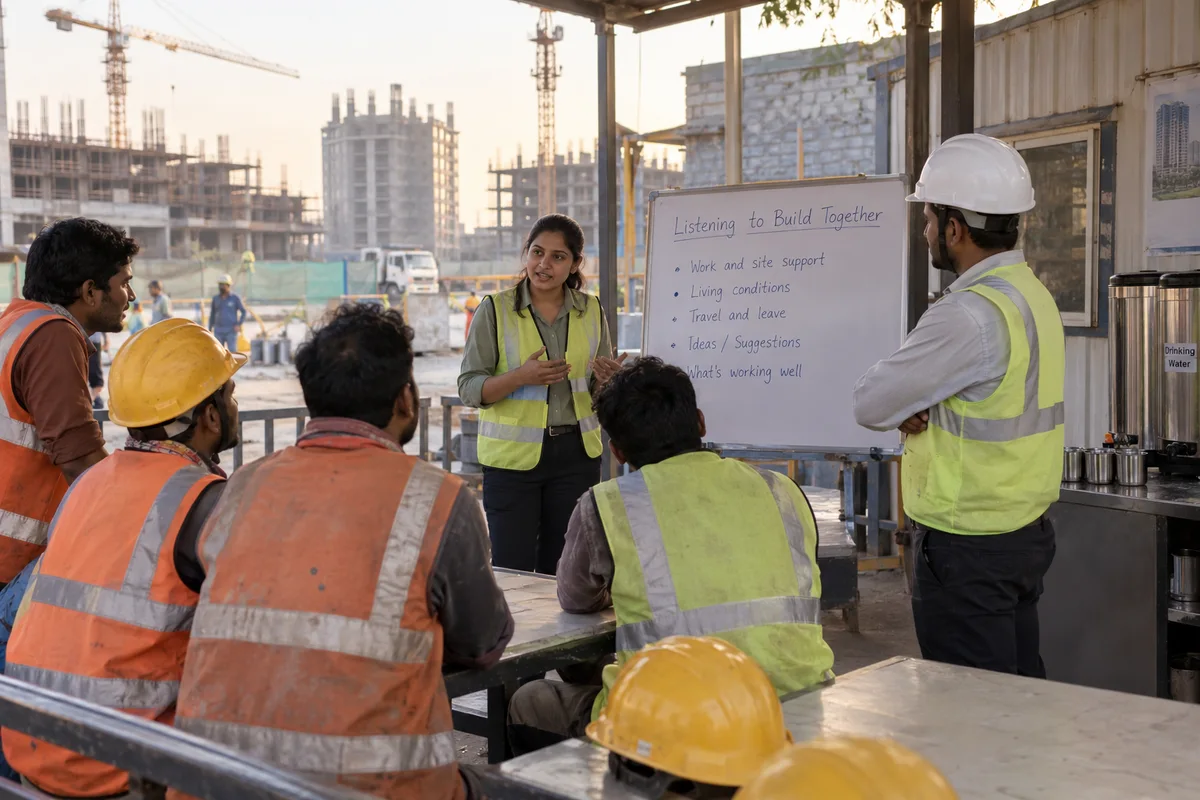
Communication, recognition and the conditions people actually work in.
Employee Relations
Two routes — one for complaints, one for conduct — kept separate.

Policies, Compliance and Governance
Policies a manager can apply, and obligations with owners and dates.

Health, Safety and Wellbeing
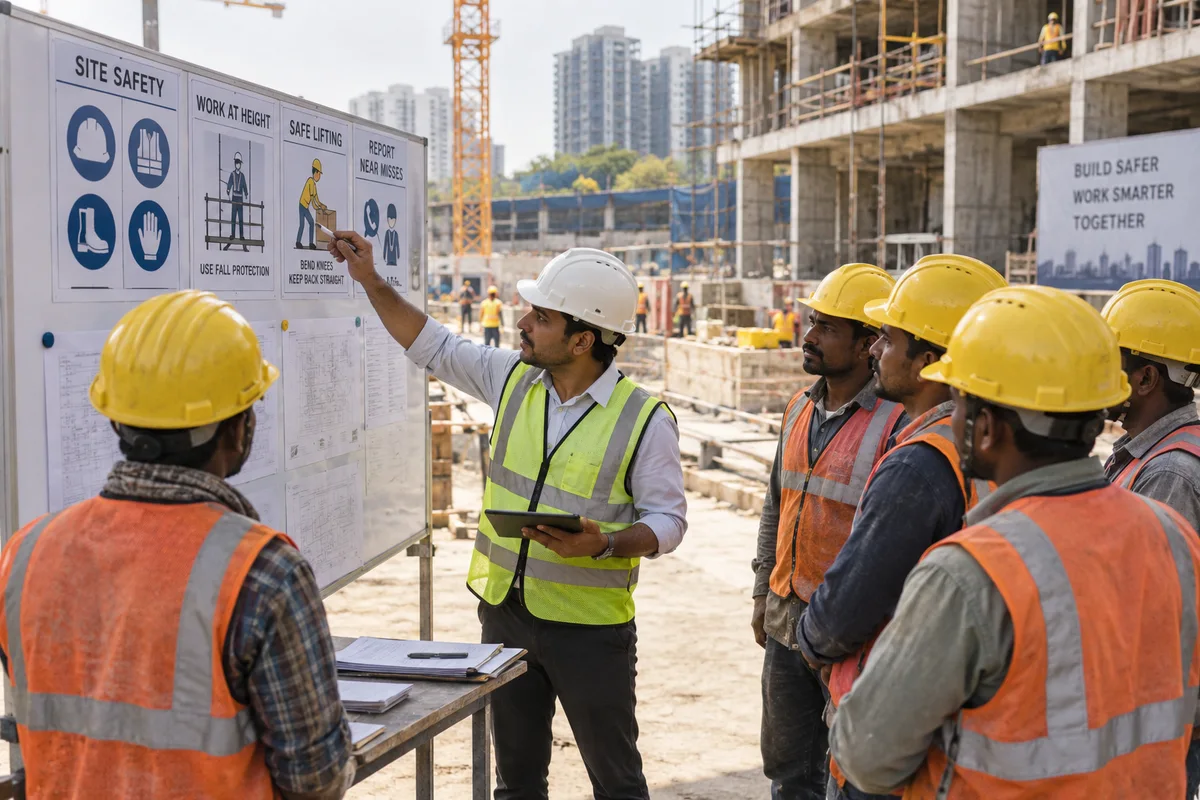
Induction, records, incident reporting and follow-through.
Retention and Attrition Management
Who leaves, when, why — and which of them mattered.

Exit and Alumni Management
Resignation to relieving letter, in a defined order.

HR Technology and Automation
Records that survive people, and approvals that do not queue.

HR Analytics and Management Reporting
A short monthly pack management actually reads.

HR Operations and Governance
An HR function that runs the same way every month.

What the HR system covers
Most businesses take a few of these at a time, in an order decided by what is costing them most. Open any area to see what it includes.
Corporate, Site and Sales Structure
Three organisations under one company.
What this coversHideOpen the full page →
Corporate, Site and Sales Structure
Three organisations under one company.
The commonest structural failure is leaving unsettled whether a site in-charge reports to the project or to a function head at head office.
- Corporate structure
- Project and site structure
- Sales organisation
- Site in-charge authority
- Matrix reporting rules
- Roles and responsibilities
- Approval matrix
- Position levels
Project Manpower Planning
People planned against the schedule, not the budget line.
What this coversHideOpen the full page →
Project Manpower Planning
People planned against the schedule, not the budget line.
- Manpower against project schedule
- Role requirements by project phase
- Mobilisation plan
- Demobilisation plan
- Redeployment between projects
- Peak-requirement planning
- Skill requirements by trade
- Contractor vs own staff mix
- How many people does this phase need?
- When do they mobilise and demobilise?
- Where do they go when this project ends?
Site and Technical Recruitment
Hiring for projects that start and finish.
What this coversHideOpen the full page →
Site and Technical Recruitment
Hiring for projects that start and finish.
Site and technical
- Project Managers
- Site Engineers
- Civil Engineers
- MEP Engineers
- Supervisors
- Surveyors
- Quantity Surveyors
- Safety Officers
- Store Keepers
- Draughtsmen
Corporate and sales
- Sales Managers
- Pre-sales
- Customer Relationship Management
- Architects
- Planning
- Procurement
- Contracts
- Finance
- Legal
- HR
- Admin
- Project-based requisition
- Approval against project budget
- Technical evaluation
- Document and qualification verification
- Offer management
- Mobilisation and joining
- Project-linked deployment
Contractor Labour Records
The largest workforce on site is usually not yours.
What this coversHideOpen the full page →
Contractor Labour Records
The largest workforce on site is usually not yours.
- Contractor register
- Labour register by contractor
- Site headcount by contractor
- Gate entry and attendance
- Induction and safety records
- Age and document verification
- Invoice vs attendance reconciliation
- Contract renewal tracking
- Site-wise consolidation
Site Attendance
Attendance where there is no office and no fixed gate.
What this coversHideOpen the full page →
Site Attendance
Attendance where there is no office and no fixed gate.
- Site attendance capture
- Mobile or biometric marking
- Multi-site attendance
- Missed punch regularisation
- Overtime sanction
- Weekly off and site working
- Leave approval on site
- Attendance cut-off
- Payroll input from sites
Safety and Incident Management
Documented safety on a physical, high-risk workplace.
What this coversHideOpen the full page →
Safety and Incident Management
Documented safety on a physical, high-risk workplace.
- Safety induction for site entry
- Job-specific safety training
- Protective equipment issue and records
- Pre-work safety briefings
- Incident and near-miss reporting
- Accident investigation
- Corrective action tracking
- Safety audit records
- Emergency procedures
Sales Team Incentives
The commission scheme, written down before the dispute.
What this coversHideOpen the full page →
Sales Team Incentives
The commission scheme, written down before the dispute.
Sales incentive disputes in real estate are almost always about a rule nobody wrote: what happens on cancellation, on a shared lead, or when the person has left.
- Incentive scheme design
- Booking vs collection linkage
- Cancellation treatment
- Shared-lead rules
- Payout timing
- Approval route
- Incentive on exit
- Dispute resolution
- Scheme communication
- Salary structure by grade
- Project cost allocation
- Site allowance
- Travel and lodging
- Overtime
- Reimbursements
- Advances and recovery
- Payroll cut-off
- Payslips
- Full-and-final settlement
Performance by Role Type
Different measures for site, sales and corporate.
What this coversHideOpen the full page →
Performance by Role Type
Different measures for site, sales and corporate.
Site
- Schedule adherence
- Quality and rework
- Safety observance
- Manpower control
- Material wastage
- Documentation
Sales
- Bookings
- Collections
- Site visits
- Conversion
- Lead response time
- Customer complaints
Mobilisation and Redeployment
What happens to a team when a project ends.
What this coversHide
Mobilisation and Redeployment
What happens to a team when a project ends.
- Project closure planning
- Redeployment list
- Skills available for next project
- Transfer process and letters
- Relocation support
- Retention of critical site staff
- Demobilisation clearance
- Bench between projects
- Headcount by project and site
- Own staff vs contractor
- Staffing against schedule
- Attendance and absenteeism
- Overtime cost
- Employee cost by project
- Open vacancies
- Attrition by project
- Safety incidents
- Contractor compliance status
- Sales-team productivity
Demobilisation and Site Exit
Releasing people from a site without losing the record.
What this coversHideOpen the full page →
Demobilisation and Site Exit
Releasing people from a site without losing the record.
On a project, exits happen in waves. A phase completes, a crew is released, and the same people may appear on another site next month under a different contractor.
- Site demobilisation list by trade and contractor
- Gate pass cancellation and access revocation
- Tools, tackle and PPE return against issue record
- Labour attendance reconciled before final payment
- Contractor-supplied labour released through the contractor, with record
- Site induction and safety training record closed
- Skill and performance note captured for rehire
- Accommodation and transport arrangements closed
We separate your own payroll from contractor labour explicitly at exit, because this is the point where the distinction most often blurs and where the record matters most later.
- Phase completes
- Demobilisation list
- Assets and access closed
- Payments reconciled
- Rehire note recorded
Engagement on Site
Engagement for people who change site every few months.
What this coversHideOpen the full page →
Engagement on Site
Engagement for people who change site every few months.
A site workforce judges an employer on conditions and predictability rather than on programmes. Most of what matters is decided by the site in-charge, not by head office.
- Site in-charge capability and conduct
- Wage and advance payment reliability
- Accommodation, drinking water, sanitation and canteen standards
- Safety equipment issued without being asked
- Transport between accommodation and site
- Redeployment visibility - what happens when this phase ends
- Grievance route independent of the site supervisor
- Recognition at crew and trade level
Redeployment visibility is the most underrated. Workers who know there is a next site stay; those who assume the work ends with the phase start looking during it.
Careers Across Projects
Progression when every project is temporary.
What this coversHideOpen the full page →
Careers Across Projects
Progression when every project is temporary.
Project-based businesses struggle with careers because the natural unit of employment is the project. People conclude their employment ends with the phase, and act accordingly.
- Trade worker
- Charge hand
- Site supervisor
- Site engineer or in-charge
- Project manager
- Progression criteria independent of any single project
- Redeployment pipeline visible to staff before demobilisation
- Site engineer and project manager succession mapped
- Cross-trade movement where skills allow
- Certification and qualification support tied to the next step
- Retention of key site staff between projects, deliberately funded
Funding a gap between projects for staff you want to keep is cheaper than rehiring and re-inducting, and it is the decision that converts project work into a career.
Systems That Work at Site
Head office software rarely survives contact with a site gate.
What this coversHideOpen the full page →
Systems That Work at Site
Head office software rarely survives contact with a site gate.
Construction HR technology fails when it is designed for an office. The capture has to happen at the gate, in conditions that include dust, sun, poor network and a workforce that changes weekly.
- Site-level attendance capture, offline-capable
- Gate pass and access control linked to the employee record
- Separate handling for own payroll and contractor labour
- Labour headcount by site, trade and contractor, live
- Site induction and safety training records held per person
- Demobilisation lists generated from site records
- Wage and advance reconciliation at site level
- Consolidated project-level reporting without re-entry
The own-payroll versus contractor-labour distinction has to be structural in the system rather than a note in a field, because every meaningful report depends on it.
Site Induction and Gate Access
Nobody works before the induction is recorded.
What this coversHideOpen the full page →
Site Induction and Gate Access
Nobody works before the induction is recorded.
On a construction site, induction is a condition of entry rather than a welcome activity. The record of who was inducted, when, and on what, is part of how the site is run.
- Site safety induction before gate pass is issued
- Gate pass and access linked to the induction record
- PPE issued and recorded against the individual
- Trade skill verification at joining
- Contractor labour inducted to the same standard, recorded separately
- Accommodation and transport arrangements explained
- Wage rate, payment date and advance policy stated clearly
- Probation and confirmation applied to staff roles, not daily labour
Holding contractor labour to the same induction standard, with a separate record, is the practice that most reduces site risk and is most often skipped under schedule pressure.
Site-Level Relations
Where the supervisor is the employer in practice.
What this coversHideOpen the full page →
Site-Level Relations
Where the supervisor is the employer in practice.
On site, the employment relationship is experienced through the site in-charge. Most disputes are about wages, measurement, advances or conditions, and most are resolved or inflamed within a day.
- Grievance route independent of the site supervisor
- Wage, measurement and advance disputes resolved on site, quickly
- Contractor labour issues escalated through the contractor, with record
- Accommodation and facility complaints treated as relations matters
- Consistency across sites so precedent does not vary
- Supervisor capability in early resolution
- Escalation route to project management that workers know about
- Central record of issues by site and trade
A central record by site is what turns individual complaints into a manageable picture. One site producing most of the issues is a supervisor question, and it is invisible without the record.
HR Operations Across Sites
Running a function where the workforce relocates.
What this coversHideOpen the full page →
HR Operations Across Sites
Running a function where the workforce relocates.
Construction HR operations follow projects. Sites open, staff mobilise, and the administrative base has to move with them without losing the record.
- Site-level HR ownership with a named person per project
- Mobilisation and demobilisation as defined processes
- Own payroll and contractor labour administered distinctly
- Wage cycle discipline maintained at every site
- Statutory registers maintained per site as required
- Consolidated project and company headcount reporting
- Records retained centrally, surviving site closure
- Internal review of site HR records on a stated cycle
Records surviving site closure is the operational discipline most often missing. When a site demobilises, its files frequently disperse, and reconstructing them later is not possible.
Retention Between Projects
Where the job ends and the employee decides.
What this coversHideOpen the full page →
Retention Between Projects
Where the job ends and the employee decides.
Project businesses lose people at phase boundaries, and the loss is usually avoidable. Workers who do not know there is a next site assume there is not.
- Redeployment pipeline communicated before demobilisation
- Key site staff retained between projects, deliberately funded
- Attrition measured by site, trade and supervisor
- Wage and advance reliability as the primary lever
- Accommodation and facility standards compared between sites
- Contractor labour retention tracked separately
- Exit reasons captured at demobilisation
- Rehire lists maintained by trade
Funding a short gap for site engineers and supervisors you want to keep is cheaper than rehiring and re-inducting, and it is the decision most often deferred to the site's cost line.
Reporting Across Projects and Sites
Labour numbers that project management can use.
What this coversHideOpen the full page →
Reporting Across Projects and Sites
Labour numbers that project management can use.
Construction people reporting has to serve project management as much as HR, which means it is organised by site and trade rather than by department.
- Headcount by site, trade, and own-versus-contractor split
- Labour cost against project budget by phase
- Attendance and productivity by site and trade
- Attrition and demobilisation tracked by site
- Safety incidents and near misses by site and contractor
- Site induction and training coverage
- Recruitment lead time by trade
- Consolidated project and company reporting
The own-versus-contractor split has to run through every report. Without it, project labour cost and company headcount both become unreliable.
Training a Workforce That Moves
Skills development across sites and contractors.
What this coversHideOpen the full page →
Training a Workforce That Moves
Skills development across sites and contractors.
Construction training has to reach people at site, in short sessions, for a workforce that changes between phases and includes contractor labour you do not employ.
- Site-based delivery in short sessions, not classroom programmes
- Safety training as the mandatory base, recorded per person
- Trade skill development and certification support
- Supervisor and charge-hand capability as the priority investment
- Contractor labour included in safety training, recorded separately
- Training records that follow the worker between sites
- Toolbox talks as the routine delivery mechanism
- Site engineer and project management development
Training records that follow the worker between sites are what prevent the same induction being delivered four times to the same person in a year.
Construction and Real Estate HR maturity assessment
Each area is scored on the same five-level scale, so management can see where HR stands today and what to improve first.
Request a construction HR audit- 1
No defined process
Activities happen differently each time.
- 2
Informal, person dependent
Processes exist but depend heavily on individual employees.
- 3
Documented
Processes and responsibilities are written down.
- 4
Implemented and measured
Processes are followed and performance is measured.
- 5
Automated and continuously improved
Technology-enabled, measured and improved deliberately.
What you receive
Depending on the engagement. Scope and sequence are agreed after the audit.
- HR Audit
- HR Gap Analysis
- HR Improvement Roadmap
- Organisation Structure
- Manpower Plan
- Job Descriptions
- KRA and KPI Framework
- Competency Framework
- Recruitment Process
- Onboarding Framework
- Attendance and Leave Process
- Performance Management System
- Training Framework
- Employee Engagement Framework
- Retention Plan
- HR Policy Manual
- Employee Handbook
- HR SOPs
- HR Forms
- HR Templates
- HR Calendar
- HR Dashboard
- HR MIS
- HR Automation Roadmap
- HRMS Implementation Framework
Our HR transformation approach
- 1
Assess
Understand the business, its workforce, current processes and HR challenges.
- 2
Identify gaps
Find the missing, weak, inconsistent or person-dependent processes.
- 3
Design
Create the structure, processes, policies, SOPs, dashboards and systems needed.
- 4
Implement
Help HR and department managers actually adopt the new system.
- 5
Automate
Digitise repetitive and approval-based workflows where it is worth doing.
- 6
Measure
Track hiring, attendance, employee cost, performance, training and attrition.
- 7
Improve
Strengthen the people-management system continuously, not once.
Build an HR function that supports project delivery
A strong HR function in construction and real estate helps the business:
- Man projects to schedule
- Mobilise new sites faster
- Bring contractor labour into view
- Document safety properly
- Settle sales incentives without dispute
- Retain critical site staff
- Redeploy teams between projects
- See headcount and cost by project
- Standardise across sites
- Support new project starts
Build a better HR system for your projects
Whether you are running one project or several, we can help build HR that works across corporate, sales and site.
Looking for a different sector? See all industries.