


















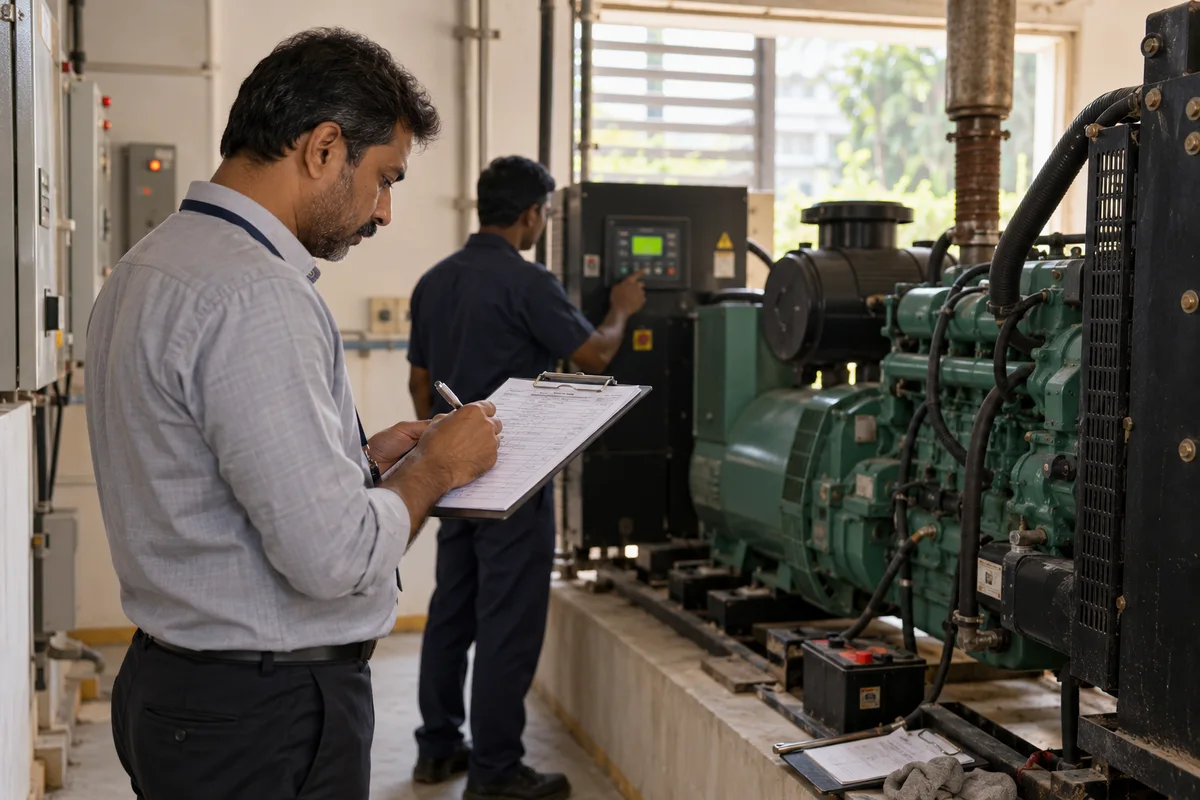

Why facility management staff leave and how to understand why
Housekeeping, technician and security staff at client sites leave for reasons head office rarely hears. How to ask, what to look for and how to act on it.
7 min readRead articleAn AC repair business earns most of its year in a few hot months, when every call is urgent and every technician is booked solid. What the company does about hiring, training and pay before April decides how that season goes.

Not sure what you need? Tell us about your business in six short steps and we will come to the first meeting prepared.
Share your requirementsAn AC repair service sends technicians and helpers to homes, shops and offices for gas top-ups, cooling faults, installation, uninstallation and yearly servicing. Work is thin in winter and heavy from March to June, when callers want someone today. A technician carries tools, a gas cylinder or gauge set and spare parts, and handles the customer at the door. Pay is usually a base plus a share of each job, so the way jobs are given out decides who earns and who leaves. A small shop may run on five technicians, while a larger one runs dozens across a city. The wider facility management sector and the home services hub cover what these businesses share.
These are the places the people side of this kind of business tends to give way. The rest of this page works through them.
HR here has to work for each of these groups, not only the office. The set-up below is written with all of them in mind.
Hiring happens in a rush, helpers are promoted before they are ready, and in October half of them have nothing to do.
One person finds a gas leak in ten minutes and another changes a part that was never faulty. Customers see the difference as repeat visits.
If allocation is informal, favourites get the easy nearby calls and others drive across the city for the same pay.
A share per job rewards speed, so careful diagnosis loses out and a callback eight days later lands on someone else.
Fuel, parking and time between calls are claimed in different ways by different technicians, and nobody can check them.
A good technician learns the customers and the suppliers, then takes both away with a phone and a second-hand scooter.
A rude remark or an unexplained charge reaches the owner on a call, with no record of which technician went.
Start with the topics that matter most here: Recruitment and Talent Acquisition; Performance Management; Learning and Development. Then work through the rest. Each topic is written for facility management, not in general.
Requisition to joining, the same way every time.
Goals, reviews and ratings that hold up in a conversation.
Training planned from need rather than from the calendar.
How many people, in which roles, by when — and what they will cost.
Structure, reporting lines and who is allowed to decide what.
A first day that is the same for the fifth joiner as the first.
Records, attendance, leave and the day-to-day HR that must simply work.
Salary structure, payroll inputs and a month that closes on time.
Named backups for the roles that cannot be vacant.
Communication, recognition and the conditions people actually work in.
Two routes — one for complaints, one for conduct — kept separate.
Policies a manager can apply, and obligations with owners and dates.
Induction, records, incident reporting and follow-through.
Who leaves, when, why — and which of them mattered.
Resignation to relieving letter, in a defined order.
Records that survive people, and approvals that do not queue.
A short monthly pack management actually reads.
An HR function that runs the same way every month.
The pieces a AC repair services business puts in place, in an order that makes each easier. Open any card for the detail.
A ladder from helper to senior technician, with jobs for each rung such as split installation, gas leak tracing and inverter faults.
What this coversHideA ladder from helper to senior technician, with jobs for each rung such as split installation, gas leak tracing and inverter faults. See pay benchmarks for placing pay on it.
A February review of last summer's call volumes by area, so the extra hands are found and trained by March, not borrowed during the peak.
What this coversHideA February review of last summer's call volumes by area, so the extra hands are found and trained by March, not borrowed during the peak. The recruitment process supports it.
Area, call time and technician skill decide the next job, in rules that the coordinator and technicians both know.
What this coversHideArea, call time and technician skill decide the next job, in rules that the coordinator and technicians both know.
A share is paid on jobs closed, with a part held back if the same fault returns within a set period.
What this coversHideA share is paid on jobs closed, with a part held back if the same fault returns within a set period. Performance and incentive design covers the structure.
A single way to record kilometres, parking and waiting, checked weekly by the area supervisor.
What this coversHideA single way to record kilometres, parking and waiting, checked weekly by the area supervisor.
Gas handling, safe work at height and customer talk in one session every March, with names recorded.
What this coversHideGas handling, safe work at height and customer talk in one session every March, with names recorded.
Before changing anything, find out what is true today. These checks take an afternoon and tell you which of the topics above to start with.
Share your requirementsConfirm with a qualified professional. What applies to you depends on your business, your state and your arrangements, and it changes. This page describes practice. It does not state a legal position.
The services below fit this kind of business best. Each starts by recording where you stand, and every later report compares against that. We do not promise outcomes.
A first-week routine so a seasonal technician is useful by the first hot week and knows how to treat a customer.
Visit-based attendance, leave planning and cover when a technician is off during peak weeks.
Job-linked incentives that reward correct fixes and do not punish an honest report of a callback.
A ladder that moves helpers to technicians and gives senior technicians a reason to stay.
Start with a free conversation, or see the paid HR Diagnostic.
Understand the business, its workforce, current processes and HR challenges.
Find the missing, weak, inconsistent or person-dependent processes.
Create the structure, processes, policies, SOPs, dashboards and systems needed.
Help HR and department managers actually adopt the new system.
Digitise repetitive and approval-based workflows where it is worth doing.
Track hiring, attendance, employee cost, performance, training and attrition.
Strengthen the people-management system continuously, not once.
From the GullyHR blog: one on HR in facility management, and one on each of the topics this page points to.

Housekeeping, technician and security staff at client sites leave for reasons head office rarely hears. How to ask, what to look for and how to act on it.
7 min readRead article

Sources beyond the neighbouring gate for setters, turners, inspectors and leak test hands, plus a one-hour bench trial built from your own rejected parts.
7 min readRead article
Measures that show how reactor, console, lab and gantry staff are really doing, the ones that mislead or bury near misses, and a monthly sheet an in-charge can run in twenty minutes.
7 min readRead article
Plastics training dies when it waits for a free Saturday. Tie it to mould changes, purges and cold starts, use one-point lessons and a visible skill ladder, and protect it in peak months.
7 min readRead articleMore on the GullyHR blog.
Start well before the first heat, because training takes weeks. Look back at last year's call numbers by month, decide the extra hands you need and bring them in while work is still slow.
Most firms use both: a base that covers living costs and a share that rewards completed jobs. Keep the share simple, pay it on time and hold part back for repeat faults.
You cannot stop everyone. Pay for skill, give senior people a team to lead and keep customer contact in the company, with a booking record, so loyalty is to the firm and not just the person.
Safe handling of tools and gas, how to read the fault card, how to speak to a customer at the door and how to close a job in writing. Sign each off after watching it done.
Allocate by area, skill and timing with the same rules for everyone, and let technicians see the day's plan. Fairness is mostly about being open about the rule, not about equal numbers.
We would ask for last summer's call and callback numbers, how many technicians you had by month and how jobs were given out. A skills ladder with a clear job-allocation rule is a natural first piece, and scope goes into writing for your sign-off.
All 7 business types in home services & maintenance · Find another business type
See all HR topics for facility management, or another industry.
Tell us what is slowing your team down. We’ll help you find a practical way forward, starting with a conversation.
