










Industries
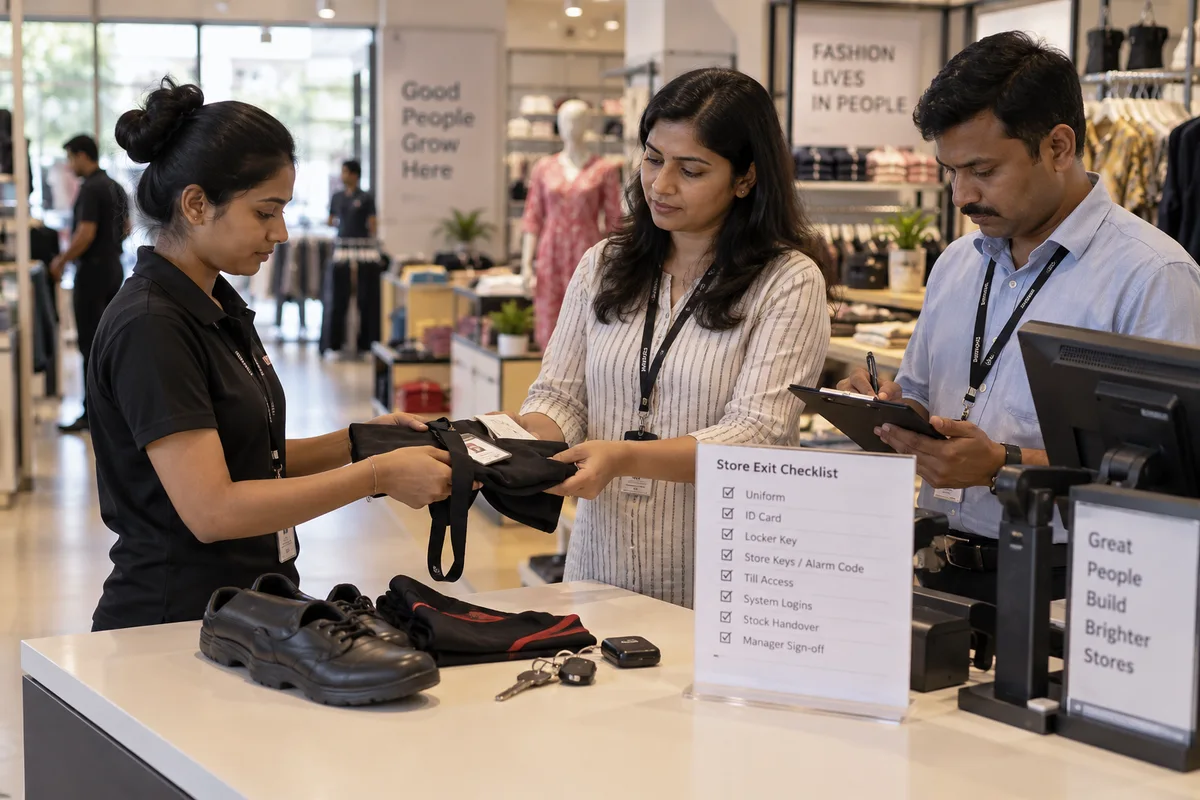
Why retail employees leave and how to understand why
Why store staff and managers leave retail jobs, and how to ask about rosters, weekends, targets and incentives in an exit conversation that leads to action.
7 min readRead articleA costume and clothing rental shop hires out wedding wear, party outfits, stage costumes and festive dress by the day. Staff fit customers, track every garment out and back, and send pieces through cleaning and repair before the next booking.

Not sure what you need? Tell us about your business in six short steps and we will come to the first meeting prepared.
Share your requirementsA rental shop earns by putting the same garment on many bodies, so its working life is a cycle of booking, fitting, handing out, taking back, cleaning, mending and returning to the rack. Staff include fitting and sales assistants, a person who keeps the booking diary, a tailor for alterations, cleaners or a link with a dry-cleaning vendor, and a packer for deliveries. Peaks come with wedding seasons, school annual days, festivals and fancy-dress events, often on the same dates for many customers. Each garment is costly and delicate, and a missing item or an unreturned lehenga is a real loss. Customers expect quick, kind fitting and accurate dates. For the wider sector picture, read HR for retail.
These are the places the people side of this kind of business tends to give way. The rest of this page works through them.
HR here has to work for each of these groups, not only the office. The set-up below is written with all of them in mind.
GullyHR runs talent acquisition for permanent roles in costume and clothing rental shops. For each role we agree the job description with you, find and screen candidates against it, and support the offer through to joining. Tell us the role and the number of people, and we start there.
We recruit permanent employees. We do not supply contract or temporary staff.
Every business interviews, but few have a written process that works the same way for every role and every interviewer. GullyHR designs yours, from the role brief to the offer, trains your managers to run it, and can run it for you on the roles you hand us.
We agree what the role must deliver, the must-have and nice-to-have skills, and how each will be scored.
Screening call, assessment, interview rounds and decision points, sized to the role and the number of people you hire.
Structured questions for each role family and a rating guide, so two interviewers judge the same answer the same way.
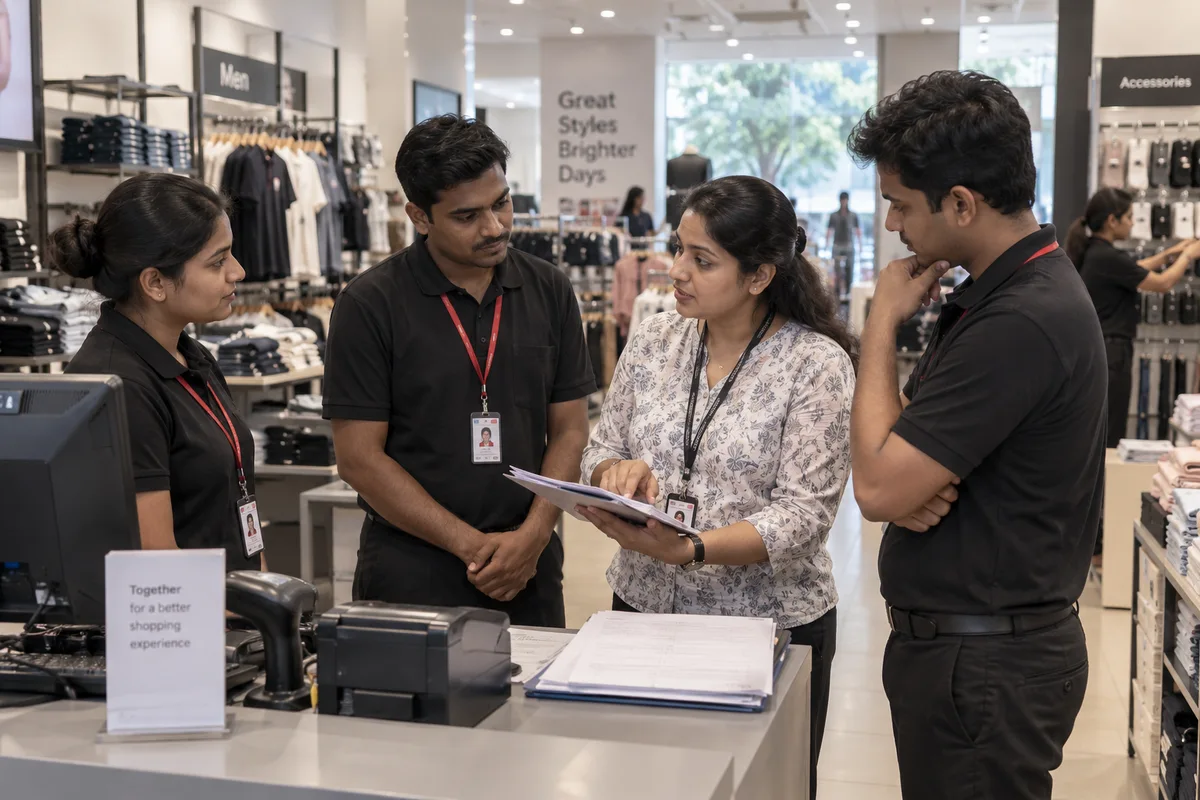
A short briefing for your managers on what to ask, what to avoid and how to give a clear yes or no.
Who approves, how the offer is made, and how candidates are kept informed from first call to joining.
A costume that is not returned, or returns torn or stained, is a loss. Without a check at handover and return, staff are blamed for what they cannot prove.
Double bookings, wrong dates and missed fittings come from a diary kept on paper and chat messages. One slip at a wedding date ruins a customer's day.
A single skilled tailor handles fit changes between hires. If he is absent in peak, garments stack up and bookings are at risk.
Whether a stain was there before is a matter of memory. Without photos or notes at handover, quarrels between staff and customers are common.
Many customers want the same weekend. Staff work long hours, cleaning and pressing queues build, and errors rise when everyone is tired.
Garments travel in vehicles and bags. Late or missed pick-ups mean the next booking cannot be met, and the delivery person takes the blame.
Outsourced cleaning or in-house pressing can shrink or damage costly fabric. Nobody tracks which batch or person caused a fault.
Deposit, damage charge and late return fines are difficult talks, and young assistants are left to handle them without a clear rule.
Start with the topics that matter most here: HR Operations and Governance; Employee Relations; Policies, Compliance and Governance. Then work through the rest. Each topic is written for retail, not in general.
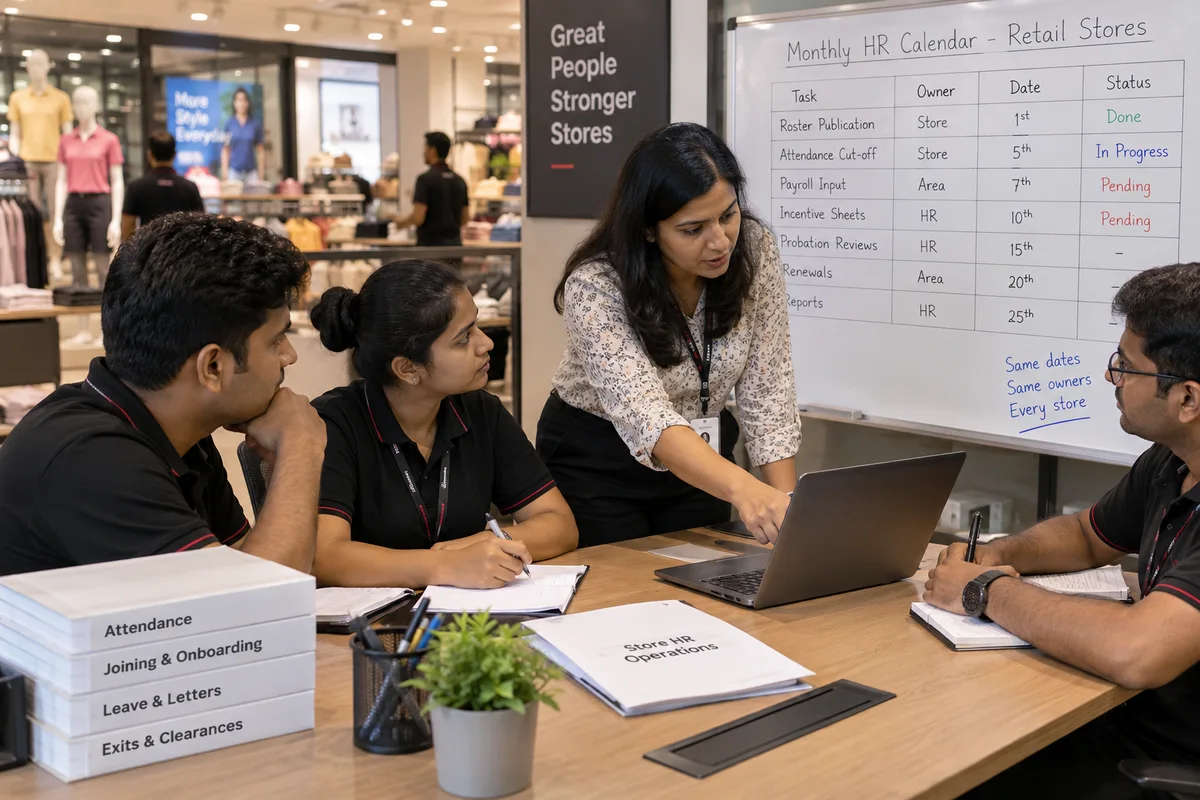
An HR function that runs the same way every month.
Two routes — one for complaints, one for conduct — kept separate.
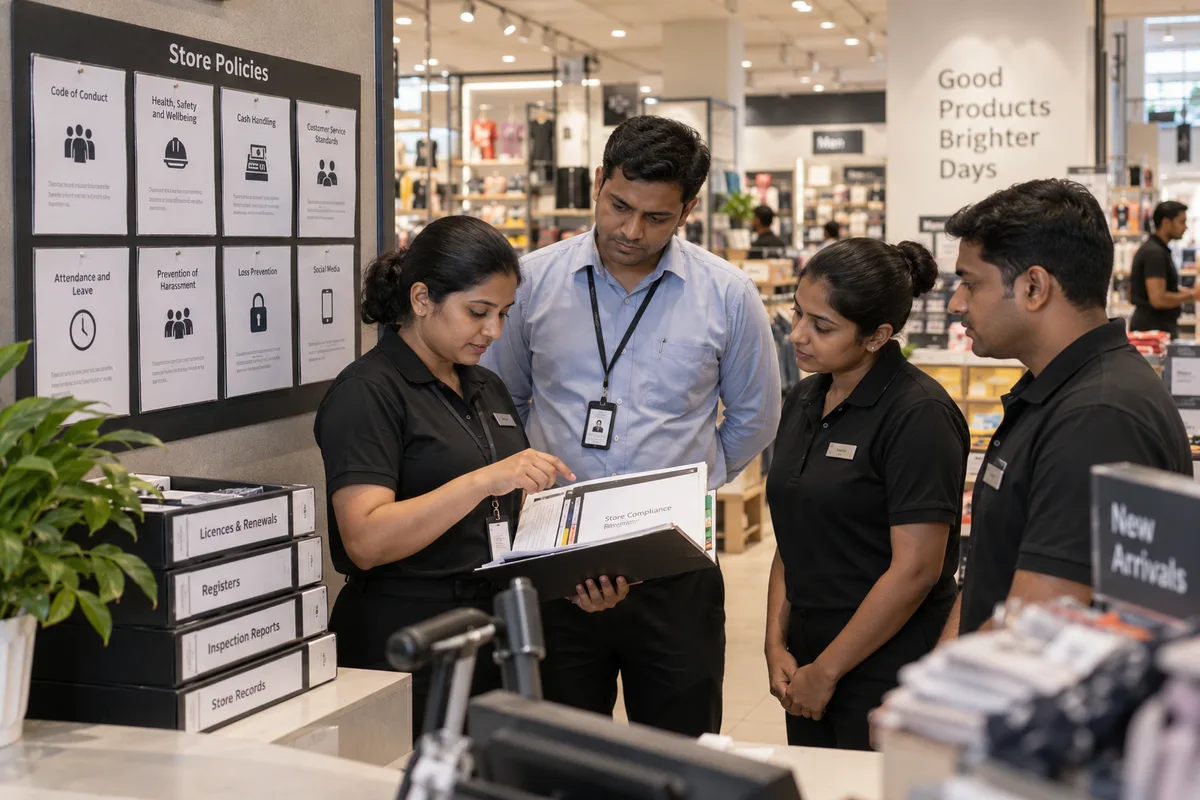
Policies a manager can apply, and obligations with owners and dates.
How many people, in which roles, by when — and what they will cost.
Structure, reporting lines and who is allowed to decide what.
Requisition to joining, the same way every time.
A first day that is the same for the fifth joiner as the first.
Records, attendance, leave and the day-to-day HR that must simply work.
Salary structure, payroll inputs and a month that closes on time.
Goals, reviews and ratings that hold up in a conversation.
Training planned from need rather than from the calendar.
Named backups for the roles that cannot be vacant.
Communication, recognition and the conditions people actually work in.
Induction, records, incident reporting and follow-through.
Who leaves, when, why — and which of them mattered.
Resignation to relieving letter, in a defined order.
Records that survive people, and approvals that do not queue.
A short monthly pack management actually reads.
The pieces a costume and clothing rental shops business puts in place, in an order that makes each easier. Open any card for the detail.
A simple tag and photo record per garment, signed off by staff and customer, so damage claims rest on facts.
A simple tag and photo record per garment, signed off by staff and customer, so damage claims rest on facts. See the hr documentation process.
A shared diary or register with a named owner, checked each evening against the next day's fittings and returns.
A shared diary or register with a named owner, checked each evening against the next day's fittings and returns.
Share the common alteration jobs and tools so one absence does not stall the shop.
Share the common alteration jobs and tools so one absence does not stall the shop.
Deposit, damage and late fees written and displayed, with a named person to decide exceptions, so junior staff do not argue alone.
Deposit, damage and late fees written and displayed, with a named person to decide exceptions, so junior staff do not argue alone.
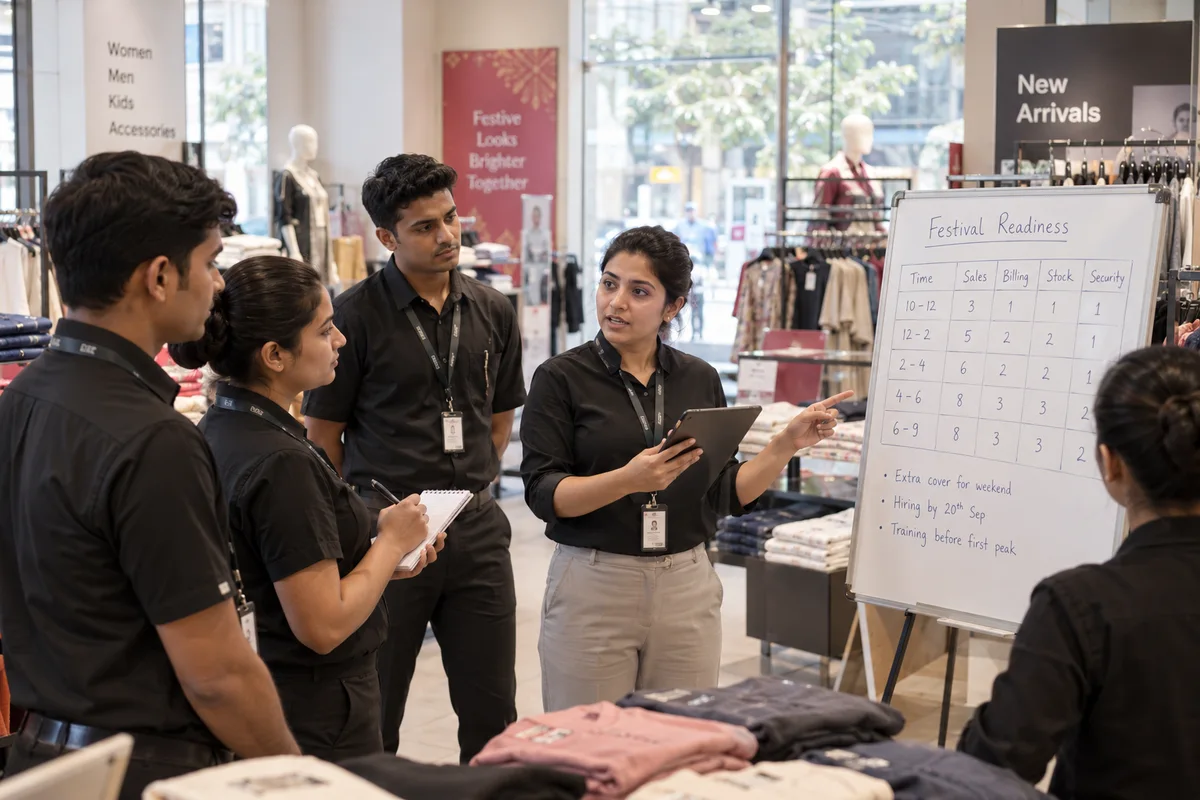
Plan peak weekends early with extra hands for pressing and packing, and set limits on long days.
Plan peak weekends early with extra hands for pressing and packing, and set limits on long days. The attendance, shift and leave process covers this.
Note which garments go to which cleaner and what comes back damaged, so quality is followed up.
Note which garments go to which cleaner and what comes back damaged, so quality is followed up. The learning and development process can cover handling skills.
Before changing anything, find out what is true today. These checks take an afternoon and tell you which of the topics above to start with.
Share your requirementsConfirm with a qualified professional. What applies to you depends on your business, your state and your arrangements, and it changes. This page describes practice. It does not state a legal position.
The services below fit this kind of business best. Each starts by recording where you stand, and every later report compares against that. We do not promise outcomes.
Condition tags and booking records that settle disputes with facts.
Rosters for wedding-season weekends and quiet weeks.
Handling, fitting and cross-training so one absence does not stall the shop.
A fair way to handle lost garments, cash gaps and customer complaints.
Start with a free conversation, or see the paid HR Diagnostic.
Understand the business, its workforce, current processes and HR challenges.
Find the missing, weak, inconsistent or person-dependent processes.
Create the structure, processes, policies, SOPs, dashboards and systems needed.
Help HR and department managers actually adopt the new system.
Digitise repetitive and approval-based workflows where it is worth doing.
Track hiring, attendance, employee cost, performance, training and attrition.
Strengthen the people-management system continuously, not once.
From the GullyHR blog: one on HR in retail, and one on each of the topics this page points to.
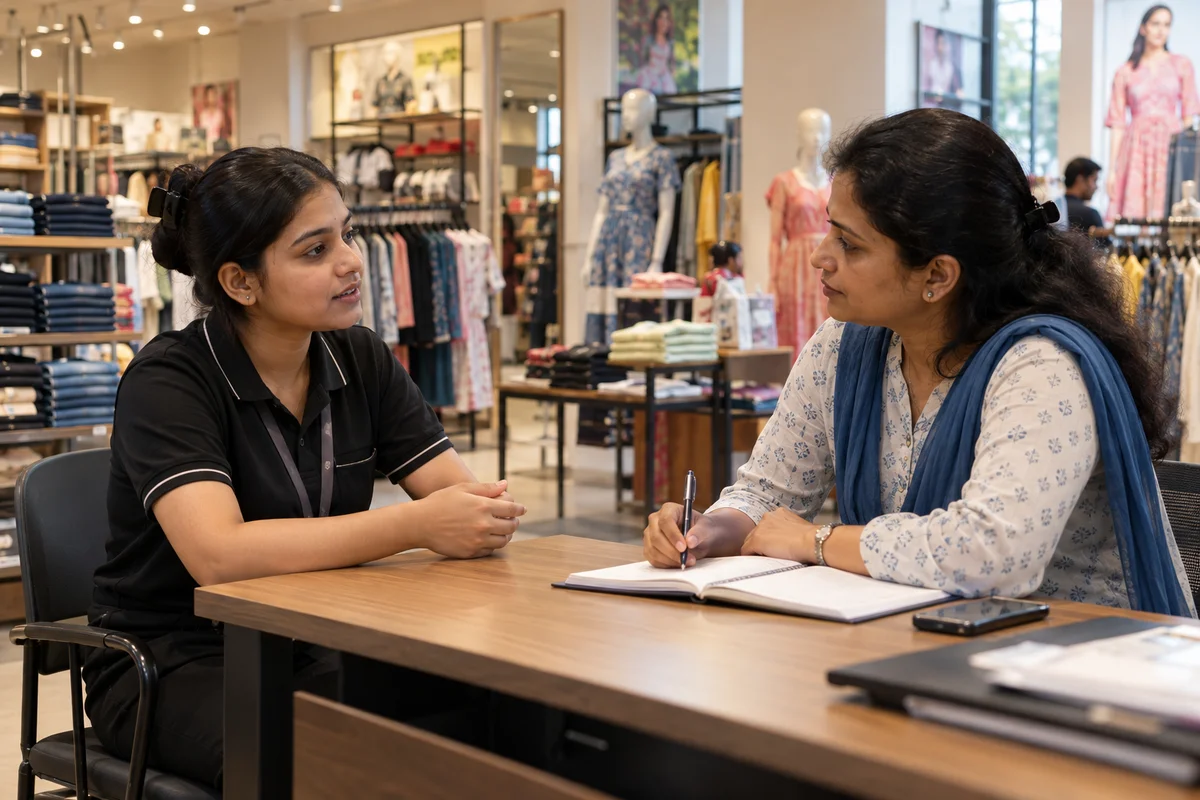
Why store staff and managers leave retail jobs, and how to ask about rosters, weekends, targets and incentives in an exit conversation that leads to action.
7 min readRead article
Every growing company reaches a point where the founder approving everything stops being speed and starts being the bottleneck. Twelve signs it has happened, and what to fix first.
9 min readRead article
An employee brings you a complaint about their supervisor. What happens next should not depend on who is in the room. A grievance procedure a small company can actually run.
8 min readRead article
How an India head can sort a global parent's HR policies into apply, adapt or replace, write an India addendum with advisers, and keep headquarters on side.
7 min readRead articleMore on the GullyHR blog.
Record condition at handover, with photos where possible, and have the customer sign. Then a dispute is settled by what was seen, not by who argues harder.
Plan for it. Cross-train a second person on common jobs and keep a trusted outside tailor on call. Do not leave the whole season on one man.
Use one shared diary, a named owner and a nightly check. Avoid separate notes in chat messages that do not match.
The owner or manager, in a written rule. Junior staff should apply it and pass exceptions upward.
Plan the roster early, cap very long days and give some rest after the peak. Fair treatment in the rush helps retention more than a bonus later.
We would look at how garments are tracked, how the diary is kept and how disputes are decided. A good first job is a handover tag and a written charge rule. Wider work is scoped with you and put in writing before it starts.
All 128 business types in retail · Find another business type
See all HR topics for retail, or another industry.
Tell us what is slowing your team down. We’ll help you find a practical way forward, starting with a conversation.