
HR Management Solutions for Retail
Build HR around store hours, frontline turnover and the manager who is also selling.

Not sure what you need? Tell us about your business in six short steps and we will come to the first meeting prepared.
Share your requirementsRetail HR is decided at store level by a manager who is also running the floor. Sales staff, cashiers, stock and visual teams, supervisors and area managers turn over quickly, and a gap on a Saturday costs the day.
- Plan
- Hire
- Onboard
- Manage
- Develop
- Perform
- Engage
- Retain
- Exit
- Improve
When HR processes are weak, you may see
- High frontline attrition
- Store roster gaps at peak hours
- Slow replacement hiring
- Attendance across many stores
- Inconsistent induction by store
- Incentive disputes
- Shrinkage and conduct issues
- Store manager capability gaps
- No central employee record
- Seasonal staffing pressure
We help retail businesses build hiring, rostering and store-level people processes that work the same way in every outlet.
Who we work with
Adapted to store count, format, staffing model and whether outlets are owned or franchised.
- Supermarkets
- Hypermarkets
- Department Stores
- Fashion Retail
- Jewellery Stores
- Electronics Stores
- Furniture Stores
- Mobile Stores
- Grocery Stores
- Pharmacy Retail
- Optical Stores
- Automobile Dealerships
- Franchise Businesses
- Multi-Location Retail Chains
Roles we help you hire in retail
GullyHR runs talent acquisition for permanent roles in retail. For each role we agree the job description with you, find and screen candidates against it, and support the offer through to joining. Tell us the role and the number of people, and we start there.
- Store managers
- Delivery drivers and helpers
- Assistant store managers
- Showroom managers
- Visual merchandisers
- Branch managers
- Collection executives
- Counter and billing staff
- Cashiers and billing staff
- Sales associates
- Counter salesmen
- Billing and accounts staff
- Delivery drivers and loaders
- Billing and counter staff
- Loaders and unloaders
- Billing and cash counter staff
- Area managers
- Delivery riders
- Stock and receiving staff
- Showroom sales consultants
- Assembly and installation carpenters
- After-sales and complaint staff
- Installation technicians
- Brand promoters
- Cluster managers
- Delivery riders and drivers
- Counter sales executives
- Store owner or manager
Job descriptions for this sector
We recruit permanent employees. We do not supply contract or temporary staff.
We set up the interview and hiring process for retail
Every business interviews, but few have a written process that works the same way for every role and every interviewer. GullyHR designs yours, from the role brief to the offer, trains your managers to run it, and can run it for you on the roles you hand us.
1. Role brief and scorecard
We agree what the role must deliver, the must-have and nice-to-have skills, and how each will be scored.
2. Stages and sequence
Screening call, assessment, interview rounds and decision points, sized to the role and the number of people you hire.
3. Question bank and scoring
Structured questions for each role family and a rating guide, so two interviewers judge the same answer the same way.
4. Interviewer readiness
A short briefing for your managers on what to ask, what to avoid and how to give a clear yes or no.
5. Offer and follow-up
Who approves, how the offer is made, and how candidates are kept informed from first call to joining.
Businesses we work with in retail
The same sector looks different from the inside of each kind of business. These pages are written for one kind at a time.
Electronics & Mobile Retail6About this group →
Wholesale & Distribution7About this group →
Specialty Retail9About this group →
Fashion & Apparel Retail7About this group →
Grocery & Supermarkets7About this group →
Jewellery Retail3About this group →
Furniture & Home Improvement Retail7About this group →
Coworking, Franchise & Multi-Location Businesses7About this group →
Other business types13
HR topics for retail
The same areas, written for this sector rather than in general.
HR Strategy and Workforce Planning
How many people, in which roles, by when — and what they will cost.
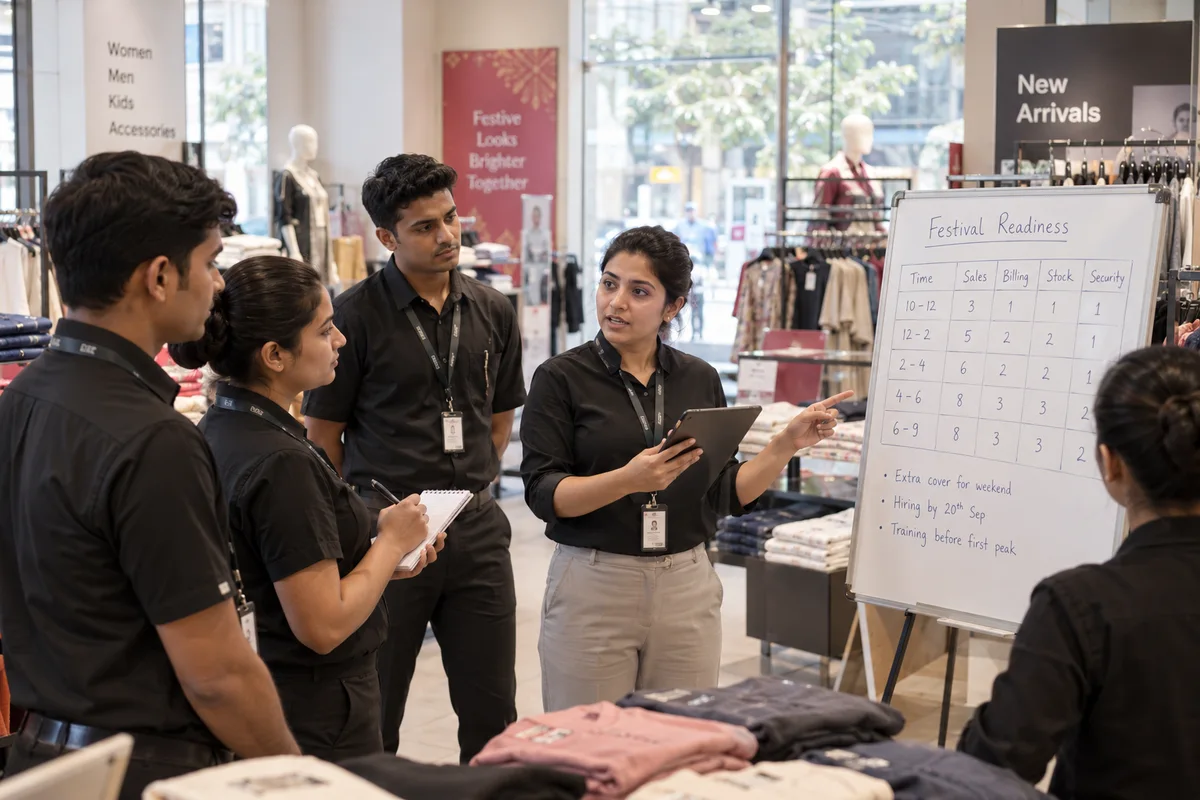
Organisation Design
Structure, reporting lines and who is allowed to decide what.

Recruitment and Talent Acquisition
Requisition to joining, the same way every time.

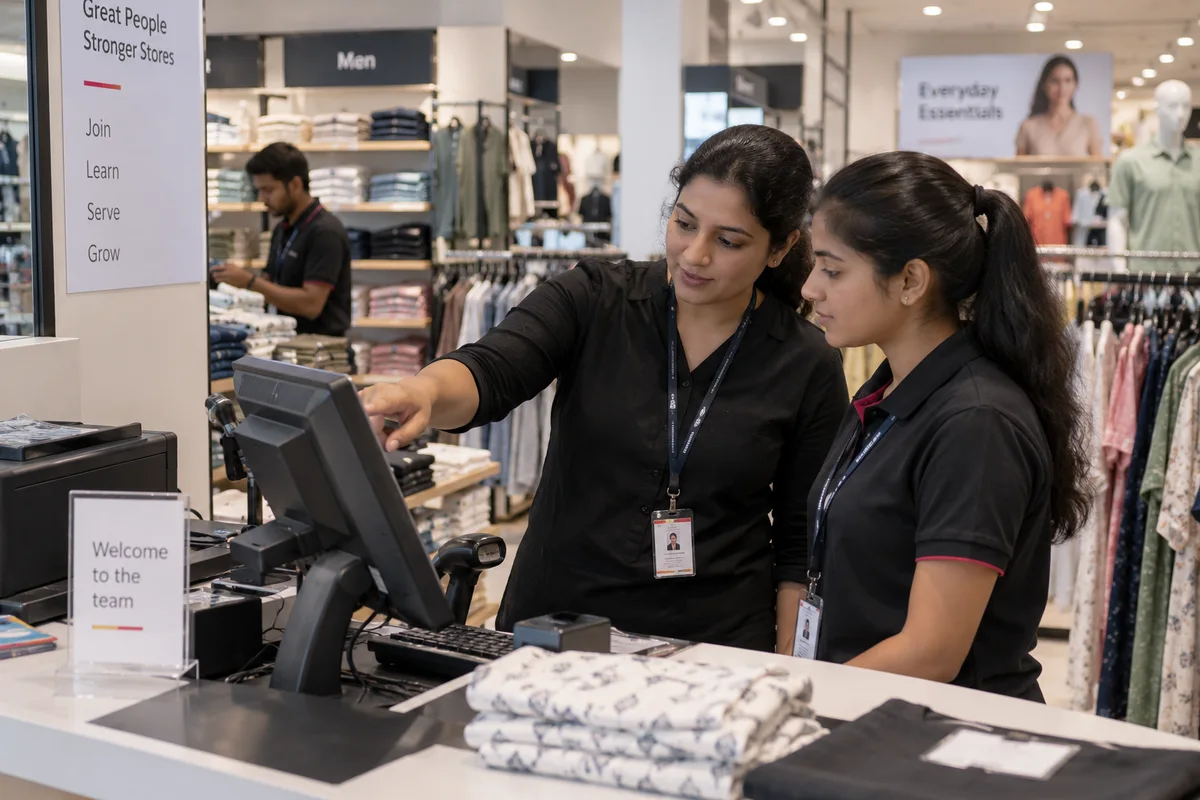
Onboarding and Probation
A first day that is the same for the fifth joiner as the first.
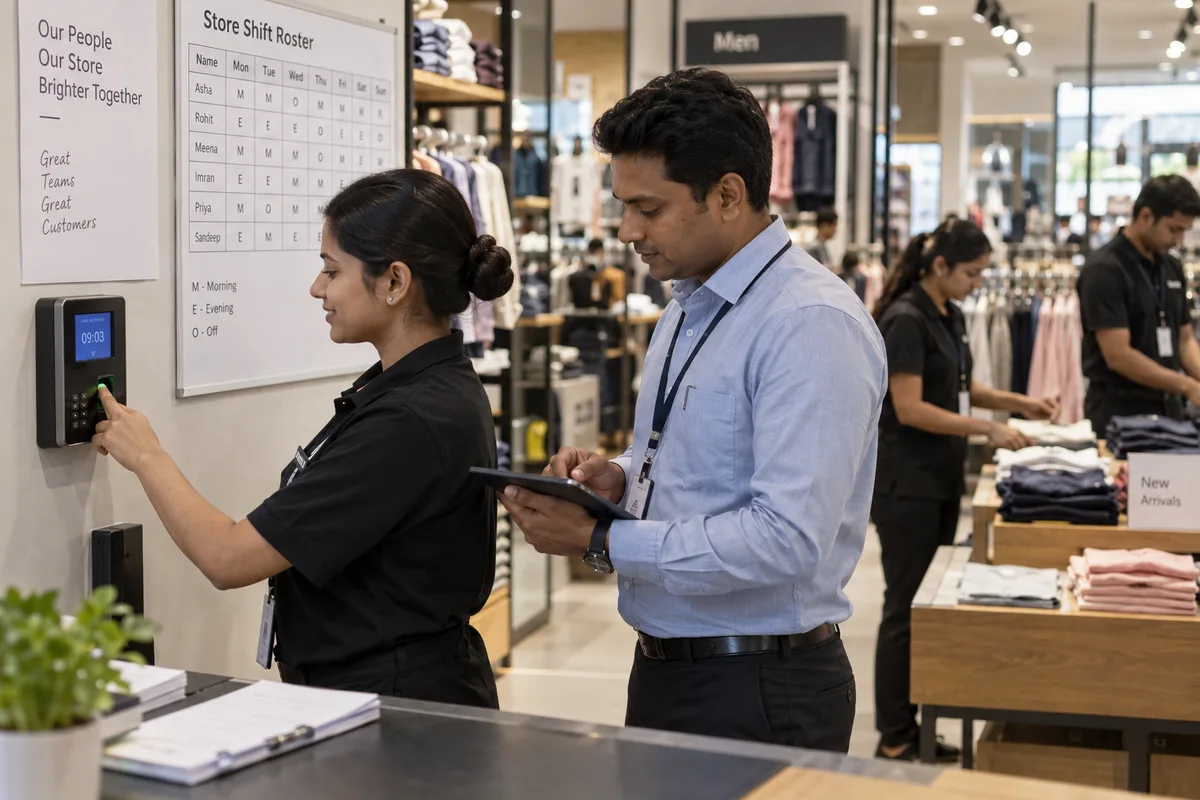
Employee Administration
Records, attendance, leave and the day-to-day HR that must simply work.
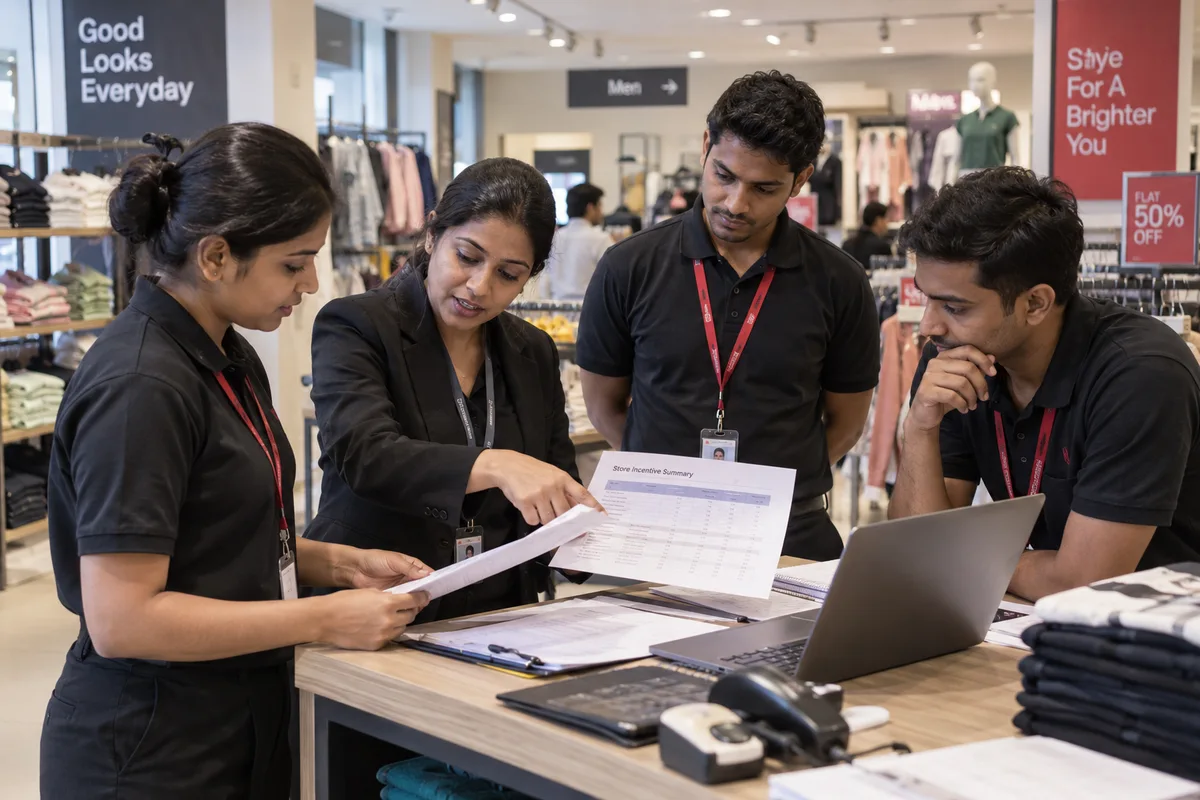
Compensation, Payroll and Benefits
Salary structure, payroll inputs and a month that closes on time.
Performance Management
Goals, reviews and ratings that hold up in a conversation.

Learning and Development
Training planned from need rather than from the calendar.
Career and Succession Management
Named backups for the roles that cannot be vacant.

Employee Engagement and Experience
Communication, recognition and the conditions people actually work in.

Employee Relations
Two routes — one for complaints, one for conduct — kept separate.
Policies, Compliance and Governance
Policies a manager can apply, and obligations with owners and dates.
Health, Safety and Wellbeing
Induction, records, incident reporting and follow-through.
Retention and Attrition Management
Who leaves, when, why — and which of them mattered.
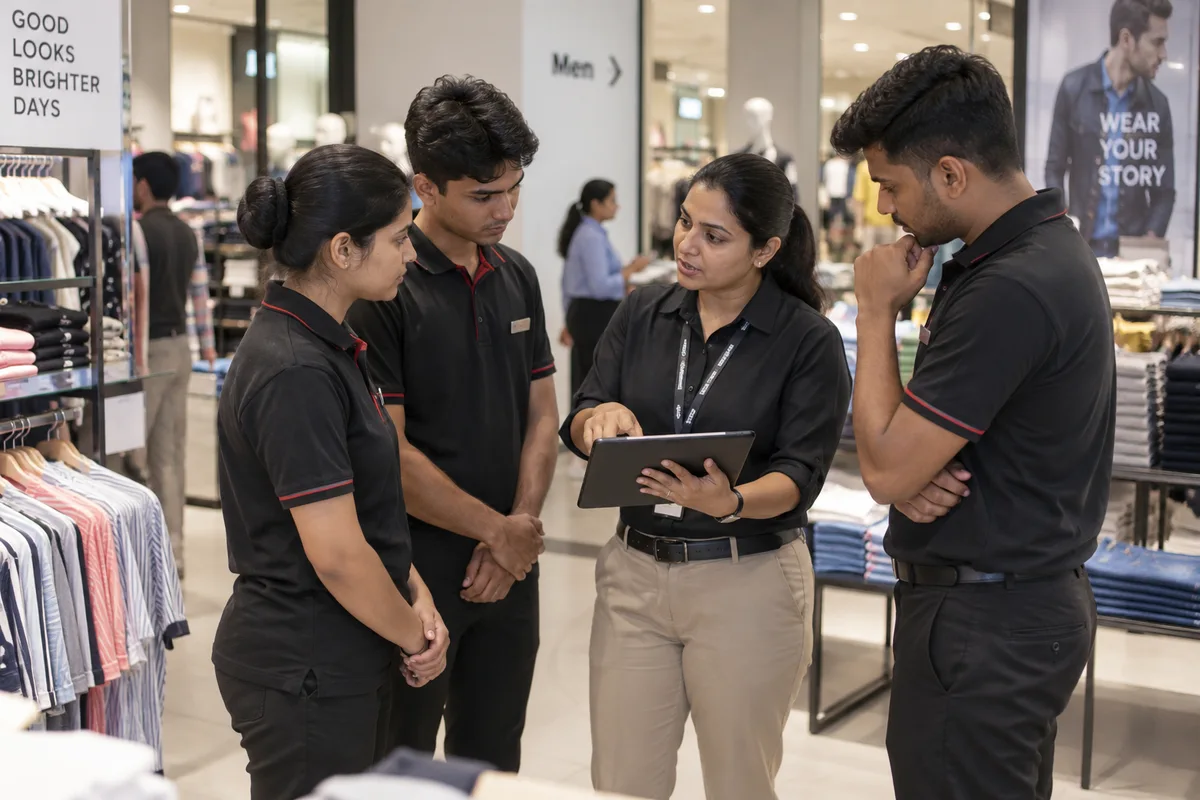
Exit and Alumni Management
Resignation to relieving letter, in a defined order.
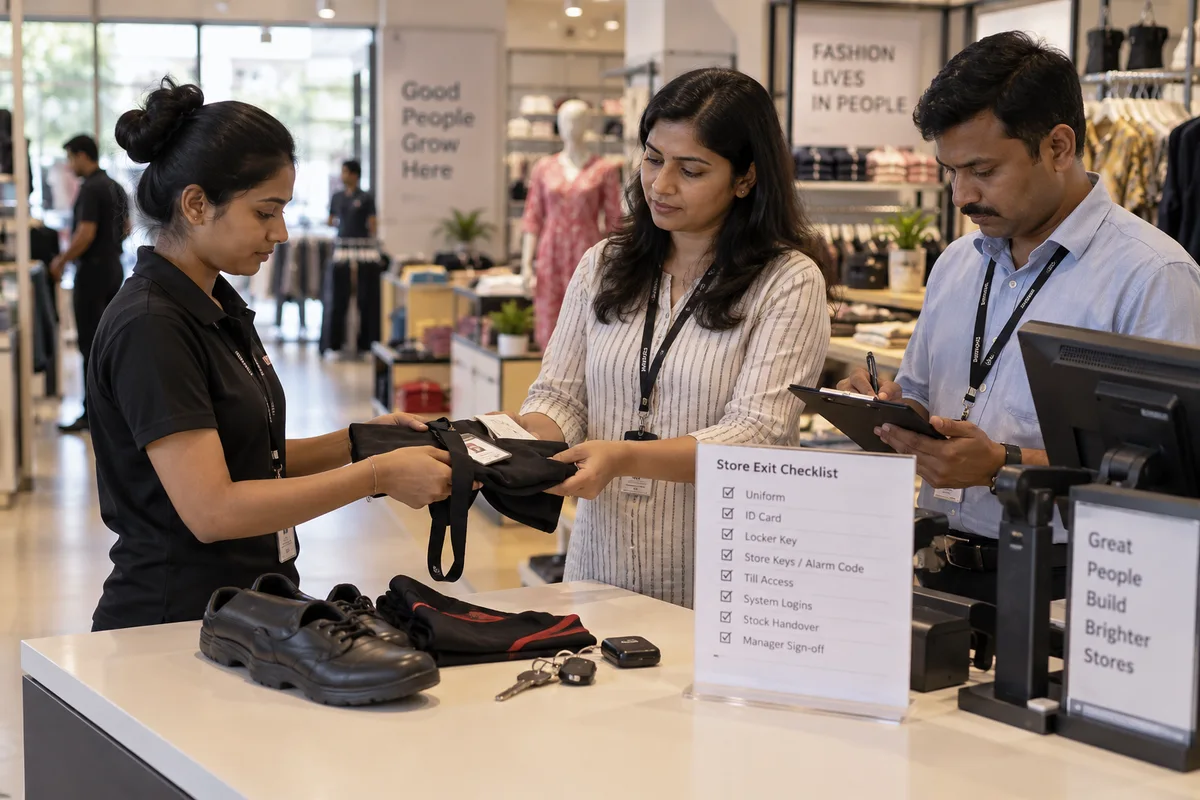
HR Technology and Automation
Records that survive people, and approvals that do not queue.

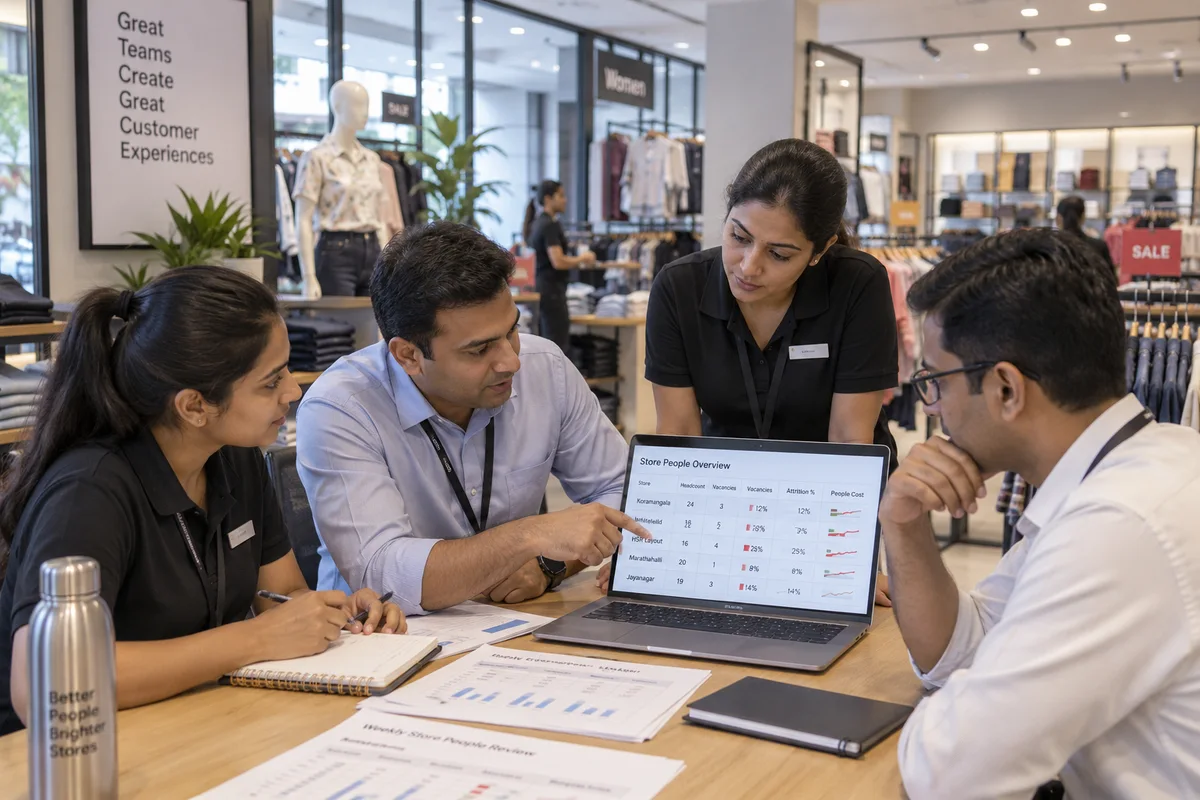
HR Analytics and Management Reporting
A short monthly pack management actually reads.
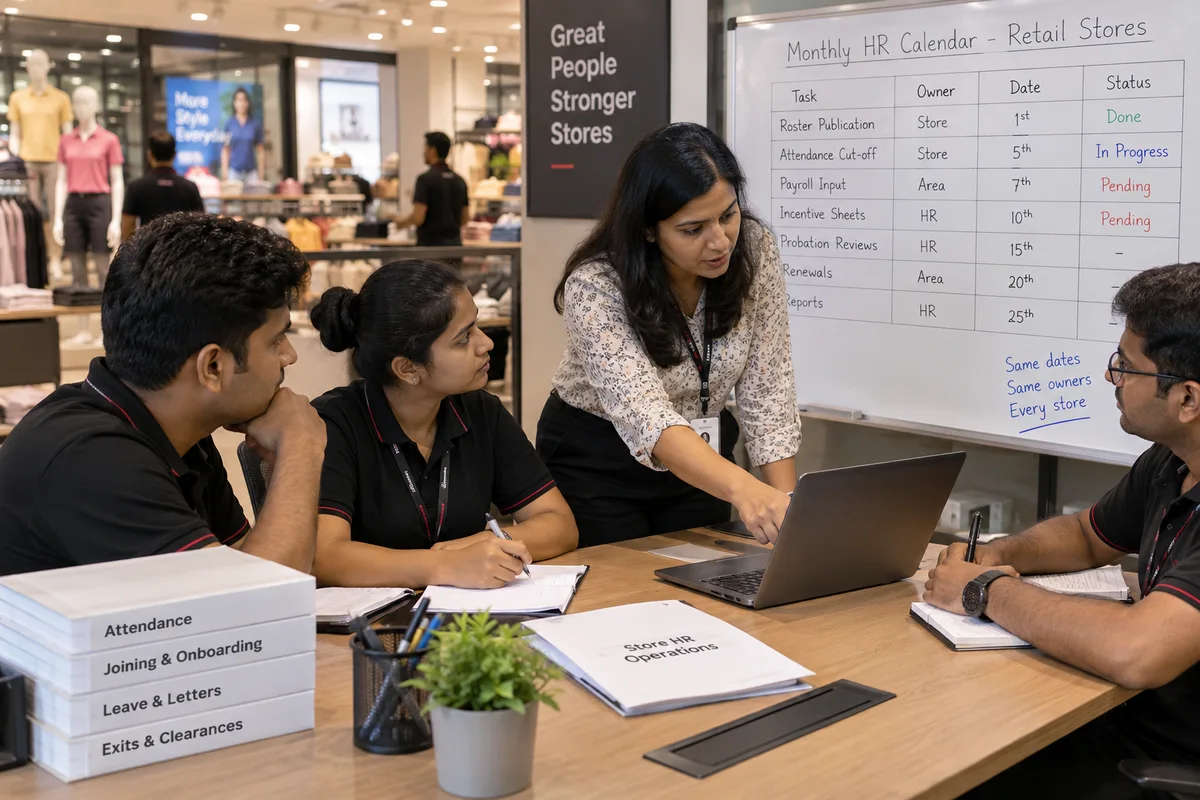
HR Operations and Governance
An HR function that runs the same way every month.
What the HR system covers
Most businesses take a few of these at a time, in an order decided by what is costing them most. Open any area to see what it includes.
Store and Area Structure
Who the store reports to, and what the store manager may decide.
What this coversHideOpen the full page →
Store and Area Structure
Who the store reports to, and what the store manager may decide.
- Store organisation structure
- Area and cluster structure
- Store manager authority
- Shift in-charge role
- Reporting lines
- Approval matrix by store
- Staffing norms by format
- Position levels
Store Manning and Rosters
Coverage at the hours customers actually arrive.
What this coversHideOpen the full page →
Store Manning and Rosters
Coverage at the hours customers actually arrive.
Retail manning is a footfall problem, not a headcount problem.
- Footfall-based manning
- Store opening hours
- Shift patterns
- Weekly off rotation
- Peak-hour coverage
- Weekend and festival staffing
- Leave replacement
- Relief staff pool
- Roster publishing
- Shift swaps
- Roster plan
- Area approval
- Publish
- Change control
- Attendance
- Payroll input
Frontline Hiring at Volume
Hiring that keeps pace with turnover.
What this coversHideOpen the full page →
Frontline Hiring at Volume
Hiring that keeps pace with turnover.
Store roles
- Sales Associates
- Cashiers
- Stock Assistants
- Visual Merchandisers
- Store Supervisors
- Store Managers
- Security
Support roles
- Area Managers
- Warehouse
- Logistics
- Category
- Marketing
- HR
- Finance
- Admin
- Store-level requisition
- Approval by area
- Local sourcing channels
- Walk-in and referral process
- Screening
- Trial or trade test
- Document verification
- Offer and joining
- Replacement turnaround tracking
- Pre-joining documents
- Employee record creation
- Uniform and ID
- Store induction
- Product knowledge basics
- Point-of-sale and system access
- Customer-service standards
- Cash and stock handling briefing
- Safety briefing
- 30/60/90-day plan
- Probation review
Attendance Across Stores
One attendance truth across every outlet.
What this coversHideOpen the full page →
Attendance Across Stores
One attendance truth across every outlet.
- Attendance capture by store
- Biometric or app-based marking
- Late and early marking
- Missed punch regularisation
- Leave types and balances
- Leave approval by store manager
- Weekly off tracking
- Overtime rules
- Attendance cut-off
- Monthly close
Incentives and Payroll Input
Targets and payouts computed the same way everywhere.
What this coversHideOpen the full page →
Incentives and Payroll Input
Targets and payouts computed the same way everywhere.
- Wage structure by role
- Store incentive scheme
- Individual vs store target
- Attendance incentive
- Overtime
- Reimbursements
- Advances
- Deductions
- Payroll cut-off
- Payslips
- Full-and-final settlement
Store Performance Measures
What a store team is actually judged on.
What this coversHideOpen the full page →
Store Performance Measures
What a store team is actually judged on.
Sales staff
- Sales against target
- Conversion
- Average bill value
- Attendance
- Customer feedback
- Product knowledge
- Grooming standards
Store manager
- Store sales
- Staffing adherence
- Attrition in store
- Shrinkage
- Audit score
- Customer complaints
- Team training completion
Conduct, Cash and Shrinkage
Consistent handling of the issues retail actually faces.
What this coversHideOpen the full page →
Conduct, Cash and Shrinkage
Consistent handling of the issues retail actually faces.
Retail discipline cases cluster around cash, stock and attendance. Handling them differently by store is what turns one incident into a pattern.
- Code of conduct
- Cash handling rules
- Stock and shrinkage process
- Incident documentation
- Investigation process
- Show-cause and warning process
- Escalation to area and HR
- Corrective action tracking
- Consistency review
Store Manager Development
Promoted off the floor, now running people.
What this coversHideOpen the full page →
Store Manager Development
Promoted off the floor, now running people.
- First-time manager development
- Rostering and manning
- Interviewing and selection
- Induction of new staff
- Feedback conversations
- Handling conduct issues
- Retention conversations
- Customer-complaint handling
- Team motivation
Frontline Attrition
Turnover is the cost centre nobody reports.
What this coversHideOpen the full page →
Frontline Attrition
Turnover is the cost centre nobody reports.
- Attrition by store and region
- First-90-day attrition
- Store-manager-wise turnover
- Exit reasons
- Replacement cost and time
- Stay interviews
- Career paths from associate upward
- Retention actions by store
Multi-Store Standardisation
One company, not forty different ones.
What this coversHideOpen the full page →
Multi-Store Standardisation
One company, not forty different ones.
- Common policies across stores
- Standard roster rules
- Standard induction
- Central employee master
- Store-level dashboards
- Consolidated headcount and cost
- Transfer between stores
- Franchise-staff handling
- Headcount by store
- Vacancies and ageing
- Staffing against the agreed norm
- Attendance and absenteeism
- Roster coverage at peak
- Attrition by store
- Replacement turnaround
- Employee cost by store
- Incentive payout
- Training completion
- Conduct cases
Store Exit and Frontline Turnover
Fast, repeatable exits that still close the till.
What this coversHideOpen the full page →
Store Exit and Frontline Turnover
Fast, repeatable exits that still close the till.
Retail exits are frequent and often short-notice. The process has to be runnable by a store manager during trading hours without anything being left open.
- Store manager can complete the exit without head office
- Till, float and cash handling position reconciled
- Staff discount card, uniform and locker returned
- POS and stock system access revoked on the last shift
- Pending incentive and target achievement settled
- Roster gap filled before the release date
- Keys and alarm codes recovered or changed where held
- Rehire eligibility recorded at store level
Alarm codes and keys are the item most often missed, because the person holding them is usually a supervisor rather than a frontline leaver and the exit process was written for frontline staff.
Engagement Store by Store
Store managers decide it, one roster at a time.
What this coversHideOpen the full page →
Engagement Store by Store
Store managers decide it, one roster at a time.
Retail engagement is set locally. Two stores in the same chain with the same pay and the same policies routinely show very different retention, and the difference is nearly always the manager.
- Roster fairness and enough notice to plan a life
- Break entitlements actually taken during busy trading
- Store manager capability as the primary investment
- Backing staff against unacceptable customer behaviour
- Progression from frontline to supervisor made visible
- Incentive and target design that stores believe
- Recognition weekly at store level rather than annually at head office
Comparing retention between similar stores is the most useful engagement diagnostic available in retail, and it needs no survey.
From Shop Floor to Store Manager
The most under-communicated ladder in the sector.
What this coversHideOpen the full page →
From Shop Floor to Store Manager
The most under-communicated ladder in the sector.
Retail promotes internally more than almost any sector and advertises it least. Frontline staff commonly believe store management is recruited externally, because nobody has told them otherwise.
- Sales associate
- Senior associate
- Department or section lead
- Assistant store manager
- Store manager
- Ladder communicated at joining and repeated
- Criteria for each step stated in observable terms
- Supervisor capability built before the role is given
- Routes into buying, visual merchandising and operations
- Store manager succession named per store
- Area management as the next horizon, made visible
Store manager succession is the operational priority. A store without an identified successor is one resignation away from being run by whoever is available, and store performance follows the manager closely.
Store Systems a Manager Can Run
HR technology that works during trading hours.
What this coversHideOpen the full page →
Store Systems a Manager Can Run
HR technology that works during trading hours.
Retail HR technology succeeds or fails at store level. If a store manager cannot complete a joiner, a roster change or an exit on a phone between customers, they will keep a register instead.
- Store-level joiner activation and exit completion
- Roster publishing and shift swap from a phone
- Attendance capture at store, including part-time patterns
- Store-wise headcount, cost and attrition visibility
- High-volume frontline joiner and leaver processing
- POS and stock system access tied to joining and exit
- Area and regional reporting from one source
Tying POS access to the exit process closes the gap that most stores carry, where a departed employee's till login remains active until somebody happens to notice.
Store Safety and Frontline Wellbeing
Standing shifts, stock handling and difficult customers.
What this coversHideOpen the full page →
Store Safety and Frontline Wellbeing
Standing shifts, stock handling and difficult customers.
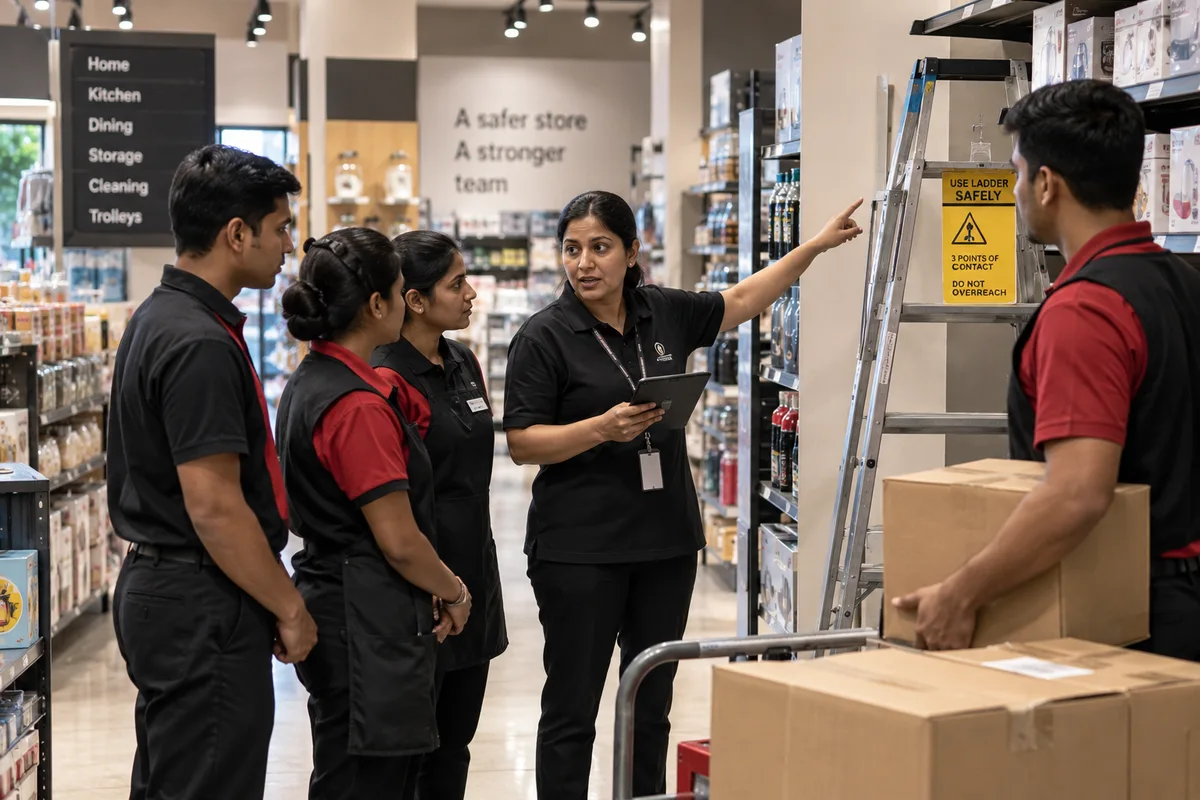
Retail safety is ordinary enough to be neglected: manual handling in stockrooms, ladders, wet floors, and the cumulative effect of long standing shifts.
- Manual handling and stockroom safety training
- Ladder, step and height access controls
- Slip and trip management on the shop floor
- Lone working during opening, closing and quiet periods
- Cash handling and robbery response procedures
- Customer aggression protection, stated and supported
- Standing shift and break enforcement
- Incident reporting completable at store level
Lone working at opening and closing is the most common unmanaged retail risk, and the procedure is usually assumed rather than written.
Store-Level Hiring
Frontline recruitment run by store managers.
What this coversHideOpen the full page →
Store-Level Hiring
Frontline recruitment run by store managers.
Retail hiring happens at store level under trading pressure, usually by a manager who is also running the floor. The process has to be simple enough to be followed and structured enough to be fair.
- Store managers able to hire within a defined framework
- Structured questions rather than free-form conversation
- Customer-facing aptitude assessed deliberately
- Availability and roster fit established before offer
- Same-day or next-day decisions where possible
- Rehire lists maintained for seasonal staff
- Source and channel effectiveness tracked by store
- Early attrition reviewed by store and by manager
Reviewing early attrition by store is the diagnostic that reveals whether a hiring problem is a market condition or a manager, and it needs no extra data collection.
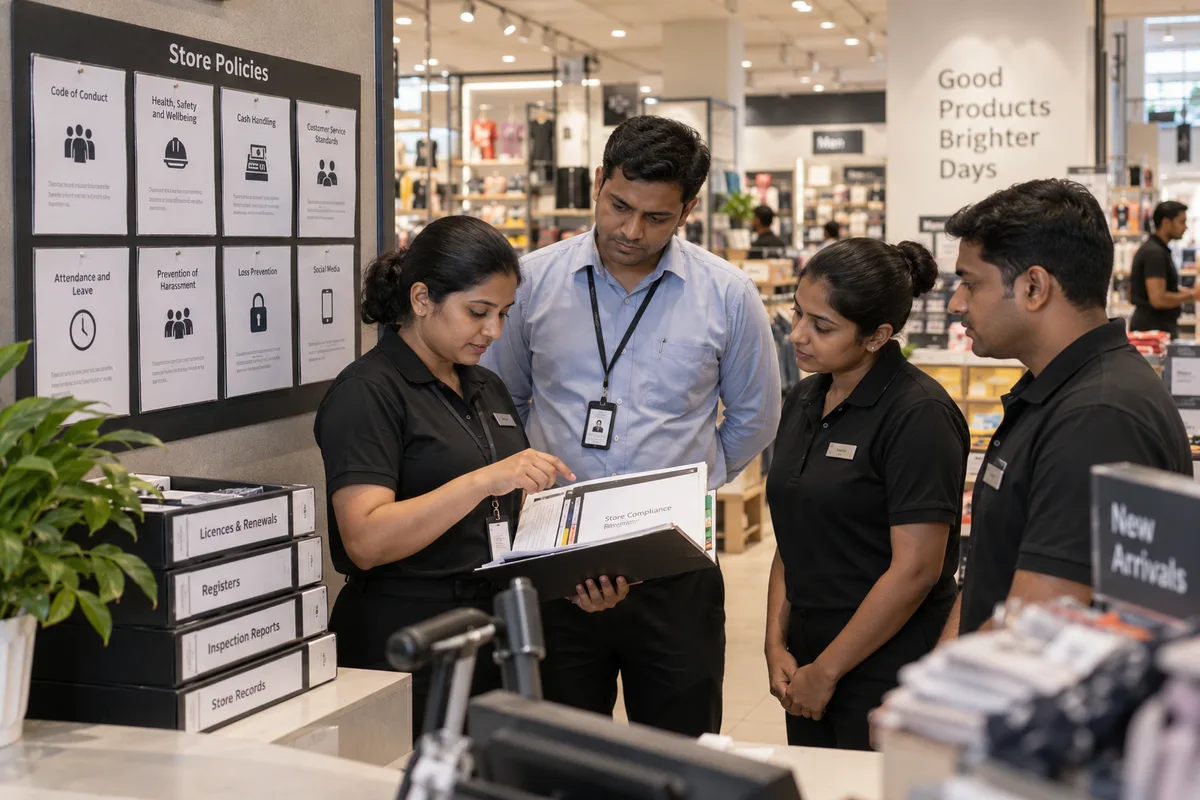
Retail compliance is distributed across stores, each potentially a separate establishment with its own registrations, registers and display requirements.
- Store-wise register of applicable obligations and registrations
- Registers and displays maintained at each store
- Working hours, shift and rest policies for trading hours
- Cash handling and loss prevention policies
- Conduct policy including customer interaction standards
- Named owner per store and per obligation
- Central visibility of store-level compliance status
- Acknowledgement records for a high-turnover frontline
Central visibility of store-level status is what turns distributed compliance from an act of faith into something the business can actually see.
Retail HR maturity assessment
Each area is scored on the same five-level scale, so management can see where HR stands today and what to improve first.
Request a retail HR audit- 1
No defined process
Activities happen differently each time.
- 2
Informal, person dependent
Processes exist but depend heavily on individual employees.
- 3
Documented
Processes and responsibilities are written down.
- 4
Implemented and measured
Processes are followed and performance is measured.
- 5
Automated and continuously improved
Technology-enabled, measured and improved deliberately.
What you receive
Depending on the engagement. Scope and sequence are agreed after the audit.
- HR Audit
- HR Gap Analysis
- HR Improvement Roadmap
- Organisation Structure
- Manpower Plan
- Job Descriptions
- KRA and KPI Framework
- Competency Framework
- Recruitment Process
- Onboarding Framework
- Attendance and Leave Process
- Performance Management System
- Training Framework
- Employee Engagement Framework
- Retention Plan
- HR Policy Manual
- Employee Handbook
- HR SOPs
- HR Forms
- HR Templates
- HR Calendar
- HR Dashboard
- HR MIS
- HR Automation Roadmap
- HRMS Implementation Framework
Our HR transformation approach
- 1
Assess
Understand the business, its workforce, current processes and HR challenges.
- 2
Identify gaps
Find the missing, weak, inconsistent or person-dependent processes.
- 3
Design
Create the structure, processes, policies, SOPs, dashboards and systems needed.
- 4
Implement
Help HR and department managers actually adopt the new system.
- 5
Automate
Digitise repetitive and approval-based workflows where it is worth doing.
- 6
Measure
Track hiring, attendance, employee cost, performance, training and attrition.
- 7
Improve
Strengthen the people-management system continuously, not once.
Build an HR function that supports store performance
A strong retail HR function helps the business:
- Keep stores manned at peak hours
- Reduce frontline attrition
- Cut replacement hiring time
- Standardise induction across outlets
- Make incentives predictable
- Handle conduct cases consistently
- Develop store managers
- See every store in one view
- Control employee cost per store
- Support new store openings
Build a better HR system for your stores
Whether you run five outlets or fifty, we can help build hiring, rostering and store people processes that behave the same everywhere.
Looking for a different sector? See all industries.