












Why construction and real estate employees leave and how to understand why
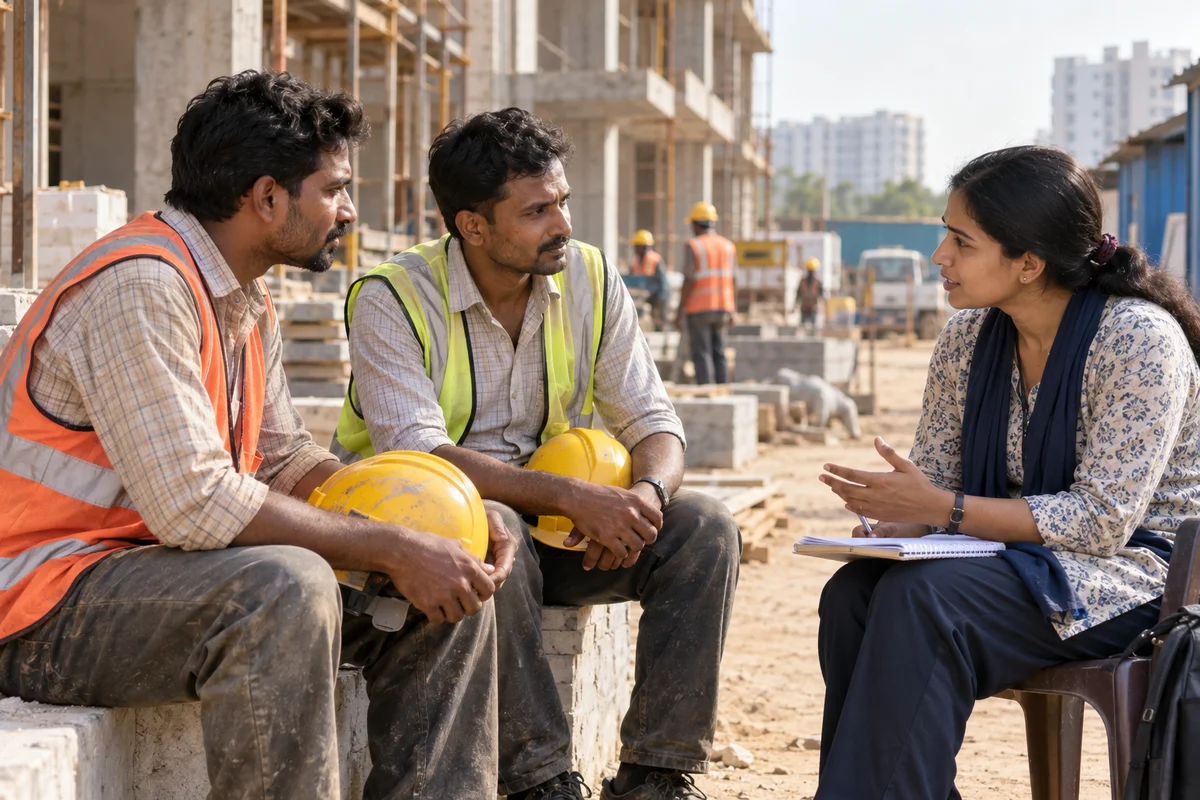
Site engineers, supervisors, crews and sales teams leave for different reasons. How to ask what shaped their decision and act on it between projects.
8 min readRead articleModular builders make rooms or panels in a factory and assemble them on site. This is how to run factory crews, drivers and site installers when work is part manufacturing and part construction.

Not sure what you need? Tell us about your business in six short steps and we will come to the first meeting prepared.
Share your requirementsA modular building manufacturer produces units such as site offices, labour camps, prefabricated homes, classrooms and clinics in a factory, then transports and assembles them on site. The factory has fabricators, welders, panel makers, electricians, plumbers and painters working on stations. A design and planning team converts a client's requirement into factory drawings, and a logistics team plans trucks and cranes. On site, an assembly crew joins modules, fixes services and finishes joints. Orders come in batches and are often urgent, such as a camp needed in six weeks. The factory runs on shifts, with heavy tools and welding. Factory crews and site crews have different skills, and moving between them is hard. For the wider sector, read HR for construction and real estate.
These are the places the people side of this kind of business tends to give way. The rest of this page works through them.
HR here has to work for each of these groups, not only the office. The set-up below is written with all of them in mind.
GullyHR runs talent acquisition for permanent roles in modular building manufacturers. For each role we agree the job description with you, find and screen candidates against it, and support the offer through to joining. Tell us the role and the number of people, and we start there.
We recruit permanent employees. We do not supply contract or temporary staff.
Every business interviews, but few have a written process that works the same way for every role and every interviewer. GullyHR designs yours, from the role brief to the offer, trains your managers to run it, and can run it for you on the roles you hand us.
We agree what the role must deliver, the must-have and nice-to-have skills, and how each will be scored.
Screening call, assessment, interview rounds and decision points, sized to the role and the number of people you hire.
Structured questions for each role family and a rating guide, so two interviewers judge the same answer the same way.
A short briefing for your managers on what to ask, what to avoid and how to give a clear yes or no.
Who approves, how the offer is made, and how candidates are kept informed from first call to joining.
A large batch needs overtime and extra hands for weeks, then the line goes quiet and people worry about work.
Sparks, fumes and heavy sheets cause burns, eye damage and cuts when kit and rest are skipped.
One slow step, such as painting or wiring, holds up the whole line, and the blame goes to the nearest supervisor.
A factory welder asked to assemble at a remote site faces travel, weather and unfamiliar tools, and may refuse.
A client revises a window or door position when units are half built, and rework falls on the line.
A unit arrives scratched or twisted and drivers, loaders and fabricators each point at others.
A good welder or panel fitter is offered a higher day rate elsewhere and leaves between batches.
The night shift finishes a station without noting what was left undone, and the day shift repeats or skips it.
Start with the topics that matter most here: HR Strategy and Workforce Planning; Health, Safety and Wellbeing; HR Operations and Governance. Then work through the rest. Each topic is written for construction and real estate, not in general.
How many people, in which roles, by when — and what they will cost.
Induction, records, incident reporting and follow-through.
An HR function that runs the same way every month.
Structure, reporting lines and who is allowed to decide what.
Requisition to joining, the same way every time.
A first day that is the same for the fifth joiner as the first.
Records, attendance, leave and the day-to-day HR that must simply work.
Salary structure, payroll inputs and a month that closes on time.
Goals, reviews and ratings that hold up in a conversation.
Training planned from need rather than from the calendar.
Named backups for the roles that cannot be vacant.
Communication, recognition and the conditions people actually work in.
Two routes — one for complaints, one for conduct — kept separate.
Policies a manager can apply, and obligations with owners and dates.
Who leaves, when, why — and which of them mattered.
Resignation to relieving letter, in a defined order.
Records that survive people, and approvals that do not queue.
A short monthly pack management actually reads.
The pieces a modular building manufacturers business puts in place, in an order that makes each easier. Open any card for the detail.
A view of confirmed and likely orders, with core staff, trained temporary hands and overtime limits.
A view of confirmed and likely orders, with core staff, trained temporary hands and overtime limits. Support it with recruitment process for peaks.
Welding screens, extraction, protective kit and permit rules checked daily.
Welding screens, extraction, protective kit and permit rules checked daily. See safety routines.
A short note at each shift change listing what is done, pending and defective, signed by both supervisors.
A named group trained for site work, with travel allowances and stay arrangements agreed in advance.
A named group trained for site work, with travel allowances and stay arrangements agreed in advance. Record in attendance rules.
A sign-off date after which client changes are priced and scheduled, not squeezed into the line.
A photographed check of each unit before it leaves, with a transport condition note, so damage is traced to a stage.
Before changing anything, find out what is true today. These checks take an afternoon and tell you which of the topics above to start with.
Share your requirementsConfirm with a qualified professional. What applies to you depends on your business, your state and your arrangements, and it changes. This page describes practice. It does not state a legal position.
The services below fit this kind of business best. Each starts by recording where you stand, and every later report compares against that. We do not promise outcomes.
Welding, cutting and lifting routines that protect factory crews.
Shift rosters, surge overtime and site assignment allowances recorded properly.
Finding and trialling welders, fitters and supervisors before the order surge.
Day rates and skill pay set against the local market so good hands stay.
Start with a free conversation, or see the paid HR Diagnostic.
Understand the business, its workforce, current processes and HR challenges.
Find the missing, weak, inconsistent or person-dependent processes.
Create the structure, processes, policies, SOPs, dashboards and systems needed.
Help HR and department managers actually adopt the new system.
Digitise repetitive and approval-based workflows where it is worth doing.
Track hiring, attendance, employee cost, performance, training and attrition.
Strengthen the people-management system continuously, not once.
From the GullyHR blog: one on HR in construction and real estate, and one on each of the topics this page points to.

Site engineers, supervisors, crews and sales teams leave for different reasons. How to ask what shaped their decision and act on it between projects.
8 min readRead article
How a D2C founder can decide which digital marketing work to hire for, which to buy from an agency, and which to split, with a worksheet and a five step plan.
6 min readRead article
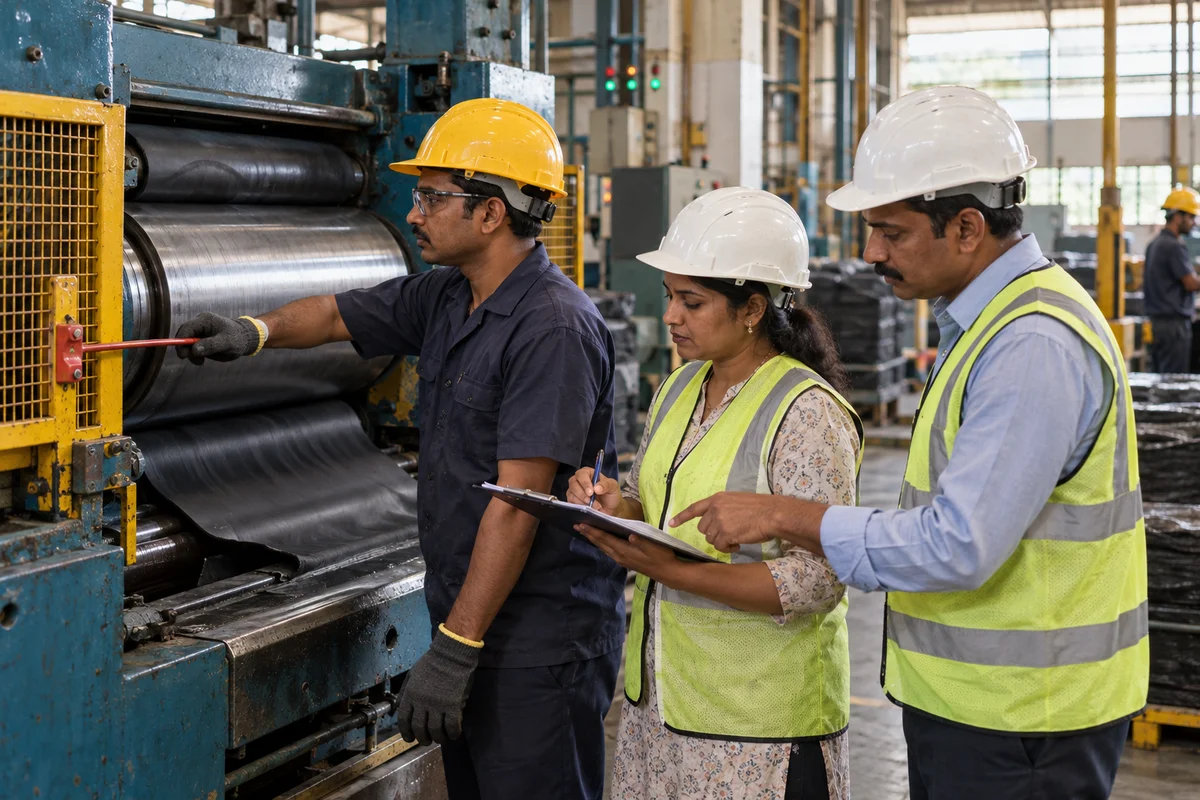
A shift, weekly and monthly safety routine for rubber plants that names who checks platen guards, mill trip bars, autoclave doors, burst-test cages and slings, and who acts on near misses.
7 min readRead article
Every growing company reaches a point where the founder approving everything stops being speed and starts being the bottleneck. Twelve signs it has happened, and what to fix first.
9 min readRead articleMore on the GullyHR blog.
Plan a mix of core staff, trained temporary hands and overtime caps, agreed before the surge. Last-minute hiring brings quality and safety problems.
Offer steady work through planning, skill pay and fair rates. Idle weeks send people to rivals.
Select volunteers, train them on site tools and rules, agree travel and stay allowances and keep a stable team. Forcing moves causes resignations.
Record the unit condition with photographs at each stage, and agree responsibilities with drivers and loaders. Confirm contract terms with a qualified professional.
Set a design freeze date, price later changes and schedule them as separate work.
A handover sheet, a safety checklist, a site assembly allowance plan and basic records. Legal and factory-regulation questions go to a qualified professional.
All 109 business types in construction and real estate · Find another business type
See all HR topics for construction and real estate, or another industry.
Tell us what is slowing your team down. We’ll help you find a practical way forward, starting with a conversation.