














GullyHR

Construction and Real Estate · Hospitality interior designers

HR for Hospitality Interior Designers: Design Teams, Site Visits and Opening-Date Pressure

A hospitality design studio shapes hotels, restaurants and resorts that must open on a fixed day. This is how to run designers, draughtsmen and site coordinators when the launch date is the only date that matters.

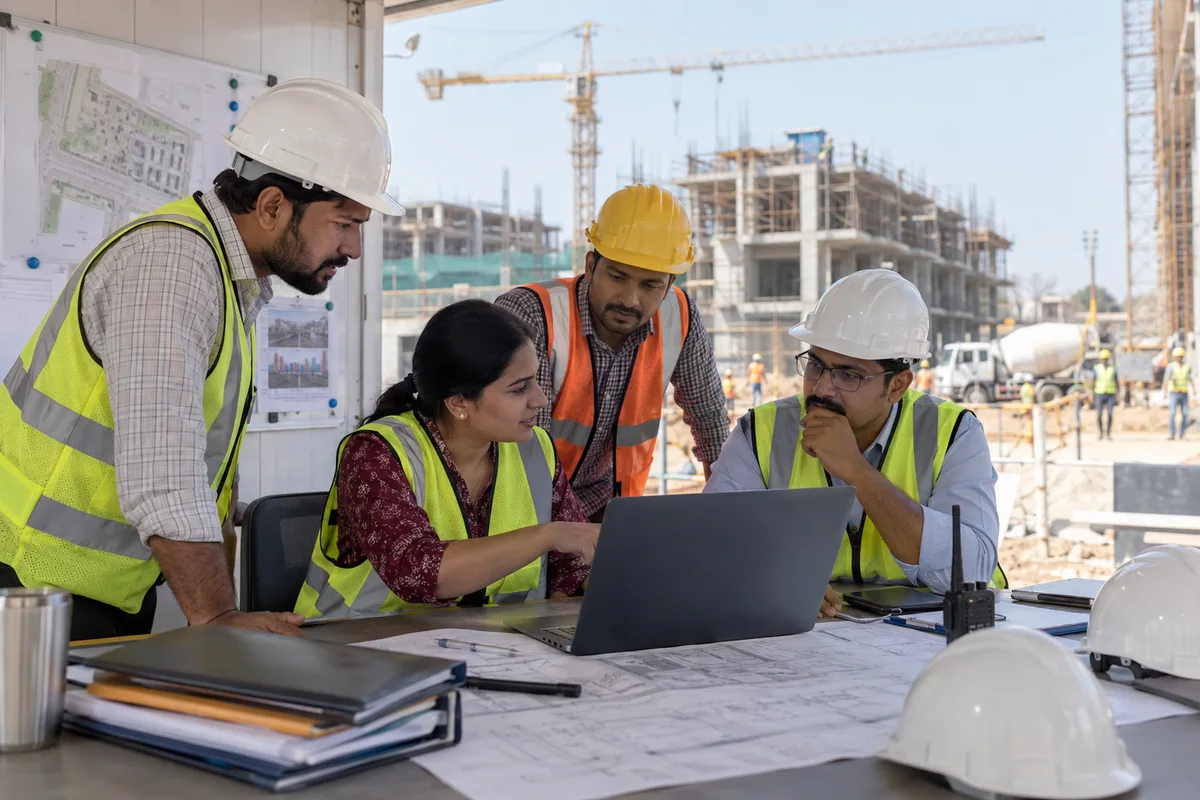
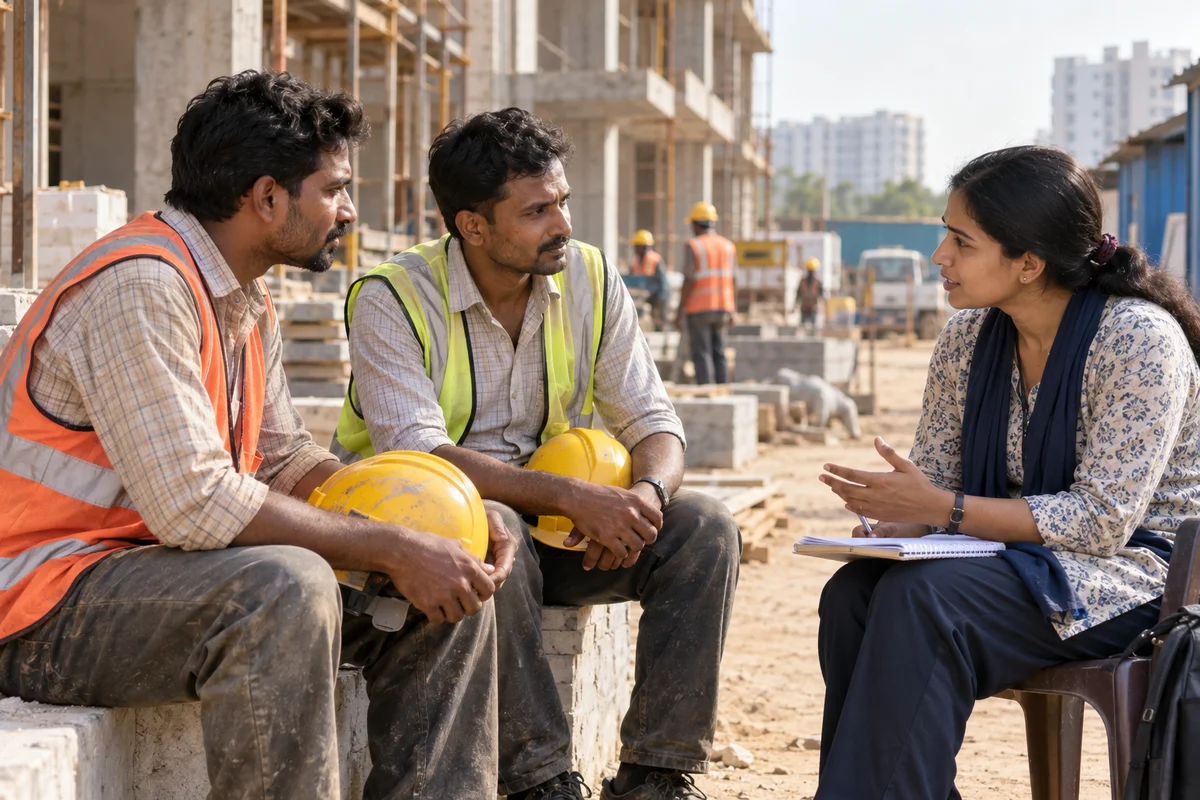
Construction supervisors and an HR coordinator reviewing crew deployment in a site office

Not sure what you need? Tell us about your business in six short steps and we will come to the first meeting prepared.

Share your requirements

A hospitality interior design studio designs and often oversees the fitting out of hotels, restaurants, cafes, resorts and banquet spaces. The team is led by principal designers and design heads, supported by junior designers, 3D visualisers, draughtsmen, procurement coordinators and site supervisors who visit properties across cities. Projects pass through concept, detailed drawings, vendor selection and a site phase where hundreds of items must arrive and be installed before the owner's opening date. Clients are hoteliers and restaurateurs who change their minds as menus, brands and budgets shift. Staff work long evenings before presentations and travel often to sites. The studio's value is in the eye of its senior designers, so losing one hurts. For the wider sector, read HR for construction and real estate.

  1. Plan
  2. Hire
  3. Onboard
  4. Manage
  5. Develop
  6. Perform
  7. Engage
  8. Retain
  9. Exit
  10. Improve

When HR is weak in hospitality interior designers, you may see

  • The opening date never moves
  • Drawing versions get mixed up
  • Juniors do the drudgery, seniors take the credit
  • Site visits eat the week
  • Client changes arrive without a price
  • Vendors are managed by relationships
  • Presentation nights are normal
  • Skills are narrow and prized

These are the places the people side of this kind of business tends to give way. The rest of this page works through them.

Who does the work in hospitality interior designers

HR here has to work for each of these groups, not only the office. The set-up below is written with all of them in mind.

  • Principal and senior designers
  • Junior designers
  • 3D visualisers and renderers
  • Draughtsmen and CAD operators
  • Procurement and vendor coordinators
  • Site supervisors and project managers
  • Studio administrators

Roles we help you hire in hospitality interior designers

GullyHR runs talent acquisition for permanent roles in hospitality interior designers. For each role we agree the job description with you, find and screen candidates against it, and support the offer through to joining. Tell us the role and the number of people, and we start there.

We recruit permanent employees. We do not supply contract or temporary staff.

We set up the interview and hiring process for hospitality interior designers

Every business interviews, but few have a written process that works the same way for every role and every interviewer. GullyHR designs yours, from the role brief to the offer, trains your managers to run it, and can run it for you on the roles you hand us.

  1. 1. Role brief and scorecard

    We agree what the role must deliver, the must-have and nice-to-have skills, and how each will be scored.

  2. 2. Stages and sequence

    Screening call, assessment, interview rounds and decision points, sized to the role and the number of people you hire.

  3. 3. Question bank and scoring

    Structured questions for each role family and a rating guide, so two interviewers judge the same answer the same way.

  4. 4. Interviewer readiness

    A short briefing for your managers on what to ask, what to avoid and how to give a clear yes or no.

  5. 5. Offer and follow-up

    Who approves, how the offer is made, and how candidates are kept informed from first call to joining.

Where HR strains in hospitality interior designers

  • The opening date never moves

    Delays upstream in design approvals or vendor delivery compress the site phase, and the studio team absorbs the squeeze.

  • Drawing versions get mixed up

    A vendor builds from an old drawing because the revised one was not sent to the right person, and the cost falls on the studio.

  • Juniors do the drudgery, seniors take the credit

    Young designers spend months on schedules and revisions with no share in design decisions, and leave for a larger studio.

  • Site visits eat the week

    Designers are called to a property three hours away, come back to missed deadlines and then work late to catch up.

  • Client changes arrive without a price

    A hotelier asks for a new lobby finish after procurement started, and nobody records the extra hours.

  • Vendors are managed by relationships

    One coordinator knows which carpenter or lighting supplier delivers, and their exit leaves the studio blind.

  • Presentation nights are normal

    Teams stay overnight before a client pitch, then get no easy time off afterwards.

  • Skills are narrow and prized

    A skilled renderer or lighting specialist is offered a better role elsewhere with a single phone call.

HR topics for hospitality interior designers

Start with the topics that matter most here: Organisation Design; Career and Succession Management; Retention and Attrition Management. Then work through the rest. Each topic is written for construction and real estate, not in general.

Organisation Design

Structure, reporting lines and who is allowed to decide what.

Career and Succession Management

Named backups for the roles that cannot be vacant.

Retention and Attrition Management

Who leaves, when, why — and which of them mattered.

HR Strategy and Workforce Planning

How many people, in which roles, by when — and what they will cost.

Recruitment and Talent Acquisition

Requisition to joining, the same way every time.

Onboarding and Probation

A first day that is the same for the fifth joiner as the first.

Employee Administration

Records, attendance, leave and the day-to-day HR that must simply work.

Compensation, Payroll and Benefits

Salary structure, payroll inputs and a month that closes on time.

Performance Management

Goals, reviews and ratings that hold up in a conversation.

Learning and Development

Training planned from need rather than from the calendar.

Employee Engagement and Experience

Communication, recognition and the conditions people actually work in.

Employee Relations

Two routes — one for complaints, one for conduct — kept separate.

Policies, Compliance and Governance

Policies a manager can apply, and obligations with owners and dates.

Health, Safety and Wellbeing

Induction, records, incident reporting and follow-through.

Exit and Alumni Management

Resignation to relieving letter, in a defined order.

HR Technology and Automation

Records that survive people, and approvals that do not queue.

HR Analytics and Management Reporting

A short monthly pack management actually reads.

HR Operations and Governance

An HR function that runs the same way every month.

What a working HR set-up looks like

The pieces a hospitality interior designers business puts in place, in an order that makes each easier. Open any card for the detail.

Stage every project with sign-offs

Concept, detailed design, procurement and site phases, each with a named approver and a freeze point after which changes are priced.

What this covers

Concept, detailed design, procurement and site phases, each with a named approver and a freeze point after which changes are priced. Record the roles in your organisation design.

Control drawing issue

One person issues drawings, every revision carries a number, and vendors acknowledge receipt.

What this covers

One person issues drawings, every revision carries a number, and vendors acknowledge receipt. Store the log with project documentation.

Build a ladder for juniors

A path from schedules to a room, then to a floor, then to a whole outlet, with a review each six months.

What this covers

A path from schedules to a room, then to a floor, then to a whole outlet, with a review each six months. See learning and development.

Plan site travel and cover

A visit calendar showing who is out of studio and who covers their desk, so deadlines do not collide with travel.

What this covers

A visit calendar showing who is out of studio and who covers their desk, so deadlines do not collide with travel.

Time-record client changes

Log hours spent on late changes against each project so the studio can bill for them or decide not to.

What this covers

Log hours spent on late changes against each project so the studio can bill for them or decide not to.

Spread vendor knowledge

A shared vendor sheet with a second contact owner for each major supplier, so a resignation does not strand a project.

What this covers

A shared vendor sheet with a second contact owner for each major supplier, so a resignation does not strand a project. Tie it into exit steps.

Start by checking where you stand

Before changing anything, find out what is true today. These checks take an afternoon and tell you which of the topics above to start with.

Share your requirements
  • Ask a junior designer what they will be doing on the third project, not the first.
  • Check which drawing version a vendor is currently building from on your live site.
  • List the hours spent last month on client changes that were never billed.
  • Find out who else knows your three most important vendors.
  • Ask a designer how many late nights they had after the last presentation, and what time off followed.
  • Review how site visits are scheduled against studio deadlines.
  • Confirm with a qualified professional the contract and intellectual property terms that cover design work and staff.

Confirm with a qualified professional. What applies to you depends on your business, your state and your arrangements, and it changes. This page describes practice. It does not state a legal position.

How GullyHR helps

The services below fit this kind of business best. Each starts by recording where you stand, and every later report compares against that. We do not promise outcomes.

Start with a free conversation, or see the paid HR Diagnostic.

Our HR transformation approach

  1. 1

    Assess

    Understand the business, its workforce, current processes and HR challenges.

  2. 2

    Identify gaps

    Find the missing, weak, inconsistent or person-dependent processes.

  3. 3

    Design

    Create the structure, processes, policies, SOPs, dashboards and systems needed.

  4. 4

    Implement

    Help HR and department managers actually adopt the new system.

  5. 5

    Automate

    Digitise repetitive and approval-based workflows where it is worth doing.

  6. 6

    Measure

    Track hiring, attendance, employee cost, performance, training and attrition.

  7. 7

    Improve

    Strengthen the people-management system continuously, not once.

Blogs worth reading first

From the GullyHR blog: one on HR in construction and real estate, and one on each of the topics this page points to.

More on the GullyHR blog.

Questions owners ask

You may not, but you can reduce the pull. Offer ownership of projects, a share in outcomes and honest development. Ask a qualified professional about what restrictions are fair and enforceable.

Your next chapter

Let’s make HR work better.

Tell us what is slowing your team down. We’ll help you find a practical way forward, starting with a conversation.

  • A free first conversation with an HR practitioner
  • A clear scope and fee before any paid work
  • A practical next step for your business

Let’s start with your business

Share your contact details and the HR challenge on your mind. We’ll help you find the right starting point.

10-digit Indian mobile, without +91.

Your details stay private. Privacy policy