













Industries
Why retail employees leave and how to understand why
Why store staff and managers leave retail jobs, and how to ask about rosters, weekends, targets and incentives in an exit conversation that leads to action.
7 min readRead articleA fitness equipment dealer sells treadmills, cycles, home gyms, weights and accessories to homes and gyms. Staff demonstrate heavy machines, arrange delivery and assembly, and handle after-sales servicing that decides repeat business.

Not sure what you need? Tell us about your business in six short steps and we will come to the first meeting prepared.
Share your requirementsA fitness equipment dealer sells costly, heavy goods that customers need explained. Salespeople demonstrate treadmills, cross trainers and weight benches, compare motor and warranty, and advise on space and use. Backing them are delivery and assembly crews who carry machines upstairs and set them up, service technicians for repairs, an accounts or finance desk and a manager. Customers include families, new gym owners and corporate buyers. Business rises in January, around health scares and festivals, and slows in other months. Heavy goods mean injury risk in delivery. A badly assembled machine can harm a user, so assembly quality matters. After-sales calls decide whether the next machine is bought from the same dealer. For the wider sector picture, read HR for retail.
These are the places the people side of this kind of business tends to give way. The rest of this page works through them.
HR here has to work for each of these groups, not only the office. The set-up below is written with all of them in mind.
GullyHR runs talent acquisition for permanent roles in fitness equipment dealers. For each role we agree the job description with you, find and screen candidates against it, and support the offer through to joining. Tell us the role and the number of people, and we start there.
We recruit permanent employees. We do not supply contract or temporary staff.
Every business interviews, but few have a written process that works the same way for every role and every interviewer. GullyHR designs yours, from the role brief to the offer, trains your managers to run it, and can run it for you on the roles you hand us.
We agree what the role must deliver, the must-have and nice-to-have skills, and how each will be scored.
Screening call, assessment, interview rounds and decision points, sized to the role and the number of people you hire.
Structured questions for each role family and a rating guide, so two interviewers judge the same answer the same way.
A short briefing for your managers on what to ask, what to avoid and how to give a clear yes or no.
Who approves, how the offer is made, and how candidates are kept informed from first call to joining.
Motor power, belt size, incline and warranty terms need real knowledge. A weak demonstration loses sales or leads to a wrong machine.
Carrying treadmills up stairs and assembling frames cause strains and drops. Crews are often casual and paid per job.
A loose bolt or misaligned belt can hurt the user. Who checks the finished job is often nobody.
Customers ring for belt noise or console faults. Technicians are few, visits are slow and the shop is blamed.
January and new-year drives load the floor and delivery crews. Months later, the shop is quiet and staff worry about pay.
Larger buyers want installation, training and maintenance. Floor staff do not know how to price or promise this.
Free installation, quick delivery and servicing are offered to close, but the crew learns later.
Showroom machines are tested by many hands. Without a care routine, they wear and break, and they put customers off.
Start with the topics that matter most here: Learning and Development; Health, Safety and Wellbeing; HR Operations and Governance. Then work through the rest. Each topic is written for retail, not in general.
Training planned from need rather than from the calendar.
Induction, records, incident reporting and follow-through.
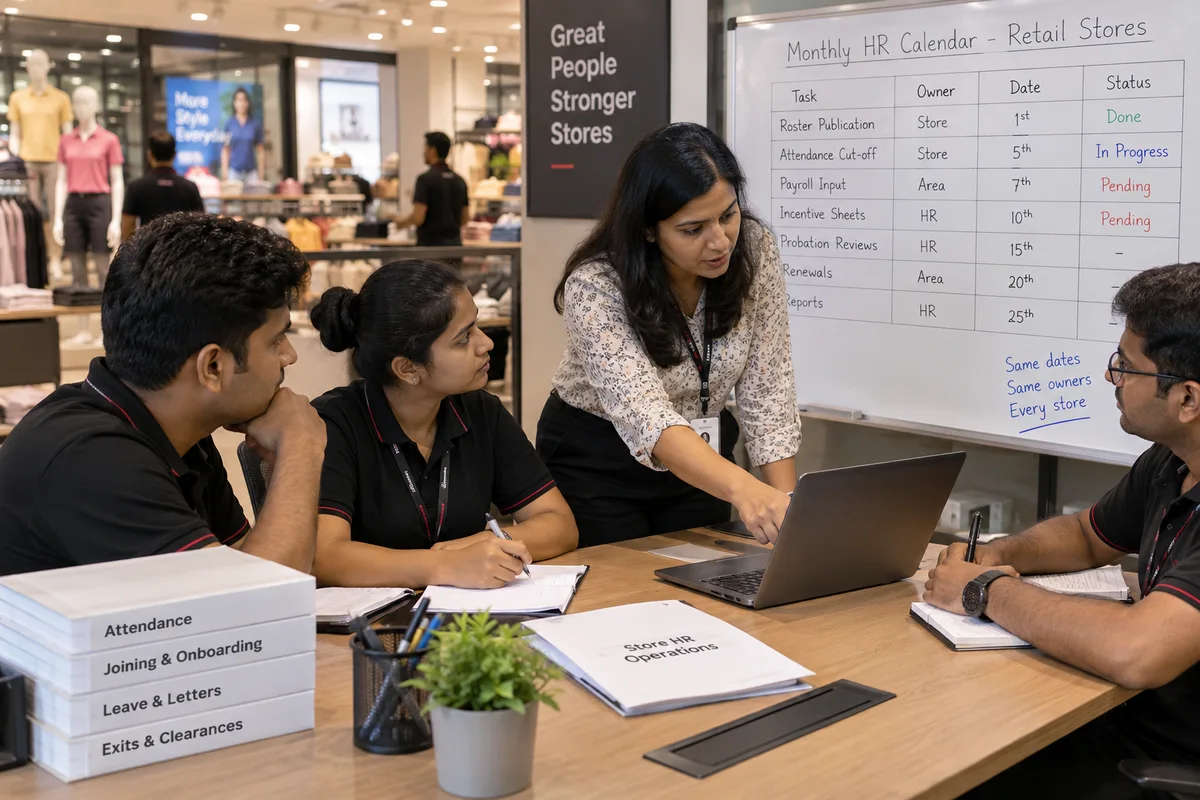
An HR function that runs the same way every month.
How many people, in which roles, by when — and what they will cost.
Structure, reporting lines and who is allowed to decide what.
Requisition to joining, the same way every time.
A first day that is the same for the fifth joiner as the first.
Records, attendance, leave and the day-to-day HR that must simply work.
Salary structure, payroll inputs and a month that closes on time.
Goals, reviews and ratings that hold up in a conversation.
Named backups for the roles that cannot be vacant.
Communication, recognition and the conditions people actually work in.
Two routes — one for complaints, one for conduct — kept separate.
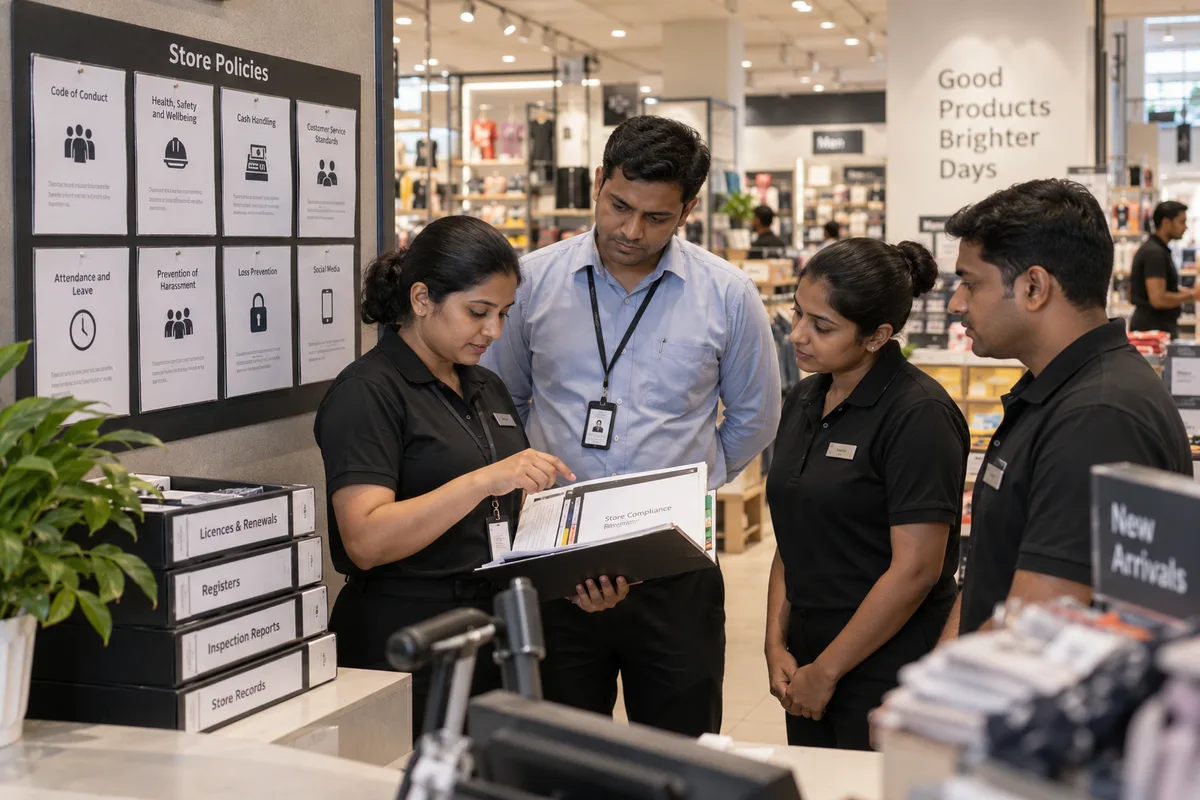
Policies a manager can apply, and obligations with owners and dates.
Who leaves, when, why — and which of them mattered.
Resignation to relieving letter, in a defined order.
Records that survive people, and approvals that do not queue.
A short monthly pack management actually reads.
The pieces a fitness equipment dealers business puts in place, in an order that makes each easier. Open any card for the detail.
A guide and a hands-on session on each major machine, with a short check before staff demonstrate alone.
A guide and a hands-on session on each major machine, with a short check before staff demonstrate alone. See the learning and development process.
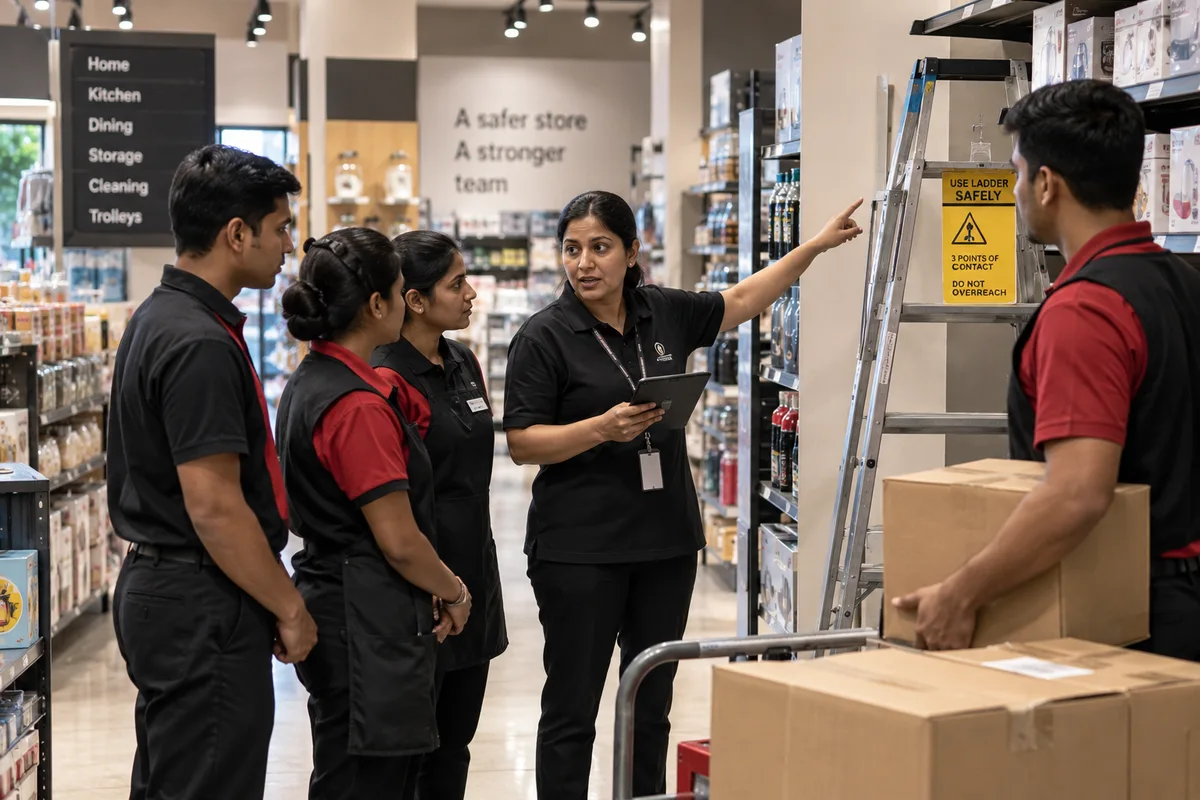
Two-person carries, proper tools, floor protection and a final safety check.
Two-person carries, proper tools, floor protection and a final safety check. The workplace health and safety work covers this.
A checklist signed by the crew and the customer at handover.
A checklist signed by the crew and the customer at handover. See the hr documentation process.
A log with date, owner and result, and a weekly look at open items.
A log with date, owner and result, and a weekly look at open items.
A delivery and installation slip created at billing.
A delivery and installation slip created at billing.
Rosters and extra hands planned weeks ahead.
Rosters and extra hands planned weeks ahead. See payroll process management for crew pay terms.
Before changing anything, find out what is true today. These checks take an afternoon and tell you which of the topics above to start with.
Share your requirementsConfirm with a qualified professional. What applies to you depends on your business, your state and your arrangements, and it changes. This page describes practice. It does not state a legal position.
The services below fit this kind of business best. Each starts by recording where you stand, and every later report compares against that. We do not promise outcomes.
Product training with a check before staff demonstrate alone.
A lifting and assembly safety routine for crews.
Assembly checklists and service logs that settle who did what.
Clear pay terms for salaried staff and per-job crews.
Start with a free conversation, or see the paid HR Diagnostic.
Understand the business, its workforce, current processes and HR challenges.
Find the missing, weak, inconsistent or person-dependent processes.
Create the structure, processes, policies, SOPs, dashboards and systems needed.
Help HR and department managers actually adopt the new system.
Digitise repetitive and approval-based workflows where it is worth doing.
Track hiring, attendance, employee cost, performance, training and attrition.
Strengthen the people-management system continuously, not once.
From the GullyHR blog: one on HR in retail, and one on each of the topics this page points to.

Why store staff and managers leave retail jobs, and how to ask about rosters, weekends, targets and incentives in an exit conversation that leads to action.
7 min readRead article
A founder's guide to hiring freshers and running a first-year programme: campus or open drives, a screening round, a training plan by quarter, mentors and checkpoints.
6 min readRead article
A shift, weekly and monthly safety routine for rubber plants that names who checks platen guards, mill trip bars, autoclave doors, burst-test cages and slings, and who acts on near misses.
7 min readRead article
Every growing company reaches a point where the founder approving everything stops being speed and starts being the bottleneck. Twelve signs it has happened, and what to fix first.
9 min readRead articleMore on the GullyHR blog.
Train with the machines, test understanding and let new staff demonstrate to a senior before real customers.
Use two-person carries, the right tools, a plan for stairs and a stop rule when a load is unsafe. Log near misses.
It confirms a safety check was done and protects both customer and dealer. A short checklist is enough.
Log every call, assign an owner, set a visit date and review weekly. Consider extra technician capacity in the peak.
Plan useful work such as corporate calls, servicing and training, keep pay dates steady and talk early.
We would look at product training, assembly sign-off and service logs. A good first job is an assembly checklist and a service call log. Wider work is scoped with you and put in writing before it starts.
All 128 business types in retail · Find another business type
See all HR topics for retail, or another industry.
Tell us what is slowing your team down. We’ll help you find a practical way forward, starting with a conversation.