






Industries
Why retail employees leave and how to understand why
Why store staff and managers leave retail jobs, and how to ask about rosters, weekends, targets and incentives in an exit conversation that leads to action.
7 min readRead articleAn ethnic wear store sells kurtas, lehengas, sherwanis, salwar suits and festive outfits for weddings and occasions. Staff style customers, handle alterations and fittings, and survive a calendar of sharp festival and wedding peaks.

Not sure what you need? Tell us about your business in six short steps and we will come to the first meeting prepared.
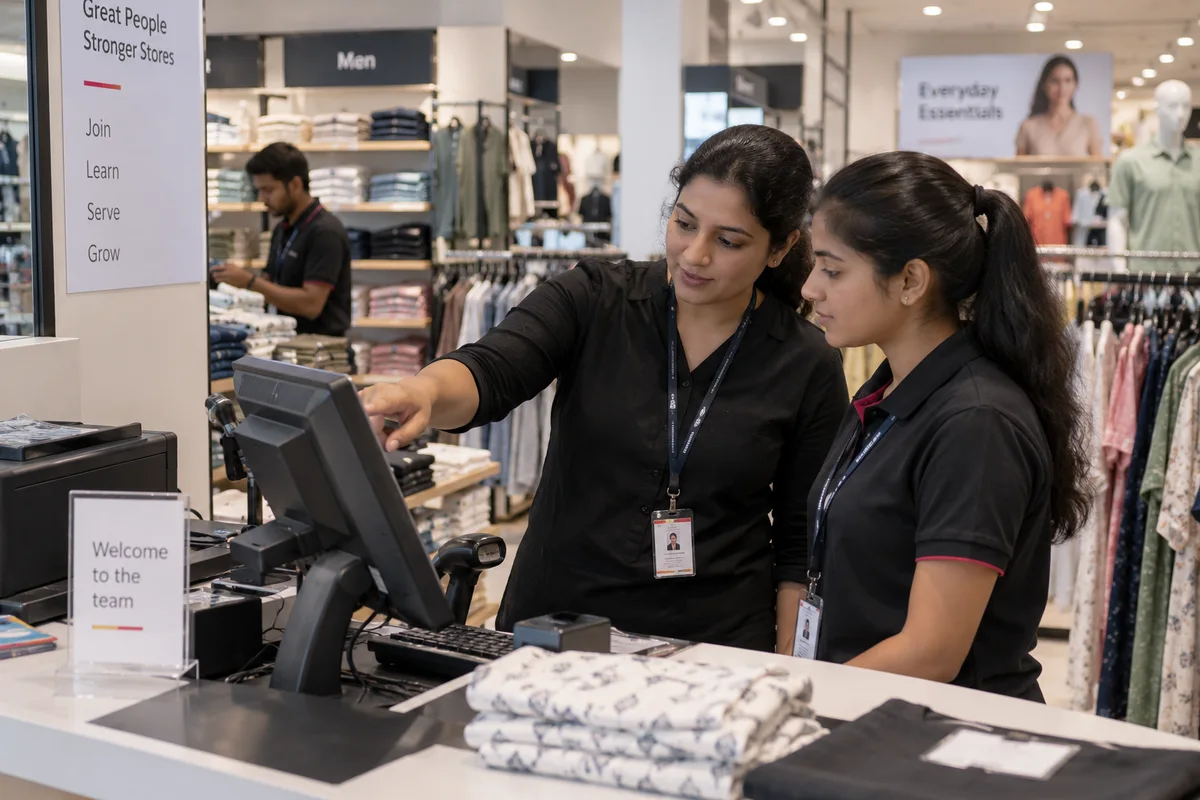
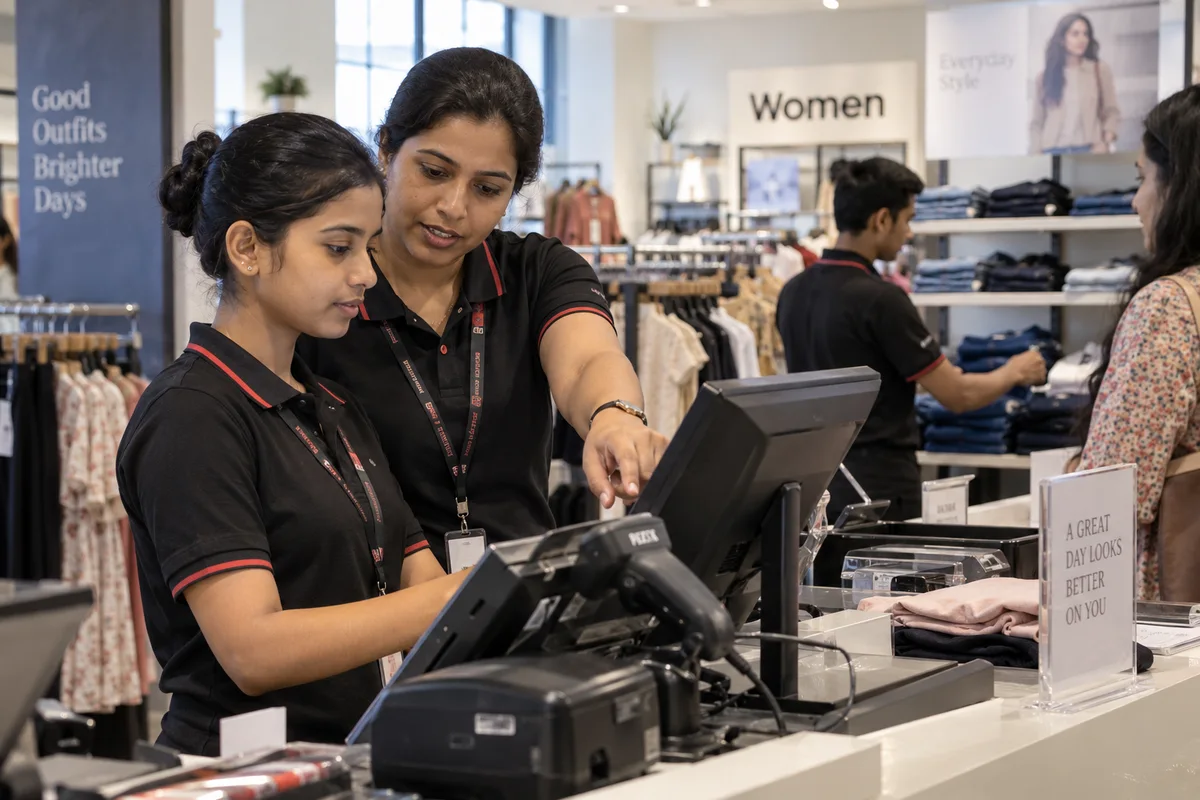
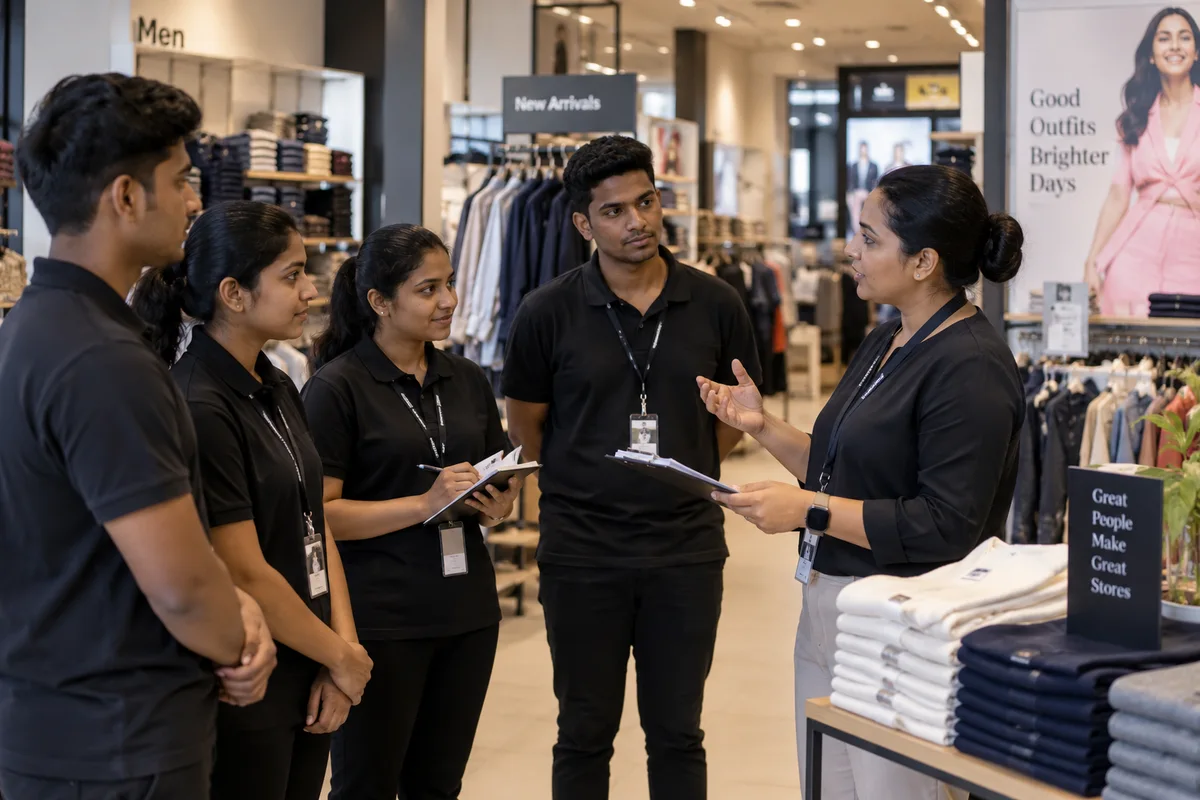
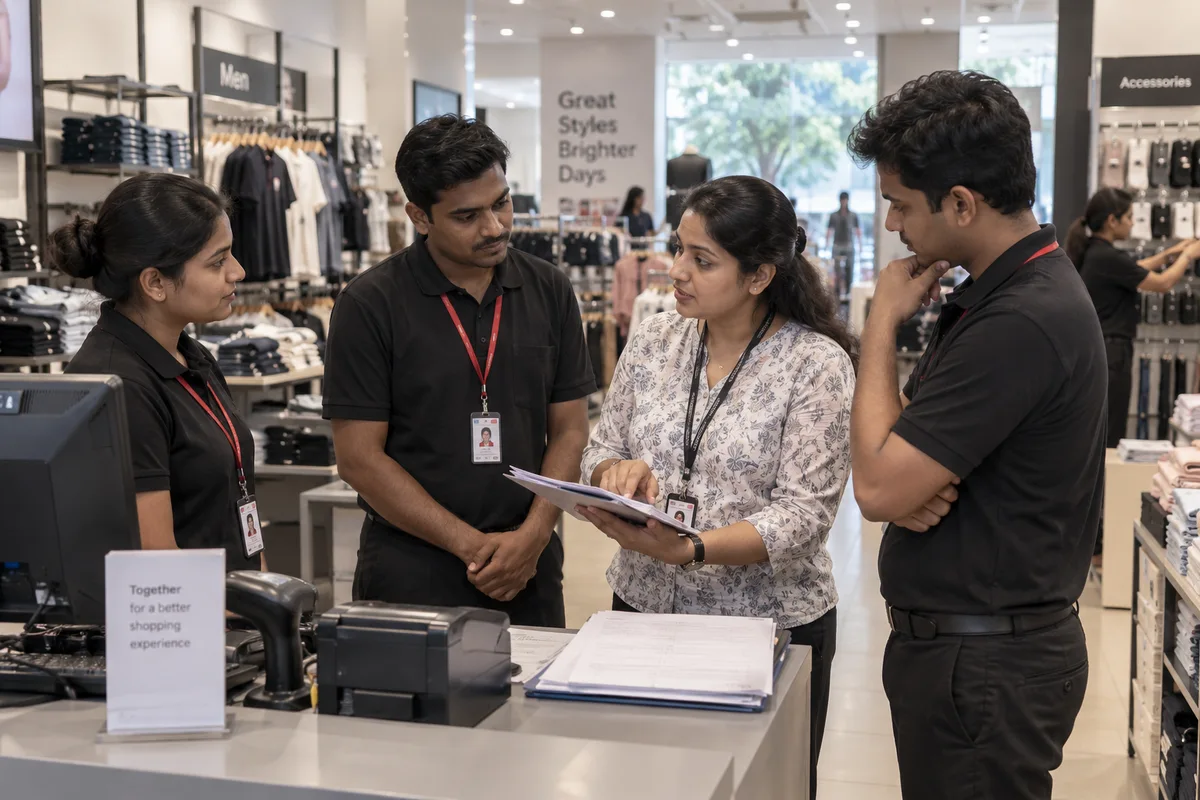
Share your requirementsAn ethnic wear store works on occasions. A customer comes for a wedding, a festival or a function with a date, a budget and several family members with opinions. Floor stylists show outfits, recommend colours and pairings, and manage family groups. Behind them are a trial-room team, an alterations tailor, a billing desk, a stock and display team and sometimes buyers who travel to markets. Garments are costly and delicate. Alterations decide whether the outfit is ready on time, and a late blouse or hem is a serious problem. Seasons are intense, with peak weeks before festivals and wedding months, followed by calm. Staff stand long hours and handle crowds, and good stylists are prized. For the wider sector picture, read HR for retail.
These are the places the people side of this kind of business tends to give way. The rest of this page works through them.
HR here has to work for each of these groups, not only the office. The set-up below is written with all of them in mind.
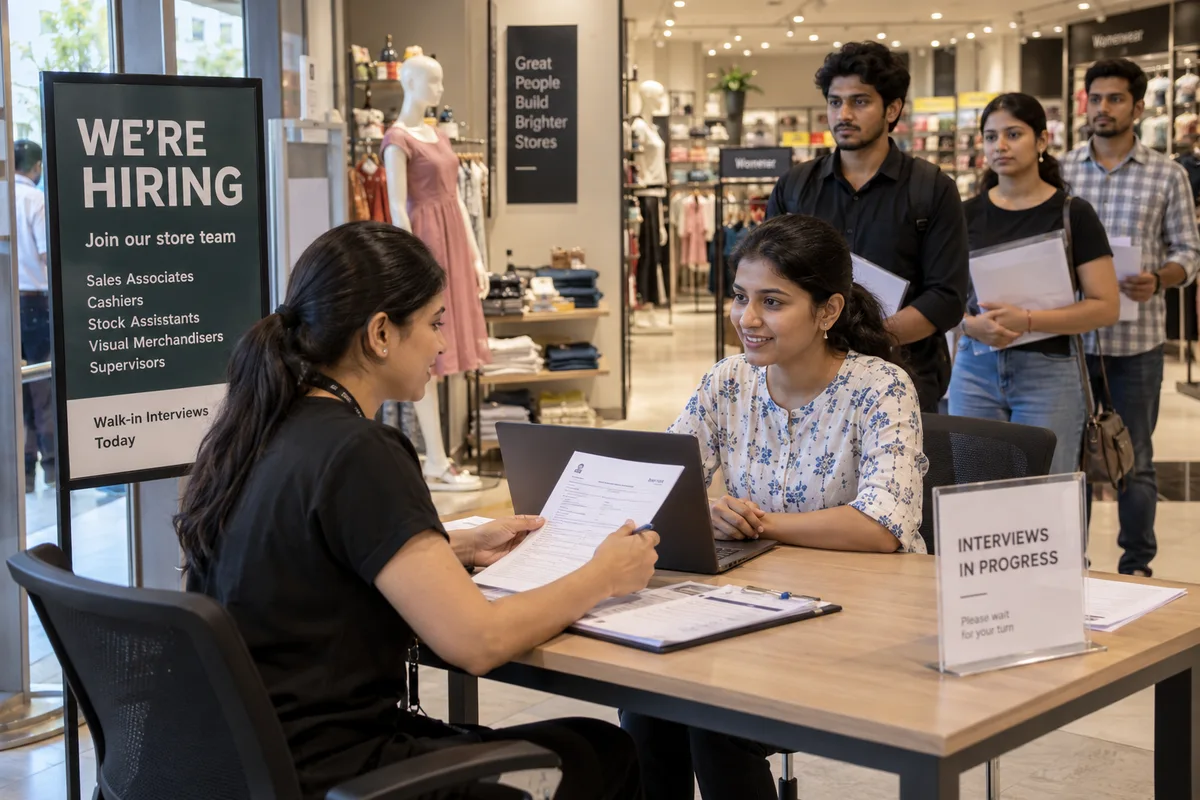
GullyHR runs talent acquisition for permanent roles in ethnic wear stores. For each role we agree the job description with you, find and screen candidates against it, and support the offer through to joining. Tell us the role and the number of people, and we start there.
We recruit permanent employees. We do not supply contract or temporary staff.
Every business interviews, but few have a written process that works the same way for every role and every interviewer. GullyHR designs yours, from the role brief to the offer, trains your managers to run it, and can run it for you on the roles you hand us.
We agree what the role must deliver, the must-have and nice-to-have skills, and how each will be scored.
Screening call, assessment, interview rounds and decision points, sized to the role and the number of people you hire.
Structured questions for each role family and a rating guide, so two interviewers judge the same answer the same way.
A short briefing for your managers on what to ask, what to avoid and how to give a clear yes or no.
Who approves, how the offer is made, and how candidates are kept informed from first call to joining.
The bride, her mother and an aunt each want different outfits. A stylist who can guide the group sells; an impatient one loses the lot.
An outfit that is not ready on the promised date is remembered. A single tailor with a heap of orders in peak weeks is a weak spot.
Sales staff commit dates without checking the tailor. The tailor learns of them later, and the stylist faces the customer.
Standing hours, crowds and tight dates produce tired staff and mistakes, then months of slack in which hours and incentive fall.
Stains, snagged embroidery and misplaced pieces in trial rooms bring losses. No one signs for what was tried and returned.
Stylists compete over walk-ins and family groups. Who gets credit is argued and customers sense the friction.
A sought-after stylist can move to a rival store, and her regular customers follow, a loss the owner sees only afterwards.
New collections, markdowns and festive layouts mean staff must relearn the floor quickly, yet no one briefs them.
Start with the topics that matter most here: Retention and Attrition Management; HR Operations and Governance; Compensation, Payroll and Benefits. Then work through the rest. Each topic is written for retail, not in general.
Who leaves, when, why — and which of them mattered.
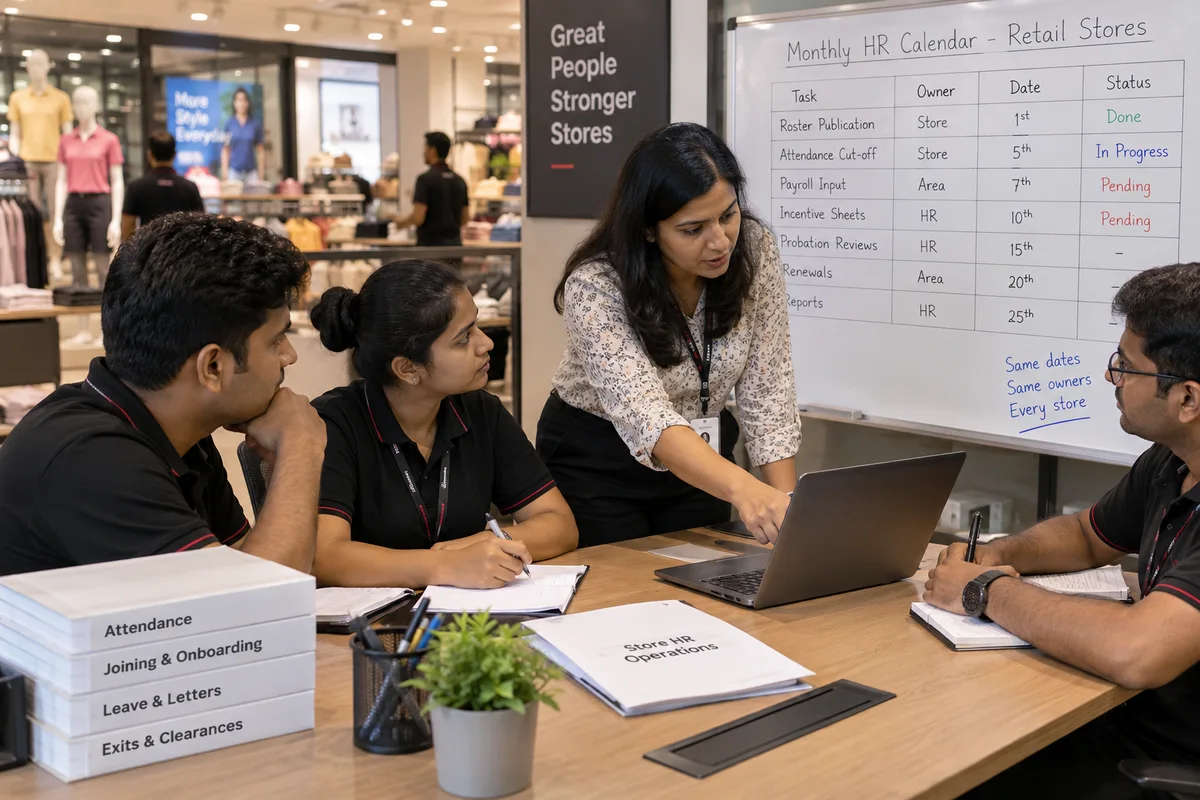
An HR function that runs the same way every month.
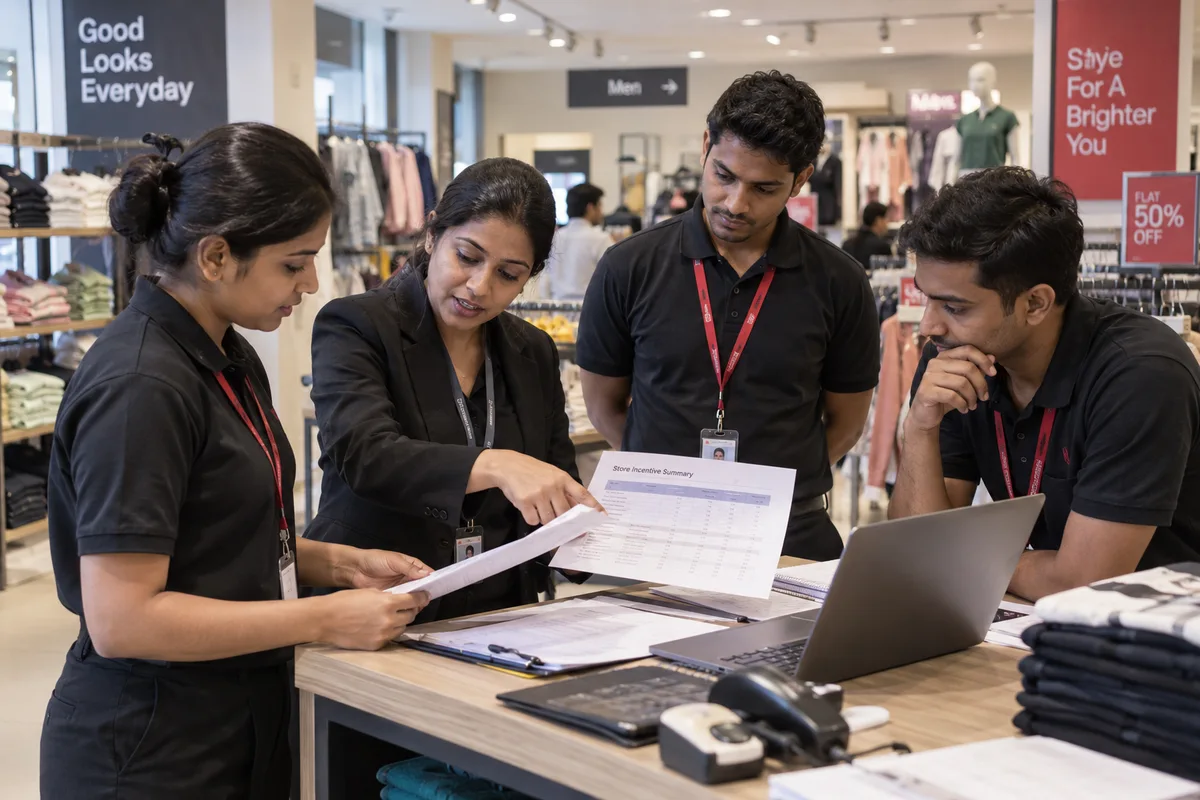
Salary structure, payroll inputs and a month that closes on time.
How many people, in which roles, by when — and what they will cost.
Structure, reporting lines and who is allowed to decide what.
Requisition to joining, the same way every time.
A first day that is the same for the fifth joiner as the first.
Records, attendance, leave and the day-to-day HR that must simply work.
Goals, reviews and ratings that hold up in a conversation.
Training planned from need rather than from the calendar.
Named backups for the roles that cannot be vacant.
Communication, recognition and the conditions people actually work in.
Two routes — one for complaints, one for conduct — kept separate.
Policies a manager can apply, and obligations with owners and dates.
Induction, records, incident reporting and follow-through.
Resignation to relieving letter, in a defined order.
Records that survive people, and approvals that do not queue.
A short monthly pack management actually reads.
The pieces a ethnic wear stores business puts in place, in an order that makes each easier. Open any card for the detail.
A simple board of alteration slots by date, checked before a date is promised.
A simple board of alteration slots by date, checked before a date is promised. See the hr documentation process.
Share common alterations so a single absence does not stall the peak.
Share common alterations so a single absence does not stall the peak.
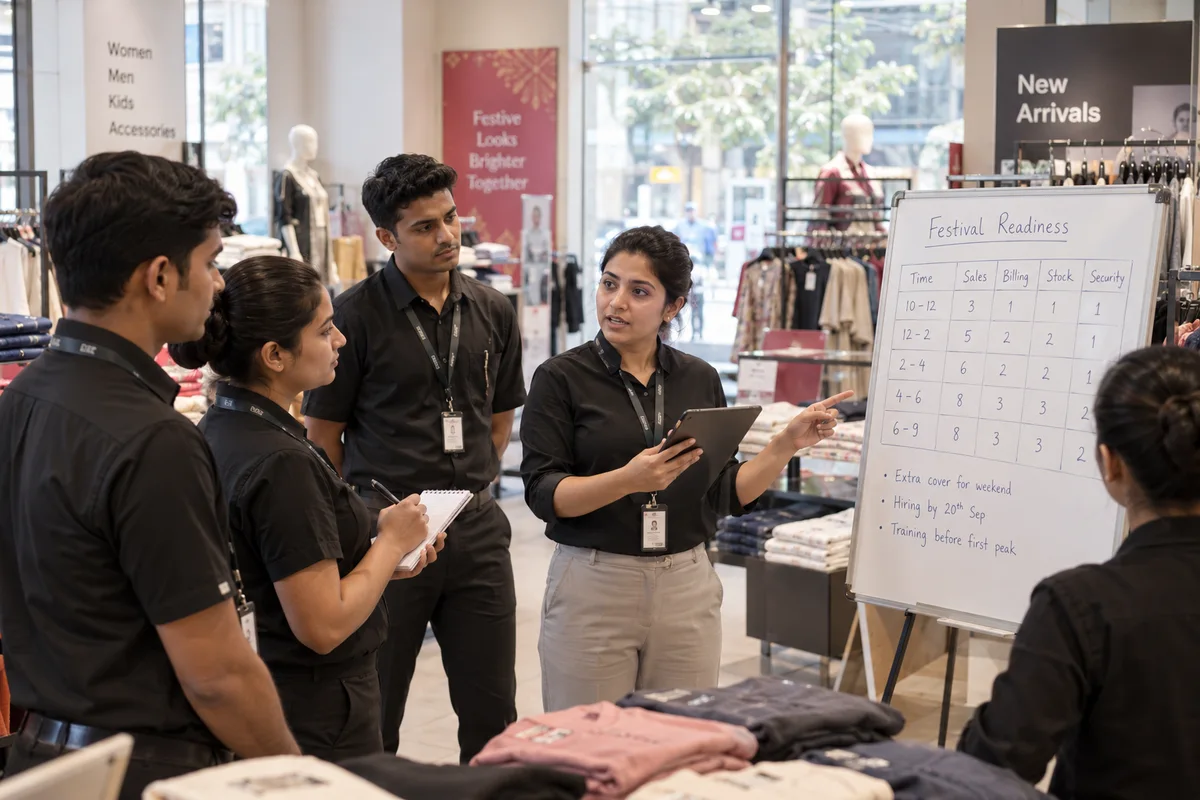
Roster by hour, set breaks and trained extra hands brought in early.
Roster by hour, set breaks and trained extra hands brought in early. The attendance, shift and leave process supports this.
A tag count in and out of trial rooms, handled by the attendant, to prevent loss and damage.
A tag count in and out of trial rooms, handled by the attendant, to prevent loss and damage.
A written rule for walk-ins, repeat customers and family groups.
A written rule for walk-ins, repeat customers and family groups. See payroll process management.
Public recognition, a senior stylist role and training others.
Public recognition, a senior stylist role and training others. The performance management process can set clear goals.
Before changing anything, find out what is true today. These checks take an afternoon and tell you which of the topics above to start with.
Share your requirementsConfirm with a qualified professional. What applies to you depends on your business, your state and your arrangements, and it changes. This page describes practice. It does not state a legal position.
The services below fit this kind of business best. Each starts by recording where you stand, and every later report compares against that. We do not promise outcomes.
Alteration slot boards and trial-room tags that keep dates and garments safe.
Rosters and breaks for wedding and festival peaks.
Clear rules on incentive credit and base pay.
Goals and growth steps that keep sought-after stylists.
Start with a free conversation, or see the paid HR Diagnostic.
Understand the business, its workforce, current processes and HR challenges.
Find the missing, weak, inconsistent or person-dependent processes.
Create the structure, processes, policies, SOPs, dashboards and systems needed.
Help HR and department managers actually adopt the new system.
Digitise repetitive and approval-based workflows where it is worth doing.
Track hiring, attendance, employee cost, performance, training and attrition.
Strengthen the people-management system continuously, not once.
From the GullyHR blog: one on HR in retail, and one on each of the topics this page points to.
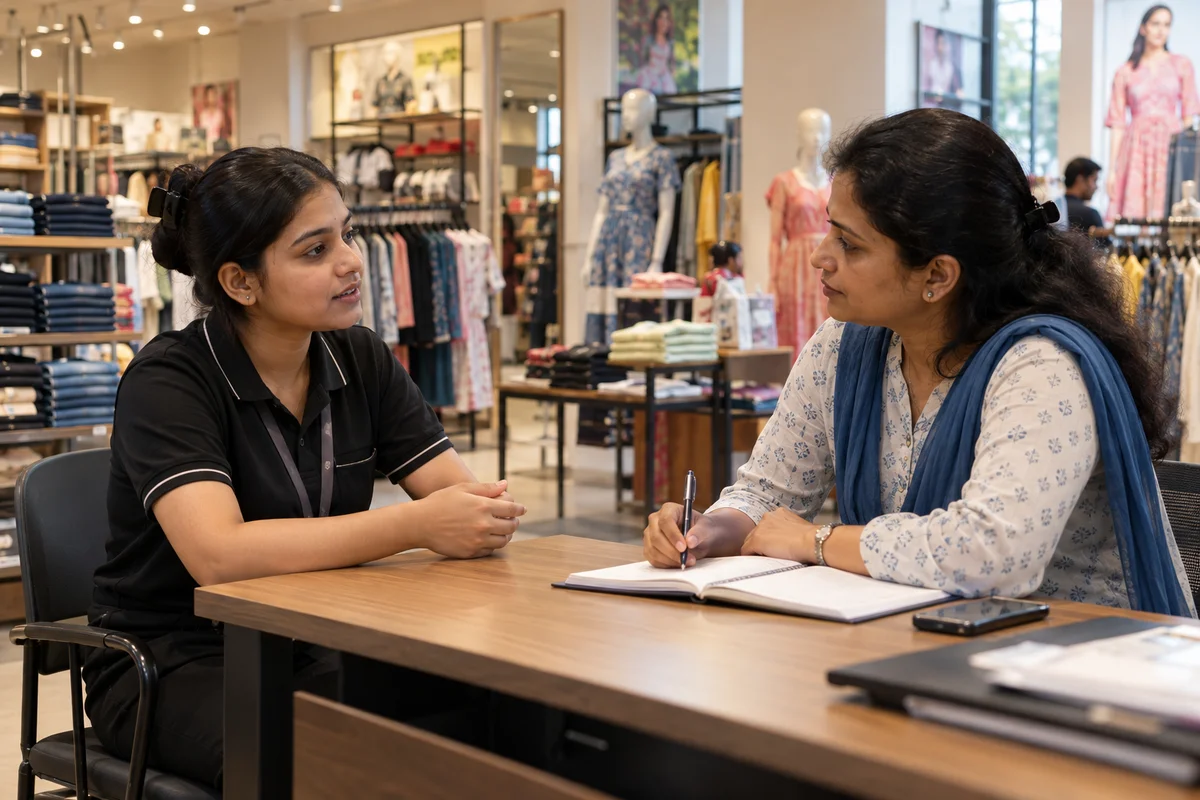
Why store staff and managers leave retail jobs, and how to ask about rosters, weekends, targets and incentives in an exit conversation that leads to action.
7 min readRead article
What really keeps mobile app and web developers in a small firm: stay conversations, growth paths, fair release rules and a risk sheet an owner can use this month.
6 min readRead article
Every growing company reaches a point where the founder approving everything stops being speed and starts being the bottleneck. Twelve signs it has happened, and what to fix first.
9 min readRead article
Simple variable pay structures for product and engineering teams: four options, why individual metrics backfire, a build plan and a one page outline to adapt.
6 min readRead articleMore on the GullyHR blog.
Check the tailor's slot board before promising a date, add a buffer and cross-train a second hand for common jobs.
Write a simple rule for walk-ins, repeat customers and groups. A rule known beforehand is easier to accept than a decision after a sale.
Pay fairly, give her a senior role, involve her in buying and displays and talk early about her goals. People rarely leave where they feel valued.
Plan early: roster, extra hands, tailor capacity and stock. Cap very long days and give rest after the peak.
Tag and count items in and out, keep an attendant on duty and brief customers politely. Record any damage with the circumstances.
We would look at how dates are promised, how tailors are loaded and how stylist credit is shared. A good first job is an alteration slot board and a credit rule. Wider work is scoped with you and put in writing before it starts.
All 128 business types in retail · Find another business type
See all HR topics for retail, or another industry.
Tell us what is slowing your team down. We’ll help you find a practical way forward, starting with a conversation.