


Industries
Why NGO and social enterprise employees leave and how to understand why
Staff at NGOs and social enterprises leave for funding, field and workload reasons as well as pay. How to understand why, listen early and act.
7 min readRead articleA club or gymkhana serves members through dining, sport and events, under a committee that changes every few years. Here is how to keep staff terms, service standards and member complaints under control.

Not sure what you need? Tell us about your business in six short steps and we will come to the first meeting prepared.
Share your requirementsA club or gymkhana runs a restaurant and bar, sports courts and a pool, a banquet hall, rooms and a library, for members who pay fees and expect good service. The staff include a general manager, department heads, stewards and bearers, cooks, coaches and markers, groundsmen, housekeeping, security and accounts clerks. Many have served for decades and know the members by name. An elected committee governs, and each new committee brings its own ideas, so the manager answers to many people and rules shift. Events, weekends, tournaments and festivals bring long, late shifts. Tips and service charges form part of earnings in some departments, which complicates pay records. Members complain loudly and directly to the committee, and staff can be blamed in public. Seniority, favouritism and informal arrangements run deep, while written terms are thin. See also HR for NGOs and social enterprises.
These are the places the people side of this kind of business tends to give way. The rest of this page works through them.
HR here has to work for each of these groups, not only the office. The set-up below is written with all of them in mind.
GullyHR runs talent acquisition for permanent roles in clubs and gymkhanas. For each role we agree the job description with you, find and screen candidates against it, and support the offer through to joining. Tell us the role and the number of people, and we start there.
We recruit permanent employees. We do not supply contract or temporary staff.
Every business interviews, but few have a written process that works the same way for every role and every interviewer. GullyHR designs yours, from the role brief to the offer, trains your managers to run it, and can run it for you on the roles you hand us.
We agree what the role must deliver, the must-have and nice-to-have skills, and how each will be scored.
Screening call, assessment, interview rounds and decision points, sized to the role and the number of people you hire.
Structured questions for each role family and a rating guide, so two interviewers judge the same answer the same way.
A short briefing for your managers on what to ask, what to avoid and how to give a clear yes or no.
Who approves, how the offer is made, and how candidates are kept informed from first call to joining.
A steward gets one instruction from the president and another from the treasurer, and the manager cannot say no to either.
A member's complaint about a bearer becomes a committee item before the manager hears the facts.
Earnings depend on how tips and charges are shared, and nobody can explain the rule clearly when a dispute arises.
Staff with thirty years' service resist new standards, and managers hesitate to correct them for fear of the members who like them.
Banquets, tournaments and annual days end late, and transport, rest and extra pay are settled informally.
Members and committee members recommend relatives or favourites for jobs and promotions, which weakens fairness.
Some coaches and service providers work on fees, some on salary, and terms, insurance and conduct rules differ.
Pool, gym and kitchen work carries risk, but lifeguard cover, first aid and incident records are inconsistent.
Start with the topics that matter most here: Policies, Compliance and Governance; Employee Relations; Compensation, Payroll and Benefits. Then work through the rest. Each topic is written for ngos and social enterprises, not in general.
Policies a manager can apply, and obligations with owners and dates.
Two routes — one for complaints, one for conduct — kept separate.
Salary structure, payroll inputs and a month that closes on time.
How many people, in which roles, by when — and what they will cost.
Structure, reporting lines and who is allowed to decide what.
Requisition to joining, the same way every time.
A first day that is the same for the fifth joiner as the first.
Records, attendance, leave and the day-to-day HR that must simply work.
Goals, reviews and ratings that hold up in a conversation.
Training planned from need rather than from the calendar.
Named backups for the roles that cannot be vacant.
Communication, recognition and the conditions people actually work in.
Induction, records, incident reporting and follow-through.
Who leaves, when, why — and which of them mattered.
Resignation to relieving letter, in a defined order.
Records that survive people, and approvals that do not queue.
A short monthly pack management actually reads.
An HR function that runs the same way every month.
The pieces a clubs and gymkhanas business puts in place, in an order that makes each easier. Open any card for the detail.
Duties, grades, hours, leave, uniform and conduct in one document approved by the committee.
Duties, grades, hours, leave, uniform and conduct in one document approved by the committee. The HR policy packages provide the structure.
A simple member complaint form, a first review by the manager and a record of outcomes before anything goes to the committee.
A simple member complaint form, a first review by the manager and a record of outcomes before anything goes to the committee. The grievance and disciplinary process shows the steps.
One page stating how pooled money is shared by department and grade, shown to staff each month.
One page stating how pooled money is shared by department and grade, shown to staff each month.
A published roster with late-night transport, rest cover and agreed extra pay.
A published roster with late-night transport, rest cover and agreed extra pay. The attendance, shift and leave process guides this.
A basic grade structure and a rule that committee recommendations go through the same interview as everyone.
A basic grade structure and a rule that committee recommendations go through the same interview as everyone. The recruitment process helps.
Lifeguard cover, first aid, hygiene training and an incident register reviewed by a qualified professional.
Lifeguard cover, first aid, hygiene training and an incident register reviewed by a qualified professional.
Before changing anything, find out what is true today. These checks take an afternoon and tell you which of the topics above to start with.
Share your requirementsConfirm with a qualified professional. What applies to you depends on your business, your state and your arrangements, and it changes. This page describes practice. It does not state a legal position.
The services below fit this kind of business best. Each starts by recording where you stand, and every later report compares against that. We do not promise outcomes.
A staff manual and committee protocol that survive changes of office bearers.
Fair handling of member complaints and staff misconduct.
Clear grades and a fair view of pay, including shared service charge.
Rotas for events, late nights and weekend duty.
Start with a free conversation, or see the paid HR Diagnostic.
Understand the business, its workforce, current processes and HR challenges.
Find the missing, weak, inconsistent or person-dependent processes.
Create the structure, processes, policies, SOPs, dashboards and systems needed.
Help HR and department managers actually adopt the new system.
Digitise repetitive and approval-based workflows where it is worth doing.
Track hiring, attendance, employee cost, performance, training and attrition.
Strengthen the people-management system continuously, not once.
From the GullyHR blog: one on HR in ngos and social enterprises, and one on each of the topics this page points to.
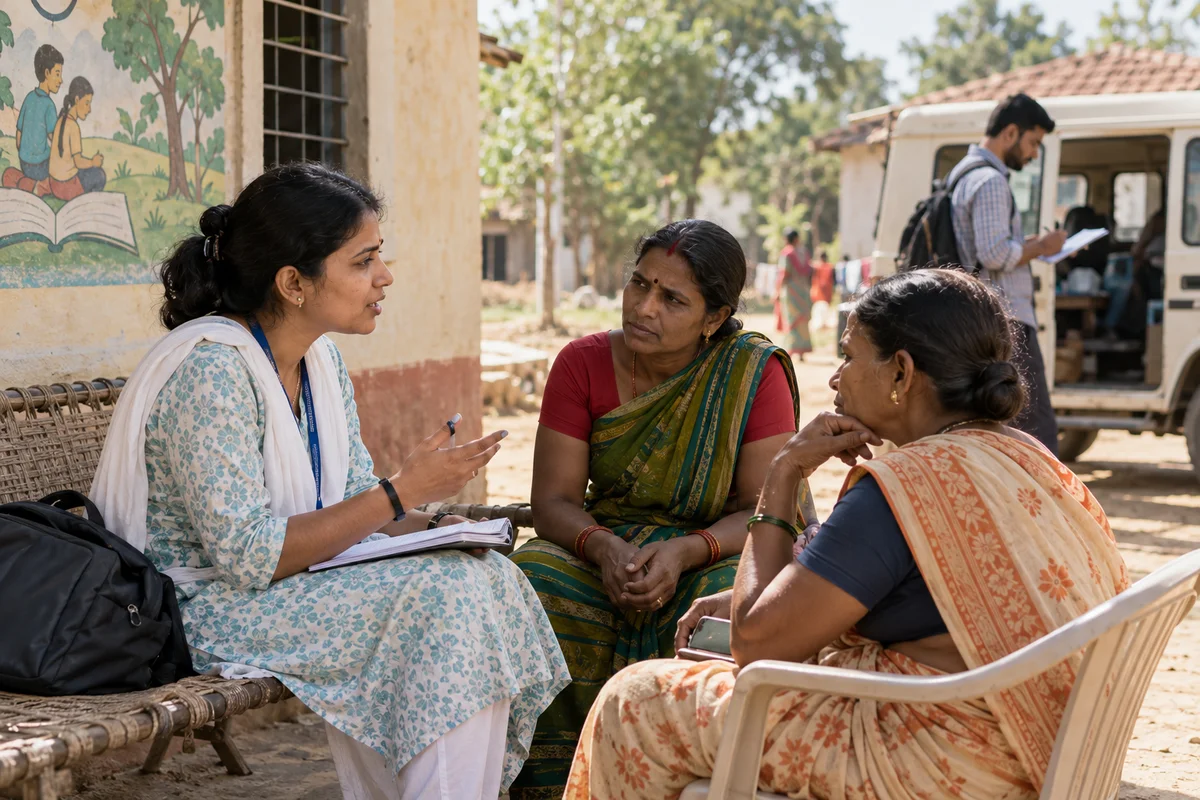
Staff at NGOs and social enterprises leave for funding, field and workload reasons as well as pay. How to understand why, listen early and act.
7 min readRead article
How an India head can sort a global parent's HR policies into apply, adapt or replace, write an India addendum with advisers, and keep headquarters on side.
7 min readRead article
An employee brings you a complaint about their supervisor. What happens next should not depend on who is in the room. A grievance procedure a small company can actually run.
8 min readRead article
Simple variable pay structures for product and engineering teams: four options, why individual metrics backfire, a build plan and a one page outline to adapt.
6 min readRead articleMore on the GullyHR blog.
Through a written form to the manager, who checks facts, hears the staff member and reports the outcome. The committee reviews patterns, not every incident.
Better not. Ask the committee to act through the manager and the agreed manual, so staff do not receive conflicting instructions.
Explain the reason, set standards in writing, train them and recognise their experience. Address performance fairly and with a record.
By a written rule agreed with staff and displayed. Ask a qualified professional about how these amounts should be treated.
Yes. Whether on salary or fee, state duties, hours, fees, conduct and safety rules so members and the club both know what to expect.
We would ask how staff are graded, who instructs them and how complaints reach the committee today. A sensible first piece of work is a staff manual, a complaint route and a written tip-sharing rule. Scope and fees are agreed in writing afterwards.
All 43 business types in ngos and social enterprises · Find another business type
See all HR topics for ngos and social enterprises, or another industry.
Tell us what is slowing your team down. We’ll help you find a practical way forward, starting with a conversation.