












Industries
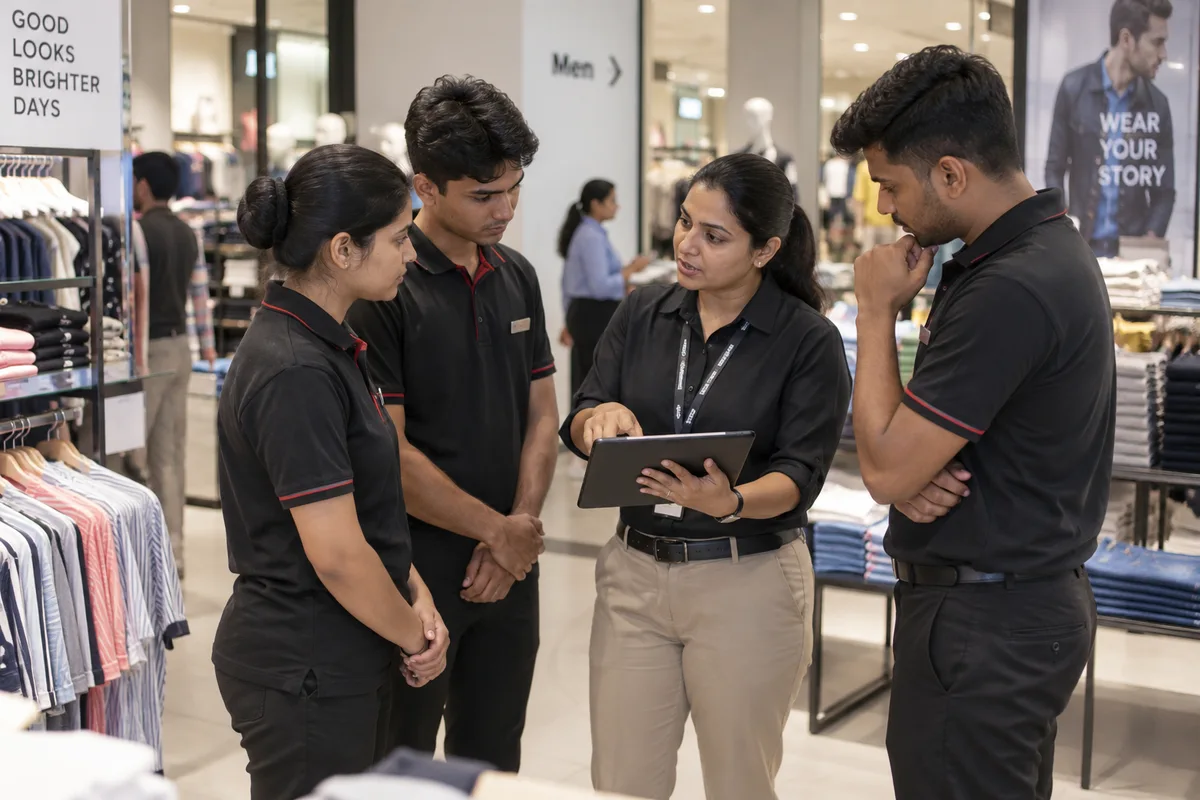
Why retail employees leave and how to understand why
Why store staff and managers leave retail jobs, and how to ask about rosters, weekends, targets and incentives in an exit conversation that leads to action.
7 min readRead articleA candle maker melts wax, pours moulds, scents and packs candles for gifts, homes, temples and events. It is small-batch work with a few skilled hands, a heated workroom and orders that surge around festivals and weddings.

Not sure what you need? Tell us about your business in six short steps and we will come to the first meeting prepared.
Share your requirementsA candle maker may be a home unit growing into a workshop, or a small factory that supplies shops and online buyers. Work moves from melting wax, adding colour and fragrance, pouring into moulds or jars, setting wicks, cooling, trimming and finally packing in boxes. Some units also craft decorative or gift candles by hand. Staff include pourers, mould and finish workers, packers, a person for wicks and labels, someone for deliveries and a few for sales or online orders. The work uses hot wax and fragrance, so burns and fumes need care. Demand peaks sharply at festivals, gifting seasons and weddings, then drops. Skilled finishers are valued, and women often form a large part of the team. For the wider sector picture, read HR for retail.
These are the places the people side of this kind of business tends to give way. The rest of this page works through them.
HR here has to work for each of these groups, not only the office. The set-up below is written with all of them in mind.
GullyHR runs talent acquisition for permanent roles in candle makers. For each role we agree the job description with you, find and screen candidates against it, and support the offer through to joining. Tell us the role and the number of people, and we start there.
We recruit permanent employees. We do not supply contract or temporary staff.
Every business interviews, but few have a written process that works the same way for every role and every interviewer. GullyHR designs yours, from the role brief to the offer, trains your managers to run it, and can run it for you on the roles you hand us.
We agree what the role must deliver, the must-have and nice-to-have skills, and how each will be scored.
Screening call, assessment, interview rounds and decision points, sized to the role and the number of people you hire.
Structured questions for each role family and a rating guide, so two interviewers judge the same answer the same way.
A short briefing for your managers on what to ask, what to avoid and how to give a clear yes or no.
Who approves, how the offer is made, and how candidates are kept informed from first call to joining.
Melting pots, pouring jugs and hot surfaces sit in a small room. A splash or a slip on wax is common, and first aid is often a cloth and hope.
Strong scents and heated wax make a stuffy room hard for those with headaches or breathing trouble, yet nobody asks or changes the ventilation.
A person who can pour a clean candle, trim a wick evenly and decorate neatly is valued. Losing her means weeks of rejects while a new hand learns.
Weeks before a major festival the order book triples. Overtime, borrowed hands and rushed packing cause errors, and then the unit is quiet for months.
Air bubbles, cracks and uneven wicks have causes in temperature, mould and cooling. Without records, staff are scolded for what a process fault caused.
When pay depends on the count, quality drops and breakage rises, yet a fixed wage with no target lets pace fall.
Extra packers and decorators are brought in for peaks, paid in cash and not noted, so no one knows who did what.
Pick lists, gift notes and packing instructions travel by chat messages, and a missed line means a wrong candle or a bruised customer.
Start with the topics that matter most here: Health, Safety and Wellbeing; HR Operations and Governance; Compensation, Payroll and Benefits. Then work through the rest. Each topic is written for retail, not in general.
Induction, records, incident reporting and follow-through.
An HR function that runs the same way every month.
Salary structure, payroll inputs and a month that closes on time.
How many people, in which roles, by when — and what they will cost.
Structure, reporting lines and who is allowed to decide what.
Requisition to joining, the same way every time.
A first day that is the same for the fifth joiner as the first.
Records, attendance, leave and the day-to-day HR that must simply work.
Goals, reviews and ratings that hold up in a conversation.
Training planned from need rather than from the calendar.
Named backups for the roles that cannot be vacant.
Communication, recognition and the conditions people actually work in.
Two routes — one for complaints, one for conduct — kept separate.
Policies a manager can apply, and obligations with owners and dates.
Who leaves, when, why — and which of them mattered.
Resignation to relieving letter, in a defined order.
Records that survive people, and approvals that do not queue.
A short monthly pack management actually reads.
The pieces a candle makers business puts in place, in an order that makes each easier. Open any card for the detail.
Temperatures, pot handling, who pours and who stands clear, with a first-aid kit and burn-care steps at hand.
Temperatures, pot handling, who pours and who stands clear, with a first-aid kit and burn-care steps at hand. The workplace health and safety work shows how to set it.
Open the room, add exhaust where possible and allow short breaks for those affected.
Open the room, add exhaust where possible and allow short breaks for those affected. Ask workers directly what bothers them.
Note the batch, the cause and the person at that stage, so the fault is traced to process before it is blamed on a worker.
Note the batch, the cause and the person at that stage, so the fault is traced to process before it is blamed on a worker. See the hr documentation process.
Agree dates, hands needed, overtime limits and who trains seasonal helpers, well before the order book fills.
Agree dates, hands needed, overtime limits and who trains seasonal helpers, well before the order book fills. The attendance, shift and leave process helps set the roster.
A base wage with a modest output bonus tied to accepted pieces, not counted pieces.
A base wage with a modest output bonus tied to accepted pieces, not counted pieces. See payroll process management.
Even short-term packers and decorators are noted by name, days and tasks, so the record is true.
Even short-term packers and decorators are noted by name, days and tasks, so the record is true.
Before changing anything, find out what is true today. These checks take an afternoon and tell you which of the topics above to start with.
Share your requirementsConfirm with a qualified professional. What applies to you depends on your business, your state and your arrangements, and it changes. This page describes practice. It does not state a legal position.
The services below fit this kind of business best. Each starts by recording where you stand, and every later report compares against that. We do not promise outcomes.
A hot-wax, ventilation and first-aid routine for the workroom.
Rosters and overtime limits for festival peaks and quiet months.
Batch and reject records that trace faults to process, not people.
A base-plus-bonus pay routine that rewards accepted pieces.
Start with a free conversation, or see the paid HR Diagnostic.
Understand the business, its workforce, current processes and HR challenges.
Find the missing, weak, inconsistent or person-dependent processes.
Create the structure, processes, policies, SOPs, dashboards and systems needed.
Help HR and department managers actually adopt the new system.
Digitise repetitive and approval-based workflows where it is worth doing.
Track hiring, attendance, employee cost, performance, training and attrition.
Strengthen the people-management system continuously, not once.
From the GullyHR blog: one on HR in retail, and one on each of the topics this page points to.

Why store staff and managers leave retail jobs, and how to ask about rosters, weekends, targets and incentives in an exit conversation that leads to action.
7 min readRead article
A shift, weekly and monthly safety routine for rubber plants that names who checks platen guards, mill trip bars, autoclave doors, burst-test cages and slings, and who acts on near misses.
7 min readRead article
Every growing company reaches a point where the founder approving everything stops being speed and starts being the bottleneck. Twelve signs it has happened, and what to fix first.
9 min readRead article
Simple variable pay structures for product and engineering teams: four options, why individual metrics backfire, a build plan and a one page outline to adapt.
6 min readRead articleMore on the GullyHR blog.
Use a set pouring routine, keep walkways clear of wax, give heat-proof gloves and aprons and keep burn first aid close. Teach it in person and repeat after any near miss.
Improve airflow, take short breaks and listen to workers who feel unwell. If the trouble continues, ask a qualified professional for advice on the room and the materials.
Recognise their skill in pay and role, let them teach, and keep their workdays predictable outside the peak. People stay where they are respected and not burnt out at festivals.
A piece rate can raise pace but also rejects. Many units choose a base wage with a bonus for accepted pieces. Confirm the arrangement with a qualified professional.
Plan early, set a limit on extra hours, bring in trained helpers in good time and stagger deliveries. A calm roster beats a last-week scramble.
We would look at the pouring routine, reject records and the festival roster. A good first job is a one-page safety routine and a batch record. Wider work is scoped with you and put in writing before it starts.
All 128 business types in retail · Find another business type
See all HR topics for retail, or another industry.
Tell us what is slowing your team down. We’ll help you find a practical way forward, starting with a conversation.