


















Industries
Why NGO and social enterprise employees leave and how to understand why
Staff at NGOs and social enterprises leave for funding, field and workload reasons as well as pay. How to understand why, listen early and act.
7 min readRead articleAn industry association runs on a small secretariat that serves hundreds of member firms and a committee of busy owners. A few coordinators carry the events, the member queries and the paperwork, so each resignation is felt at once.

Not sure what you need? Tell us about your business in six short steps and we will come to the first meeting prepared.
Share your requirementsAn industry association represents firms in one trade, such as textiles, auto components or food processing. Its permanent team is usually small: a secretary general or director, a few coordinators, an accounts person and office support. Work follows the calendar of committee meetings, seminars, trade fairs and delegations, and members ring up with questions the same day. Bosses change too, because office bearers are elected and each new president brings priorities. Extra hands are hired for event weeks and some specialists work as consultants. The wider NGO and social enterprise hub covers what such organisations share, and the associations hub looks at the whole family.
These are the places the people side of this kind of business tends to give way. The rest of this page works through them.
HR here has to work for each of these groups, not only the office. The set-up below is written with all of them in mind.
Seminars, delegations and fairs fall on a handful of coordinators, so leave is blocked for weeks and burnout follows the busy months.
A new president brings new wishes, and staff must relearn who decides what, which unsettles people who stay for years.
Staff report to the director on paper but take orders from committee chairs in practice, and conflicting asks go unresolved.
Without clear targets, a coordinator who runs a sharp event and one who coasts often get the same increment.
Students and part-timers are pulled in at short notice and learn the registration desk on the day, in front of members.
Short-term specialists and permanent staff have different terms, and the records of who is engaged for what are thin.
Start with the topics that matter most here: Organisation Design; Employee Administration; Performance Management. Then work through the rest. Each topic is written for ngos and social enterprises, not in general.
Structure, reporting lines and who is allowed to decide what.
Records, attendance, leave and the day-to-day HR that must simply work.
Goals, reviews and ratings that hold up in a conversation.
How many people, in which roles, by when — and what they will cost.
Requisition to joining, the same way every time.
A first day that is the same for the fifth joiner as the first.
Salary structure, payroll inputs and a month that closes on time.
Training planned from need rather than from the calendar.
Named backups for the roles that cannot be vacant.
Communication, recognition and the conditions people actually work in.
Two routes — one for complaints, one for conduct — kept separate.
Policies a manager can apply, and obligations with owners and dates.
Induction, records, incident reporting and follow-through.
Who leaves, when, why — and which of them mattered.
Resignation to relieving letter, in a defined order.
Records that survive people, and approvals that do not queue.
A short monthly pack management actually reads.
An HR function that runs the same way every month.
The pieces a industry associations business puts in place, in an order that makes each easier. Open any card for the detail.
One reporting line to the director, with a clear way for committee chairs to route requests.
What this coversHideOne reporting line to the director, with a clear way for committee chairs to route requests. See role design for a simple format.
For every major event, list the roles, who fills them, and when helpers are briefed.
What this coversHideFor every major event, list the roles, who fills them, and when helpers are briefed. The attendance and leave process then protects time off around peaks.
A half-yearly talk against four or five agreed outcomes such as events delivered, member queries answered and reports published.
What this coversHideA half-yearly talk against four or five agreed outcomes such as events delivered, member queries answered and reports published.
A single folder of terms, scope and dates, so the secretariat knows who is engaged and for what.
What this coversHideA single folder of terms, scope and dates, so the secretariat knows who is engaged and for what. The documentation process shows how.
A short pack on how the secretariat works, who does what and how requests reach staff, handed over at each change of term.
What this coversHideA short pack on how the secretariat works, who does what and how requests reach staff, handed over at each change of term.
Before changing anything, find out what is true today. These checks take an afternoon and tell you which of the topics above to start with.
Share your requirementsConfirm with a qualified professional. What applies to you depends on your business, your state and your arrangements, and it changes. This page describes practice. It does not state a legal position.
The services below fit this kind of business best. Each starts by recording where you stand, and every later report compares against that. We do not promise outcomes.
Clear roles and one reporting line for coordinators who take asks from many committee chairs.
Leave and time-off planning that respects event peaks and the quiet weeks after them.
A light appraisal for a small secretariat, tied to events delivered and members served.
One tidy record for staff, event helpers and consultants engaged by the association.
Start with a free conversation, or see the paid HR Diagnostic.
Understand the business, its workforce, current processes and HR challenges.
Find the missing, weak, inconsistent or person-dependent processes.
Create the structure, processes, policies, SOPs, dashboards and systems needed.
Help HR and department managers actually adopt the new system.
Digitise repetitive and approval-based workflows where it is worth doing.
Track hiring, attendance, employee cost, performance, training and attrition.
Strengthen the people-management system continuously, not once.
From the GullyHR blog: one on HR in ngos and social enterprises, and one on each of the topics this page points to.
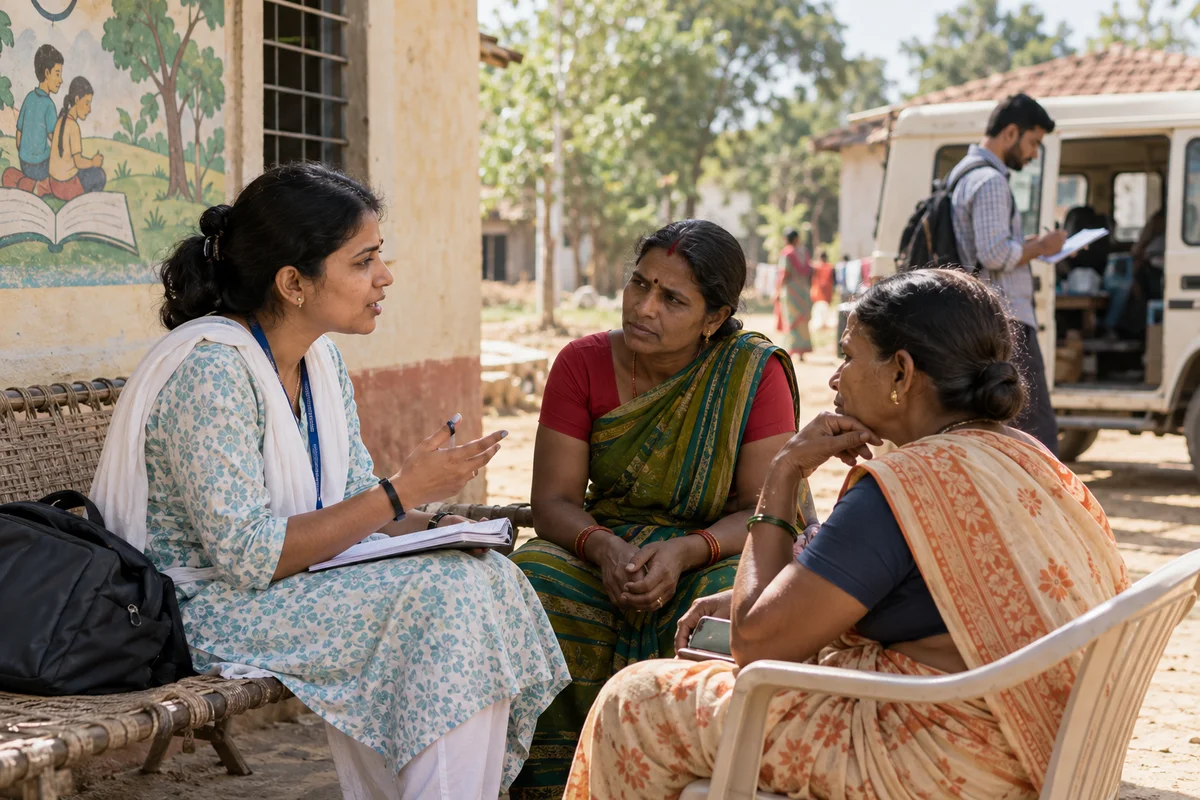
Staff at NGOs and social enterprises leave for funding, field and workload reasons as well as pay. How to understand why, listen early and act.
7 min readRead article
A flat structure works until the founder becomes the only route to a decision. How to tell when you have passed that point, and how to redesign without a reorganisation.
8 min readRead article
Payroll says one joining date, the personal file says another and the manager remembers a third. How to establish a single trustworthy employee record and keep it that way.
7 min readRead article
Measures that show how reactor, console, lab and gantry staff are really doing, the ones that mislead or bury near misses, and a monthly sheet an in-charge can run in twenty minutes.
7 min readRead articleMore on the GullyHR blog.
There is no fixed number. Count the events, committees and member queries you handle in a year, then match people to that load. A small team with clear roles beats a larger one with muddled lines.
Usually the president or a named office bearer, with a small executive group for important decisions. One named person avoids staff receiving different instructions from different chairs.
Plan time off after each major event, share the load among more than one person and recognise good work in appraisal. Burnout drives more exits than pay in many associations.
Yes, if they are briefed, given a written task list and supervised by a named coordinator. Treat them as a short programme with an induction, not as extra bodies on the day.
Keep a written description of roles and processes, and let the director agree changes with the new office bearers. It protects the secretariat from shifting every time the leadership changes.
We would first ask who each person reports to, list the next six months of events against the people available and read how consultants are engaged. A clear role and reporting map is a natural first job, with scope written for your approval.
All 6 business types in associations & membership organizations · Find another business type
See all HR topics for ngos and social enterprises, or another industry.
Tell us what is slowing your team down. We’ll help you find a practical way forward, starting with a conversation.