


Industries
Why NGO and social enterprise employees leave and how to understand why
Staff at NGOs and social enterprises leave for funding, field and workload reasons as well as pay. How to understand why, listen early and act.
7 min readRead articleA volunteer organisation gets its work done by people who are not paid. Here is how to recruit, brief, supervise and thank volunteers, and how to treat the few paid staff who coordinate them.

Not sure what you need? Tell us about your business in six short steps and we will come to the first meeting prepared.
Share your requirementsA volunteer organisation, such as a youth corps, disaster response group, community kitchen, tutoring network or hospital visiting group, depends mainly on people who give time without pay. A small paid team of a coordinator, programme officer and administrator manages many volunteers: students, retired professionals, homemakers, working youth and corporate groups. Volunteers join with energy and leave quickly if the work is unclear, unsupervised or unappreciated. Availability changes with exams, jobs and family. Some do sensitive tasks such as helping children, visiting the ill or handling donations, which needs care. Unlike staff, volunteers cannot be directed through pay, so motivation, purpose and respect carry the weight. Paid coordinators may supervise people older and more experienced than themselves. Without records, nobody knows how many active volunteers there are or what they have done. Certificates and letters are often requested later. See also HR for NGOs and social enterprises.
These are the places the people side of this kind of business tends to give way. The rest of this page works through them.
HR here has to work for each of these groups, not only the office. The set-up below is written with all of them in mind.
GullyHR runs talent acquisition for permanent roles in volunteer organisations. For each role we agree the job description with you, find and screen candidates against it, and support the offer through to joining. Tell us the role and the number of people, and we start there.
We recruit permanent employees. We do not supply contract or temporary staff.
Every business interviews, but few have a written process that works the same way for every role and every interviewer. GullyHR designs yours, from the role brief to the offer, trains your managers to run it, and can run it for you on the roles you hand us.
We agree what the role must deliver, the must-have and nice-to-have skills, and how each will be scored.
Screening call, assessment, interview rounds and decision points, sized to the role and the number of people you hire.
Structured questions for each role family and a rating guide, so two interviewers judge the same answer the same way.
A short briefing for your managers on what to ask, what to avoid and how to give a clear yes or no.
Who approves, how the offer is made, and how candidates are kept informed from first call to joining.
Many sign up for an event and disappear because the first experience was disorganised or unclear.
Volunteers are told to help, but not given a task, a guide or a way to see the effect of their work.
Volunteers handle children, patients or cash after minimal briefing, and nobody has checked references or set boundaries.
A coordinator in her twenties manages retired executives, and both sides are unsure how to give or take direction.
Employee volunteering days bring crowds who want photographs and a quick activity, and the organisation struggles to give them meaningful work.
Volunteers ask for certificates and references, but nobody has written down what they did.
A few dedicated volunteers take on too much, and quietly disappear after a strong run.
Volunteers feel paid staff are unappreciative, and staff feel volunteers are unreliable.
Start with the topics that matter most here: Employee Engagement and Experience; Onboarding and Probation; Retention and Attrition Management. Then work through the rest. Each topic is written for ngos and social enterprises, not in general.
Communication, recognition and the conditions people actually work in.
A first day that is the same for the fifth joiner as the first.
Who leaves, when, why — and which of them mattered.
How many people, in which roles, by when — and what they will cost.
Structure, reporting lines and who is allowed to decide what.
Requisition to joining, the same way every time.
Records, attendance, leave and the day-to-day HR that must simply work.
Salary structure, payroll inputs and a month that closes on time.
Goals, reviews and ratings that hold up in a conversation.
Training planned from need rather than from the calendar.
Named backups for the roles that cannot be vacant.
Two routes — one for complaints, one for conduct — kept separate.
Policies a manager can apply, and obligations with owners and dates.
Induction, records, incident reporting and follow-through.
Resignation to relieving letter, in a defined order.
Records that survive people, and approvals that do not queue.
A short monthly pack management actually reads.
An HR function that runs the same way every month.
The pieces a volunteer organisations business puts in place, in an order that makes each easier. Open any card for the detail.
Task, time, training, supervisor, limits and what to do if a concern arises.
Task, time, training, supervisor, limits and what to do if a concern arises. See the employee onboarding process for an induction pattern.
A short, friendly induction covering purpose, safety, conduct and who to ask, then a buddy for the first shifts.
A short, friendly induction covering purpose, safety, conduct and who to ask, then a buddy for the first shifts.
Reference checks, conduct code and supervision for work with children or vulnerable people, reviewed by a qualified professional.
Reference checks, conduct code and supervision for work with children or vulnerable people, reviewed by a qualified professional.
Name, contact, role, hours and training in a simple register.
Name, contact, role, hours and training in a simple register. The employee information management guidance gives structure.
Regular recognition, feedback and a path from helper to leader.
Regular recognition, feedback and a path from helper to leader. The employee engagement process helps.
A short statement on who directs volunteers, how disagreements are handled and what volunteers can expect from staff.
A short statement on who directs volunteers, how disagreements are handled and what volunteers can expect from staff.
Before changing anything, find out what is true today. These checks take an afternoon and tell you which of the topics above to start with.
Share your requirementsConfirm with a qualified professional. What applies to you depends on your business, your state and your arrangements, and it changes. This page describes practice. It does not state a legal position.
The services below fit this kind of business best. Each starts by recording where you stand, and every later report compares against that. We do not promise outcomes.
A quick, welcoming induction for volunteers.
Recognition and growth paths that keep volunteers coming back.
A volunteer register that can support certificates and references.
A volunteer policy covering conduct, safety and sensitive roles.
Start with a free conversation, or see the paid HR Diagnostic.
Understand the business, its workforce, current processes and HR challenges.
Find the missing, weak, inconsistent or person-dependent processes.
Create the structure, processes, policies, SOPs, dashboards and systems needed.
Help HR and department managers actually adopt the new system.
Digitise repetitive and approval-based workflows where it is worth doing.
Track hiring, attendance, employee cost, performance, training and attrition.
Strengthen the people-management system continuously, not once.
From the GullyHR blog: one on HR in ngos and social enterprises, and one on each of the topics this page points to.
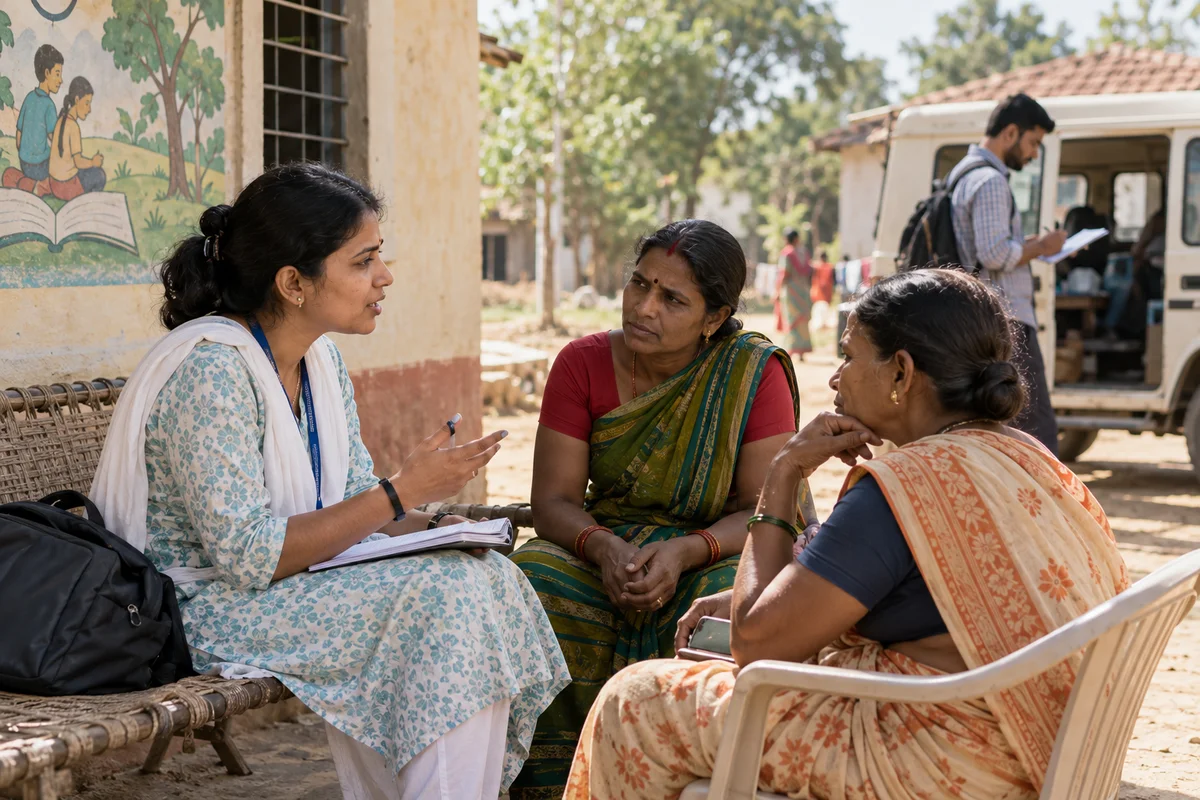
Staff at NGOs and social enterprises leave for funding, field and workload reasons as well as pay. How to understand why, listen early and act.
7 min readRead article
Eighty per cent responded, the report was thorough, and six months later trust was lower than before. What went wrong between the survey and the silence.
8 min readRead article
A first-week plan for bringing in an outside specialist: what access to give, how to protect client data, and the confidentiality steps to settle on day one.
7 min readRead article
What really keeps mobile app and web developers in a small firm: stay conversations, growth paths, fair release rules and a risk sheet an owner can use this month.
6 min readRead articleMore on the GullyHR blog.
A short volunteer agreement setting out role, time, conduct and limits is good practice. A qualified professional can confirm what suits your situation.
Give meaningful tasks, quick feedback, flexibility on hours and public thanks. Show them the results of their work.
Only with checks, a code of conduct, supervision and a person to report to. Keep one-to-one situations visible.
Plan tasks in advance, brief the group, assign local guides and follow up with a report. Say no to activities that do not help.
Speak to them privately, remind them of the code, record the matter and, if needed, end the placement kindly and clearly.
We would ask how volunteers join, what they do and how coordinators supervise them. A sensible first piece of work is role descriptions, a short induction and a volunteer register. Scope and fees are agreed in writing afterwards.
All 43 business types in ngos and social enterprises · Find another business type
See all HR topics for ngos and social enterprises, or another industry.
Tell us what is slowing your team down. We’ll help you find a practical way forward, starting with a conversation.