


















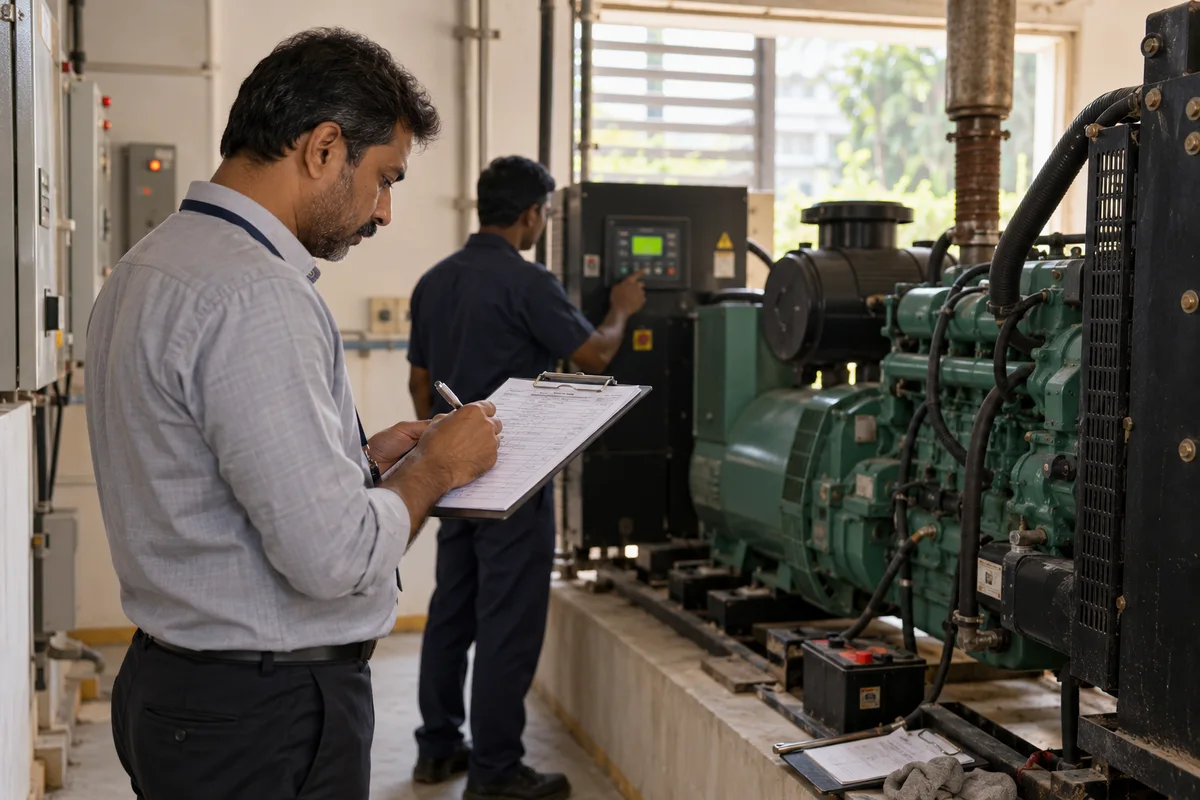

Why facility management staff leave and how to understand why
Housekeeping, technician and security staff at client sites leave for reasons head office rarely hears. How to ask, what to look for and how to act on it.
7 min readRead articleA commercial housekeeping company wins contracts in blocks of fifty or a hundred posts and must staff them by a start date. Growth is lumpy, and every new site stretches the same few supervisors.

Not sure what you need? Tell us about your business in six short steps and we will come to the first meeting prepared.
Share your requirementsA commercial housekeeping company runs cleaning, pantry, waste and sometimes landscaping or pest tasks across campuses, factories, warehouses, showrooms and corporate parks. Contracts are signed for a headcount and a start date, then mobilised in a rush. Crews include general attendants, machine operators for scrubber-dryers and polishers, and team leaders who hold the site together. The owner earns when a contract is staffed quickly and kept stable. Scale is the strain: ten sites are manageable, forty need a structure. See also HR for facility management and the facility management and housekeeping hub.
These are the places the people side of this kind of business tends to give way. The rest of this page works through them.
HR here has to work for each of these groups, not only the office. The set-up below is written with all of them in mind.
The client wants fifty people on a date. Hiring, uniform, induction and shift plans all compress into days, and quality suffers on day one.
The best attendant becomes team leader with no preparation for rosters, complaints or reporting, and the site feels it.
Operating a scrubber-dryer or polisher well takes practice. Untrained operators damage floors and machines.
One site calls its senior cleaner a supervisor, another a team leader. Pay and expectations differ without a reason.
Staff pulled from running sites to start a new one leave the old site thin.
Joining papers, training notes and attendance sit in site files, so the head office cannot see who is where.
People hired in a hurry leave within weeks when site conditions do not match what was said at hiring.
Start with the topics that matter most here: Recruitment and Talent Acquisition; Organisation Design; Learning and Development. Then work through the rest. Each topic is written for facility management, not in general.
Requisition to joining, the same way every time.
Structure, reporting lines and who is allowed to decide what.
Training planned from need rather than from the calendar.
How many people, in which roles, by when — and what they will cost.
A first day that is the same for the fifth joiner as the first.
Records, attendance, leave and the day-to-day HR that must simply work.
Salary structure, payroll inputs and a month that closes on time.
Goals, reviews and ratings that hold up in a conversation.
Named backups for the roles that cannot be vacant.
Communication, recognition and the conditions people actually work in.
Two routes — one for complaints, one for conduct — kept separate.
Policies a manager can apply, and obligations with owners and dates.
Induction, records, incident reporting and follow-through.
Who leaves, when, why — and which of them mattered.
Resignation to relieving letter, in a defined order.
Records that survive people, and approvals that do not queue.
A short monthly pack management actually reads.
An HR function that runs the same way every month.
The pieces a commercial housekeeping companies business puts in place, in an order that makes each easier. Open any card for the detail.
One page per stage: hiring plan, induction, uniform, site brief and first-week supervision.
What this coversHideOne page per stage: hiring plan, induction, uniform, site brief and first-week supervision. The recruitment process fits into it.
Maintain a pool of screened applicants by area, so a new contract draws from known names.
What this coversHideMaintain a pool of screened applicants by area, so a new contract draws from known names.
Attendant, machine operator, team leader and supervisor, each with tasks and limits, using the role design work.
What this coversHideAttendant, machine operator, team leader and supervisor, each with tasks and limits, using the role design work.
A short programme on rosters, complaints and handover, with a first month of check-ins.
What this coversHideA short programme on rosters, complaints and handover, with a first month of check-ins.
Who can run which machine, signed by a senior operator, kept at head office.
What this coversHideWho can run which machine, signed by a senior operator, kept at head office.
Before changing anything, find out what is true today. These checks take an afternoon and tell you which of the topics above to start with.
Share your requirementsConfirm with a qualified professional. What applies to you depends on your business, your state and your arrangements, and it changes. This page describes practice. It does not state a legal position.
The services below fit this kind of business best. Each starts by recording where you stand, and every later report compares against that. We do not promise outcomes.
A standing pool and a mobilisation plan, so a new contract meets its start date with people who have been told what the site is.
One set of job definitions across sites, so a title means the same thing in every client building.
Short practical training for machine crews and team leaders, with a record of who has been checked.
A weekly view of headcount, exits and absence by site, so thin sites are spotted before the client does.
Start with a free conversation, or see the paid HR Diagnostic.
Understand the business, its workforce, current processes and HR challenges.
Find the missing, weak, inconsistent or person-dependent processes.
Create the structure, processes, policies, SOPs, dashboards and systems needed.
Help HR and department managers actually adopt the new system.
Digitise repetitive and approval-based workflows where it is worth doing.
Track hiring, attendance, employee cost, performance, training and attrition.
Strengthen the people-management system continuously, not once.
From the GullyHR blog: one on HR in facility management, and one on each of the topics this page points to.

Housekeeping, technician and security staff at client sites leave for reasons head office rarely hears. How to ask, what to look for and how to act on it.
7 min readRead article

Sources beyond the neighbouring gate for setters, turners, inspectors and leak test hands, plus a one-hour bench trial built from your own rejected parts.
7 min readRead article
A flat structure works until the founder becomes the only route to a decision. How to tell when you have passed that point, and how to redesign without a reorganisation.
8 min readRead article
Plastics training dies when it waits for a free Saturday. Tie it to mould changes, purges and cold starts, use one-point lessons and a visible skill ladder, and protect it in peak months.
7 min readRead articleMore on the GullyHR blog.
It depends on how many screened candidates you hold already. A standing pool of known names makes it possible. Without one, quality drops as you hire in a rush.
Yes for the basics, such as rosters, handover and complaints. Then add a site-specific briefing. A common core keeps standards close across sites.
Compare headcount on the roster with people marked present each day, and ask the client's facility team how it looks to them. A gap that persists is a staffing signal.
Many firms give them one, because the skill is real and replaceable operators cost money in damaged floors. Decide it from your own site needs and set a written step.
Cap the number of sites each one covers and keep a few trained relievers at head office. Pulling supervisors for every start leaves the old sites open.
We would ask how quickly your last contract was fully staffed, how titles differ across sites and who can run each machine. A mobilisation playbook with a role definition set is a natural first job, and scope goes into writing for your approval.
All 5 business types in facility management & housekeeping · Find another business type
See all HR topics for facility management, or another industry.
Tell us what is slowing your team down. We’ll help you find a practical way forward, starting with a conversation.
