



Industries
Why FMCG employees leave and how to understand why
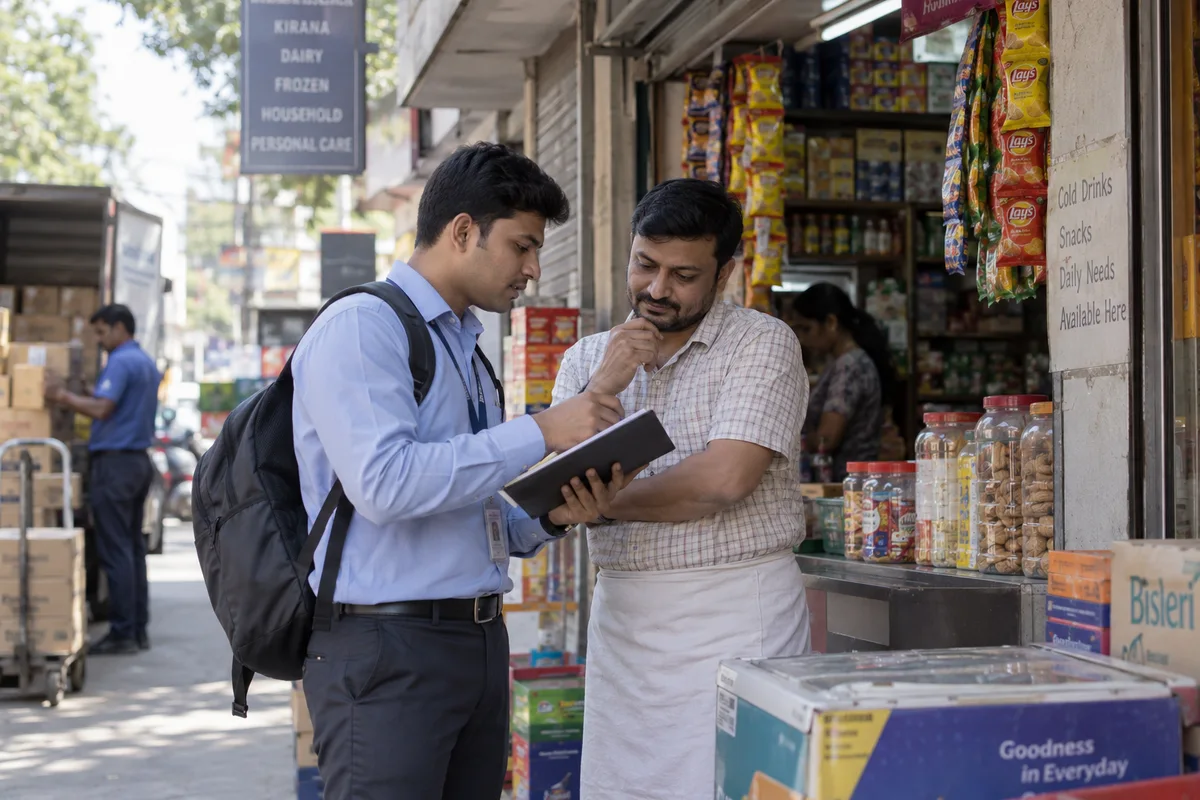
Field sales, depot and plant staff in FMCG leave for different reasons. How to hear them out, ask about targets, incentives and territory, and act.
6 min readRead articleNamkeen, chips, biscuits, chocolates and mithai are made fresh and leave the gate fast. This is about the fryer crew, the packing hall and the van salesmen who carry short-dated stock.

Make this work for your business. Share your team size, priorities and what you need help with. We’ll use your brief to prepare for the first conversation.
Share your requirementsA snacks or confectionery maker turns out namkeen, chips, extruded snacks, biscuits, chocolates, candies or traditional sweets, sells through distributors and retailers, and may have a strong regional name. The floor does cooking, frying, seasoning, baking or moulding, then weighing, sealing and cartoning for dispatch. Shelf life is short, so trucks leave daily and batches are timed to demand. Diwali, Holi, Raksha Bandhan and other festivals can double output for a few weeks. Some packers are women, while kadhai, fryer and boiler operators are skilled and hard to replace. Salesmen and distributor staff carry the product to shops. See also HR for FMCG and consumer goods.
These are the places the people side of this kind of business tends to give way. The rest of this page works through them.
Why GullyHR for packaged snacks and confectionery makers
For namkeen, chips, biscuit, chocolate and sweet makers whose output doubles in festival weeks. The ramp is planned, hygiene is taught before the first shift and the senior fryer's skill is shared.
We plot last season's busiest weeks against floor headcount and set a hiring and recall plan weeks ahead, so Diwali week is not staffed in a panic.
A short routine on handwashing, hair covers, tools and line clearance is shown and signed off on a new packer's first morning, before a batch can be spoiled.
A kadhai, fryer or oven operator takes a named learner through the temperature, timing and taste checks, so the flavour of your product does not leave with one person.
We agree finish times, transport and basic facilities with the sealing line, so late shifts stop pushing out the women who pack and who the line depends on.
Start with any one of these. Scope and fee are agreed in writing after a free first conversation.
We start with the busiest week of the last festival season and set the floor headcount against normal weeks. Then we stand at a new packer's first morning and note which hygiene steps were shown. We speak to the senior fryer, oven and kadhai operators about who could take over if they left. We ask packers on the sealing line what would make late finishes workable. In the sales team we study how expired returns from distributors affect a van salesman's incentive. The report ranks the gaps by the risk to product and people.
What you receive
An example, not a client storyPicture a sweets maker whose senior halwai handles the signature batches and is the only person who knows when the sugar is right. The audit asks who could run the pan if he were away for a week, finds no one, and recommends pairing him with two learners who are signed off step by step.
How the hr audit works →The ramp routine begins weeks before the festival, with a recall list of last year's seasonal hands, joining steps and a first-day hygiene check that cannot be skipped. The pairing routine names the senior operator, the learner and the checks passed on at each stage, from temperature to taste. A packer routine fixes finish times, transport and rest facilities. In sales we write how expired returns are recorded and how they are netted against targets, so a salesman is not punished for stock that aged on a shelf.
What you receive
An example, not a client storySuppose a new packer, hired in a rush two days before the festival, starts work without having been shown hair covers or the tool check. A first-morning hygiene routine, which every joiner follows before touching product, would have caught it, and the batch would not be at risk from the first hour of the peak.
How the hr process design works →Before each festival we keep the recall list live, call returning hands, and run the joining checks at the gate so each person starts clean. During the ramp we watch hours, rest and hot-room conditions with the plant supervisor, and talk to packers who are struggling with late finishes. We follow the pairing between senior and learner and note where skills are moving. In sales we review returns, targets and incentives each month with the sales head, so the returns rule is applied the same way for every van.
What you receive
An example, not a client storySay two weeks before a festival the owner finds that half of last year's seasonal packers have not been contacted. A recall list kept current through the year, with weekly checks, would have shown the gap in time to call them, book the first-day hygiene sessions and tell the plant supervisor who to expect.
How the hr management works →The hard roles are the skilled operators whose hands define the product, and the supervisor who can hold a hot floor together in festival weeks. We write what each does on a normal day and on a festival day. We source from similar makers and food institutes, screen with scored questions, and set a practical task: describing the checks on a batch, or planning a van route with short-dated stock. For hygiene checkers we add a walk-through exercise. Each shortlist carries scores and reasons, so owner and plant head choose on evidence.
What you receive
An example, not a client storyTake a maker who hires a fryer operator on the strength of a good reference, only to find that his experience is with a different product and he does not read oil colour the way the house recipe needs. A practical task on a real batch would have shown the difference before the offer.
How the recruitment for permanent roles works →For new floor hands we run a first-shift session on handwashing, hair and jewellery rules, tools, cross-contact and what to do when a batch looks wrong. Senior fryer, oven and kadhai operators learn how to coach: explaining a check, letting a learner try and signing off. Supervisors learn to run a hot floor in a festival peak, spot heat strain and rotate staff. Van salesmen learn how to handle short-dated stock, record returns and talk to a retailer. Your adviser confirms food-safety training that is required.
What you receive
An example, not a client storyPicture a young packer who, to hurry a late order, lifts a dropped bag back onto the line because nobody explained what to do with it. A first-shift session built on real moments like that one is what teaches the rule, and the sign-off records that she heard it, so the supervisor can refer back.
How the manager and team training works →The handbook covers hygiene and line clearance, what a joiner must complete before touching product, rest and drinking water in hot rooms, the festival hours and how extra work is recognised, finish times and transport for packers, and conduct with distributors and retailers. The sales pages cover returns, short-dated stock and how incentives are netted. In the HR system we hold each person's training dates, sign-offs, seasonal history and return eligibility. Your own adviser confirms the food-safety, factory and employment duties that govern the unit.
What you receive
An example, not a client storySuppose a salesman disputes his incentive because a distributor returned a large batch of expired stock that he had not been told about. A returns rule written into the incentive policy, and a record of each return, would have given both sides one set of facts to look at, instead of two memories.
How the policies, handbook and hr software works →We start from last year's festival weeks, set headcount against normal weeks and write a plan: recall list, joining steps, first-day hygiene and rest in hot rooms. We begin weeks ahead so the seasonal hands are people you know. Your own adviser confirms what applies to seasonal and temporary hands, and what must be recorded for each.
We would write down, with him, what he checks and when, and pair him with named learners who are signed off step by step. We would also talk about recognition and path so he sees a future in teaching. We cannot promise he stays, but the product stops depending on a single pair of hands.
We make the teaching and the record reliable: a short first-morning session, a sign-off before anyone touches product, refreshers and a check by the supervisor. We do not set the food-safety standard itself; your own adviser or quality lead confirms that. HR makes sure every joiner, including a seasonal hand, hears it and the owner can show it.
We would write a returns rule with the sales head: how returns are recorded, which are netted against targets and which are not, and how a salesman raises a dispute. We would also train salesmen on handling short-dated stock with retailers. Your own adviser confirms any legal point on deductions from pay, since the rule has to fit the law where you work.
GullyHR runs talent acquisition for permanent roles in packaged snacks and confectionery makers. For each role we agree the job description with you, find and screen candidates against it, and support the offer through to joining. Tell us the role and the number of people, and we start there.
We recruit permanent employees. We do not supply contract or temporary staff.
A few weeks of heavy frying and packing bring long shifts and big temporary crews, then a sharp fall when the season closes.
Skipped handwashing, loose clothing or poor cleaning between runs can taint a whole lot, and short-term hands are likeliest to miss it.
Colour, crispness and sweetness depend on experienced operators, who may leave for a rival or start a small unit.
Sealing lines run for hours in warm halls, and absences and early exits climb in the busy weeks.
Finishing late with no transport and no child care drives out the experienced women on the line.
Short-dated stock coming back from distributors makes targets unfair for salesmen and sours relations with the trade.
Start with the topics that matter most here: Recruitment and Talent Acquisition; Onboarding and Probation; Learning and Development. Then work through the rest. Each topic is written for fmcg and consumer goods, not in general.
Requisition to joining, the same way every time.
A first day that is the same for the fifth joiner as the first.
Training planned from need rather than from the calendar.
How many people, in which roles, by when, and what they will cost.
Structure, reporting lines and who is allowed to decide what.
Records, attendance, leave and the day-to-day HR that must simply work.
Salary structure, payroll inputs and a month that closes on time.
Goals, reviews and ratings that hold up in a conversation.
Named backups for the roles that cannot be vacant.
Communication, recognition and the conditions people actually work in.
Two routes, one for complaints, one for conduct, kept separate.
Policies a manager can apply, and obligations with owners and dates.
Induction, records, incident reporting and follow-through.
Who leaves, when, why, and which of them mattered.
Resignation to relieving letter, in a defined order.
Records that survive people, and approvals that do not queue.
A short monthly pack management actually reads.
An HR function that runs the same way every month.
The pieces a packaged snacks and confectionery makers business puts in place, in an order that makes each easier. Open any card for the detail.
A calendar of the weeks needing extra hands, with sourcing, training and transport settled beforehand.
A calendar of the weeks needing extra hands, with sourcing, training and transport settled beforehand. The recruitment process builds the pool.
A practical induction on clothing, handwashing and line cleaning for every new and temporary worker, with a supervisor check in the first days and a record per person.
A practical induction on clothing, handwashing and line cleaning for every new and temporary worker, with a supervisor check in the first days and a record per person.
A set way for experienced fryer and oven operators to teach juniors, with recognition for it.
A set way for experienced fryer and oven operators to teach juniors, with recognition for it. The learning and development work supports it.
Predictable finish times, transport or safe routes, rest points and clean washrooms, reviewed with the women on the line.
Predictable finish times, transport or safe routes, rest points and clean washrooms, reviewed with the women on the line.
An incentive that counts sell-through and short-dated returns, not just invoices raised on distributors.
An incentive that counts sell-through and short-dated returns, not just invoices raised on distributors.
Confirm with a qualified professional. What applies to you depends on your business, your state and your arrangements, and it changes. This page describes practice. It does not state a legal position.
A returning-worker pool and a quicker hiring routine in place before the Diwali rush.
A first-day hygiene induction for every new hand, permanent or seasonal.
A route for moving frying and baking skill from seniors to the next group.
Practical changes to shift end times, transport and washrooms that keep women packers.
Start with a free conversation, or see the paid HR Diagnostic.
Understand the business, its workforce, current processes and HR challenges.
Find the missing, weak, inconsistent or person-dependent processes.
Create the structure, processes, policies, SOPs, dashboards and systems needed.
Help HR and department managers actually adopt the new system.
Digitise repetitive and approval-based workflows where it is worth doing.
Track hiring, attendance, employee cost, performance, training and attrition.
Strengthen the people-management system continuously, not once.
From the GullyHR blog: one on HR in fmcg and consumer goods, and one on each of the topics this page points to.
Field sales, depot and plant staff in FMCG leave for different reasons. How to hear them out, ask about targets, incentives and territory, and act.
6 min readRead article
How a D2C founder can test a performance marketing hire on real work, ignore weak signals such as dashboard screenshots, and run a fair process.
7 min readRead article
A first-week plan for bringing in an outside specialist: what access to give, how to protect client data, and the confidentiality steps to settle on day one.
7 min readRead article
A founder's guide to hiring freshers and running a first-year programme: campus or open drives, a screening round, a training plan by quarter, mentors and checkpoints.
6 min readRead articleMore on the GullyHR blog.
Line up returning workers early, teach hygiene and packing before the rush and give each new group a supervisor. Quality drops when untrained hands arrive on the day.
Clothing, handwashing, cleaning between batches, what to do when unwell and how to report a problem. Have the content checked by a qualified professional.
Pair them with a learner, write down oil temperature and timing, and reward the teaching. Pay and standing hold people better than any lock-in.
Net them against the salesman or distributor team's result, with a fair allowance. Otherwise targets reward pushing stock that comes back.
Predictable finish times, safe transport and respectful supervision. Ask them, then fix one or two things quickly.
We would ask how many people worked the last festival peak, whether a new packer sees the hygiene steps on day one and who could take over the main fryer. A festival ramp plan with a learner for each senior operator is a likely first piece. Scope goes into writing after we talk.
All 13 business types in fmcg and consumer goods · Find another business type
See all HR topics for fmcg and consumer goods, or another industry.
Tell us your industry, team size and the issue you want to address. Bring one example of where work gets delayed or ownership is unclear, and the deadline or decision you are working towards.