
Hire Field, Depot and Plant People Who Stay Past the First Beat
Consumer goods companies hire all the time, because territories turn over and plants and depots add shifts around the season. The difficulty is hiring quickly without choosing people who leave in the first quarter. We help you set a hiring route for each workforce, so field, depot and plant roles are screened for what each job needs and you can see which sources produce people who stay.
Not sure what you need? Tell us about your business in six short steps and we will come to the first meeting prepared.
Share your requirementsThe starting point
Is a Vacant Territory Being Filled Faster Than It Is Being Understood?
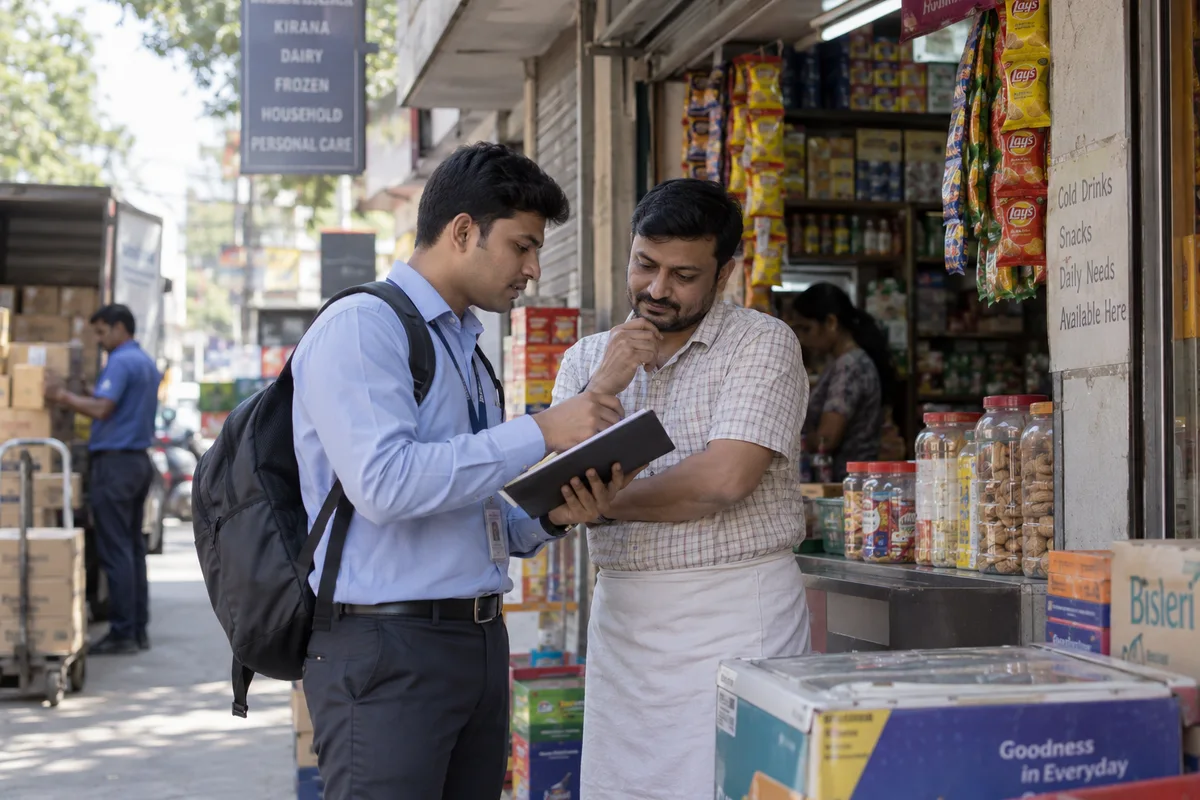
Where a beat is empty, the pressure is to put somebody on the road. That pushes selection towards quick conversations and local referrals, and the skills that decide success in the field, such as route discipline, outlet negotiation and record keeping, are rarely tested.
We help you build a hiring route that fits the role, then measure which sources deliver.
You may be experiencing:
- Sales officers and van salesmen who leave within months of joining, with no view of which source they came from.
- Interviews that judge confidence and not the ability to plan a beat or handle an outlet owner.
- Plant and depot hiring run the same way as sales hiring, despite different skills and shift needs.
- Merchandiser and promoter hiring through agencies with little say in who is sent.
- Area managers hired externally without a clear view of the team they inherit.
- Offers accepted and then lost to a counter-offer or a better beat elsewhere.
- Hiring peaks before festival and summer seasons that overwhelm a small HR team.
What we can help with
Our Recruitment Services for FMCG and Consumer Goods
Requisition and Approval Route
A single route for raising a vacancy, with the role, territory or site, budget and approver recorded. Replacement hires and new positions follow different paths.
Role Profiles for Field, Depot and Plant
Short profiles stating what each role must be able to do, covering, for field roles, travel, beat planning, outlet handling and use of the sales app, and for plant roles, shift work, safety and the skills the line needs.
Sourcing by Role Family
Channels suited to each family: local networks and distributor referrals for territory roles, institutes and agencies for trade marketing, and technical sources for plant, quality and maintenance.
Screening and Field Assessment
Structured screening with practical elements, such as asking a candidate to plan a beat or work through an outlet objection, so that fieldwork skills are tested and not assumed.
Interview Scorecards and Panels
A shared scorecard for each role family, so area managers, regional heads and HR compare candidates against the same standard.
Verification and Reference Checks
Checks on identity, previous employment and, where relevant, qualifications and licences for roles such as drivers and technicians. The scope is agreed with you for each role.
Offer, Joining and Drop-Off Management
Offer templates, a record of acceptance and contact through the notice period, so fewer accepted candidates fail to turn up.
Source and Retention Tracking
A record linking each hire to its source and recruiter, then to their status after the first months, so that effort moves to the sources that produce people who stay.
Working together
Ways We Can Support Your Hiring
Process Design
We build the route, profiles, scorecards and offer documents, and your team runs it.
Territory and Plant Hiring Drives
Coordinated recruitment for a new region, a depot or a shift added for the season.
Ongoing Recruitment Support
Continuing capacity for businesses that replace field and plant staff throughout the year.
Managerial and Specialist Search
Focused sourcing for area managers, regional heads, trade marketing and quality or plant specialists.
Scope, responsibilities and commercial terms are agreed in writing before an engagement begins.
The deliverables
What You Receive
Depending on the agreed scope, the work produces:
- A recruitment process for field, depot and plant roles, with the route from requisition to joining.
- Role profiles for the main sales, trade marketing, supply and plant positions.
- Interview structures with scorecards and practical exercises for the field.
- A source register showing where each hire came from and how long they stayed.
- Offer letters, a joining checklist and a notice-period contact plan.
- Screened candidate profiles for the roles within the agreed scope.
- A hiring calendar that anticipates the festival and summer peaks.
- A handover to the onboarding team, so the territory or line is ready for the joiner.
Step by step
How We Work
Understand the vacancies and the pattern
We review open roles and the record of recent joiners and leavers, to see which roles, regions and sources have lost people early.
Set the profile and the route
We agree what each role needs, who approves the hire and who assesses, for sales, depot and plant separately.
Source and screen
We use the channels agreed for each role family, screen against the profile and present a shortlist with notes.
Assess and decide
We coordinate interviews and exercises and collect scorecards. Your managers decide whom to hire.
Close the offer and follow the joining
We support the offer and keep contact until joining. Before work starts we record where you stand, and we report against it.
The difference
Hire for the Work, and Learn from Who Stays
A defined recruitment route helps you:
We do not promise outcomes. We record a baseline before work starts, covering time to fill by role family, joiners lost in the first quarter and the share of accepted offers that join, and report against it, so you can see what changed and what did not.
- Test for beat discipline and outlet handling before the offer.
- Use different hiring paths for plant, depot and field roles.
- See which sources and recruiters produce people who stay.
- Reduce the load on area managers who now run interviews alone.
- Know how many accepted offers turn into joiners.
- Be ready for the festival and summer hiring peaks.
Find your fit
Who This Service Is For
Companies Replacing Field Staff Continuously
Sales heads whose territories turn over and who want a repeatable route instead of urgent searches.
Businesses Opening Depots or Adding Shifts
Supply and plant leaders who need manpower and supervisors for a date.
Brands Building a Trade Marketing Team
Companies that need merchandising and activation talent with consistent standards.
Small HR Teams in Large Field Organisations
Teams that cannot run every interview and want structure and extra capacity.
How it usually shows up in fmcg and consumer goods
FMCG recruitment is dominated by field roles: sales officers, merchandisers, van salesmen and area managers, hired continuously because the turnover is high. Territories need to be filled quickly, which pushes selection to fast conversations and local referrals. Roles require fieldwork skills such as route discipline, outlet negotiation and record-keeping, and a willingness to travel, which standard interviews do not test. Plant and depot hiring is different again, with shifts, safety and skill. Many hires leave within months, and the company often cannot say which channels or recruiters produce people who stay.
Common challenges
Where it goes wrong in fmcg and consumer goods
Speed beats fit
A vacant territory is filled quickly with whoever is available.
Fieldwork skills are not tested
Route discipline, negotiation and record-keeping are assumed from a conversation.
Source performance is not tracked
Channels and recruiters are not compared on retention.
Plant and depot hiring uses the same process
Roles with shifts and safety needs are screened like sales roles.
A better process
What a working version looks like
- 01
Test for the field
A short practical exercise on planning a beat, handling an outlet objection and recording a visit. The recruitment process holds the standard.
- 02
Compare sources by retention
Track which channels and recruiters produce people who are still in the role after six months.
- 03
Use a different path for plant and depot
Safety, shift readiness and skills tested separately.
- 04
Keep a bench for territories
Pre-screened candidates ready to fill a vacancy within days.
What to check this week
- Look at the last batch of field hires and count how many are still in post after six months.
- Ask what a salesperson is tested on before being hired.
- Find which sources gave the longest-staying hires.
- Check how plant and depot candidates are assessed on safety.
- Count how many territories are filled from a bench.
Confirm with a qualified professional. What applies depends on your establishment, your state and your sector, and it changes. This page describes a practice; it does not state a legal position.
What this looks like in fmcg and consumer goods
The parts of recruitment and talent acquisition that are specific to this sector, rather than general.
Field-Force Hiring
Continuous hiring across geographies.
What this coversHide
Field-Force Hiring
Continuous hiring across geographies.
What this coversHide- Territory-level requisition
- Local sourcing channels
- Sales aptitude assessment
- Document and reference verification
- Offer and joining
- Induction and territory handover
- Replacement turnaround by territory
- Pipeline for high-churn territories
Questions on this, in fmcg and consumer goods
Yes. We can run a coordinated drive for several territories, with a common profile, scorecard and joining plan, and report progress by territory. Your area managers keep the final say on each hire.
We add short practical exercises, such as planning a day's beat from a list of outlets or responding to a retailer's objection. They give your managers something to compare beyond impressions from conversation.
We support them with their own profiles and sourcing. Plant and depot hiring puts weight on shift availability, safety attitude and hands-on skill, so the questions differ from those for field roles.
We can share your profile and scorecard with distributors who want them and help you track those hires. Employment stays with the distributor, and your agreement with them governs what you can ask.
It can be included where agreed, with scope set role by role. The checks that apply to drivers, technicians and others depend on your obligations, which should be confirmed with a qualified professional. GullyHR does not give legal advice.
It depends on the region, the pay on offer and how well the profile fits the local market. We will agree an expected timeline for each batch and tell you early when a search is slower.
With a short exercise on planning a beat, handling an outlet objection and recording a visit. A conversation shows confidence and a task shows how they would work.
The one whose hires stay. Track retention by source and recruiter over a few months and move effort to what works.
Separately from sales: test safety awareness, shift readiness and the skills the work needs. The criteria are different.
From a bench of pre-screened candidates, within days. Without one, weeks are typical, and the beat suffers.
It depends on the sector's history, so measure your own baseline first and then improve it. Focus on the early months, where most of the loss occurs, and on the sources and recruiters whose hires stay.
Fill Territories and Shifts with People Who Fit the Work
Tell us which roles you are hiring and where people have been leaving. We will discuss a hiring route for your field force, depots and plant.
Prefer to talk first? Call +91 80958 58589 or write to hello@gullyhr.com.
Discuss Your Hiring Requirements
Share the roles and locations you need to fill.
The general method — what recruitment and talent acquisition covers, the questions it answers and what an engagement produces — is the same whatever the sector, and is set out on the workforce and recruitment process page. What is above is the part that differs for fmcg and consumer goods.
To run this in a system rather than on paper, see recruitment management.
Other HR topics for fmcg and consumer goods
Where to start
Most engagements begin with a review of how this runs in your business today, then a written process and the sequence to implement it.
See all HR topics for fmcg and consumer goods, or another industry.