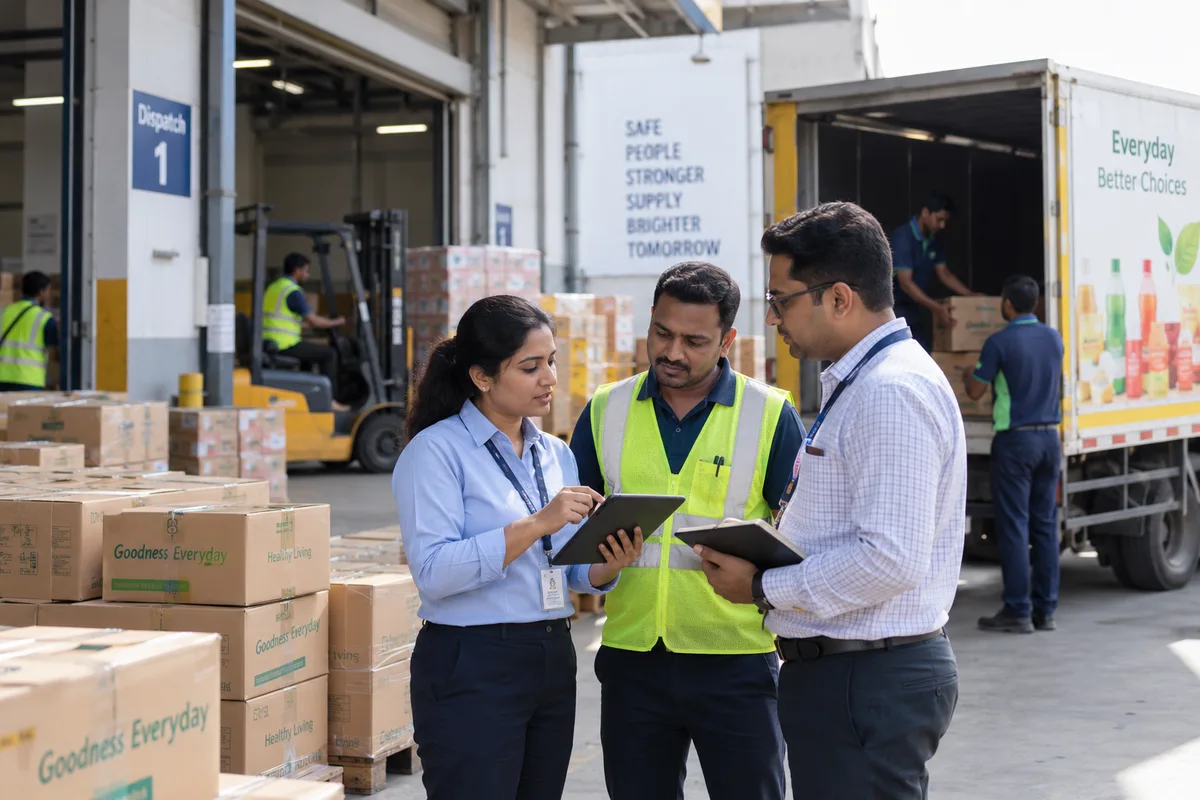
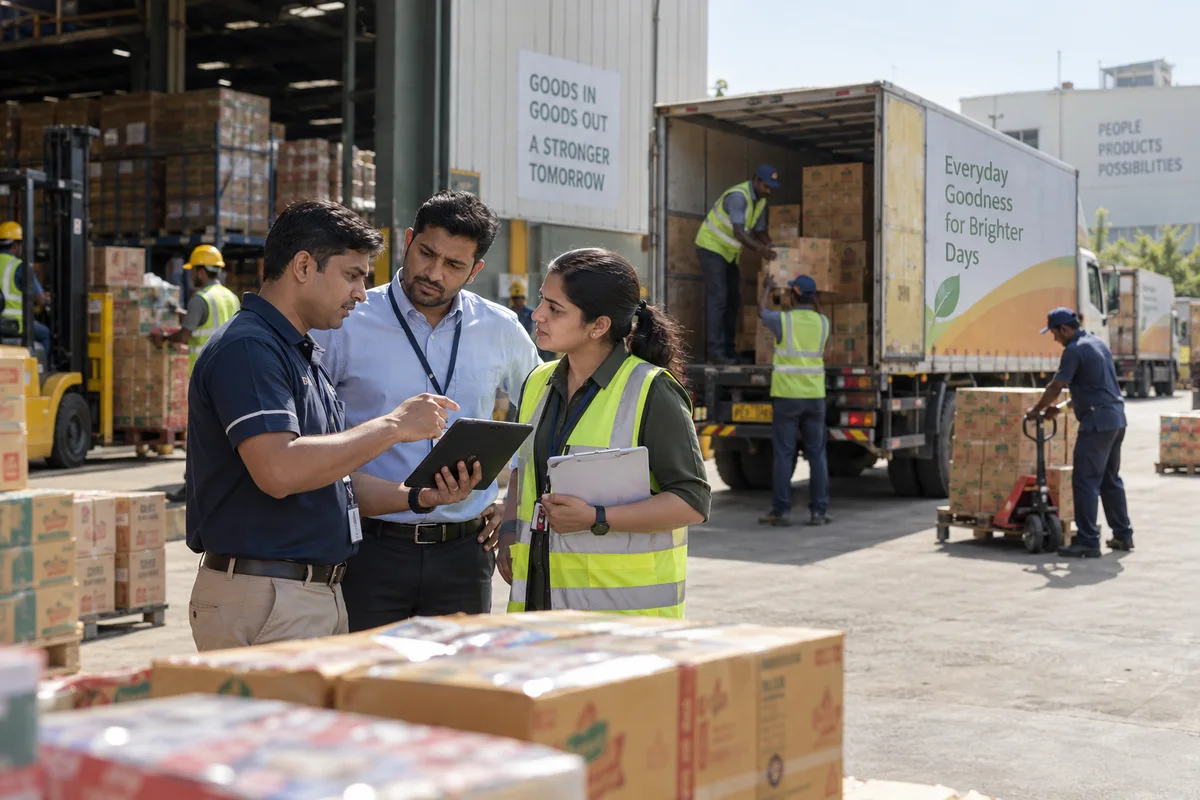
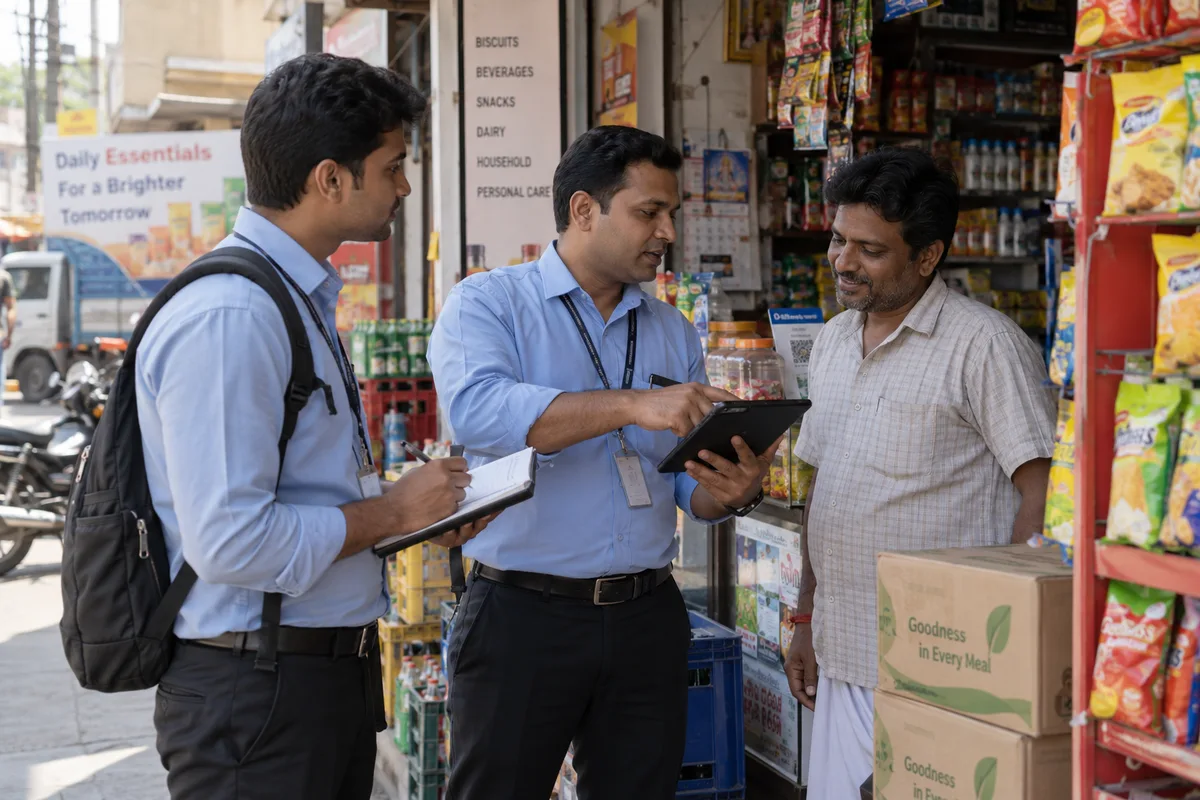
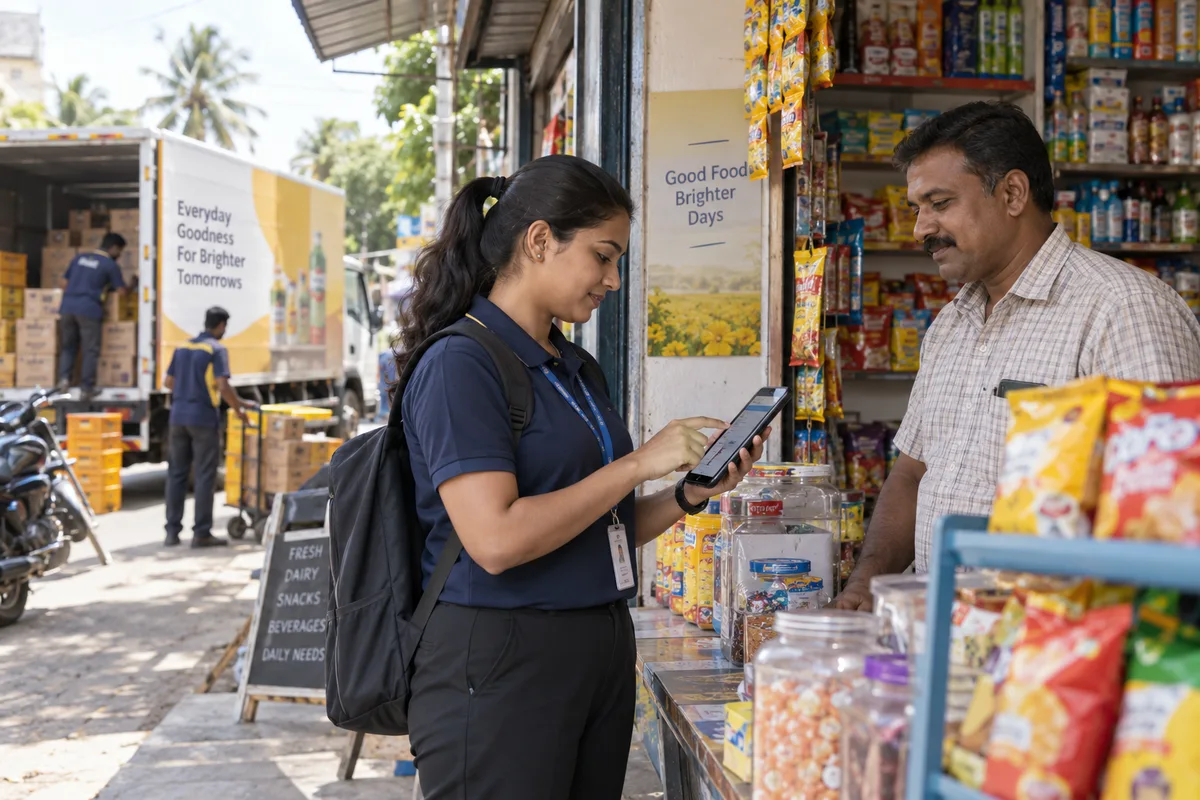
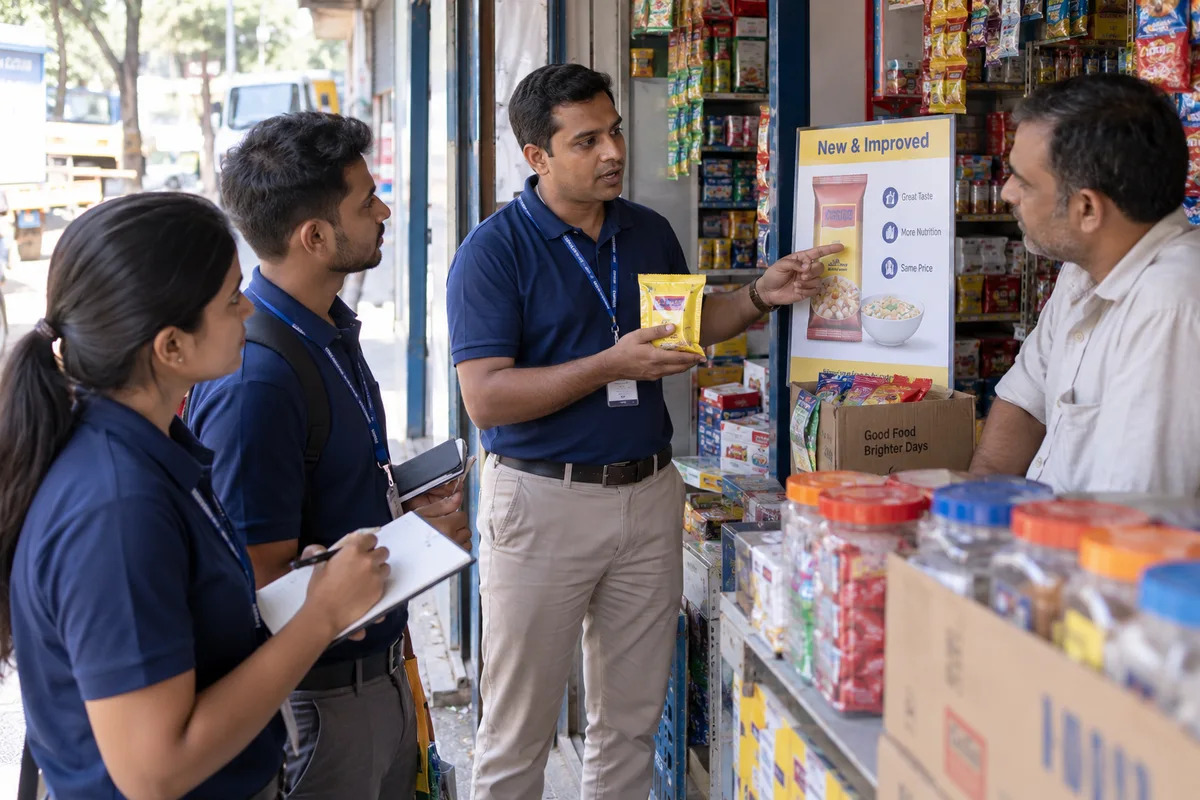
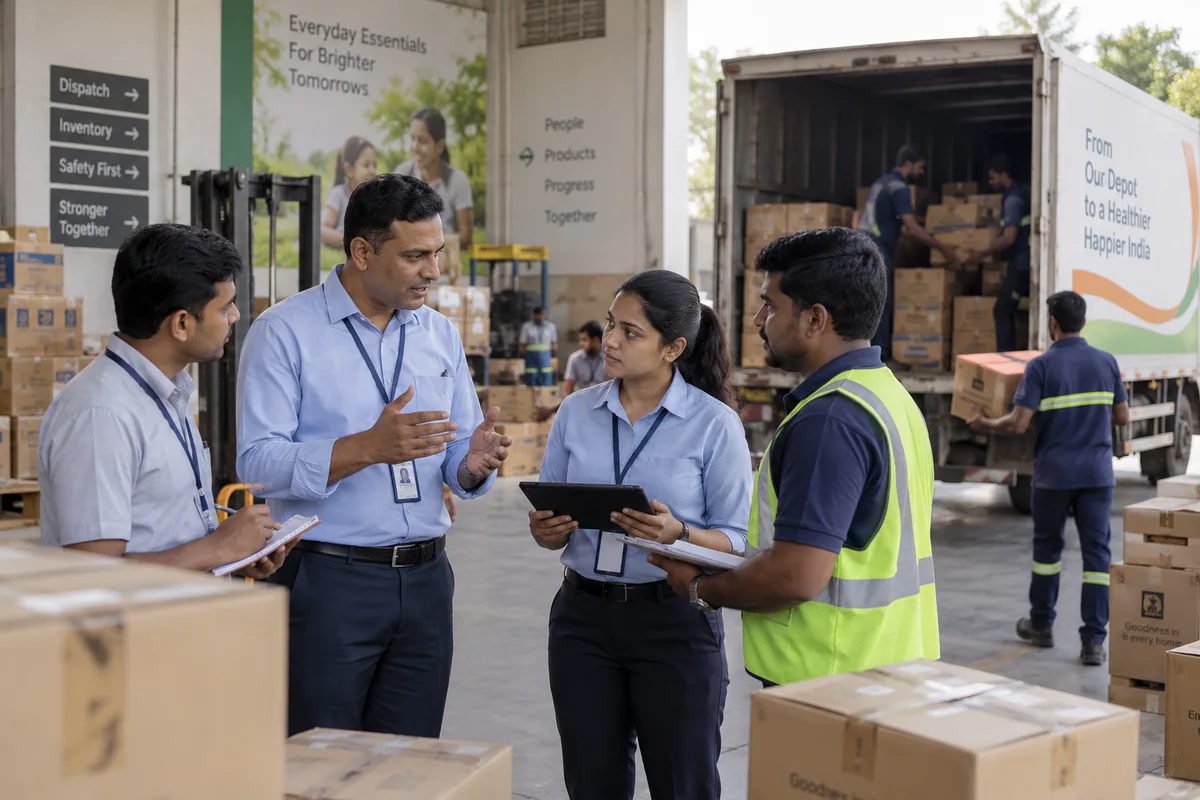
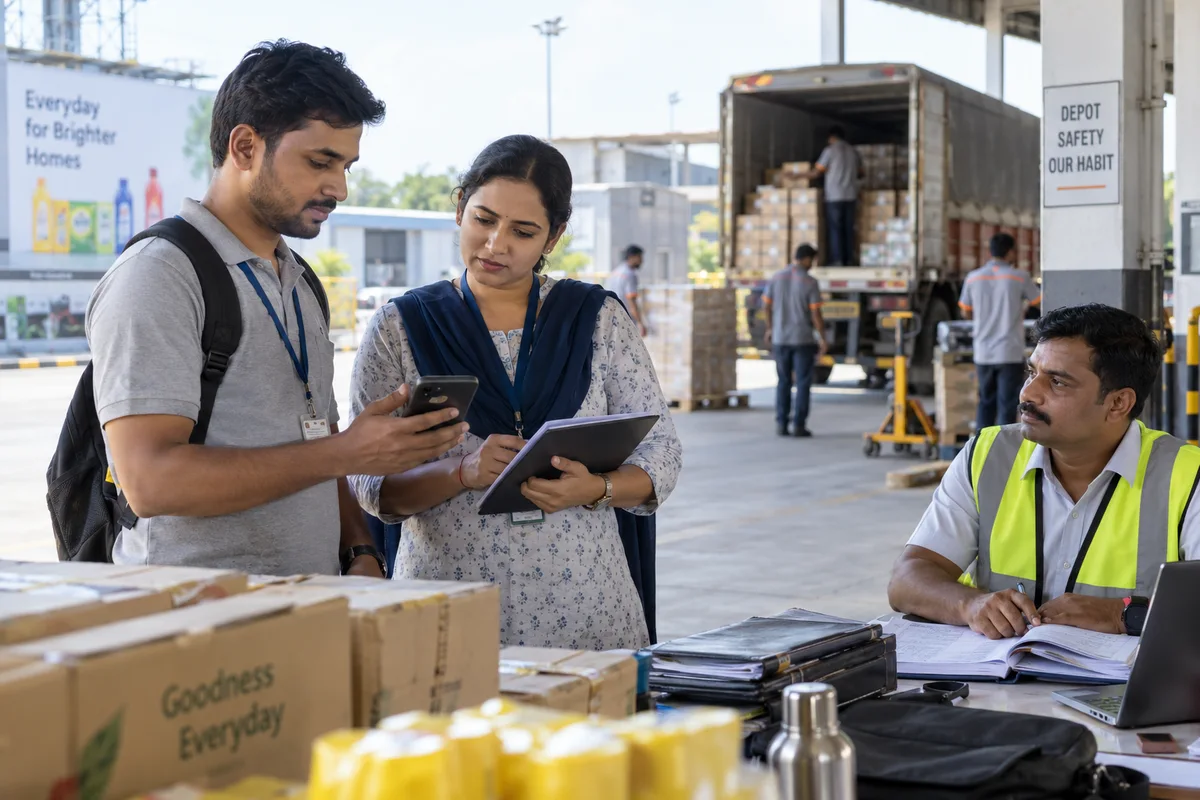
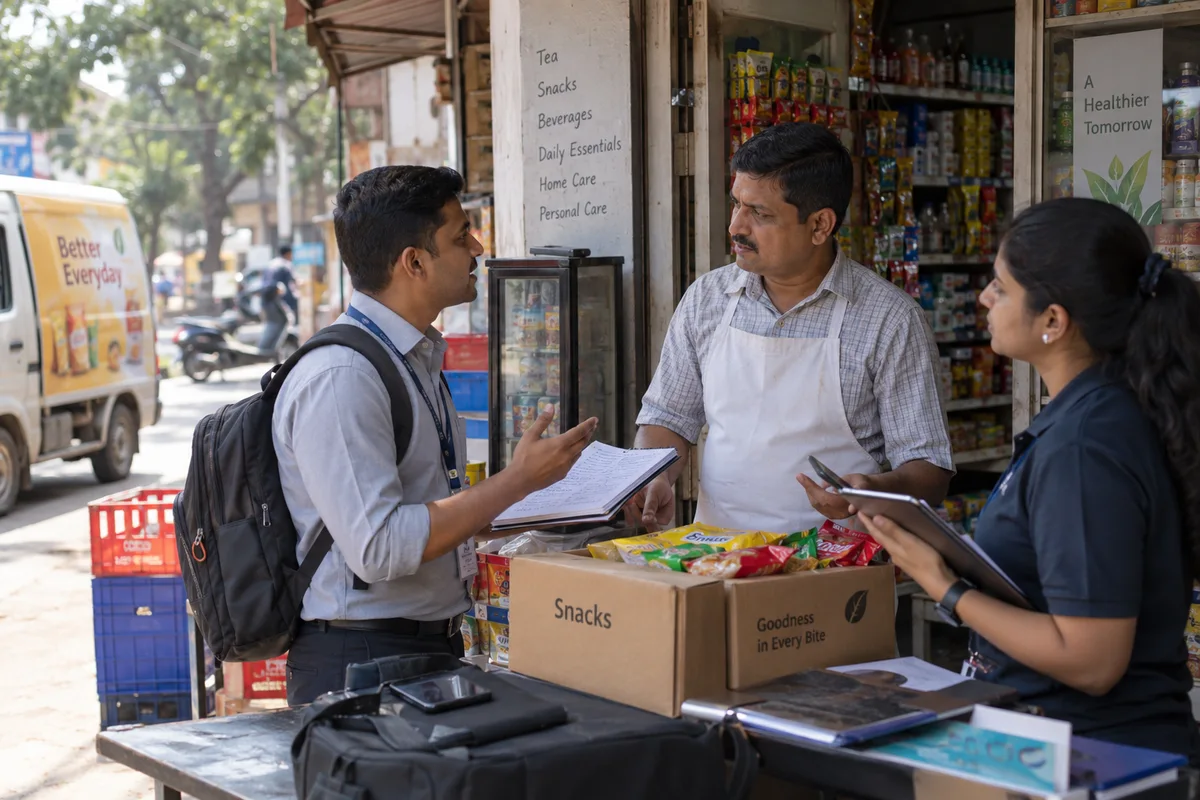
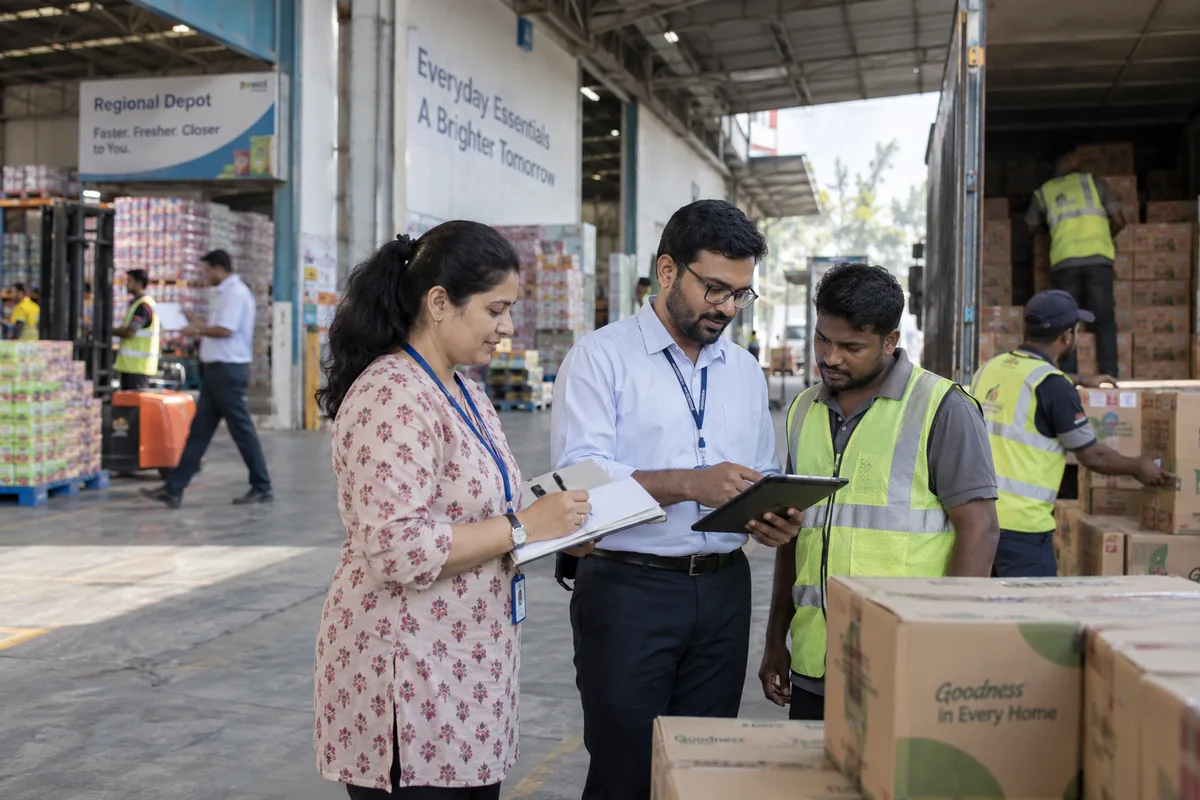
Connect plant staffing, depot operations and sales-force management. Set consistent attendance records, role expectations, incentives and reviews across locations.
Make this work for your business. Share your team size, priorities and what you need help with. We’ll use your brief to prepare for the first conversation.
FMCG businesses run manufacturing, warehousing, distribution and a large field sales force at once. The field force is the biggest, the most distributed and the hardest to see, and it turns over fastest.
Plan→
Hire→
Onboard→
Manage→
Develop→
Perform→
Engage→
Retain→
Exit→
Improve
When HR processes are weak, you may see
Field-force attrition and territory gaps
Field attendance and beat adherence unclear
Sales incentive disputes
Depot and warehouse staffing
Plant shift coverage
Distributor-employed staff outside the record
Slow replacement in territories
No consolidated view of the field
We help FMCG businesses build field-force, depot and plant people processes that give management one view.
Why GullyHR for fmcg and consumer goods
A field force you can see, support and replace within days.
For sales heads in packaged food, personal care and household goods who manage a large field force across territories. What changes is that beats, attendance and incentives are visible, and a vacant territory is refilled quickly.
01
Beat attendance visible by territory
A daily check-in and beat adherence report, reviewed by area managers each week, shows which outlets were visited and which territories sit uncovered, without chasing salespeople by phone.
02
Incentive sheets that end month-end arguments
We write each scheme with cut-offs, claim proof and a dispute route, so salesmen and supervisors can check their own payout before raising it with the area manager.
03
Territory vacancies refilled from a bench
A standing pipeline of screened candidates for sales and merchandising roles, by region, shortens the gap when a territory executive leaves mid-month.
04
Distributor staff brought into view
We create a simple record of distributor-employed salesmen and delivery staff who work your territories, so training and performance discussions include them.
Our services for fmcg and consumer goods
Start with any one of these. Scope and fee are agreed in writing after a free first conversation.
HR audit
We pull field attendance and beat reports for a handful of territories and compare them with outlet visit records and sales. Incentive calculations are rebuilt from cut-offs and claim proof to see where payouts differ from what salesmen expected. Territory vacancies are timed from the day the executive left to the day the replacement started. Depot, warehouse and plant rosters are read, and distributor salesmen are counted against what the record shows.
What you receive
A territory gap list ranked by vacancy length and the sales the area normally carries
An incentive rebuild showing where payouts and expectations differ and why
A distributor staff count set against the people actually working your beats
An example, not a client storyTake a regional head who suspects three territories sat uncovered last quarter. The audit times each vacancy, sets it beside beat visits and sales, and shows which territories lost the biggest share and which were quietly covered by a distributor salesman.
The first routines are field onboarding and territory handover. A new executive gets beats, outlet list, scheme sheet and reporting rules on the first day, and a leaving executive hands over outlets and open claims in writing. Next come written incentive schemes with cut-offs, proof and a dispute route, then a depot rostering routine that covers loading, dispatch and returns. Each document is short and kept on the executive's phone, so area managers can point to it on a ride-along.
What you receive
A field onboarding pack with beat plan, outlet list, scheme sheet and reporting rules
A territory handover form covering outlets, open claims and pending retailer promises
A depot roster routine for loading, dispatch and returns across both shifts
An example, not a client storyPicture an executive who resigns on the last day of the month. With a handover form and a standing bench, the area manager passes the outlet list on at once and the territory is not left silent through the next scheme cycle.
Each week we track territory vacancies, check-in and beat adherence, incentive queries, depot and plant rosters and distributor staff changes. A short summary goes to sales leadership, naming territories that need a replacement or a coaching visit. Area managers receive their own list of queries to close, so month-end payouts are never the first time a problem is seen. Distributor staff changes are added to the register the week they happen, so no beat is covered by someone nobody has met.
What you receive
A weekly one-page territory summary for sales leadership with replacement and coaching flags
An area manager query list showing open incentive questions and due dates
A depot and plant roster check noting uncovered shifts before they arrive
An example, not a client storySay two territories in the same region lose their executives in one fortnight. Our weekly summary flags both, the bench supplies shortlists, and the area manager covers the beats with a coaching visit meanwhile. The area manager arrives at the weekly call with a plan, not a surprise, and sales leadership sees the gap closed.
Territory sales executives, area managers, merchandisers, depot supervisors and plant operators are the roles that keep opening. We keep a standing bench by region and screen with structured questions, a field-readiness check that looks at route planning and retailer conversation, and a shared scorecard. Regional hires can then be compared fairly across areas. Merchandisers and depot supervisors are screened on routine and reliability, while area managers are asked how they coach people who work alone all day. The bench is refreshed each quarter so it never goes stale.
What you receive
A regional bench of screened sales and merchandising candidates with notes
A field-readiness check covering route planning, retailer talk and reporting habits
A shared scorecard so area managers rate every candidate on the same points
An example, not a client storySuppose a territory goes empty in a festival month. From the regional bench we would put forward a short list the same week, each candidate rated on the same field-readiness check, so the area manager can choose quickly. Nobody starts from a blank page in a hurry.
Field executives learn call routines, retailer conversations and daily reporting. Area managers learn coaching on the road, ride-along feedback and how to answer incentive questions with the scheme sheet in hand. Depot and plant supervisors learn shift handover and a short safety briefing for new joiners, so first-week staff are placed with care. Sessions are held by region so executives meet the colleagues they share borders with. New joiners are placed with an experienced executive for their first beats before working alone.
What you receive
A field call routine session using real beats and outlet lists from your territories
An area manager ride-along coaching guide with a feedback sheet
A supervisor handover and new joiner briefing card for depot and plant
An example, not a client storyPicture a new area manager who was the best salesman in the region. A short coaching session covers how to ride with a junior, give feedback on a call and explain a scheme without a dispute. The same session then becomes the starting point for every new area manager in the region.
Written rules cover field travel, beat discipline, incentives, samples and stock handling, and conduct with retailers. Your own adviser confirms legal points. HR software then holds the field headcount by territory, attendance and training, with distributor staff on a simple register so they appear in the same picture as your own people. Rules are written in short, plain sentences and shared on the phone, because the field team seldom sits at a desk. Each rule names who to ask when a case is not covered.
What you receive
A field conduct policy covering travel, beat discipline, samples and retailer dealings
An incentive scheme policy with cut-offs, proof requirements and dispute steps
A distributor staff register showing name, territory, role and training status
An example, not a client storySay a distributor changes the salesman who covers a busy beat. With the register in place, the area manager sees the change that week and arranges the same product briefing your own executives receive. Rules for samples and stock handling also reach them from the first day, which protects the retailer relationship.
Adapted to plant operations, depot network, distribution model and field-force size.
FMCG Companies
Food and Beverage Companies
Consumer Product Companies
Personal Care Companies
Cosmetics Companies
Household Product Companies
Packaged Food Companies
Dairy Companies
Beverage Companies
Roles we help you hire in fmcg and consumer goods
GullyHR runs talent acquisition for permanent roles in fmcg and consumer goods. For each role we agree the job description with you, find and screen candidates against it, and support the offer through to joining. Tell us the role and the number of people, and we start there.
When a field salesperson resigns, the business loses a territory relationship that was never written down, which outlets buy what, who pays late, and which distributor needs chasing.
Beat and route plan handed over in person, not on paper
Outlet-level relationship notes captured before the last week
Distributor and retailer introductions made by the outgoing person
Pending claims, schemes and credit notes reconciled
Stock in hand, samples and POS material accounted for
Incentive and target achievement settled to the release date
Vehicle, fuel card, phone and SIM returned
Territory coverage plan confirmed for the gap period
The gap period is what most businesses handle badly. A territory left uncovered for six weeks loses shelf position that takes two quarters to recover, so the coverage plan matters more than the paperwork.
Engaging a Field Force
People who are alone all day and measured every day.
A field salesperson works alone, is measured daily, and experiences the organisation through a phone. Engagement here is mostly about whether the target is fair and whether anyone notices good work.
Beat plans that are physically achievable
Target setting that accounts for territory differences
Incentive statements a salesperson can verify
Expense and claim settlement without chasing
Regular contact from the manager beyond target review
Recognition that reaches the person, not only the leaderboard
Career route from field to supervisory roles
Support when a distributor relationship turns difficult
Expense settlement is disproportionately important. A salesperson funding travel from their own pocket while a claim sits unprocessed will disengage faster than one who missed target.
From Field to Management
The sales ladder, and the specialist routes beside it.
An FMCG field force has a well-understood ladder and a well-understood problem: the best salesperson is promoted to supervisor, and the business loses a producer and gains a manager who has never managed.
Sales officer→
Senior sales officer→
Area sales manager→
Regional manager→
National role
Management capability built before the promotion, not after
Specialist routes into trade marketing, key accounts and distribution
Plant and depot career routes mapped alongside field routes
Area and regional manager succession named
Criteria for each step stated in observable terms
Cross-movement between field, depot and plant
Building management capability before the promotion is the single change that most improves both retention and performance, and it is consistently deferred until after someone is struggling.
FMCG businesses may run a plant system, a depot process and a field-force app that do not reconcile, so headcount and cost are assembled manually every month.
Plant and depot
Shift and skill capture
Contract labour handled distinctly
Statutory records and registers
Field force
Mobile attendance and beat adherence
Territory and beat assignment on the record
Incentive and claim processing
Expense settlement without paper
Expense and claim settlement is the field-force capability with the clearest return, because delayed claims are a leading cause of field attrition and the delay is almost entirely process.
An FMCG business inducts machine operators, depot staff and field salespeople in the same month, and a single programme serves none of them well.
Plant and depot
Safety and machine induction before floor access
Quality and hygiene standards
Shift pattern and attendance rules
Field force
Territory and beat handover, in person
Distributor and key outlet introductions
Product, scheme and pricing training
Incentive structure explained in full
Claim and expense process before the first claim
Walking the beat with the outgoing salesperson or the supervisor is the single most effective field induction activity, and it is frequently replaced by a route list on paper.
FMCG businesses run a plant relations environment and a field-force one that share almost nothing. The plant needs structure and consistency; the field needs reachability.
Plant and depot
Structured grievance and disciplinary process
Consistency across shifts and units
Contract labour issues handled correctly
Union or committee engagement where present
Field force
A route that works for someone who is never at an office
Incentive and target disputes resolved with evidence
Expense and claim disagreements handled quickly
Distributor-related pressure on staff addressed
Incentive disputes dominate field relations, and most are resolved by showing the calculation. Where the calculation cannot be reproduced, the dispute becomes about trust instead.
Safety Across Plant, Depot and Road
Machinery, material handling and a field force that drives.
FMCG safety covers a plant, a depot network and a field force whose main exposure is road travel - the last being the most common source of serious harm and the least managed.
Plant and depot
Machine guarding and line safety
Material handling and stacking
Cold storage and confined space where present
Hygiene and contamination controls
Field force
Road safety and two-wheeler risk
Travel hours and fatigue
Personal safety in unfamiliar territories
Load handling during merchandising
Two-wheeler road safety for field staff deserves specific attention. It is the highest-consequence risk most FMCG businesses carry and is rarely part of the safety programme.
FMCG HR operations serve a plant with shift discipline, depots with small teams, and a field force that is never present - and the same monthly deadlines apply to all three.
Payroll input calendar with named owners at plant, depot and field
Field force attendance and expense processing at scale
Contract labour administration handled distinctly at plant and depot
Statutory registers maintained per establishment
Consolidated headcount and cost reporting
Service levels for field claims and queries
Records retained and retrievable across locations
Internal audit of HR records on a stated cycle
Field expense processing deserves a service level of its own. It is the highest-volume employee transaction in most FMCG businesses and the most common source of dissatisfaction.
FMCG businesses operate plants, depots and a field force across states, which means several establishment registrations and a set of obligations nobody holds in one place.
Register of establishments and applicable obligations
Contract labour arrangements documented and governed
Field force policies covering travel, expense and conduct
Distributor and trade interaction policy
Product handling and hygiene policies at plant and depot
Named owner and dated calendar per obligation
Version control across locations
Acknowledgement records maintained per employee
Contract labour governance at plants and depots is where FMCG exposure concentrates, and it requires the principal employer's obligations to be understood rather than assumed.
FMCG development spans machine operators who train on the line, depot teams who train in short blocks, and a field force that can only be trained in periodic gatherings.
Plant and depot
Skill matrix driven training on the line
Safety, quality and hygiene training
Supervisor and line lead capability
Multi-skilling development
Field force
Product, scheme and pricing knowledge
Selling and negotiation skills
Distributor and outlet handling
Digital tools and reporting discipline
Field training works best when it is short, frequent and tied to what is launching, rather than delivered as an annual event that competes with the month's targets.
FMCG and Consumer Goods HR maturity assessment
Each area is scored on the same five-level scale, so management can see where HR stands today and what to improve first.
Processes exist but depend heavily on individual employees.
3
Documented
Processes and responsibilities are written down.
4
Implemented and measured
Processes are followed and performance is measured.
5
Automated and continuously improved
Technology-enabled, measured and improved deliberately.
Training and performance review, role by role
For each role that matters in fmcg and consumer goods: what a new joiner, an independent worker and a senior should be able to do, how to train them at each stage, and how to review them.
Tell us your industry, team size and the issue you want to address. Bring one example of where work gets delayed or ownership is unclear, and the deadline or decision you are working towards.