



















Why facility management staff leave and how to understand why
Housekeeping, technician and security staff at client sites leave for reasons head office rarely hears. How to ask, what to look for and how to act on it.
7 min readRead articlePest control mixes skilled fieldwork, chemicals and recurring contracts. Here is how to run the people side so technicians are trained, safe and stay.

Not sure what you need? Tell us about your business in six short steps and we will come to the first meeting prepared.
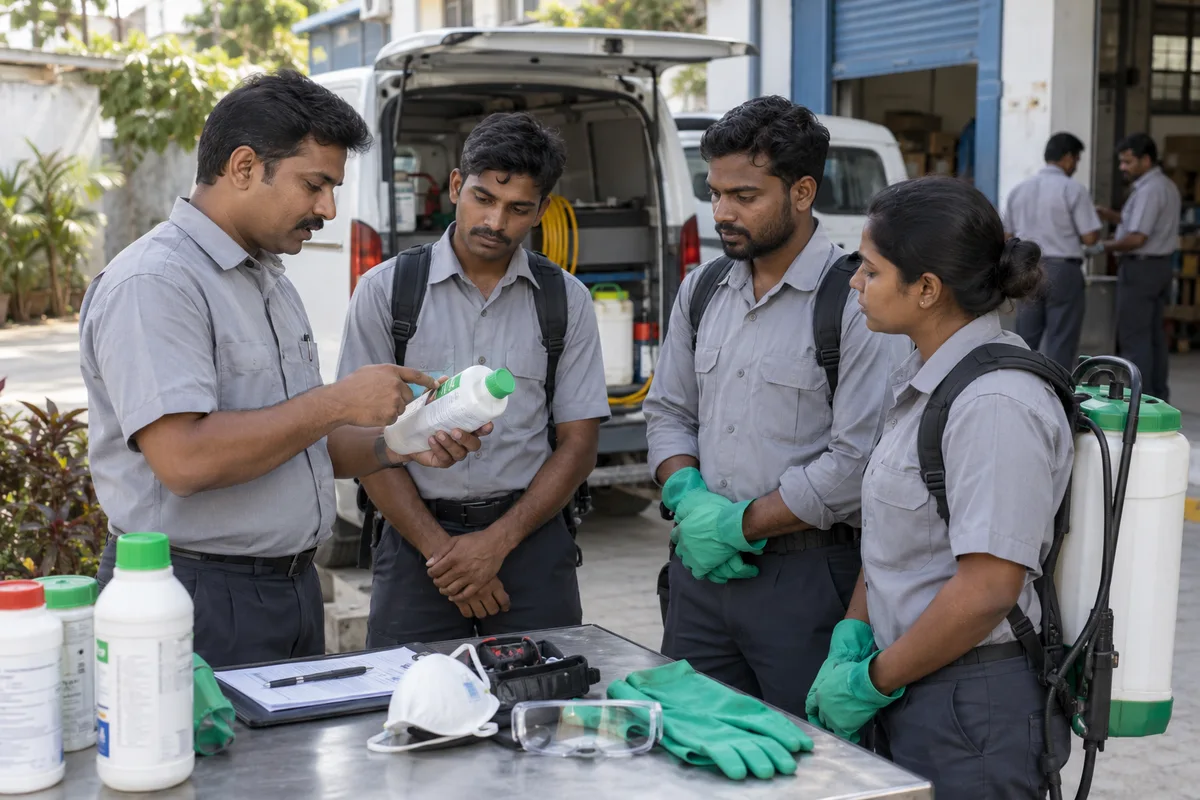
Share your requirementsA pest control business sells treatment and visits: one-time jobs, and recurring contracts for homes, offices, restaurants, warehouses and food units. Technicians travel from site to site, often alone, handling chemicals and equipment and working in other people's premises. The quality of the work is hard for the customer to check at the time, so trust and records matter. Sales or enquiry staff book the visits, a coordinator plans routes, and technicians carry out and report. Good technicians are valuable, because they build customer relationships, and they are tempting to a competitor. See also HR for facility management. Most of the HR work is about what technicians know, what they are safe to handle and whether the business can show it.
These are the places the people side of this kind of business tends to give way. The rest of this page works through them.
HR here has to work for each of these groups, not only the office. The set-up below is written with all of them in mind.
Chemical handling and treatment methods are passed on by whoever is nearest, so practice varies and records of who was taught what are thin.
Protective gear, storage and disposal are followed when someone watches, and drift when they do not.
A poorly planned route means long travel, late visits and rushed treatments, and technicians feel it first.
Treatment details, quantities and customer sign-off are held on paper or in a phone, so a complaint is hard to answer.
A technician who knows the customer can take them to a rival, and the business often holds no record of the relationship.
Pay linked to the number of jobs encourages short visits, and callbacks follow.
Technicians arrive through friends of friends, and skills and background are taken on trust rather than tested.
Where chemicals are kept and how containers are disposed of depends on the person, and nobody checks regularly.
Start with the topics that matter most here: Learning and Development; Health, Safety and Wellbeing; Performance Management. Then work through the rest. Each topic is written for facility management, not in general.
Training planned from need rather than from the calendar.
Induction, records, incident reporting and follow-through.
Goals, reviews and ratings that hold up in a conversation.
How many people, in which roles, by when — and what they will cost.
Structure, reporting lines and who is allowed to decide what.
Requisition to joining, the same way every time.
A first day that is the same for the fifth joiner as the first.
Records, attendance, leave and the day-to-day HR that must simply work.
Salary structure, payroll inputs and a month that closes on time.
Named backups for the roles that cannot be vacant.
Communication, recognition and the conditions people actually work in.
Two routes — one for complaints, one for conduct — kept separate.
Policies a manager can apply, and obligations with owners and dates.
Who leaves, when, why — and which of them mattered.
Resignation to relieving letter, in a defined order.
Records that survive people, and approvals that do not queue.
A short monthly pack management actually reads.
An HR function that runs the same way every month.
The pieces a pest control operators business puts in place, in an order that makes each easier. Open any card for the detail.
A short method for each common treatment, with the chemicals, quantities and safety steps, used for teaching and for checking.
What this coversHideA short method for each common treatment, with the chemicals, quantities and safety steps, used for teaching and for checking. The learning and development process holds the plan.
What was done, what was used, who signed, with time and location, kept centrally so a complaint can be answered quickly.
What this coversHideWhat was done, what was used, who signed, with time and location, kept centrally so a complaint can be answered quickly.
Realistic time per job and per leg, with the scheduler, so technicians are not set up to rush.
What this coversHideRealistic time per job and per leg, with the scheduler, so technicians are not set up to rush.
An incentive that counts callbacks and customer feedback alongside completed jobs.
What this coversHideAn incentive that counts callbacks and customer feedback alongside completed jobs. The performance management process shows how to build it.
Customer details and visit history held by the business, so a technician's departure does not take them with it.
What this coversHideCustomer details and visit history held by the business, so a technician's departure does not take them with it.
A short practical assessment of method and safety awareness before an offer, scored by a senior technician.
What this coversHideA short practical assessment of method and safety awareness before an offer, scored by a senior technician. The recruitment process holds the standard.
Before changing anything, find out what is true today. These checks take an afternoon and tell you which of the topics above to start with.
Share your requirementsConfirm with a qualified professional. What applies to you depends on your business, your state and your arrangements, and it changes. This page describes practice. It does not state a legal position.
The services below fit this kind of business best. Each starts by recording where you stand, and every later report compares against that. We do not promise outcomes.
A written treatment standard, practical teaching and a record of who has been trained in what.
Chemical handling, protective gear and incident routines for people who work alone with hazardous products.
Measures and incentives that reward good work, not only fast work.
One record per technician, with training, certificates and the customers and routes they handle.
Start with a free conversation, or see the paid HR Diagnostic.
Understand the business, its workforce, current processes and HR challenges.
Find the missing, weak, inconsistent or person-dependent processes.
Create the structure, processes, policies, SOPs, dashboards and systems needed.
Help HR and department managers actually adopt the new system.
Digitise repetitive and approval-based workflows where it is worth doing.
Track hiring, attendance, employee cost, performance, training and attrition.
Strengthen the people-management system continuously, not once.
From the GullyHR blog: one on HR in facility management, and one on each of the topics this page points to.

Housekeeping, technician and security staff at client sites leave for reasons head office rarely hears. How to ask, what to look for and how to act on it.
7 min readRead article

A calendar of courses, a budget spent by March and no record of what any of it changed. What a learning and development process contains when it starts from need rather than from the catalogue.
7 min readRead article
A laminated notice, an annual drill, and an incident register with three entries in two years. What workplace health and safety looks like when it is real.
7 min readRead article
A review can only judge what was agreed beforehand. How to set expectations that are specific, written and revisited, so the review stops being a surprise.
5 min readRead articleMore on the GullyHR blog.
With a written standard for each treatment, a period shadowing an experienced technician, a practical check and a record of what has been signed off. Do not let them handle certain chemicals alone until they are cleared.
The customer, the address, what was done, what was used and how much, the technician, the time and the customer's sign-off. Keep them centrally so you can answer a complaint quickly.
Hold the customer relationship in the business, with records and a second person who knows the account, and treat technicians well enough that they have less reason to leave. Confirm any restrictive terms with a qualified professional.
One that counts callbacks and customer feedback as well as jobs completed. Pay for volume alone encourages rushed visits.
A great deal, which is why routines, checks and records matter. Gear and storage rules that nobody checks tend to drift.
Early on we would ask which chemicals each technician has been trained on, where visit records live, and who holds your top recurring customers' contact details. A reasonable first project is a written treatment standard with a simple visit record. If a records-level review feels like the right next step, the paid HR Diagnostic covers it. Scope is agreed in writing.
All 10 business types in facility management · Find another business type
See all HR topics for facility management, or another industry.
Identify payroll leaks, record gaps and hiring bottlenecks in a free first conversation, and leave knowing what to fix first.
Know what you need? Share your requirements in four short steps.
Want the full picture? See the paid HR Diagnostic.
Prefer a quick message? Chat on WhatsApp