


















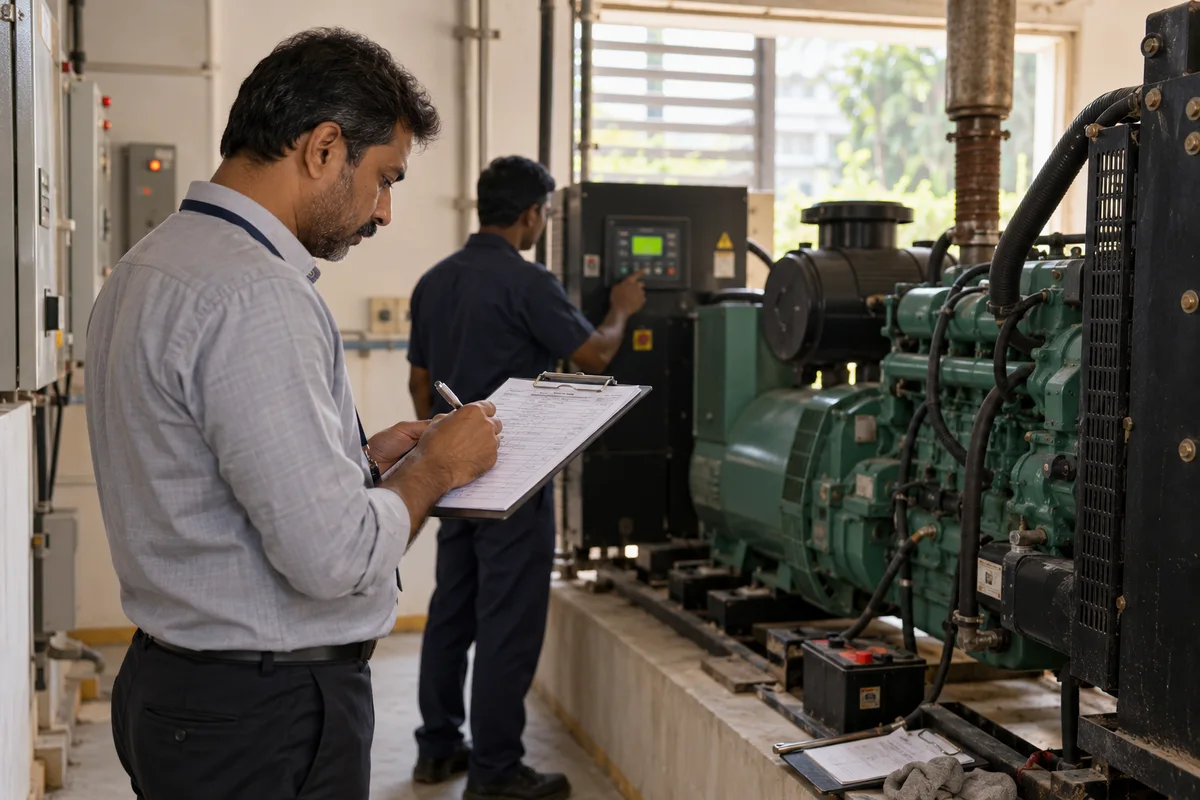

Why facility management staff leave and how to understand why
Housekeeping, technician and security staff at client sites leave for reasons head office rarely hears. How to ask, what to look for and how to act on it.
7 min readRead articleA doorstep laundry promises a slot at the customer's gate and a clean bag back by a set day. The business is won or lost by riders who arrive on time and a hub that returns every order complete.

Not sure what you need? Tell us about your business in six short steps and we will come to the first meeting prepared.
Share your requirementsA doorstep laundry provider collects clothes from homes and flats at an agreed time, processes them at its own hub or through partner plants, and returns them in a few days. Riders and pickup executives speak to customers directly, carry bags up lifts, count items and note stains at the door. At the hub, tagging, sorting, washing, finishing and packing run in shifts, and a missing item can be traced only if every bag was scanned or written down at each step. Demand follows weekends, month starts and monsoon weeks. Customers rate the service on the rider more than on the wash, and riders change jobs for slightly better delivery pay. See also HR for facility management.
These are the places the people side of this kind of business tends to give way. The rest of this page works through them.
HR here has to work for each of these groups, not only the office. The set-up below is written with all of them in mind.
The customer is told a window, and the rider scheduled for it is on leave. The first sign is an angry call at the end of the slot.
They enter societies, climb stairs and handle customers with no supervisor present. Politeness, safe conduct and honest counting depend on training and trust.
The customer says ten items went, the hub counts nine. Without a record made at pickup, the dispute lands on the rider or the hub unfairly.
A base amount, per-order payments, waiting time and fuel mean the monthly sum is hard to explain, and a rider who cannot follow it starts to doubt it.
Delivery slips, riders are wet and tired, and customers want clothes back faster. This is when riders resign.
Riders blame the hub for delays and the hub blames riders for wrong labels. People rarely visit each other's work.
A poor rating reaches the owner while the rider who earned it hears nothing.
Start with the topics that matter most here: Onboarding and Probation; Employee Administration; Performance Management. Then work through the rest. Each topic is written for facility management, not in general.
A first day that is the same for the fifth joiner as the first.
Records, attendance, leave and the day-to-day HR that must simply work.
Goals, reviews and ratings that hold up in a conversation.
How many people, in which roles, by when — and what they will cost.
Structure, reporting lines and who is allowed to decide what.
Requisition to joining, the same way every time.
Salary structure, payroll inputs and a month that closes on time.
Training planned from need rather than from the calendar.
Named backups for the roles that cannot be vacant.
Communication, recognition and the conditions people actually work in.
Two routes — one for complaints, one for conduct — kept separate.
Policies a manager can apply, and obligations with owners and dates.
Induction, records, incident reporting and follow-through.
Who leaves, when, why — and which of them mattered.
Resignation to relieving letter, in a defined order.
Records that survive people, and approvals that do not queue.
A short monthly pack management actually reads.
An HR function that runs the same way every month.
The pieces a doorstep laundry providers business puts in place, in an order that makes each easier. Open any card for the detail.
Customer conduct, how to count and tag at the door, how to handle stairs, lifts and security desks, and what to do about a stain or complaint.
What this coversHideCustomer conduct, how to count and tag at the door, how to handle stairs, lifts and security desks, and what to do about a stain or complaint. The employee onboarding process sets the order.
Slots offered to customers match the number of riders actually on duty, with a reliever named for each zone.
What this coversHideSlots offered to customers match the number of riders actually on duty, with a reliever named for each zone. The attendance and leave process covers weekly offs and leave.
Each bag is counted with the customer and recorded on a slip or phone before it leaves.
What this coversHideEach bag is counted with the customer and recorded on a slip or phone before it leaves. Hub and rider both work from the same record.
A weekly statement that lists base, per-order amounts and fuel help in simple lines.
What this coversHideA weekly statement that lists base, per-order amounts and fuel help in simple lines. The performance management and incentive design work balances speed, rating and complaints.
Weekly, face to face, with praise first and one point to improve.
What this coversHideWeekly, face to face, with praise first and one point to improve. Include hub staff so they hear what customers say.
A short code on dress, behaviour at the door, privacy of customer information and respect to security staff.
What this coversHideA short code on dress, behaviour at the door, privacy of customer information and respect to security staff. The professionalism and work ethics training builds it in.
Before changing anything, find out what is true today. These checks take an afternoon and tell you which of the topics above to start with.
Share your requirementsConfirm with a qualified professional. What applies to you depends on your business, your state and your arrangements, and it changes. This page describes practice. It does not state a legal position.
The services below fit this kind of business best. Each starts by recording where you stand, and every later report compares against that. We do not promise outcomes.
A short induction that prepares riders and pickup executives for customer homes, counting and tagging.
Slot rosters matched to riders on duty, with relievers named for each zone and a plan for rainy weeks.
Rider pay and review built on timeliness, rating and complaints, with a plain weekly statement.
Training on conduct at the door, privacy of customer details and respect for building staff.
Start with a free conversation, or see the paid HR Diagnostic.
Understand the business, its workforce, current processes and HR challenges.
Find the missing, weak, inconsistent or person-dependent processes.
Create the structure, processes, policies, SOPs, dashboards and systems needed.
Help HR and department managers actually adopt the new system.
Digitise repetitive and approval-based workflows where it is worth doing.
Track hiring, attendance, employee cost, performance, training and attrition.
Strengthen the people-management system continuously, not once.
From the GullyHR blog: one on HR in facility management, and one on each of the topics this page points to.

Housekeeping, technician and security staff at client sites leave for reasons head office rarely hears. How to ask, what to look for and how to act on it.
7 min readRead article

Hour by hour, then week by week, for a recruit's first month at a module, inverter, pack or junction box line: safety and handling first, a practice bench, a buddy, a sign-off and a day-30 review.
7 min readRead article
Payroll says one joining date, the personal file says another and the manager remembers a third. How to establish a single trustworthy employee record and keep it that way.
7 min readRead article
Measures that show how reactor, console, lab and gantry staff are really doing, the ones that mislead or bury near misses, and a monthly sheet an in-charge can run in twenty minutes.
7 min readRead articleMore on the GullyHR blog.
Offer only what your riders can deliver. Start with fewer slots, count how many are met on time, and open more only as the roster grows. A kept promise is worth more than a long list of slots.
That is a business choice with legal consequences, so take advice from a qualified professional. Whatever the arrangement, give riders a clear written basis of pay, an induction and a person to call.
Recount together, note the figure on the slip and ask the customer to confirm. Do not argue. Pass the matter to the supervisor with the slip, and let the hub check against its own count.
Provide rain gear, plan slower targets for wet days, pay waiting time fairly and talk to riders before the season. A weekly check-in tells you who is struggling.
Train staff not to share names, addresses or photos, and not to keep customer numbers on personal phones beyond the task. Ask a qualified professional about the rules that apply to your records.
We would ask how many promised slots were missed last weekend, how a rider's pay is explained to him and how counts are agreed at the door. A good start is a rider induction plus a slot roster. We write the scope down for you to accept or change.
All 6 business types in laundry & personal services · Find another business type
See all HR topics for facility management, or another industry.
Tell us what is slowing your team down. We’ll help you find a practical way forward, starting with a conversation.
