


















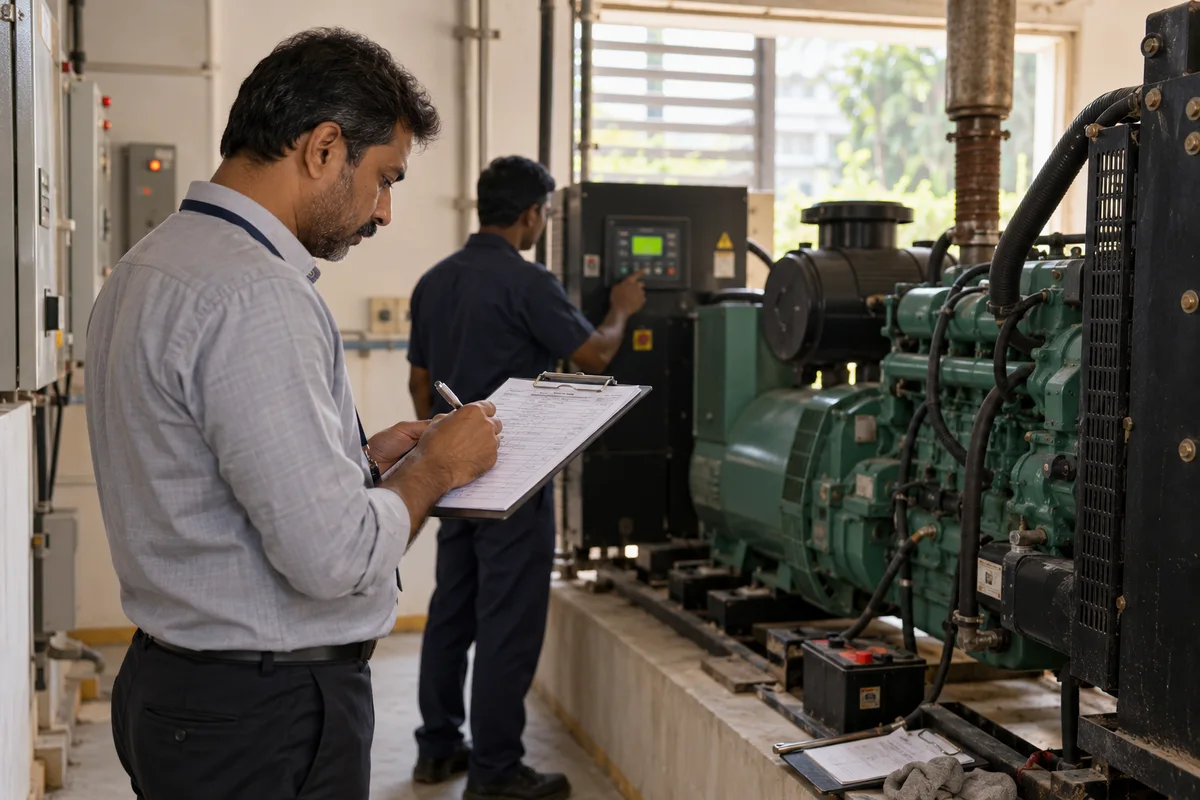

Why facility management staff leave and how to understand why
Housekeeping, technician and security staff at client sites leave for reasons head office rarely hears. How to ask, what to look for and how to act on it.
7 min readRead articleA commercial laundry plant washes hotel, hospital and restaurant linen to a daily schedule, and a missed truck is a client complaint. The plant depends on shift crews, machine skills and supervisors who can hold a hot floor together.

Not sure what you need? Tell us about your business in six short steps and we will come to the first meeting prepared.
Share your requirementsA commercial laundry plant processes linen for hotels, hospitals, hostels, restaurants and sometimes uniforms for factories. Trucks bring soiled linen in the early hours, sorting and washing run on tunnel or batch machines, dryers and flatwork ironers finish it, and packed lots go back to clients by the next morning. Work is heavy, hot and in shifts, with a crew of machine operators, sorters, feeders, folders and loaders. Volumes depend on hotel occupancy, wedding seasons and hospital demand, so they rise and fall without much notice. Clients inspect for count, cleanliness and timing. A supervisor on the night shift carries the plant's reputation. See also HR for facility management.
These are the places the people side of this kind of business tends to give way. The rest of this page works through them.
HR here has to work for each of these groups, not only the office. The set-up below is written with all of them in mind.
A hotel group fills up for an event, and the plant gets twice the linen overnight. Overtime and absentee rates both go up on the same day.
Sorting soiled linen, feeding ironers and loading trucks are hard physical tasks. Good workers leave for lighter jobs if nobody notices their fatigue.
A tunnel washer or ironer operator learns settings and faults through years of practice. When he is absent, output and quality both drop.
Supervisors alone handle breakdowns, count disputes and absenteeism between midnight and dawn, with little backup.
If the count of towels or sheets differs from the client's, the plant needs to show who sorted and packed. Weak records favour the client.
Workers come through contractors, relatives and village networks, and loyalty is to the group leader more than to the plant.
A hurried crew skips a guard or a glove, and an injury becomes a plant-wide story.
Start with the topics that matter most here: HR Strategy and Workforce Planning; Health, Safety and Wellbeing; Employee Relations. Then work through the rest. Each topic is written for facility management, not in general.
How many people, in which roles, by when — and what they will cost.
Induction, records, incident reporting and follow-through.
Two routes — one for complaints, one for conduct — kept separate.
Structure, reporting lines and who is allowed to decide what.
Requisition to joining, the same way every time.
A first day that is the same for the fifth joiner as the first.
Records, attendance, leave and the day-to-day HR that must simply work.
Salary structure, payroll inputs and a month that closes on time.
Goals, reviews and ratings that hold up in a conversation.
Training planned from need rather than from the calendar.
Named backups for the roles that cannot be vacant.
Communication, recognition and the conditions people actually work in.
Policies a manager can apply, and obligations with owners and dates.
Who leaves, when, why — and which of them mattered.
Resignation to relieving letter, in a defined order.
Records that survive people, and approvals that do not queue.
A short monthly pack management actually reads.
An HR function that runs the same way every month.
The pieces a commercial laundry plants business puts in place, in an order that makes each easier. Open any card for the detail.
A table that says how many people each shift needs at low, usual and peak volumes, with a standby list for peaks.
What this coversHideA table that says how many people each shift needs at low, usual and peak volumes, with a standby list for peaks. The workforce planning work builds it from your own records.
Short talks at shift start, a floor walk by the supervisor, and a record of near misses.
What this coversHideShort talks at shift start, a floor walk by the supervisor, and a record of near misses. The health, safety and wellbeing work shapes the routine.
Teach how to brief a crew, handle a breakdown, settle a count dispute and report in writing.
What this coversHideTeach how to brief a crew, handle a breakdown, settle a count dispute and report in writing. The manager development programme fits here.
A clear path for a worker with a grievance and for a supervisor dealing with misconduct, with notes kept.
What this coversHideA clear path for a worker with a grievance and for a supervisor dealing with misconduct, with notes kept. The grievance and disciplinary process covers the steps.
Each key machine has at least two people who can run it, signed off by the maintenance technician.
What this coversHideEach key machine has at least two people who can run it, signed off by the maintenance technician.
Sorting, washing, finishing and packing counts signed per shift, so disputes can be traced to a stage.
What this coversHideSorting, washing, finishing and packing counts signed per shift, so disputes can be traced to a stage.
Before changing anything, find out what is true today. These checks take an afternoon and tell you which of the topics above to start with.
Share your requirementsConfirm with a qualified professional. What applies to you depends on your business, your state and your arrangements, and it changes. This page describes practice. It does not state a legal position.
The services below fit this kind of business best. Each starts by recording where you stand, and every later report compares against that. We do not promise outcomes.
Crew sizes by volume band, standby arrangements and a view of the people needed as client contracts grow.
Shift-start talks, floor walks and a record of near misses, designed for a hot and heavy workplace.
A fair, written route for complaints and for misconduct, so night shift issues do not wait for the day team.
Practical training for shift supervisors on briefing, breakdowns, disputes and reporting.
Start with a free conversation, or see the paid HR Diagnostic.
Understand the business, its workforce, current processes and HR challenges.
Find the missing, weak, inconsistent or person-dependent processes.
Create the structure, processes, policies, SOPs, dashboards and systems needed.
Help HR and department managers actually adopt the new system.
Digitise repetitive and approval-based workflows where it is worth doing.
Track hiring, attendance, employee cost, performance, training and attrition.
Strengthen the people-management system continuously, not once.
From the GullyHR blog: one on HR in facility management, and one on each of the topics this page points to.

Housekeeping, technician and security staff at client sites leave for reasons head office rarely hears. How to ask, what to look for and how to act on it.
7 min readRead article

Hiring decisions made one request at a time, in the month the pain is worst. What a workforce plan contains and why a twelve-month view changes what you hire.
7 min readRead article
A shift, weekly and monthly safety routine for rubber plants that names who checks platen guards, mill trip bars, autoclave doors, burst-test cages and slings, and who acts on near misses.
7 min readRead article
An employee brings you a complaint about their supervisor. What happens next should not depend on who is in the room. A grievance procedure a small company can actually run.
8 min readRead articleMore on the GullyHR blog.
Track daily weights and crew counts for a few months, define volume bands and keep a standby list for the top band. Agree overtime and call-in rules with the crew in advance so a spike does not lead to arguments.
Someone who knows the machines, is respected by the crew and can write a clear handover note. Technical skill alone is not enough, so give new supervisors training in people management.
Pay on time, give safe transport or a late-night allowance where it fits, ensure a manager visits sometimes and avoid constant changes of shift. Ask the crew what they find hardest.
Brief both on the same safety and quality rules, mix them in teams where useful and avoid two classes of treatment on the floor. Ask a qualified professional about contractor obligations.
Talk about hazards at each shift start, supervise the use of guards and gloves, rotate heavy tasks and record near misses so repeated patterns are fixed. Ask a safety professional to review the floor.
We would ask how headcount compares with volume, what the night supervisor handles alone and who can run each key machine. A good first project is crew sizing by volume band and a supervisor briefing routine. The scope is written down for you to accept or change.
All 6 business types in laundry & personal services · Find another business type
See all HR topics for facility management, or another industry.
Tell us what is slowing your team down. We’ll help you find a practical way forward, starting with a conversation.
