


Industries
Why NGO and social enterprise employees leave and how to understand why
Staff at NGOs and social enterprises leave for funding, field and workload reasons as well as pay. How to understand why, listen early and act.
7 min readRead articleA child welfare NGO works with children who may be vulnerable, in shelters, schools or on the street. Here is how to recruit carefully, set conduct rules and support staff who carry heavy cases.

Not sure what you need? Tell us about your business in six short steps and we will come to the first meeting prepared.
Share your requirementsA child welfare NGO may run a children's home, a shelter, a drop-in centre, a bridge school, a helpline or outreach to children at stations and streets. Staff include house parents, caregivers, counsellors, teachers, social workers, outreach workers, night wardens, cooks and a coordinator. Shifts run through nights and festivals because children live on site. The work is emotionally heavy, with abuse, neglect, trafficking and loss in the case files, and staff who are paid little are asked to give a great deal. Adults have close access to children, so who is hired and how they behave matters more here than almost anywhere. Government inspections, donor audits and court or committee visits are frequent. Volunteers, interns and visitors add risk if they are not managed. Turnover is high, and every departure disturbs children who have already lost people. See also HR for NGOs and social enterprises.
These are the places the people side of this kind of business tends to give way. The rest of this page works through them.
HR here has to work for each of these groups, not only the office. The set-up below is written with all of them in mind.
GullyHR runs talent acquisition for permanent roles in child welfare NGOs. For each role we agree the job description with you, find and screen candidates against it, and support the offer through to joining. Tell us the role and the number of people, and we start there.
We recruit permanent employees. We do not supply contract or temporary staff.
Every business interviews, but few have a written process that works the same way for every role and every interviewer. GullyHR designs yours, from the role brief to the offer, trains your managers to run it, and can run it for you on the roles you hand us.
We agree what the role must deliver, the must-have and nice-to-have skills, and how each will be scored.
Screening call, assessment, interview rounds and decision points, sized to the role and the number of people you hire.
Structured questions for each role family and a rating guide, so two interviewers judge the same answer the same way.
A short briefing for your managers on what to ask, what to avoid and how to give a clear yes or no.
Who approves, how the offer is made, and how candidates are kept informed from first call to joining.
Someone is hired on a recommendation and starts working with children before references and a conduct code have been properly looked at.
Staff and volunteers are unsure what is allowed: gifts, photos, phones, one-to-one time, outings and physical contact.
A single warden covers a dormitory overnight with no clear check, supervision or way to raise a concern.
Caregivers hear traumatic stories and have nowhere to talk, so stress shows as anger, absence or leaving.
Short-term helpers get access to children without induction, and a donor visit becomes a photo session.
When a house parent leaves suddenly, a child loses trust again, and handover is rarely planned.
Staff fear blame if they speak up about a colleague, and there is no named person or safe way to do it.
Case notes, attendance and staff files need to be ready for officials, but are kept in different places by different people.
Start with the topics that matter most here: Employee Relations; Policies, Compliance and Governance; Health, Safety and Wellbeing. Then work through the rest. Each topic is written for ngos and social enterprises, not in general.
Two routes — one for complaints, one for conduct — kept separate.
Policies a manager can apply, and obligations with owners and dates.
Induction, records, incident reporting and follow-through.
How many people, in which roles, by when — and what they will cost.
Structure, reporting lines and who is allowed to decide what.
Requisition to joining, the same way every time.
A first day that is the same for the fifth joiner as the first.
Records, attendance, leave and the day-to-day HR that must simply work.
Salary structure, payroll inputs and a month that closes on time.
Goals, reviews and ratings that hold up in a conversation.
Training planned from need rather than from the calendar.
Named backups for the roles that cannot be vacant.
Communication, recognition and the conditions people actually work in.
Who leaves, when, why — and which of them mattered.
Resignation to relieving letter, in a defined order.
Records that survive people, and approvals that do not queue.
A short monthly pack management actually reads.
An HR function that runs the same way every month.
The pieces a child welfare NGOs business puts in place, in an order that makes each easier. Open any card for the detail.
Plain rules on contact, photos, phones, one-to-one time and outings, signed by everyone and reviewed by a qualified professional.
Plain rules on contact, photos, phones, one-to-one time and outings, signed by everyone and reviewed by a qualified professional. The HR policy packages give a base.
A job note, interview questions on attitude to children, references that are followed up and a probation period.
A job note, interview questions on attitude to children, references that are followed up and a probation period. Confirm any checks with a qualified professional. The recruitment process covers the steps.
A fair rota with two adults where needed, rest days and a supervisor to call.
A fair rota with two adults where needed, rest days and a supervisor to call. The attendance, shift and leave process shows how.
Regular case discussions, supervision by a senior person and access to counselling, so heavy work is shared.
Regular case discussions, supervision by a senior person and access to counselling, so heavy work is shared. The workplace health, safety and wellbeing work helps.
A short briefing, a signed code, a named escort and a rule on photos and gifts.
A short briefing, a signed code, a named escort and a rule on photos and gifts.
A senior person, and a back-up outside the line, who receives concerns and records what was done.
A senior person, and a back-up outside the line, who receives concerns and records what was done.
Before changing anything, find out what is true today. These checks take an afternoon and tell you which of the topics above to start with.
Share your requirementsConfirm with a qualified professional. What applies to you depends on your business, your state and your arrangements, and it changes. This page describes practice. It does not state a legal position.
The services below fit this kind of business best. Each starts by recording where you stand, and every later report compares against that. We do not promise outcomes.
A safeguarding, conduct and photo policy that every adult signs.
Careful hiring steps for roles with access to children.
Support for the stress of caring for children with difficult histories.
A safe, written route for concerns about a colleague.
Start with a free conversation, or see the paid HR Diagnostic.
Understand the business, its workforce, current processes and HR challenges.
Find the missing, weak, inconsistent or person-dependent processes.
Create the structure, processes, policies, SOPs, dashboards and systems needed.
Help HR and department managers actually adopt the new system.
Digitise repetitive and approval-based workflows where it is worth doing.
Track hiring, attendance, employee cost, performance, training and attrition.
Strengthen the people-management system continuously, not once.
From the GullyHR blog: one on HR in ngos and social enterprises, and one on each of the topics this page points to.
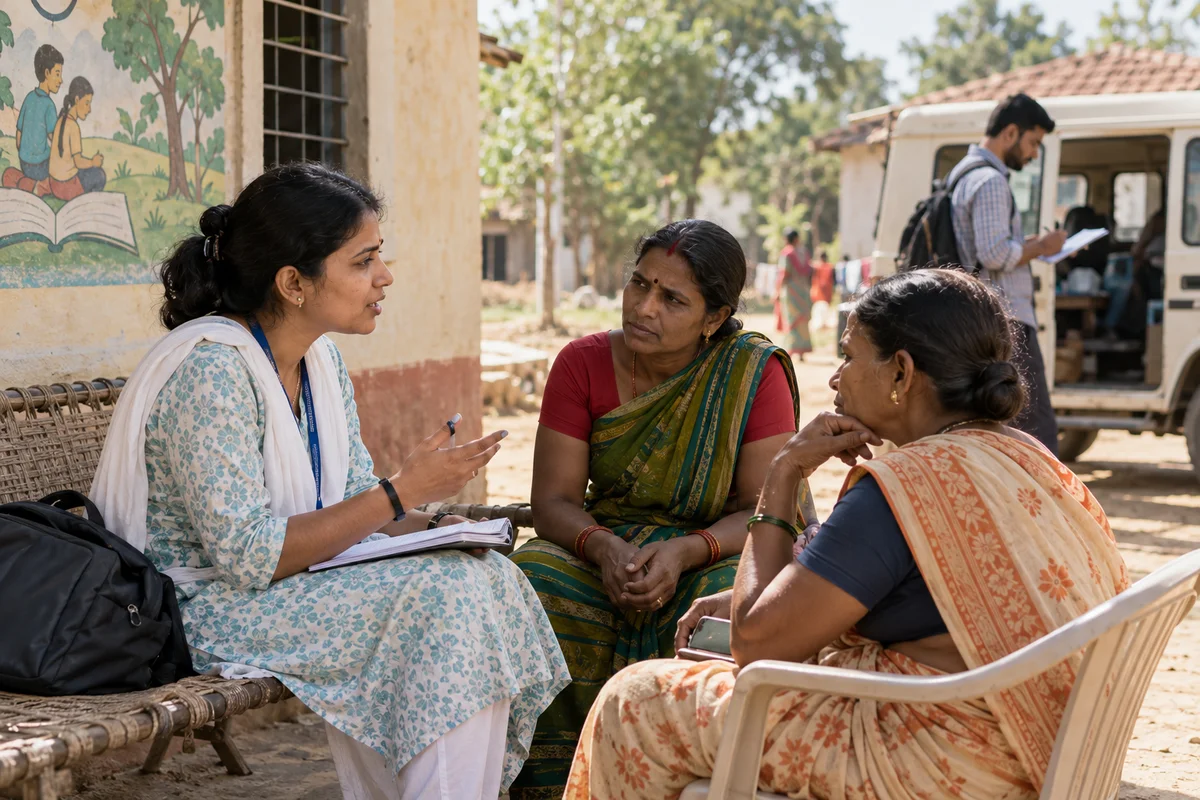
Staff at NGOs and social enterprises leave for funding, field and workload reasons as well as pay. How to understand why, listen early and act.
7 min readRead article
An employee brings you a complaint about their supervisor. What happens next should not depend on who is in the room. A grievance procedure a small company can actually run.
8 min readRead article
How an India head can sort a global parent's HR policies into apply, adapt or replace, write an India addendum with advisers, and keep headquarters on side.
7 min readRead article
A shift, weekly and monthly safety routine for rubber plants that names who checks platen guards, mill trip bars, autoclave doors, burst-test cages and slings, and who acts on near misses.
7 min readRead articleMore on the GullyHR blog.
Rules on contact, photos, phones, supervision, outings, gifts, how concerns are raised and who receives them. A qualified professional should review it.
Use clear interviews, references that you actually call, a probation period and any checks that are advised for your type of home. Confirm requirements with a qualified professional.
Generally no. Give them induction, a code to sign and supervision, and keep one-to-one time visible.
Share heavy cases, fix rest days, give supervision and offer counselling. Notice changes in attendance and mood.
Receive it calmly, record it, protect the person raising it and follow the written steps. Take advice at once where a child may be at risk.
We would ask how staff are hired, who is alone with children and how concerns are raised today. A sensible first piece of work is a safeguarding and conduct code with a stepwise hiring routine. Scope and fees are agreed in writing afterwards.
All 43 business types in ngos and social enterprises · Find another business type
See all HR topics for ngos and social enterprises, or another industry.
Tell us what is slowing your team down. We’ll help you find a practical way forward, starting with a conversation.