
Industries
Why hospitality employees leave and how to understand why
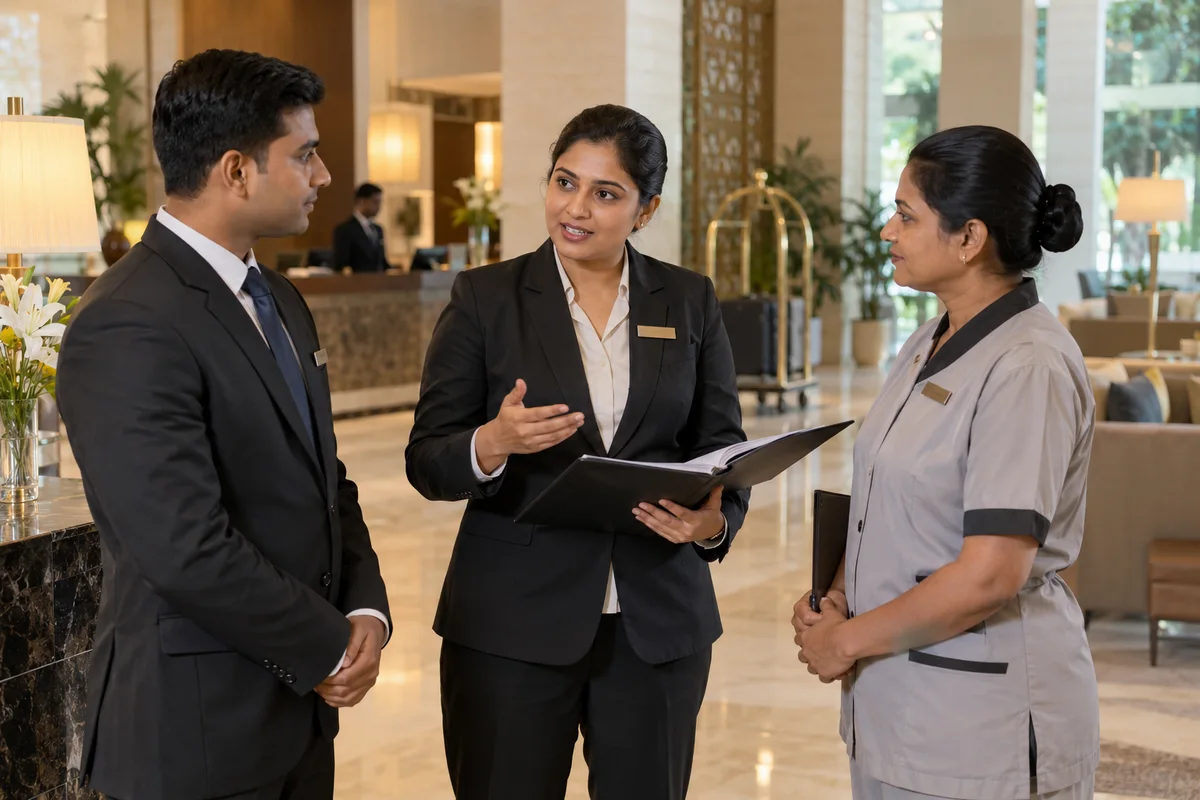
Hotel, restaurant and banquet staff leave for reasons that vary by department and season. How to ask what sits behind the first answer and act on it.
7 min readRead articleA casino or gaming venue runs all night, with cash on every table and guests who expect polished service. This is how to organise dealers, floor teams and controls for licensed, high-trust work.
Not sure what you need? Tell us about your business in six short steps and we will come to the first meeting prepared.
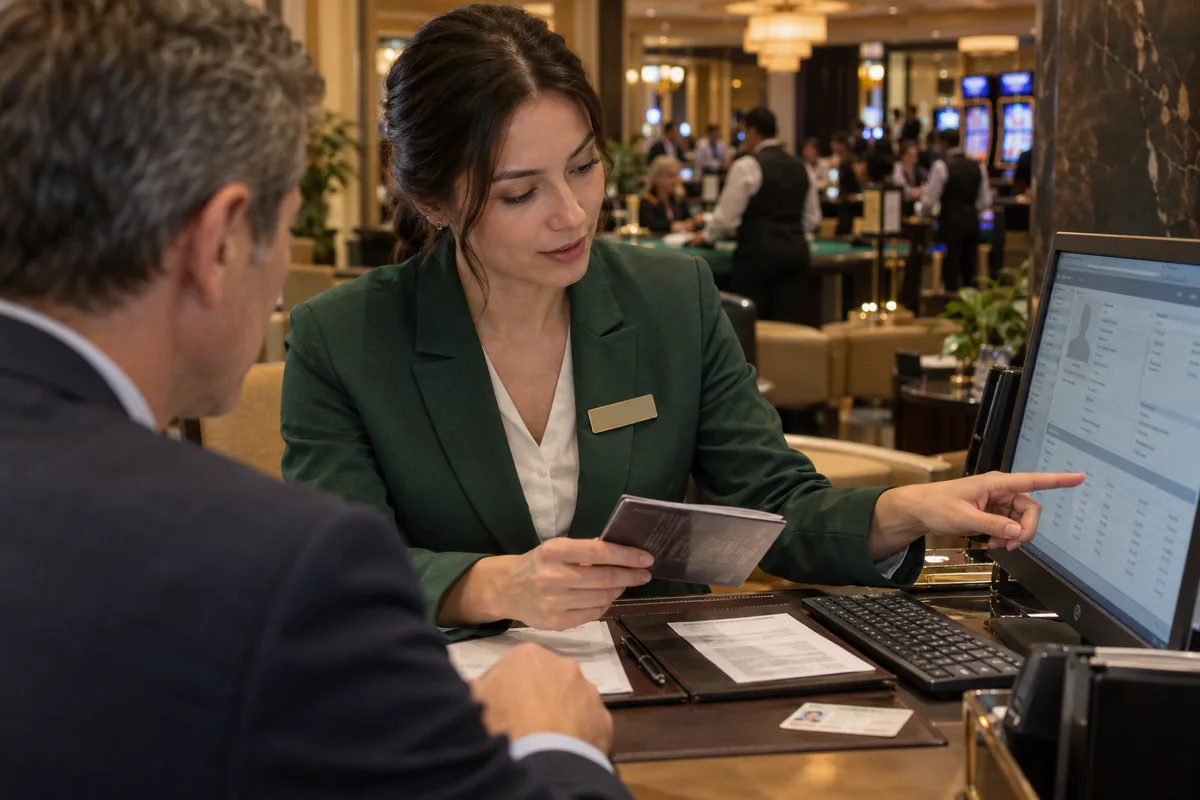
Share your requirementsA casino or gaming venue runs tables, a gaming floor, food and drink service and a hotel or entertainment area, late into the night. Dealers and croupiers run the tables, pit supervisors and floor managers watch the play, cashiers handle chips and cash, and a surveillance team watches the floor on screens. Host and guest-relations staff look after regular players, while bar, kitchen and housekeeping keep the rest of the venue going. Rules on where and how gaming may operate differ widely across Indian states, so each venue works under its own licence conditions. The business runs on trust: every chip, card and cash movement is watched, and an employee who bends a rule can put the whole licence at risk. Shifts run overnight, weekends and festivals are the busiest, and the guest is tired, excited or both.
These are the places the people side of this kind of business tends to give way. The rest of this page works through them.
HR here has to work for each of these groups, not only the office. The set-up below is written with all of them in mind.
GullyHR runs talent acquisition for permanent roles in casinos and gaming venues. For each role we agree the job description with you, find and screen candidates against it, and support the offer through to joining. Tell us the role and the number of people, and we start there.
We recruit permanent employees. We do not supply contract or temporary staff.
Every business interviews, but few have a written process that works the same way for every role and every interviewer. GullyHR designs yours, from the role brief to the offer, trains your managers to run it, and can run it for you on the roles you hand us.
We agree what the role must deliver, the must-have and nice-to-have skills, and how each will be scored.
Screening call, assessment, interview rounds and decision points, sized to the role and the number of people you hire.
Structured questions for each role family and a rating guide, so two interviewers judge the same answer the same way.
A short briefing for your managers on what to ask, what to avoid and how to give a clear yes or no.
Who approves, how the offer is made, and how candidates are kept informed from first call to joining.
Learning the games and running a table at speed takes weeks of practice, and a dealer who leaves right after training wastes the investment.
Broken sleep and constant exposure to cash, smoke and noise raise absence and turnover on the floor.
Cashiers and table staff handle large sums, and without separation of duties one person's slip or misconduct is hard to catch.
Staff meet intoxicated, angry or demanding players and need clear backing from supervisors on what they may refuse and when to step away.
Surveillance, finance and operations each see one slice, and staff are unsure whom they answer to when something goes wrong.
Start with the topics that matter most here: Learning and Development; Policies, Compliance and Governance; Employee Relations. Then work through the rest. Each topic is written for hospitality, not in general.
Training planned from need rather than from the calendar.
Policies a manager can apply, and obligations with owners and dates.
Two routes, one for complaints, one for conduct, kept separate.
How many people, in which roles, by when, and what they will cost.
Structure, reporting lines and who is allowed to decide what.
Requisition to joining, the same way every time.
A first day that is the same for the fifth joiner as the first.
Records, attendance, leave and the day-to-day HR that must simply work.
Salary structure, payroll inputs and a month that closes on time.
Goals, reviews and ratings that hold up in a conversation.
Named backups for the roles that cannot be vacant.
Communication, recognition and the conditions people actually work in.
Induction, records, incident reporting and follow-through.
Who leaves, when, why, and which of them mattered.
Resignation to relieving letter, in a defined order.
Records that survive people, and approvals that do not queue.
A short monthly pack management actually reads.
An HR function that runs the same way every month.
The pieces a casinos and gaming venues business puts in place, in an order that makes each easier. Open any card for the detail.
A path from trainee to table-ready with a test at each stage and a minimum service period agreed up front.
A path from trainee to table-ready with a test at each stage and a minimum service period agreed up front. The learning and development process sets it out.
A cap on consecutive late shifts, regular rest days and rules for shift swaps, with the roster built from expected footfall.
A cap on consecutive late shifts, regular rest days and rules for shift swaps, with the roster built from expected footfall. The attendance, shift and leave work covers the record.
A conduct and controls guide per department: what a dealer, cashier or host must never do, how to report a worry and what follows a breach.
A conduct and controls guide per department: what a dealer, cashier or host must never do, how to report a worry and what follows a breach. The HR policies and governance work gives the format.
Practice in handling difficult guests, refusing service calmly and standing beside a dealer on the floor.
Practice in handling difficult guests, refusing service calmly and standing beside a dealer on the floor. The conflict management programme supports it.
A way for any employee to flag a worry about conduct or controls without going through their own supervisor.
A way for any employee to flag a worry about conduct or controls without going through their own supervisor. The grievance and disciplinary process provides the steps.
Before changing anything, find out what is true today. Work through the checks using a recent operating period. The time needed depends on the records you hold; note missing evidence and use the findings to choose a priority.
Share your requirementsConfirm with a qualified professional. What applies to you depends on your business, your state and your arrangements, and it changes. This page describes practice. It does not state a legal position.
The services below fit this kind of business best. Each starts by recording where you stand, and every later report compares against that. We do not promise outcomes.
A staged dealer and supervisor training path with tests and records.
Night rosters with rest limits and a reliable record for payroll.
Clear written conduct and controls rules for each department.
A fair route for raising concerns and handling breaches without leaving it to individual supervisors.
Start with a free conversation, or see the paid HR Diagnostic.
Understand the business, its workforce, current processes and HR challenges.
Find the missing, weak, inconsistent or person-dependent processes.
Create the structure, processes, policies, SOPs, dashboards and systems needed.
Help HR and department managers actually adopt the new system.
Digitise repetitive and approval-based workflows where it is worth doing.
Track hiring, attendance, employee cost, performance, training and attrition.
Strengthen the people-management system continuously, not once.
From the GullyHR blog: one on HR in hospitality, and one on each of the topics this page points to.

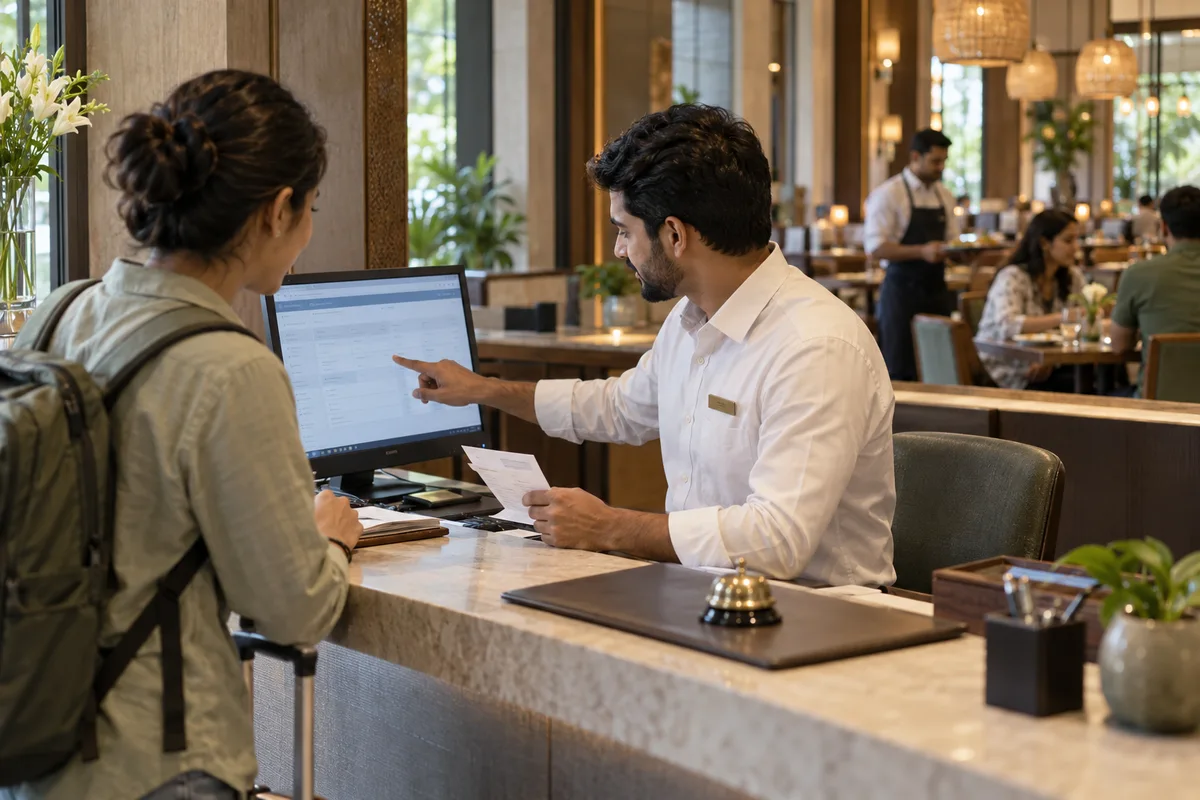
Hotel, restaurant and banquet staff leave for reasons that vary by department and season. How to ask what sits behind the first answer and act on it.
7 min readRead article
A founder's guide to hiring freshers and running a first-year programme: campus or open drives, a screening round, a training plan by quarter, mentors and checkpoints.
6 min readRead article
How an India head can sort a global parent's HR policies into apply, adapt or replace, write an India addendum with advisers, and keep headquarters on side.
7 min readRead article
An employee brings you a complaint about their supervisor. What happens next should not depend on who is in the room. A grievance procedure a small company can actually run.
8 min readRead articleMore on the GullyHR blog.
Say at the start what training involves and what you expect in return. Check with a qualified professional before using any minimum-service or recovery condition, and apply the same terms to everyone.
Cap consecutive late shifts, give regular rest days, build breaks into the roster and avoid last-minute changes. Ask the team what is hardest, then test one change at a time.
Separate duties so one person never handles and records the same transaction, count in pairs and keep a written trail. Ask your finance and licensing advisers what applies under your licence.
Give them a script for refusals, a supervisor who steps in quickly and a debrief after hard encounters. Staff stay longer when they know they will be backed.
Use one standard for pay, conduct and training and list local differences, since licence conditions and state rules vary. Check each location's requirements with a qualified professional.
Three things: how many trainee dealers remain on the floor after training, how late shifts fall across table staff, and whether supervisors and cashiers follow the same written rules. A staged dealer academy or a night roster built for recovery could be the first job. The scope would then be put in writing for you to approve, and licence matters stay with your own advisers.
All 143 business types in hospitality · Find another business type
Tell us your industry, team size and the issue you want to address. Bring one example of where work gets delayed or ownership is unclear, and the deadline or decision you are working towards.