


Industries
Why hospitality employees leave and how to understand why
Hotel, restaurant and banquet staff leave for reasons that vary by department and season. How to ask what sits behind the first answer and act on it.
7 min readRead articleMembers of a club own a stake in it and expect to be recognised by name. The team behind them is long serving, answers to a committee that rotates and works under the eyes of the people it serves.
Make this work for your business. Share your team size, priorities and what you need help with. We’ll use your brief to prepare for the first conversation.
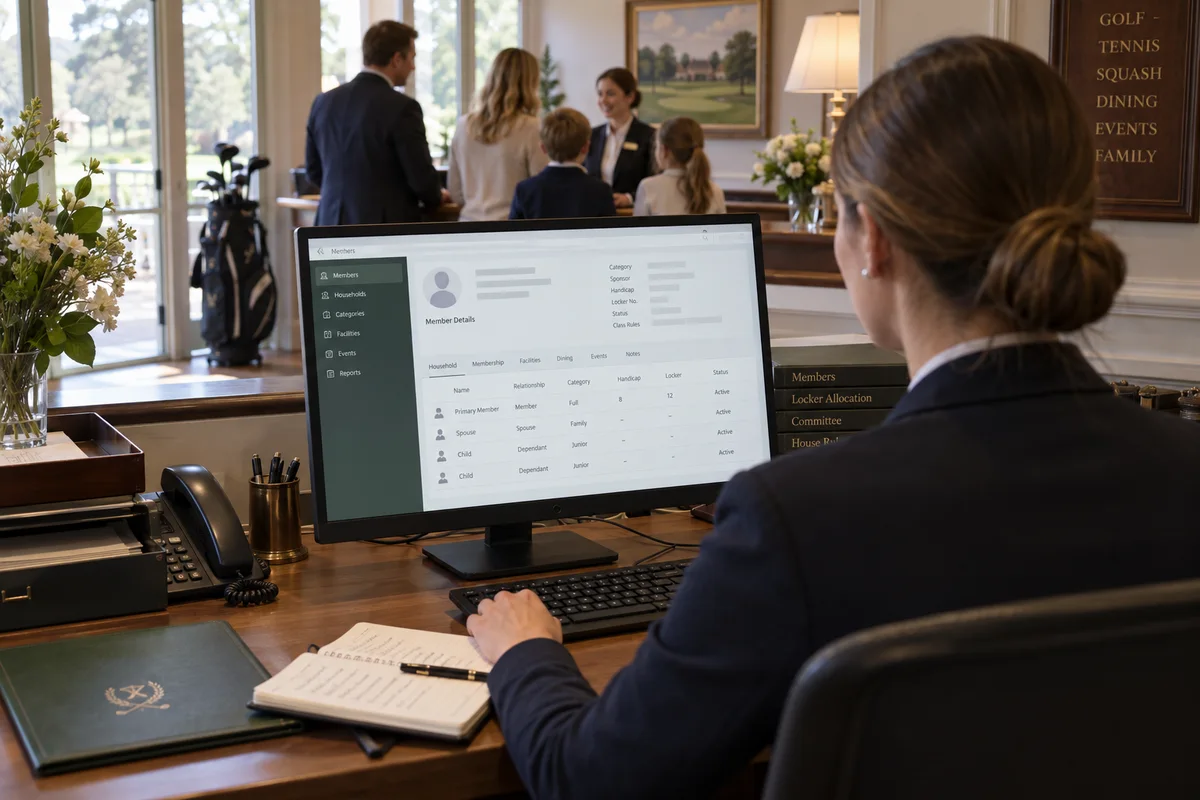
Share your requirementsA country club, gymkhana or member club serves families who pay to belong, not guests who pay once. The staff run dining rooms, bars, banquet halls, sports courts, a pool, sometimes guest rooms, the lawns and an office for membership, accounts and events. Some employees have served for decades and know each member's habits, while kitchens, cleaning or security may be outsourced. A general manager or secretary runs the day, but answers to an elected committee whose members change every year or two and do not always agree on priorities. Members watch closely: they notice a slow bar, a changed menu or a missing familiar face, and may complain straight to a committee member. Festival weekends and annual days bring heavy loads, and weekday afternoons are quiet.
These are the places the people side of this kind of business tends to give way. The rest of this page works through them.
Why GullyHR for country clubs and member clubs
For general managers and secretaries of member clubs. Staffing rules are adopted once and handed on, long-serving roles are written down, and members' feedback reaches staff through the manager.
Hiring, pay revisions, promotion and discipline are written once, approved and handed from one committee to the next, so a decision is not undone by the next term.
A current description, grade and pay for each employee is discussed face to face, so informal arrangements from years ago give way to clear ones.
Members give feedback through the manager or the office, and committee members agree not to instruct staff directly, so a bearer is not caught between two bosses.
Each section records regular members' preferences and event traditions with the staff who know them, so a retirement does not take the club's memory away.
Start with any one of these. Scope and fee are agreed in writing after a free first conversation.
The audit begins with a list of every employee: joining date, present duties and pay. We mark where the three disagree, a gap that decades of informal change leave behind. We read the minutes of the last two committees for staffing decisions and ask whether the current committee has seen them. We ask the manager the number of instructions last month that came straight from committee members. Outsourced kitchen, cleaning and security arrangements are reviewed for how their staff are managed on the floor. Younger staff are asked where they see themselves in two years, and your own adviser confirms any employment or society points.
What you receive
An example, not a client storyTake a club where a bartender of twenty years is paid under an arrangement nobody can explain and a new committee wants to revise it. The audit would set out his duties, history and pay beside the current grade structure, and give the committee a clear starting point for a respectful conversation with him.
How the hr audit works →Process design for a club is built around continuity. We write the staffing route: who proposes a post, who approves it, how pay revisions are decided and where the decision is recorded for the next committee. Next the member feedback route, from member to office to manager to section head, with the response noted. Then the ladder from trainee steward to steward to supervisor, with training and a review date. Finally the retirement handover, a short process in which the section writes down the preferences and traditions of its regular members, and the successor shadows before the leaving date.
What you receive
An example, not a client storySuppose a member complains at the bar about a slow service and a committee friend tells the steward to fix it that night. With a feedback route agreed by the committee, the friend passes it to the office, the manager speaks to the section head and the member hears back within a set time.
How the hr process design works →Week to week, we meet the manager and section heads to cover rosters for the coming events, absences and member feedback received. We keep role papers and pay records current, remind the manager when a review date arrives and track trainees on the ladder. When a committee term ends we prepare a short briefing for incoming members, covering the staffing policy, open cases and how decisions are recorded. Each month the manager receives a note listing events needing extra staff, long-serving employees nearing retirement and any trainees ready for a step up, so festival weekends and annual days do not arrive as a surprise.
What you receive
An example, not a client storyPicture a new committee that arrives with a plan to cut staff hours in the weekday afternoons and rehire for weekends. A briefing pack would show what the last committee decided and why, how much of the weekday work is cleaning and maintenance, and what the staffing policy says about consulting the manager first.
How the hr management works →Club roles need people who treat members as members, not as customers. For dining and bar roles we design a trial shift with a regular-member scenario, scored for manner, memory and calm. Coaches and marshals demonstrate a session with a mixed group. Reception and membership staff handle a role-play about a member who is upset about a charge. Section head interviews explore how the person would lead a team of long-serving staff. The brief describes festival weekends and annual days honestly. Recruitment covers permanent roles only, and outsourced teams stay with their own suppliers.
What you receive
An example, not a client storySay the club needs a new banquet supervisor and the committee wants a member's nephew to have the job. A written selection route with the same exercise and scoring sheet for all candidates would let the manager show the committee how each performed, and the decision could be explained to the nephew, the committee and the team.
How the recruitment for permanent roles works →Quiet weekday afternoons are the time for learning. Service staff practise member etiquette: names, preferences, handling a complaint with calm and referring it to the manager. Trainee stewards follow a short learning plan with a review date at each step. Section heads learn to lead people who know the club better than they do, to give feedback to someone with twenty years of service and to document a conversation. The manager practises briefing a new committee on what staff may and may not be asked to do. Each session uses a recent real situation with identifying details removed and ends with one agreed habit.
What you receive
An example, not a client storyTake a young steward who corrects a long-standing member's order in front of guests and is later reprimanded by a committee member. A session on handling disagreement quietly, with a standing phrase and a referral to the section head, would be run for all service staff, and the manager would brief the committee on the feedback route.
How the manager and team training works →The club's staffing policy is adopted by the committee and passed on in writing. It sets out how posts are created, how pay is revised, how promotion works and how discipline is handled with notes. A conduct page covers dealing with members, gifts and tips, and confidentiality about members' affairs. An event-day page covers extra duty and rest. A role description is issued to each employee after a conversation. We set up a simple HR system with a record for each person, the date of each review and reminders for the manager. Your own adviser confirms employment, society and record-keeping duties before issue.
What you receive
An example, not a client storySuppose a committee member asks that a favoured clerk be promoted straight to a supervisor post. The adopted policy sets the steps, the review and the record. The manager can explain that the route applies to everyone, the clerk can see what to work towards and the committee has a rule it agreed to itself.
How the policies, handbook and hr software works →We write a staffing policy in plain words, have the committee adopt it, and add a short briefing for each incoming committee covering what was decided and why. Decisions on pay, hiring and discipline are recorded in one place the manager keeps. Your own adviser confirms what your society rules say about who may approve staffing matters.
With respect and with paper. We would prepare a current description, grade and pay for each person, and the manager would discuss it face to face before anything changes. Where the paper and the practice differ, the committee decides how to settle it. Your own adviser confirms the employment points, and we keep the conversation fair and recorded.
We would help the committee agree one rule: member feedback goes to the office or manager, and committee members do not instruct staff directly. We write the route, brief the staff on how to answer politely and give committee members a short note on why it protects them. Habits change slowly and staff need to see it work, so we review the route with the manager and the committee after a few months.
A visible ladder from trainee to steward to supervisor, with stated expectations and a review date at each step, plus a short learning plan and a mentor from the long-serving team. We also record leavers and their reasons. We cannot match every hotel offer, but people stay longer when they can see where they are going and who will help them get there.
GullyHR runs talent acquisition for permanent roles in country clubs and member clubs. For each role we agree the job description with you, find and screen candidates against it, and support the offer through to joining. Tell us the role and the number of people, and we start there.
We recruit permanent employees. We do not supply contract or temporary staff.
Fresh office-bearers arrive with views on hiring and pay, and what one committee decided is undone by the next because nothing was minuted.
An employee with twenty years has informal arrangements, an unclear role and pay that no longer matches current duties.
A member tells a committee friend, who then instructs a bearer or a clerk directly, bypassing the manager.
Staff know a member's usual table and drink by heart but nothing is written, so a retirement takes it all away.
Trainee stewards see little movement upward and leave for hotels, so the team grows older each year.
Start with the topics that matter most here: Policies, Compliance and Governance; Career and Succession Management; Employee Engagement and Experience. Then work through the rest. Each topic is written for hospitality, not in general.
Policies a manager can apply, and obligations with owners and dates.
Named backups for the roles that cannot be vacant.
Communication, recognition and the conditions people actually work in.
How many people, in which roles, by when, and what they will cost.
Structure, reporting lines and who is allowed to decide what.
Requisition to joining, the same way every time.
A first day that is the same for the fifth joiner as the first.
Records, attendance, leave and the day-to-day HR that must simply work.
Salary structure, payroll inputs and a month that closes on time.
Goals, reviews and ratings that hold up in a conversation.
Training planned from need rather than from the calendar.
Two routes, one for complaints, one for conduct, kept separate.
Induction, records, incident reporting and follow-through.
Who leaves, when, why, and which of them mattered.
Resignation to relieving letter, in a defined order.
Records that survive people, and approvals that do not queue.
A short monthly pack management actually reads.
An HR function that runs the same way every month.
The pieces a country clubs and member clubs business puts in place, in an order that makes each easier. Open any card for the detail.
A written policy on hiring, pay revisions, promotion and discipline, approved once and handed from one committee to the next.
A written policy on hiring, pay revisions, promotion and discipline, approved once and handed from one committee to the next. The HR policies and governance work covers it.
A current description, grade and pay for each long-serving employee, discussed face to face, so informal arrangements give way to clear ones.
A current description, grade and pay for each long-serving employee, discussed face to face, so informal arrangements give way to clear ones. The role design and job descriptions work provides the format.
A simple way for members to give feedback through the manager or the office, with a rule that committee members never instruct staff directly.
A simple way for members to give feedback through the manager or the office, with a rule that committee members never instruct staff directly.
A short guide for each section on regular members' preferences, event traditions and local ways of doing things, written with the staff who know them.
A short guide for each section on regular members' preferences, event traditions and local ways of doing things, written with the staff who know them.
Steps from trainee to steward to supervisor with training and a review date, so people see where they are heading.
Steps from trainee to steward to supervisor with training and a review date, so people see where they are heading. The learning and development process helps.
Confirm with a qualified professional. What applies to you depends on your business, your state and your arrangements, and it changes. This page describes practice. It does not state a legal position.
Staffing rules approved once by the committee and applied the same way as office-bearers change.
Current role descriptions and grades for long-serving staff, replacing informal understandings.
A plan for the manager, head chef and section heads, so a retirement does not leave the club exposed.
A way to keep long-serving staff and younger hires working as one team.
Start with a free conversation, or see the paid HR Diagnostic.
Understand the business, its workforce, current processes and HR challenges.
Find the missing, weak, inconsistent or person-dependent processes.
Create the structure, processes, policies, SOPs, dashboards and systems needed.
Help HR and department managers actually adopt the new system.
Digitise repetitive and approval-based workflows where it is worth doing.
Track hiring, attendance, employee cost, performance, training and attrition.
Strengthen the people-management system continuously, not once.
From the GullyHR blog: one on HR in hospitality, and one on each of the topics this page points to.

Hotel, restaurant and banquet staff leave for reasons that vary by department and season. How to ask what sits behind the first answer and act on it.
7 min readRead article
How a local head can sort a global parent's HR policies into apply, adapt or replace, write a local addendum with advisers, and keep headquarters on side.
7 min readRead article
A two-hour exercise that names the roles you could not fill quickly, who could cover them, and what readiness would actually require.
7 min readRead article
Eighty per cent responded, the report was thorough, and six months later trust was lower than before. What went wrong between the survey and the silence.
8 min readRead articleMore on the GullyHR blog.
Agree a grade structure and compare each person's present duties with it. Discuss changes with the person and the manager before the committee approves anything.
From their manager. Members and committee members raise concerns through the manager or office, who then direct the team. Put this in writing and share it with each new committee on its first day.
Begin with a plain talk about what is expected, offer training or a changed role and keep a written note. Take advice from a qualified professional before any formal step.
Treat them as part of the club's standard: share the service rules, check how the contractor handles attendance and training, and agree one contact on each side.
Show a path, train them properly and praise good work in front of colleagues. Some leave because nobody explained what comes next.
We would meet the manager and, if useful, the committee. We would ask whether each long-serving employee's joining date, duties and pay agree on paper, who gives orders to staff and how member complaints reach the right person. A first job could be a staffing policy the committee carries across terms. We write the scope down after the first talk.
All 143 business types in hospitality · Find another business type
Tell us your industry, team size and the issue you want to address. Bring one example of where work gets delayed or ownership is unclear, and the deadline or decision you are working towards.