


Industries
Why NGO and social enterprise employees leave and how to understand why
Staff at NGOs and social enterprises leave for funding, field and workload reasons as well as pay. How to understand why, listen early and act.
7 min readRead articleA women's development NGO supports livelihoods, rights and leadership among women, often with women field staff. Here is how to protect, pay and grow the women who do the work, and how to handle sensitive cases.

Not sure what you need? Tell us about your business in six short steps and we will come to the first meeting prepared.
Share your requirementsA women's development NGO supports women through self-help groups, livelihood training, legal aid, counselling, shelters, helplines, savings and leadership programmes. Many of its staff are women: facilitators, trainers, counsellors, paralegals, shelter staff and field workers, often from the communities they serve. They travel to villages and settlements, hold evening meetings and deal with violence, abuse and conflict in families. Their own families may question them going out to work and returning late. Staff hear distressing stories and may face threats from relatives of those they support. Funding comes from projects with fixed terms, and some roles are paid as honoraria, not salaries. Male staff, where present, may be few and must work with care. The organisation promotes rights and equality, so its own treatment of staff is watched closely: pay, safety, maternity, flexibility and conduct all matter. See also HR for NGOs and social enterprises.
These are the places the people side of this kind of business tends to give way. The rest of this page works through them.
HR here has to work for each of these groups, not only the office. The set-up below is written with all of them in mind.
GullyHR runs talent acquisition for permanent roles in women's development NGOs. For each role we agree the job description with you, find and screen candidates against it, and support the offer through to joining. Tell us the role and the number of people, and we start there.
We recruit permanent employees. We do not supply contract or temporary staff.
Every business interviews, but few have a written process that works the same way for every role and every interviewer. GullyHR designs yours, from the role brief to the offer, trains your managers to run it, and can run it for you on the roles you hand us.
We agree what the role must deliver, the must-have and nice-to-have skills, and how each will be scored.
Screening call, assessment, interview rounds and decision points, sized to the role and the number of people you hire.
Structured questions for each role family and a rating guide, so two interviewers judge the same answer the same way.
A short briefing for your managers on what to ask, what to avoid and how to give a clear yes or no.
Who approves, how the offer is made, and how candidates are kept informed from first call to joining.
Women staff reach villages by shared transport and meet groups in the evening, with no clear safety rule or home drop.
Relatives of women who left a violent home may threaten the counsellor or helpline worker, and staff are unsure what protection they have.
Community workers receive small honoraria with no leave, no maternity cover and no notice, which sits oddly with the rights the NGO promotes.
Counsellors and shelter staff carry stories home, and the team has no structured space for debrief or leave.
Women staff face questions at home on hours and travel, and some quit after marriage or childbirth.
Where men and women work together, norms on travel, meetings and conduct are unwritten, and concerns are hard to raise.
A committee exists for harassment complaints, but its members are unsure of their role and staff don't trust it.
Facilitators with years of experience cannot move to a senior role because of limited qualifications or posts.
Start with the topics that matter most here: Health, Safety and Wellbeing; Employee Relations; Career and Succession Management. Then work through the rest. Each topic is written for ngos and social enterprises, not in general.
Induction, records, incident reporting and follow-through.
Two routes — one for complaints, one for conduct — kept separate.
Named backups for the roles that cannot be vacant.
How many people, in which roles, by when — and what they will cost.
Structure, reporting lines and who is allowed to decide what.
Requisition to joining, the same way every time.
A first day that is the same for the fifth joiner as the first.
Records, attendance, leave and the day-to-day HR that must simply work.
Salary structure, payroll inputs and a month that closes on time.
Goals, reviews and ratings that hold up in a conversation.
Training planned from need rather than from the calendar.
Communication, recognition and the conditions people actually work in.
Policies a manager can apply, and obligations with owners and dates.
Who leaves, when, why — and which of them mattered.
Resignation to relieving letter, in a defined order.
Records that survive people, and approvals that do not queue.
A short monthly pack management actually reads.
An HR function that runs the same way every month.
The pieces a women's development NGOs business puts in place, in an order that makes each easier. Open any card for the detail.
Travel times, home drops, check-in calls, a buddy system and an escalation route for threats, reviewed with a qualified professional.
Travel times, home drops, check-in calls, a buddy system and an escalation route for threats, reviewed with a qualified professional. See workplace health, safety and wellbeing.
Hours, honorarium, leave, maternity support where possible and notice, written in plain language.
Hours, honorarium, leave, maternity support where possible and notice, written in plain language. See the HR documentation process.
Regular case discussions, supervision by a senior and days off after hard cases.
Regular case discussions, supervision by a senior and days off after hard cases.
Named members, training, a visible route to contact and confidentiality.
Named members, training, a visible route to contact and confidentiality. The grievance and disciplinary process shows the steps. Confirm requirements with a qualified professional.
Adjusted hours, return-to-work help after childbirth and open conversation with families where staff wish.
Adjusted hours, return-to-work help after childbirth and open conversation with families where staff wish.
Training, certifications and senior posts for experienced facilitators.
Training, certifications and senior posts for experienced facilitators. The learning and development process can guide this.
Before changing anything, find out what is true today. These checks take an afternoon and tell you which of the topics above to start with.
Share your requirementsConfirm with a qualified professional. What applies to you depends on your business, your state and your arrangements, and it changes. This page describes practice. It does not state a legal position.
The services below fit this kind of business best. Each starts by recording where you stand, and every later report compares against that. We do not promise outcomes.
Field safety routines and debrief for staff who handle hard cases.
Clear terms for honorarium-based workers.
A harassment and grievance route that staff trust.
A growth ladder for facilitators and counsellors.
Start with a free conversation, or see the paid HR Diagnostic.
Understand the business, its workforce, current processes and HR challenges.
Find the missing, weak, inconsistent or person-dependent processes.
Create the structure, processes, policies, SOPs, dashboards and systems needed.
Help HR and department managers actually adopt the new system.
Digitise repetitive and approval-based workflows where it is worth doing.
Track hiring, attendance, employee cost, performance, training and attrition.
Strengthen the people-management system continuously, not once.
From the GullyHR blog: one on HR in ngos and social enterprises, and one on each of the topics this page points to.
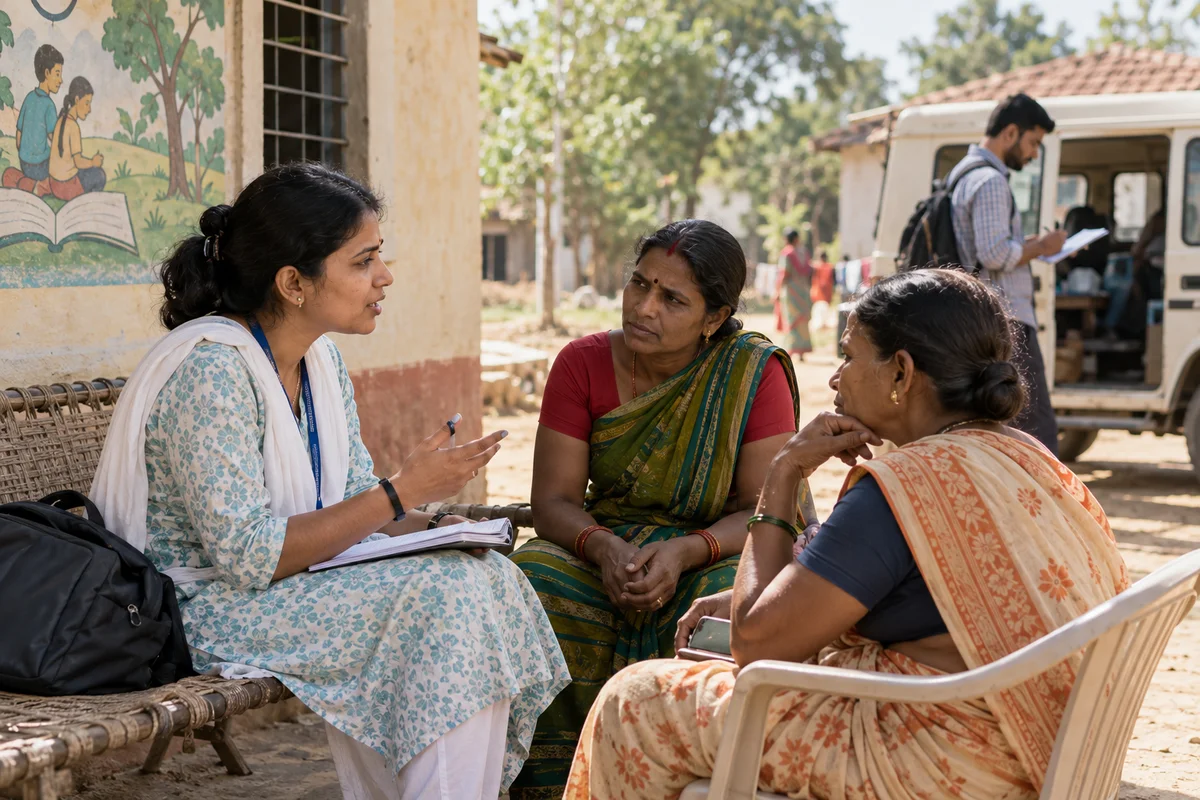
Staff at NGOs and social enterprises leave for funding, field and workload reasons as well as pay. How to understand why, listen early and act.
7 min readRead article
A shift, weekly and monthly safety routine for rubber plants that names who checks platen guards, mill trip bars, autoclave doors, burst-test cages and slings, and who acts on near misses.
7 min readRead article
An employee brings you a complaint about their supervisor. What happens next should not depend on who is in the room. A grievance procedure a small company can actually run.
8 min readRead article
A two-hour exercise that names the roles you could not fill quickly, who could cover them, and what readiness would actually require.
7 min readRead articleMore on the GullyHR blog.
Set rules on travel times, drops, check-ins and escalation, and give staff the authority to decline unsafe visits.
Yes. Plain terms on hours, honorarium, leave and notice avoid disputes. A qualified professional can advise how to frame them.
Offer regular supervision, a safe space to debrief, time off after hard cases and access to counselling.
Trained members, a known process, confidentiality, and visible follow-up. Review it yearly with a qualified professional.
Offer flexibility, planned leave, return support and respect. Talk openly with the person about what would help.
We would ask how field staff travel and are protected, how community workers are paid and how complaints are heard. A sensible first piece of work is field safety rules, honorarium terms and a working complaints route. Scope and fees are agreed in writing afterwards.
All 43 business types in ngos and social enterprises · Find another business type
See all HR topics for ngos and social enterprises, or another industry.
Tell us what is slowing your team down. We’ll help you find a practical way forward, starting with a conversation.