
GullyHR

Manufacturing · Textile machinery manufacturers

HR for Textile Machinery Manufacturers: Machining, Assembly Bays and Erection Engineers

Looms, spinning frames, knitting machines and processing equipment are machined, assembled and installed in mills. This page covers fitters, machinists, erection engineers, service staff and the long cycle from order to commissioning.

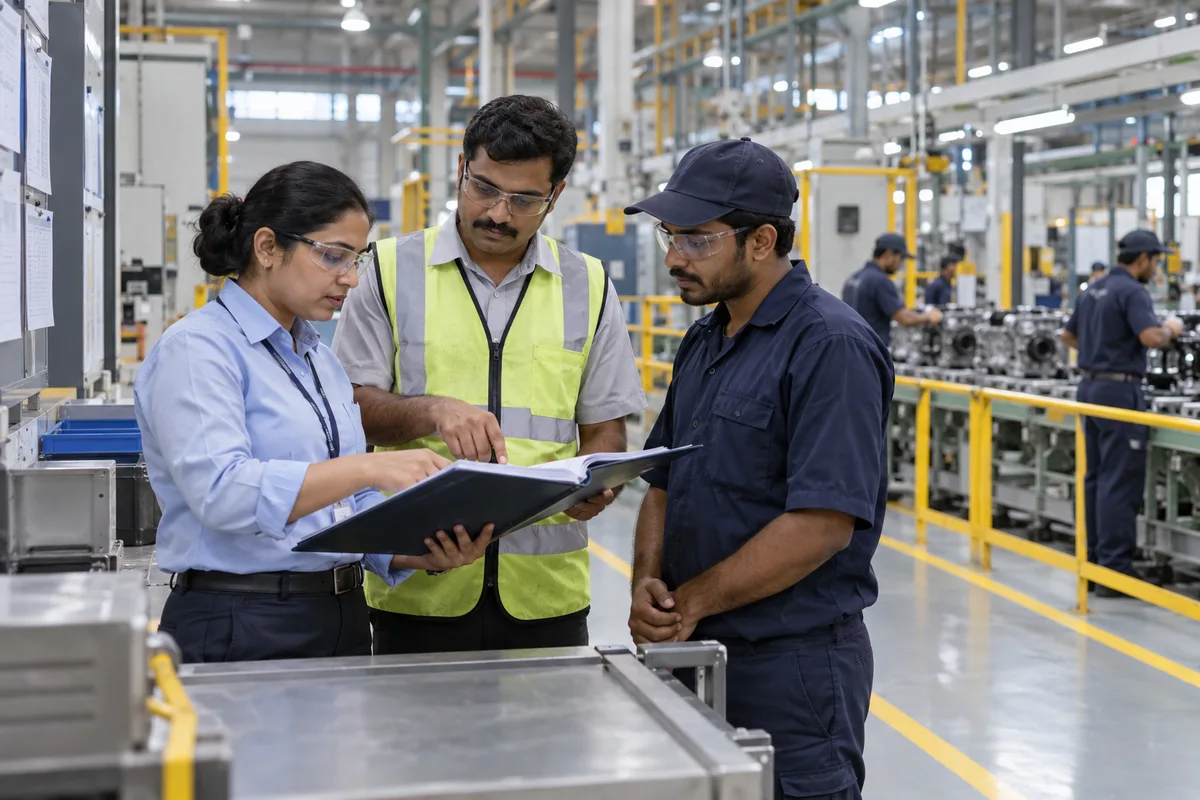
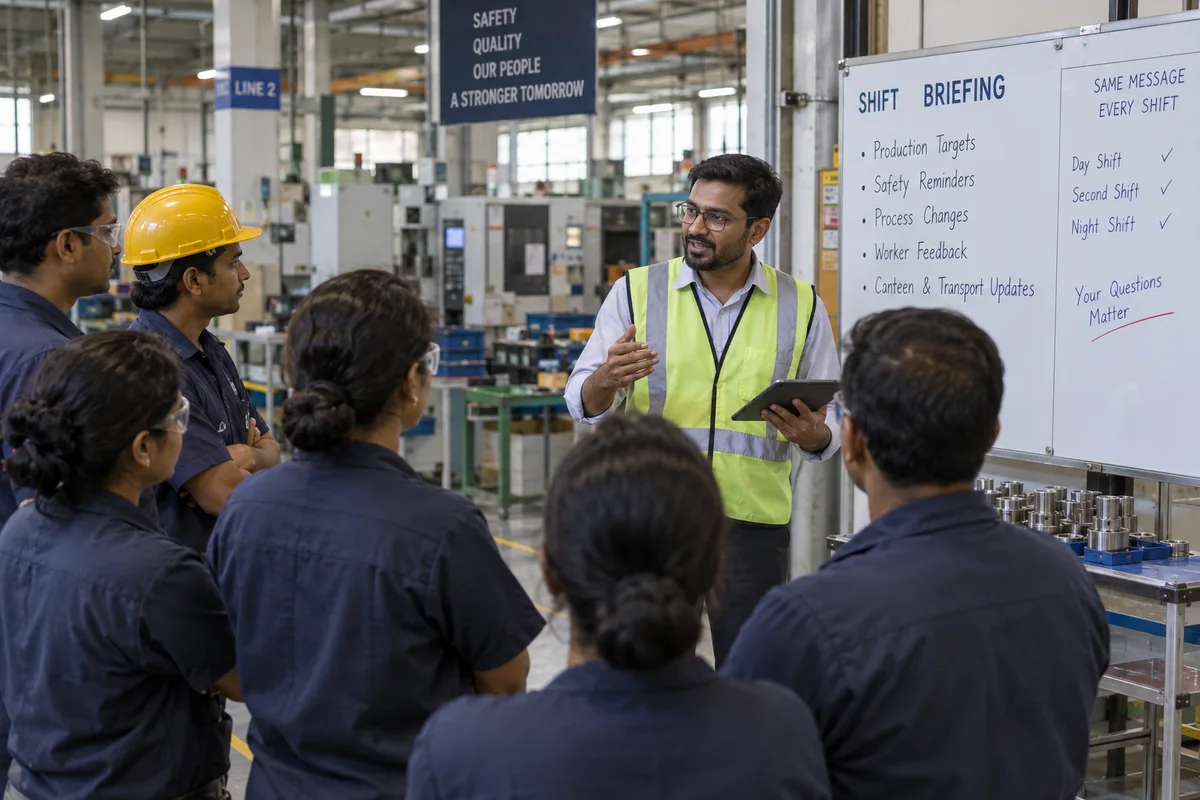
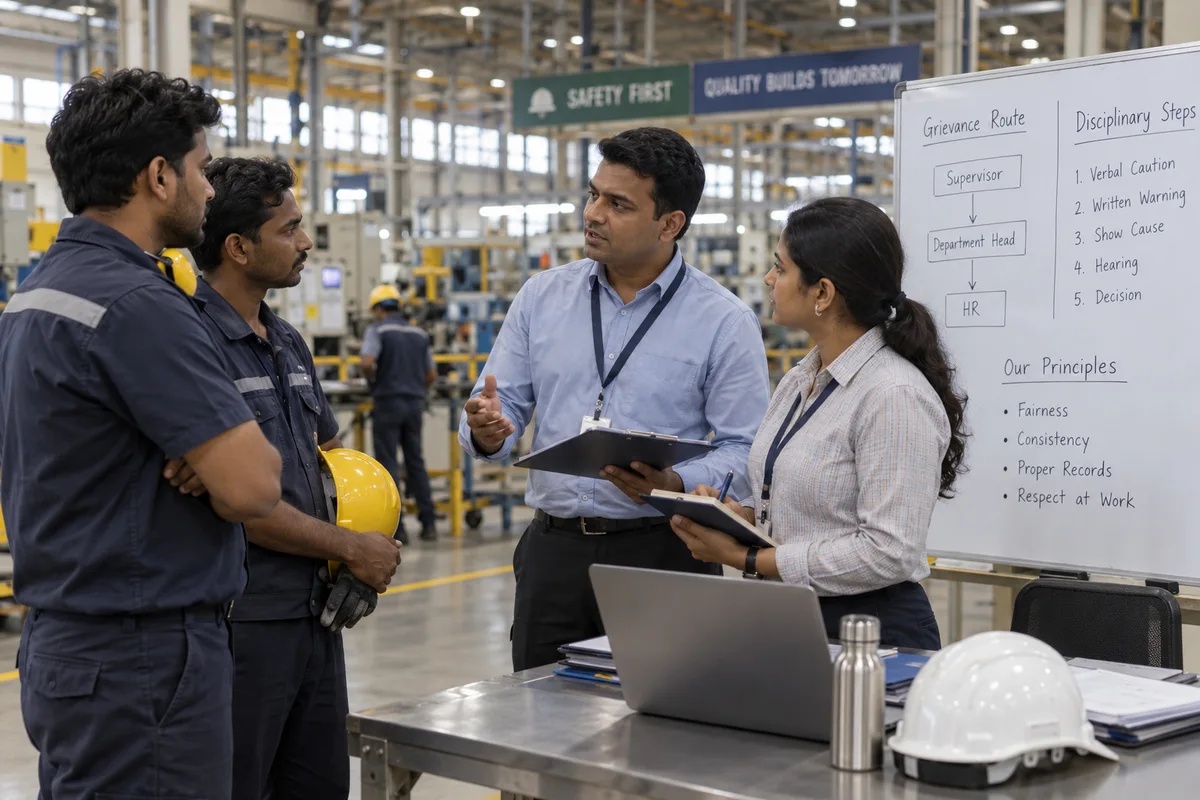
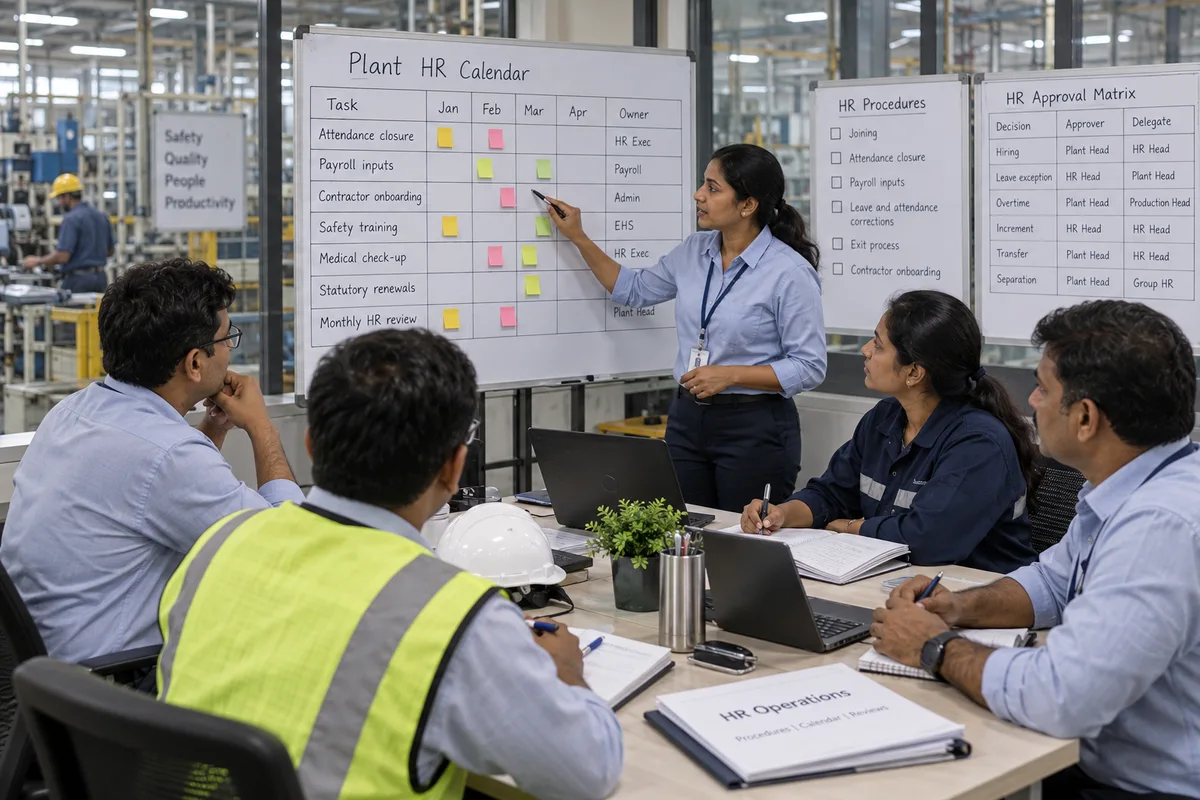
A plant HR officer and production colleagues planning shift coverage at a factory briefing station

Not sure what you need? Tell us about your business in six short steps and we will come to the first meeting prepared.

Share your requirements

A textile machinery maker builds complex machines with many moving parts. Machinists turn and mill shafts, rollers and frames, fitters assemble heads, gearboxes and drives, electricians wire panels, and testers run the machine before dispatch. Then erection engineers travel to the buyer's mill to install, align and commission it. Orders arrive in lumps, from mills that expand when cotton or fabric demand is good, and sit quiet when it is not. A machine can take weeks to build, so planning headcount is hard. Service engineers support customers across mill clusters and are valued by those customers, who may hire them away. Related reading: HR for manufacturing.

  1. Plan
  2. Hire
  3. Onboard
  4. Manage
  5. Develop
  6. Perform
  7. Engage
  8. Retain
  9. Exit
  10. Improve

When HR is weak in textile machinery manufacturers, you may see

  • Demand rises and falls with mill cycles
  • Assembly knowledge is held by senior fitters
  • Erection engineers spend long periods on the road
  • Customers poach service engineers
  • Machining and assembly blame each other
  • Long build cycles hide delays
  • Trial runs happen under pressure
  • Documentation of installs is weak

These are the places the people side of this kind of business tends to give way. The rest of this page works through them.

Who does the work in textile machinery manufacturers

HR here has to work for each of these groups, not only the office. The set-up below is written with all of them in mind.

  • CNC and conventional machinists
  • Assembly fitters
  • Electricians and panel wiremen
  • Test and trial run technicians
  • Erection and commissioning engineers
  • Service engineers
  • Stores and kitting staff

Roles we help you hire in textile machinery manufacturers

GullyHR runs talent acquisition for permanent roles in textile machinery manufacturers. For each role we agree the job description with you, find and screen candidates against it, and support the offer through to joining. Tell us the role and the number of people, and we start there.

We recruit permanent employees. We do not supply contract or temporary staff.

We set up the interview and hiring process for textile machinery manufacturers

Every business interviews, but few have a written process that works the same way for every role and every interviewer. GullyHR designs yours, from the role brief to the offer, trains your managers to run it, and can run it for you on the roles you hand us.

  1. 1. Role brief and scorecard

    We agree what the role must deliver, the must-have and nice-to-have skills, and how each will be scored.

  2. 2. Stages and sequence

    Screening call, assessment, interview rounds and decision points, sized to the role and the number of people you hire.

  3. 3. Question bank and scoring

    Structured questions for each role family and a rating guide, so two interviewers judge the same answer the same way.

  4. 4. Interviewer readiness

    A short briefing for your managers on what to ask, what to avoid and how to give a clear yes or no.

  5. 5. Offer and follow-up

    Who approves, how the offer is made, and how candidates are kept informed from first call to joining.

Where HR strains in textile machinery manufacturers

  • Demand rises and falls with mill cycles

    Order books swell and thin with textile sentiment, and headcount planning is a guess.

  • Assembly knowledge is held by senior fitters

    Alignment and fine adjustment are learned by hand, and retirement risk is high.

  • Erection engineers spend long periods on the road

    Months at customer sites strain family life, and allowances and rest are unclear.

  • Customers poach service engineers

    Mills offer steady jobs to engineers who know their machines, and the maker loses field knowledge.

  • Machining and assembly blame each other

    Parts that do not fit are traced slowly, and teams argue.

  • Long build cycles hide delays

    A delay in one part stalls the whole machine, and the responsible team is unclear.

  • Trial runs happen under pressure

    Buyers visit to watch trials, and testers work under watchful eyes without clear checklists.

  • Documentation of installs is weak

    Site notes sit in personal phones and diaries, and new engineers repeat old errors.

HR topics for textile machinery manufacturers

Start with the topics that matter most here: HR Strategy and Workforce Planning; Career and Succession Management; Retention and Attrition Management. Then work through the rest. Each topic is written for manufacturing, not in general.

HR Strategy and Workforce Planning

How many people, in which roles, by when — and what they will cost.

Career and Succession Management

Named backups for the roles that cannot be vacant.

Retention and Attrition Management

Who leaves, when, why — and which of them mattered.

Organisation Design

Structure, reporting lines and who is allowed to decide what.

Recruitment and Talent Acquisition

Requisition to joining, the same way every time.

Onboarding and Probation

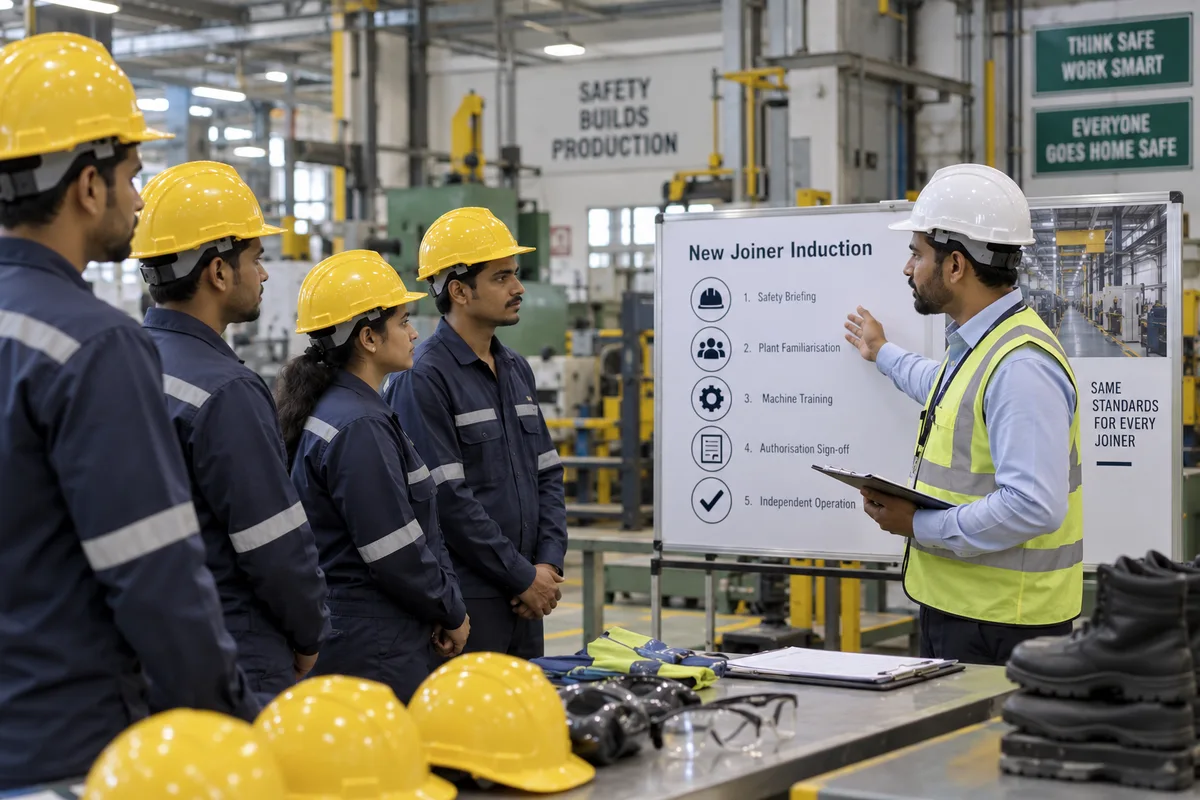
A first day that is the same for the fifth joiner as the first.

Employee Administration

Records, attendance, leave and the day-to-day HR that must simply work.

Compensation, Payroll and Benefits

Salary structure, payroll inputs and a month that closes on time.

Performance Management

Goals, reviews and ratings that hold up in a conversation.

Learning and Development

Training planned from need rather than from the calendar.

Employee Engagement and Experience

Communication, recognition and the conditions people actually work in.

Employee Relations

Two routes — one for complaints, one for conduct — kept separate.

Policies, Compliance and Governance

Policies a manager can apply, and obligations with owners and dates.

Health, Safety and Wellbeing

Induction, records, incident reporting and follow-through.

Exit and Alumni Management

Resignation to relieving letter, in a defined order.

HR Technology and Automation

Records that survive people, and approvals that do not queue.

HR Analytics and Management Reporting

A short monthly pack management actually reads.

HR Operations and Governance

An HR function that runs the same way every month.

What a working HR set-up looks like

The pieces a textile machinery manufacturers business puts in place, in an order that makes each easier. Open any card for the detail.

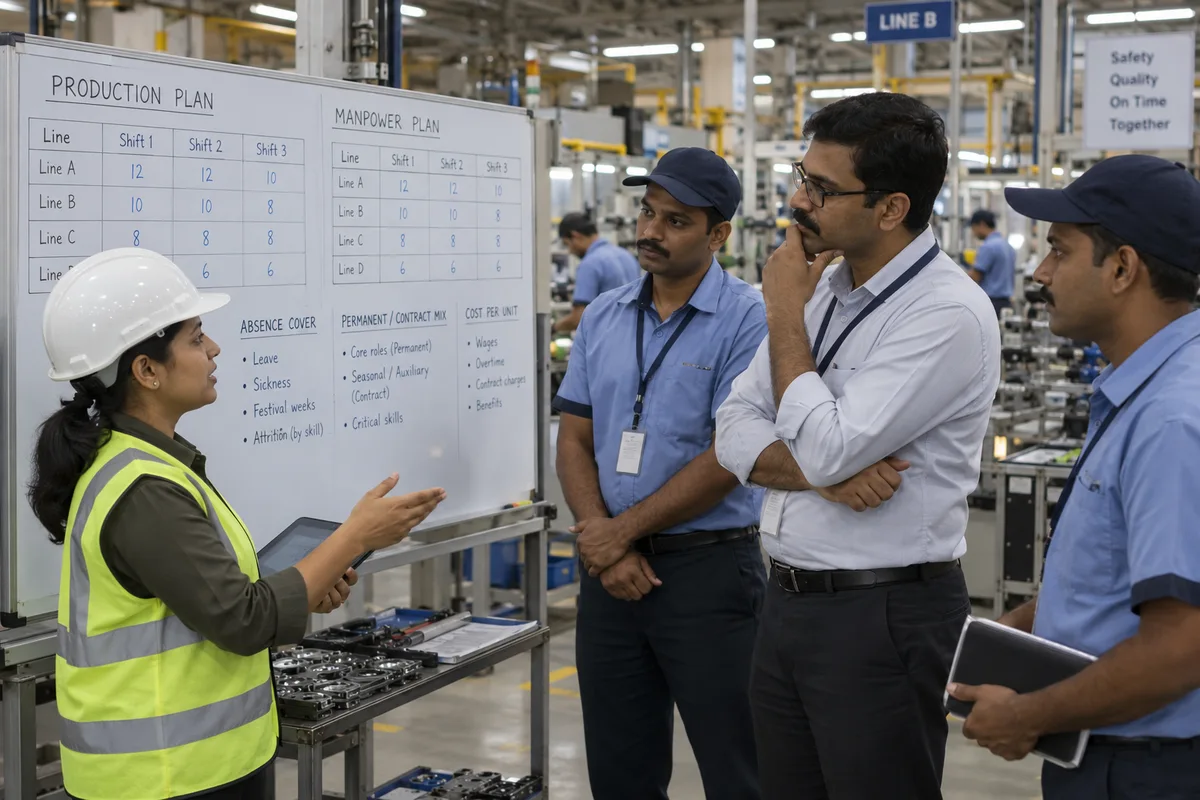
Plan headcount by order book bands

A simple plan for core, flexible and contract capacity at low, medium and high order levels.

What this covers

A simple plan for core, flexible and contract capacity at low, medium and high order levels. See recruitment process.

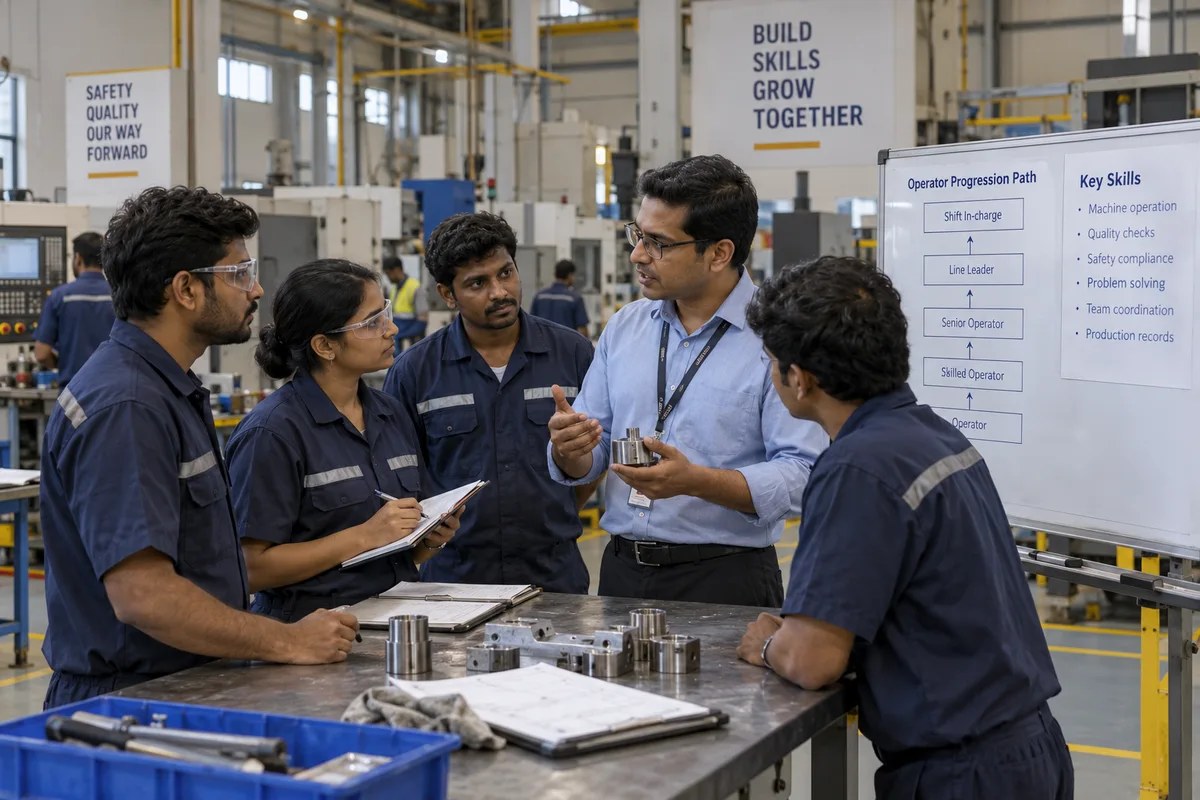
Capture fitter know-how

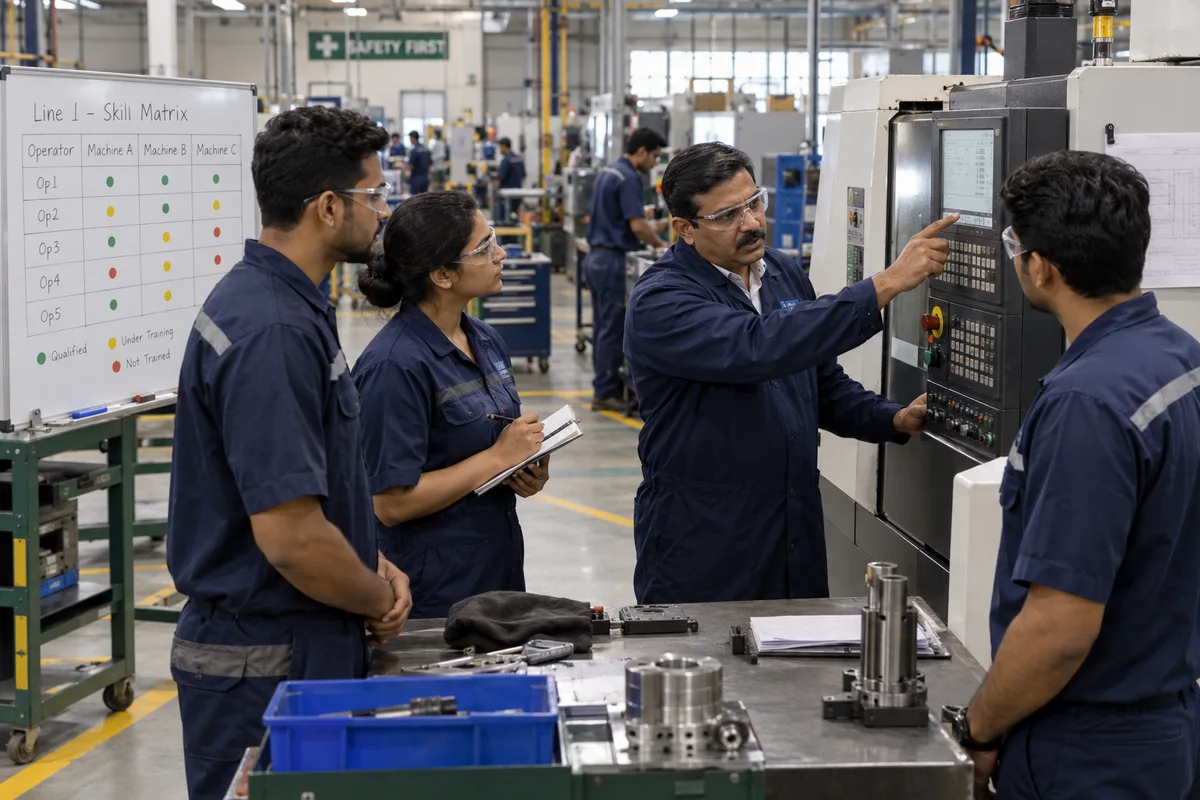
A buddy system, photo and note libraries for alignment steps, and a skills grid by machine.

What this covers

A buddy system, photo and note libraries for alignment steps, and a skills grid by machine. See the learning and development process.

Set field assignment rules

Length of site stays, rest periods, travel allowances and home leave in a written policy.

What this covers

Length of site stays, rest periods, travel allowances and home leave in a written policy. See attendance and leave.

Build service engineer careers

A path to lead engineer and area manager, with fair pay checked through compensation benchmarking.

What this covers

A path to lead engineer and area manager, with fair pay checked through compensation benchmarking.

Hold a weekly build review

Machining, assembly and stores meet on parts that do not fit, so fixes happen at source.

What this covers

Machining, assembly and stores meet on parts that do not fit, so fixes happen at source.

Create a site report format

One format for each install and service visit, stored centrally.

What this covers

One format for each install and service visit, stored centrally. See HR documentation.

Start by checking where you stand

Before changing anything, find out what is true today. These checks take an afternoon and tell you which of the topics above to start with.

Share your requirements
  • Plot headcount against orders for the last three years.
  • Name senior fitters near retirement and who is learning from them.
  • Add up days each erection engineer spent away last year.
  • Ask which service engineers customers have approached.
  • List parts that failed fit-up last quarter and their source.
  • Check where site reports are kept.
  • Confirm with a qualified professional the employment, travel and contract duties that apply to your business.

Confirm with a qualified professional. What applies to you depends on your business, your state and your arrangements, and it changes. This page describes practice. It does not state a legal position.

How GullyHR helps

The services below fit this kind of business best. Each starts by recording where you stand, and every later report compares against that. We do not promise outcomes.

Start with a free conversation, or see the paid HR Diagnostic.

Our HR transformation approach

  1. 1

    Assess

    Understand the business, its workforce, current processes and HR challenges.

  2. 2

    Identify gaps

    Find the missing, weak, inconsistent or person-dependent processes.

  3. 3

    Design

    Create the structure, processes, policies, SOPs, dashboards and systems needed.

  4. 4

    Implement

    Help HR and department managers actually adopt the new system.

  5. 5

    Automate

    Digitise repetitive and approval-based workflows where it is worth doing.

  6. 6

    Measure

    Track hiring, attendance, employee cost, performance, training and attrition.

  7. 7

    Improve

    Strengthen the people-management system continuously, not once.

Blogs worth reading first

From the GullyHR blog: one on HR in manufacturing, and one on each of the topics this page points to.

More on the GullyHR blog.

Questions owners ask

Keep a core team, a trained flexible pool and a plan for each order level.

Your next chapter

Let’s make HR work better.

Tell us what is slowing your team down. We’ll help you find a practical way forward, starting with a conversation.

  • A free first conversation with an HR practitioner
  • A clear scope and fee before any paid work
  • A practical next step for your business

Let’s start with your business

Share your contact details and the HR challenge on your mind. We’ll help you find the right starting point.

10-digit Indian mobile, without +91.

Your details stay private. Privacy policy