








Industries
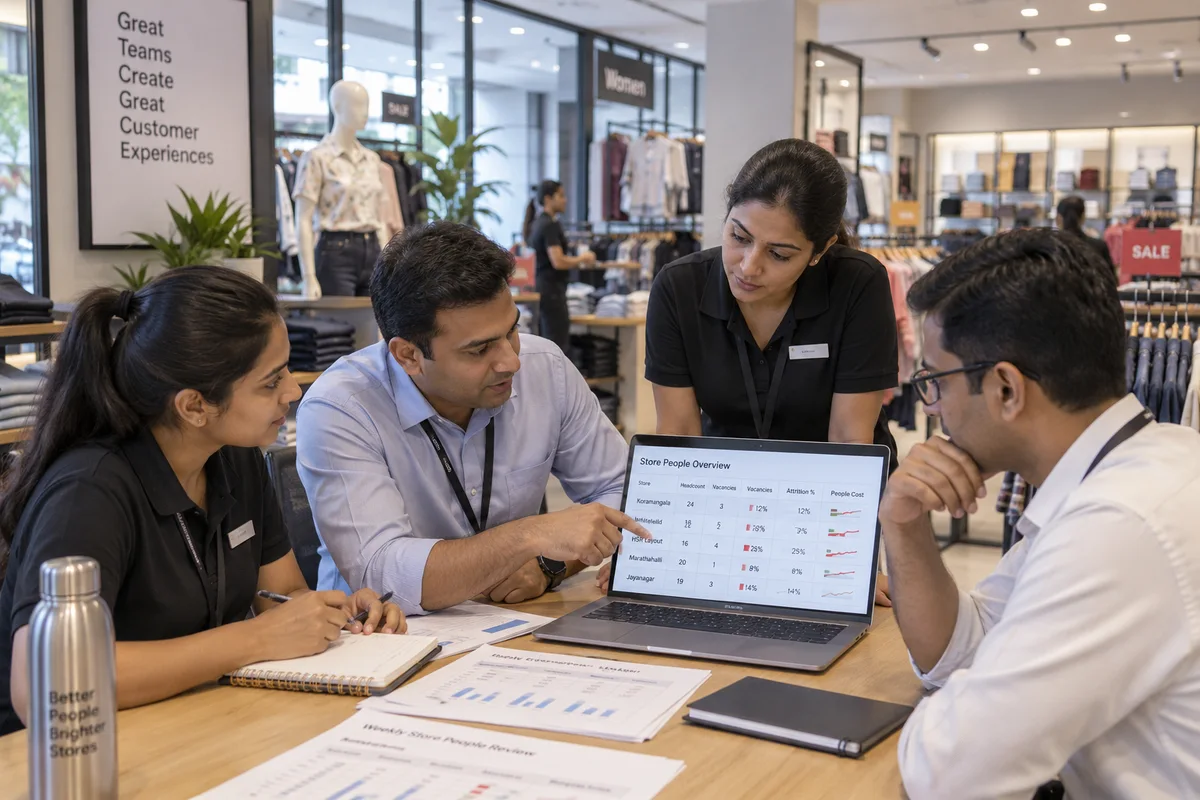
Why retail employees leave and how to understand why
Why store staff and managers leave retail jobs, and how to ask about rosters, weekends, targets and incentives in an exit conversation that leads to action.
7 min readRead articleA sports store sells advice as much as goods. A customer choosing a bat, a bicycle or a treadmill expects the person at the counter to know the game, and the busy season arrives faster than hiring does.

Make this work for your business. Share your team size, priorities and what you need help with. We’ll use your brief to prepare for the first conversation.
Share your requirementsA sports equipment store sells bats, balls, shoes, racquets, cycles, gym equipment and team kits. Customers range from a parent buying a school kit to a serious player who knows exactly what they want. Staff are expected to talk about grip, size, weight and fit with some confidence. Trade runs in waves: before the cricket season, at the start of the school year, around sports day and in the weeks after New Year when people take up fitness. Larger items may need assembly or delivery, and schools or clubs place bulk orders. A single store may have a dozen people on mixed hours. See also HR for retail and HR for specialty retail.
These are the places the people side of this kind of business tends to give way. The rest of this page works through them.
Why GullyHR for sports equipment stores
For owners of sports equipment stores who want every counter conversation to be informed, every school order to be right and season hiring to start before the rush.
A product knowledge map names who answers on cricket, racquets, cycles and gym equipment, so customers stop getting different advice depending on who happens to be on the floor.
A hiring calendar and a short floor induction get seasonal helpers ready before the first cricket or New Year fitness rush, not a week into it.
One standard order sheet for schools and clubs records sizes, names, colours and delivery dates, so errors are caught at entry and not on sports day.
Incentive rules say how returns and size exchanges are credited, so associates are not punished for good advice and the big ticket item is not the only thing rewarded.
Start with any one of these. Scope and fee are agreed in writing after a free first conversation.
The audit starts with the staff roster across a full season, set against the weeks when cricket, the school term and fitness demand peak. We open the school and club order files and trace each error back to where it entered. We read the exchange and return log and see how associates are credited for it. Then we talk, one at a time, to floor associates, the stringer or cycle mechanic, the billing counter and the store manager about who answers which question and who covers when someone is out.
What you receive
An example, not a client storyTake a store where two of the best associates keep asking for a transfer and nobody can say why. The audit finds that both spend the bulk of their week on assembly and delivery, while their targets still count only counter sales. The owner gets a plain finding and a revised credit rule to discuss.
How the hr audit works →Process design begins with the bulk order, because a wrong shirt size for a whole school is the costliest slip in the store. We map each step from the first call to the signed order sheet, the deposit, the pickup or delivery and the later exchange. Next come the rules for who assembles a cycle or a treadmill and when, so the counter is never left empty. Each process is drawn with the people who do it, then tried for a few weeks on the floor before it is fixed.
What you receive
An example, not a client storySuppose a school places a large kit order and half the jerseys arrive in the wrong size. Nobody can tell whether the error came from the call, the sheet or the packing. With a written order process, each step has a name against it and the mistake is found in minutes, not argued over for days.
How the hr process design works →Week to week we keep the rota matched to what the store expects, with more hands on weekends and before term starts. We track which associates are pulled into assembly or delivery and the number of hours that takes from the counter. The weekly plan then moves cover before a gap opens. Seasonal helpers are onboarded, checked at the end of their first week and reviewed before the peak ends. The manager gets a short weekly note listing open staffing gaps, pending school orders and any customer complaint about the advice given at the counter.
What you receive
An example, not a client storyPicture a store manager who also does the billing, the school orders and the cycle assembly because the senior associate left. Hours stretch, and a new helper is left alone on a Saturday. Running the weekly HR routine returns the rota, the helper check and the school order follow-up to named people, so the manager can return to the floor.
How the hr management works →The hard roles are the ones where knowledge shows: a cricket or badminton specialist, a cycle mechanic, a racket stringer and a gym equipment demonstrator. We write a scorecard for each that names the product knowledge and the customer manner expected. Candidates take a counter role play and, for mechanics and stringers, a bench task, and every panel member scores against the same sheet. We also draft offers that state the season hours plainly, so a new joiner is not surprised in the first rush.
What you receive
An example, not a client storySay the store needs a stringer before the cricket and badminton rush and the last hire left within a season. A bench task on a real racquet, scored by two people on one sheet, shows who can do the work. The offer states the peak hours up front, so the candidate who accepts knows what the first month holds.
How the recruitment for permanent roles works →Training for the floor covers the customer conversation: asking what the player needs before showing a product, explaining a difference without pushing the dearest item, and handing over to a specialist without losing the sale. Specialists learn to pass on what they know in short product sessions. Store managers practise coaching at the counter during a quiet hour, setting weekly targets that include exchange handling and giving feedback to a helper who is new. Each session uses the store's own products and a real customer question from the past month.
What you receive
An example, not a client storySuppose a parent asks an associate which bat suits a young player and receives three different answers on three different days. A half-hour session on asking about age, height and level, with the specialist watching, gives everyone the same questions. The parent hears one clear answer whoever is on the floor.
How the manager and team training works →The handbook for a sports store needs plain rules in writing on peak season hours, rest after a long weekend, lifting and assembly work and who may drive on a delivery. We write them in language a seasonal helper can read in one sitting. In the HR software we set up staff records, product training sign-offs, roster templates and the exchange credit rules so everyone sees the same figures. The owner's own adviser confirms the shop and employment rules that apply before anything is finalised.
What you receive
An example, not a client storyPicture a seasonal helper who is asked to carry a treadmill upstairs alone and is hurt. The owner then finds there is no written rule on who lifts what, and no record of the induction. A handbook section and a signed induction checklist would have set out who does heavy work and when a second pair of hands is needed.
How the policies, handbook and hr software works →Yes. We would set a hiring calendar working back from your busiest weeks, write a short floor induction covering the main product lines, and agree who checks each helper after the first week. The aim is for a seasonal helper to give sensible advice on day one. Your own adviser confirms the rules on seasonal hiring and shop hours.
It is both. The cause is that nobody has named who answers on which product. We would map product areas to named people, write a short conversation guide for each line and train associates to hand over cleanly. Then we would check in the weekly routine that the handover is working, so advice stops depending on who is on the floor.
We would trace the last order from the first call to delivery and find where the error entered. Then we would write a single order sheet, a signed checklist and a named person for each step. Staff are trained to use it. Your adviser confirms any terms in the school contract, which we do not draft as legal advice.
We can write an incentive rule that credits assembly, delivery and exchange handling fairly, and set a rota that stops the same people leaving the floor every time. We would first review the hours that work takes and who does it. Your adviser confirms how pay and incentive changes are made under the rules that apply to your store.
GullyHR runs talent acquisition for permanent roles in sports equipment stores. For each role we agree the job description with you, find and screen candidates against it, and support the offer through to joining. Tell us the role and the number of people, and we start there.
We recruit permanent employees. We do not supply contract or temporary staff.
One associate knows cricket well and another knows nothing about it. Customers meet whichever one is free, and the sale depends on the draw.
Demand jumps for a few weeks, yet hiring and training start only when the shop is already full.
A kit order for a school brings several sizes and names, and a small mistake on one line affects a whole team.
A cycle to build or a treadmill to install takes a person away for hours, and the counter is left thin.
A shoe or kit that does not fit comes back, and staff who sold it argue over whose sale it was.
Incentives built on value favour a gym machine over a regular kit sale, so smaller customers get less attention.
Start with the topics that matter most here: Recruitment and Talent Acquisition; Compensation, Payroll and Benefits; Employee Administration. Then work through the rest. Each topic is written for retail, not in general.
Requisition to joining, the same way every time.
Salary structure, payroll inputs and a month that closes on time.
Records, attendance, leave and the day-to-day HR that must simply work.
How many people, in which roles, by when, and what they will cost.
Structure, reporting lines and who is allowed to decide what.
A first day that is the same for the fifth joiner as the first.
Goals, reviews and ratings that hold up in a conversation.
Training planned from need rather than from the calendar.
Named backups for the roles that cannot be vacant.
Communication, recognition and the conditions people actually work in.
Two routes, one for complaints, one for conduct, kept separate.
Policies a manager can apply, and obligations with owners and dates.
Induction, records, incident reporting and follow-through.
Who leaves, when, why, and which of them mattered.
Resignation to relieving letter, in a defined order.
Records that survive people, and approvals that do not queue.
A short monthly pack management actually reads.
An HR function that runs the same way every month.
The pieces a sports equipment stores business puts in place, in an order that makes each easier. Open any card for the detail.
Name the cricket, racket sports, footwear and fitness leads for each shift, so customers are directed to someone who knows.
Name the cricket, racket sports, footwear and fitness leads for each shift, so customers are directed to someone who knows. See the recruitment process for how to find them.
Fix the seasonal headcount and a start date weeks ahead, with a short joining routine for each helper.
Fix the seasonal headcount and a start date weeks ahead, with a short joining routine for each helper.
One template for names, sizes, quantities and delivery dates, checked by a second person before it is confirmed.
One template for names, sizes, quantities and delivery dates, checked by a second person before it is confirmed.
Assign assembly and delivery to named people, with rostered cover for the floor while they are away.
Assign assembly and delivery to named people, with rostered cover for the floor while they are away. The attendance, shift and leave process covers cover rules.
A clear scale for floor associates, line leads and mechanics, set against nearby stores.
A clear scale for floor associates, line leads and mechanics, set against nearby stores. Compensation benchmarking supports this.
A short session on asking about the player, the level and the budget before suggesting a product, drawn from the customer-service skills programme.
A short session on asking about the player, the level and the budget before suggesting a product, drawn from the customer-service skills programme.
Confirm with a qualified professional. What applies to you depends on your business, your state and your arrangements, and it changes. This page describes practice. It does not state a legal position.
A seasonal and permanent hiring plan, with sports knowledge tested before the rush.
Rosters with line leads, assembly cover and leave limits for peak weeks.
Pay bands for floor staff, line leads and mechanics set against nearby stores.
Short training on listening to the player and matching gear to need.
Start with a free conversation, or see the paid HR Diagnostic.
Understand the business, its workforce, current processes and HR challenges.
Find the missing, weak, inconsistent or person-dependent processes.
Create the structure, processes, policies, SOPs, dashboards and systems needed.
Help HR and department managers actually adopt the new system.
Digitise repetitive and approval-based workflows where it is worth doing.
Track hiring, attendance, employee cost, performance, training and attrition.
Strengthen the people-management system continuously, not once.
From the GullyHR blog: one on HR in retail, and one on each of the topics this page points to.

Why store staff and managers leave retail jobs, and how to ask about rosters, weekends, targets and incentives in an exit conversation that leads to action.
7 min readRead article
How a D2C founder can test a performance marketing hire on real work, ignore weak signals such as dashboard screenshots, and run a fair process.
7 min readRead article
Simple variable pay structures for product and engineering teams: four options, why individual metrics backfire, a build plan and a one page outline to adapt.
6 min readRead article
Payroll says one joining date, the personal file says another and the manager remembers a third. How to establish a single trustworthy employee record and keep it that way.
7 min readRead articleMore on the GullyHR blog.
Look at last year's busiest weeks and the hours each type stayed unattended. Start with a modest number of helpers, train them quickly and add more only if queues persist.
Playing helps with credibility, but it is not necessary. A willingness to learn the product and ask the customer questions matters more. Pair non-players with a keen specialist.
Use one order sheet, have a second person check it and confirm the list with the school before processing. Record who took and who checked each order so you can trace faults.
It can lift effort, but it may leave low-value customers ignored. Combine a fixed salary with a team incentive and small product-specific rewards. Test it with your staff before rollout.
Pay for the skill, give them a clear role and recognise their work. Skilled craftspeople leave for owner-run workshops, so show them a path inside your store.
We would ask how seasonal hiring ran last year, which categories lack a specialist and how school orders are checked. A season hiring plan and a floor roster with named line leads is a usual first job, agreed in writing.
All 9 business types in specialty retail · Find another business type
See all HR topics for retail, or another industry.
Tell us your industry, team size and the issue you want to address. Bring one example of where work gets delayed or ownership is unclear, and the deadline or decision you are working towards.