
















GullyHR

Energy and Utilities · Oil and gas companies

HR for Oil and Gas Companies: Rotations, Technical Skills and Site Discipline

An oil and gas business runs on technical specialists, rotating field crews and tight site discipline. The people work spans offices, terminals, rigs and contractor teams.

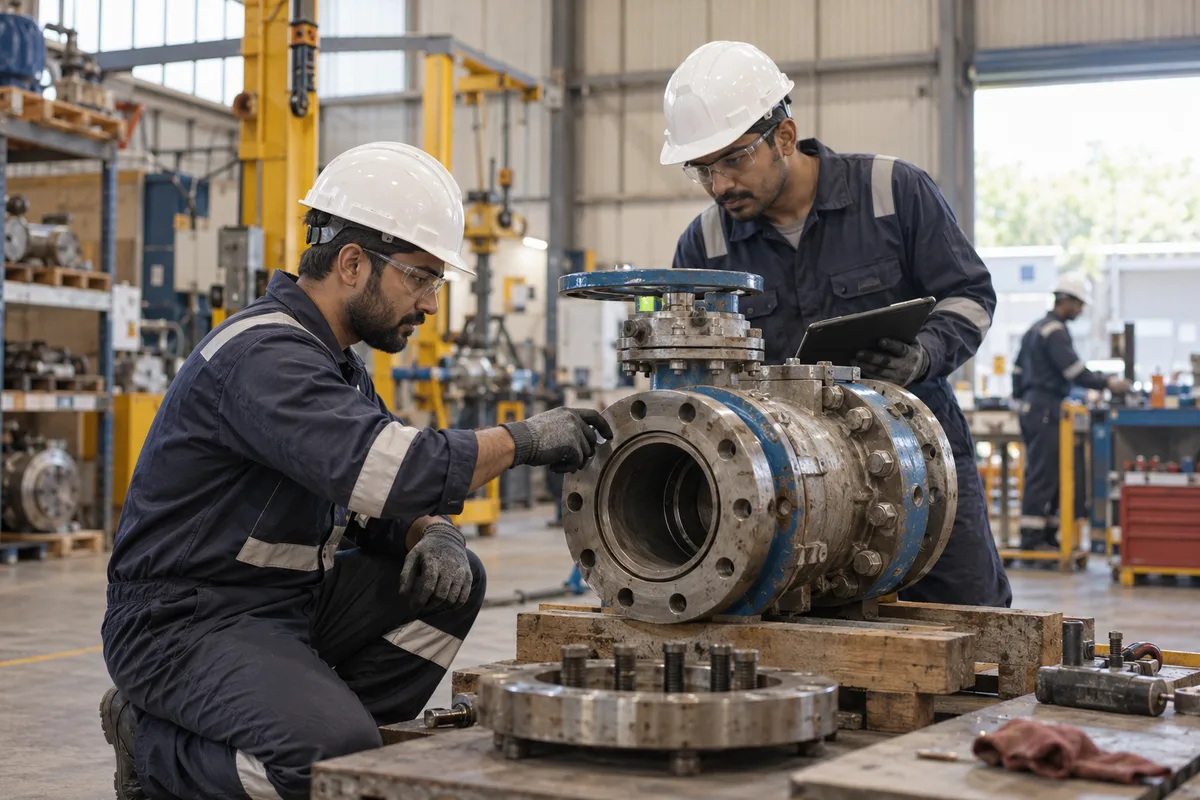
Workplace scene for Oil and Gas Companies: Rotations, Technical Skills and Site Discipline

Not sure what you need? Tell us about your business in six short steps and we will come to the first meeting prepared.

Share your requirements

An oil and gas company may explore and produce, run pipelines and terminals, refine or distribute fuel, or serve those who do. The workforce spans petroleum and process engineers, drilling and production crews, control-room operators, instrument and rotating-equipment technicians, inspectors and, for distributors, depot hands and tanker drivers. Field and offshore crews work rotations: a block of days on site, then days home. A good share of the work goes to service contractors, and certificates for confined space, firefighting or permit-to-work are routine. Skilled people are sought across the world, and one project can pull them away. The wider picture sits on the energy and utilities overview.

  1. Plan
  2. Hire
  3. Onboard
  4. Manage
  5. Develop
  6. Perform
  7. Engage
  8. Retain
  9. Exit
  10. Improve

When HR is weak in oil and gas companies, you may see

  • Rotation patterns strain home life
  • Certificates lapse unnoticed
  • Contractor crews do much of the work
  • Plant knowledge sits with a few
  • Lapses on permits and handovers are serious
  • Allowances differ site to site
  • Price cycles freeze and then flood hiring

These are the places the people side of this kind of business tends to give way. The rest of this page works through them.

Who does the work in oil and gas companies

HR here has to work for each of these groups, not only the office. The set-up below is written with all of them in mind.

  • Petroleum, process and facilities engineers
  • Drilling and production crews
  • Control-room and terminal operators
  • Instrument, electrical and rotating-equipment technicians
  • Inspection and integrity staff
  • HSE officers
  • Depot and tanker loading staff
  • Contractor supervisors
  • Supply chain and logistics staff

Roles we help you hire in oil and gas companies

GullyHR runs talent acquisition for permanent roles in oil and gas companies. For each role we agree the job description with you, find and screen candidates against it, and support the offer through to joining. Tell us the role and the number of people, and we start there.

We recruit permanent employees. We do not supply contract or temporary staff.

We set up the interview and hiring process for oil and gas companies

Every business interviews, but few have a written process that works the same way for every role and every interviewer. GullyHR designs yours, from the role brief to the offer, trains your managers to run it, and can run it for you on the roles you hand us.

  1. 1. Role brief and scorecard

    We agree what the role must deliver, the must-have and nice-to-have skills, and how each will be scored.

  2. 2. Stages and sequence

    Screening call, assessment, interview rounds and decision points, sized to the role and the number of people you hire.

  3. 3. Question bank and scoring

    Structured questions for each role family and a rating guide, so two interviewers judge the same answer the same way.

  4. 4. Interviewer readiness

    A short briefing for your managers on what to ask, what to avoid and how to give a clear yes or no.

  5. 5. Offer and follow-up

    Who approves, how the offer is made, and how candidates are kept informed from first call to joining.

Where HR strains in oil and gas companies

  • Rotation patterns strain home life

    Long blocks away and then time at home leave people tired and unsettled, and the pattern itself becomes a reason to quit.

  • Certificates lapse unnoticed

    Several roles need training that expires, and who is due for what is kept on a sheet nobody owns.

  • Contractor crews do much of the work

    Service companies bring their own people, and the operator's rules and the contractor's habits do not always agree.

  • Plant knowledge sits with a few

    Senior engineers and operators know how a unit really behaves, none of it written down, and a retirement is a real loss.

  • Lapses on permits and handovers are serious

    Shortcuts with permits, shift handovers or checks carry heavy consequences, yet the handling of lapses varies by site.

  • Allowances differ site to site

    Field allowances, rotation pay and office salaries grew apart, and people compare them across the fence.

  • Price cycles freeze and then flood hiring

    A price slump halts intake and the recovery demands a rush, leaving a gap in age and experience.

HR topics for oil and gas companies

Start with the topics that matter most here: Compensation, Payroll and Benefits; Career and Succession Management; Policies, Compliance and Governance. Then work through the rest. Each topic is written for energy and utilities, not in general.

Compensation, Payroll and Benefits

Salary structure, payroll inputs and a month that closes on time.

Career and Succession Management

Named backups for the roles that cannot be vacant.

Policies, Compliance and Governance

Policies a manager can apply, and obligations with owners and dates.

HR Strategy and Workforce Planning

How many people, in which roles, by when, and what they will cost.

Organisation Design

Structure, reporting lines and who is allowed to decide what.

Recruitment and Talent Acquisition

Requisition to joining, the same way every time.

Onboarding and Probation

A first day that is the same for the fifth joiner as the first.

Employee Administration

Records, attendance, leave and the day-to-day HR that must simply work.

Performance Management

Goals, reviews and ratings that hold up in a conversation.

Learning and Development

Training planned from need rather than from the calendar.

Employee Engagement and Experience

Communication, recognition and the conditions people actually work in.

Employee Relations

Two routes, one for complaints, one for conduct, kept separate.

Health, Safety and Wellbeing

Induction, records, incident reporting and follow-through.

Retention and Attrition Management

Who leaves, when, why, and which of them mattered.

Exit and Alumni Management

Resignation to relieving letter, in a defined order.

HR Technology and Automation

Records that survive people, and approvals that do not queue.

HR Analytics and Management Reporting

A short monthly pack management actually reads.

HR Operations and Governance

An HR function that runs the same way every month.

What a working HR set-up looks like

The pieces a oil and gas companies business puts in place, in an order that makes each easier. Open any card for the detail.

Keep one register of certificates and training

Each person, the training their role needs and the expiry dates, with alerts to the manager.

What this covers

Each person, the training their role needs and the expiry dates, with alerts to the manager. The employee records service covers it.

Review rotation patterns with the crews

Weigh block length, travel time and home time with the people affected before deciding.

What this covers

Weigh block length, travel time and home time with the people affected before deciding. Roster results sit in the shift and leave process.

Capture senior know-how before it leaves

Structured sessions where veteran operators and engineers record how a unit behaves, paired with a younger colleague.

What this covers

Structured sessions where veteran operators and engineers record how a unit behaves, paired with a younger colleague. Succession planning frames it.

Use one disciplinary standard

A defined list of safety-critical lapses, a fair investigation step and matching outcomes, set out in the grievance and disciplinary service.

What this covers

A defined list of safety-critical lapses, a fair investigation step and matching outcomes, set out in the grievance and disciplinary service.

Map allowances across sites

A chart of allowances and rotation pay by role and location, so gaps are chosen and not accidental.

What this covers

A chart of allowances and rotation pay by role and location, so gaps are chosen and not accidental. Pay benchmarking supports it.

Start by checking where you stand

Before changing anything, find out what is true today. Work through the checks using a recent operating period. The time needed depends on the records you hold; note missing evidence and use the findings to choose a priority.

Share your requirements
  • List the certificates your critical roles need and how many expire in the next six months.
  • Ask a crew on rotation which part of the pattern hurts most.
  • Name the three people whose exit would hurt a plant or terminal hardest.
  • Compare how a permit or handover lapse was handled at two sites.
  • Lay out the allowances for one role at different locations and see if the gaps can be explained.
  • Confirm with a qualified professional the duties that bind a hydrocarbon operator: site safety, contractor engagement, working-hour limits and employment records.

Confirm with a qualified professional. What applies to you depends on your business, your state and your arrangements, and it changes. This page describes practice. It does not state a legal position.

How GullyHR helps

The services below fit this kind of business best. Each starts by recording where you stand, and every later report compares against that. We do not promise outcomes.

Start with a free conversation, or see the paid HR Diagnostic.

Our HR transformation approach

  1. 1

    Assess

    Understand the business, its workforce, current processes and HR challenges.

  2. 2

    Identify gaps

    Find the missing, weak, inconsistent or person-dependent processes.

  3. 3

    Design

    Create the structure, processes, policies, SOPs, dashboards and systems needed.

  4. 4

    Implement

    Help HR and department managers actually adopt the new system.

  5. 5

    Automate

    Digitise repetitive and approval-based workflows where it is worth doing.

  6. 6

    Measure

    Track hiring, attendance, employee cost, performance, training and attrition.

  7. 7

    Improve

    Strengthen the people-management system continuously, not once.

Blogs worth reading first

From the GullyHR blog: one on HR in energy and utilities, and one on each of the topics this page points to.

More on the GullyHR blog.

Questions owners ask

Keep one register under a named owner, with expiry dates and reminders to staff and managers. Separate sheets in separate departments are why lapses show up late.

Start with your business need

What does your HR team need to solve?

Tell us your industry, team size and the issue you want to address. Bring one example of where work gets delayed or ownership is unclear, and the deadline or decision you are working towards.

  • A free first conversation with an HR practitioner
  • A clear scope and fee before any paid work
  • A practical next step for your business

Let’s start with your business

Share your contact details and the HR challenge on your mind. We’ll help you find the right starting point.

10-digit Indian mobile, without +91.

Your details stay private. Privacy policy