


















Industries
Why NGO and social enterprise employees leave and how to understand why
Staff at NGOs and social enterprises leave for funding, field and workload reasons as well as pay. How to understand why, listen early and act.
7 min readRead articleA rural development NGO works through block and village teams on livelihoods, water, farming and women's groups. Staff are spread over wide distances, paid by project, and judged on results that take seasons to show.

Not sure what you need? Tell us about your business in six short steps and we will come to the first meeting prepared.
Share your requirementsA rural development NGO may support farmer producer groups, build watersheds, organise women's self-help groups, train youth in skills or help families reach government schemes. Staff include a state or district head, block coordinators, field facilitators who live near the villages, technical specialists such as agronomists, accounts staff and a few drivers. Offices are small and often far from each other. Staff may cover forty villages on a motorcycle, and a supervisor may see them only once a fortnight. Work follows the farming calendar and the monsoon, and project funds follow their own. See also HR for NGOs and social enterprises and the NGO and foundation group.
These are the places the people side of this kind of business tends to give way. The rest of this page works through them.
HR here has to work for each of these groups, not only the office. The set-up below is written with all of them in mind.
A facilitator rides between villages for days, and the coordinator cannot tell where time goes except through reports.
Sowing, harvest and monsoon create peaks of work and idle weeks, and the project plan seldom fits either.
Villagers hired as facilitators earn trust that the NGO needs, yet their jobs end with the grant and the trust goes with them.
A strong facilitator is promoted to coordinator and has to lead a team, handle accounts and report to donors with no preparation.
Educated recruits from towns accept a post in a remote block and leave in a few months because of isolation.
Yield, savings and water levels move with weather and prices, so judging a worker only by outcomes is unfair and misleading.
Travel and field expenses are claimed on paper and settled late, which strains staff who cannot afford to wait.
Start with the topics that matter most here: HR Strategy and Workforce Planning; Performance Management; Employee Administration. Then work through the rest. Each topic is written for ngos and social enterprises, not in general.
How many people, in which roles, by when — and what they will cost.
Goals, reviews and ratings that hold up in a conversation.
Records, attendance, leave and the day-to-day HR that must simply work.
Structure, reporting lines and who is allowed to decide what.
Requisition to joining, the same way every time.
A first day that is the same for the fifth joiner as the first.
Salary structure, payroll inputs and a month that closes on time.
Training planned from need rather than from the calendar.
Named backups for the roles that cannot be vacant.
Communication, recognition and the conditions people actually work in.
Two routes — one for complaints, one for conduct — kept separate.
Policies a manager can apply, and obligations with owners and dates.
Induction, records, incident reporting and follow-through.
Who leaves, when, why — and which of them mattered.
Resignation to relieving letter, in a defined order.
Records that survive people, and approvals that do not queue.
A short monthly pack management actually reads.
An HR function that runs the same way every month.
The pieces a rural development NGOs business puts in place, in an order that makes each easier. Open any card for the detail.
Map each project's start, peak and end, and see which posts are needed when.
What this coversHideMap each project's start, peak and end, and see which posts are needed when. The workforce planning work builds this view for several years.
A weekly plan and a short visit log per facilitator, checked by the coordinator.
What this coversHideA weekly plan and a short visit log per facilitator, checked by the coordinator. The attendance and leave process can be adapted for field work.
Tell village hires what happens when the grant ends, and offer a role in a federation or partner where possible.
What this coversHideTell village hires what happens when the grant ends, and offer a role in a federation or partner where possible.
Short modules on leading a team, planning a block and handling reports.
What this coversHideShort modules on leading a team, planning a block and handling reports. The manager development programme fits this need.
Agree a mix of activity measures and outcome measures, and note weather and market effects.
What this coversHideAgree a mix of activity measures and outcome measures, and note weather and market effects. See performance management.
Before changing anything, find out what is true today. These checks take an afternoon and tell you which of the topics above to start with.
Share your requirementsConfirm with a qualified professional. What applies to you depends on your business, your state and your arrangements, and it changes. This page describes practice. It does not state a legal position.
The services below fit this kind of business best. Each starts by recording where you stand, and every later report compares against that. We do not promise outcomes.
A seasonal and multi-year view of posts across projects, so that hiring and project end dates are planned together.
Field time, weekly plans and leave handled in a form that suits staff who travel from village to village.
Practical preparation for block coordinators who must lead teams after being strong in the field.
Targets that mix activity and outcomes and allow for weather and market conditions beyond the worker's control.
Start with a free conversation, or see the paid HR Diagnostic.
Understand the business, its workforce, current processes and HR challenges.
Find the missing, weak, inconsistent or person-dependent processes.
Create the structure, processes, policies, SOPs, dashboards and systems needed.
Help HR and department managers actually adopt the new system.
Digitise repetitive and approval-based workflows where it is worth doing.
Track hiring, attendance, employee cost, performance, training and attrition.
Strengthen the people-management system continuously, not once.
From the GullyHR blog: one on HR in ngos and social enterprises, and one on each of the topics this page points to.
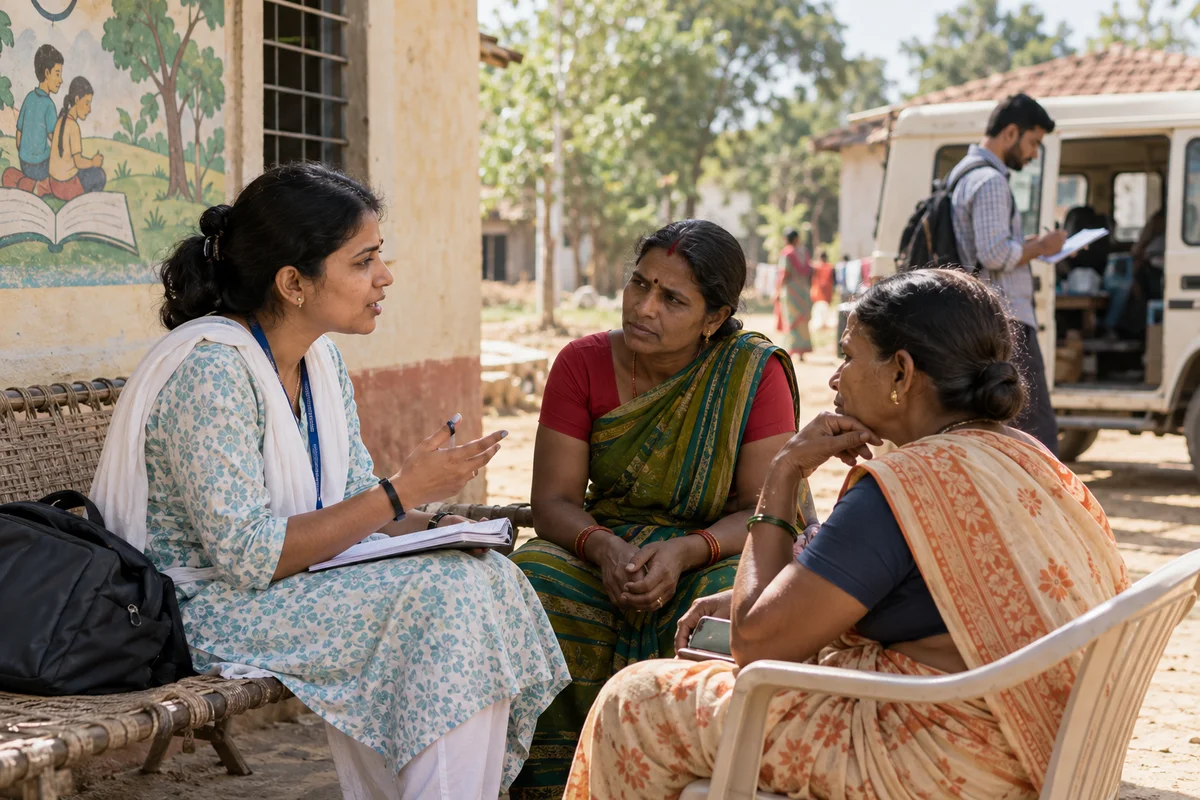
Staff at NGOs and social enterprises leave for funding, field and workload reasons as well as pay. How to understand why, listen early and act.
7 min readRead article
Hiring decisions made one request at a time, in the month the pain is worst. What a workforce plan contains and why a twelve-month view changes what you hire.
7 min readRead article
Measures that show how reactor, console, lab and gantry staff are really doing, the ones that mislead or bury near misses, and a monthly sheet an in-charge can run in twenty minutes.
7 min readRead article
Payroll says one joining date, the personal file says another and the manager remembers a third. How to establish a single trustworthy employee record and keep it that way.
7 min readRead articleMore on the GullyHR blog.
Use a weekly plan, a short visit log and regular calls, then visit in person on a schedule. Trust the staff, check the pattern and hold a monthly team meeting to share experience.
Local hires bring trust and stay longer, while outsiders bring skills and fresh views. Many NGOs mix them. Be honest with local hires about what happens when funding ends.
Set targets in two parts: what the worker does, such as visits and trainings, and what changes in the community. Weigh activity more in bad seasons and discuss the context openly.
Training on running a team, planning the block, handling accounts and writing reports, plus a mentor from another block. Support in the first six months matters more than a long course.
Set a clear claim format, a weekly or fortnightly batch date and a named person who approves. Staff who cannot afford to wait should not be asked to carry costs for long.
We would ask which projects end this year, how facilitators' weeks are planned and how coordinators were prepared. A good opening project is a seasonal workforce plan plus a simple field time record. The scope is written down for you to accept or change.
All 6 business types in NGOs & foundations · Find another business type
See all HR topics for ngos and social enterprises, or another industry.
Tell us what is slowing your team down. We’ll help you find a practical way forward, starting with a conversation.