


















Industries
Why NGO and social enterprise employees leave and how to understand why
Staff at NGOs and social enterprises leave for funding, field and workload reasons as well as pay. How to understand why, listen early and act.
7 min readRead articleA charitable foundation has a small staff, a board of trustees and a mission that outlasts any one person. The people work is about clear roles, fair pay against the market, hiring for judgement and planning who comes next.

Not sure what you need? Tell us about your business in six short steps and we will come to the first meeting prepared.
Share your requirementsA charitable foundation may fund other organisations, run its own programmes, or do both. Some are set up by a business family, some by a company's CSR arm, some by a donor or a community. The team is small: a chief executive or managing trustee, programme officers who select and monitor grants, a finance and operations lead, a communications person and a few support staff. Above them sits a board of trustees who meet a few times a year. Trustees may be generous with time, but they are not full-time and may disagree on direction. See also HR for NGOs and social enterprises and the NGO and foundation group.
These are the places the people side of this kind of business tends to give way. The rest of this page works through them.
HR here has to work for each of these groups, not only the office. The set-up below is written with all of them in mind.
One officer may read proposals, visit grantees and write board papers, so the role changes shape by the week and no description fits.
A trustee gives instructions directly to a junior officer, and the chief executive finds out later.
Salaries are decided case by case, often by comparing with the founder's business, and staff in similar roles are paid differently.
Knowledge of donors, history and relationships sits with one or two long-serving people, and nobody has planned for their absence.
A programme officer must be able to question a grantee politely and read a budget, qualities that do not show on a CV.
With six or ten staff, there is little to be promoted to, and ambitious officers leave to larger funders.
Each brings energy and needs time to guide, and the institutional memory they take away is seldom captured.
Start with the topics that matter most here: Organisation Design; Compensation, Payroll and Benefits; Career and Succession Management. Then work through the rest. Each topic is written for ngos and social enterprises, not in general.
Structure, reporting lines and who is allowed to decide what.
Salary structure, payroll inputs and a month that closes on time.
Named backups for the roles that cannot be vacant.
How many people, in which roles, by when — and what they will cost.
Requisition to joining, the same way every time.
A first day that is the same for the fifth joiner as the first.
Records, attendance, leave and the day-to-day HR that must simply work.
Goals, reviews and ratings that hold up in a conversation.
Training planned from need rather than from the calendar.
Communication, recognition and the conditions people actually work in.
Two routes — one for complaints, one for conduct — kept separate.
Policies a manager can apply, and obligations with owners and dates.
Induction, records, incident reporting and follow-through.
Who leaves, when, why — and which of them mattered.
Resignation to relieving letter, in a defined order.
Records that survive people, and approvals that do not queue.
A short monthly pack management actually reads.
An HR function that runs the same way every month.
The pieces a charitable foundations business puts in place, in an order that makes each easier. Open any card for the detail.
A short note on who sets direction, who approves what, and how trustees may speak to staff.
What this coversHideA short note on who sets direction, who approves what, and how trustees may speak to staff. The HR process consulting work can build these basics.
Say what an officer owns, such as a portfolio of grants, and what they share.
What this coversHideSay what an officer owns, such as a portfolio of grants, and what they share. Keep room for variety, but name the main duties.
Compare with other foundations, NGOs and CSR teams of similar size.
What this coversHideCompare with other foundations, NGOs and CSR teams of similar size. The compensation benchmarking work shows how to read the range.
Name who could step in for the chief executive and the heads of programme and finance, and what each needs.
What this coversHideName who could step in for the chief executive and the heads of programme and finance, and what each needs. See succession planning.
A sample proposal to review and a conversation about a hard decision.
What this coversHideA sample proposal to review and a conversation about a hard decision. The recruitment process can be tuned to this.
A short handover note on grantees, history and open questions, written before every exit, including interns and fellows.
What this coversHideA short handover note on grantees, history and open questions, written before every exit, including interns and fellows.
Before changing anything, find out what is true today. These checks take an afternoon and tell you which of the topics above to start with.
Share your requirementsConfirm with a qualified professional. What applies to you depends on your business, your state and your arrangements, and it changes. This page describes practice. It does not state a legal position.
The services below fit this kind of business best. Each starts by recording where you stand, and every later report compares against that. We do not promise outcomes.
A set of simple HR basics for a small team, covering roles, decision lines between trustees and staff, and routine paperwork.
A fair range for each role, compared with similar foundations and NGOs, so pay is explained rather than guessed.
A plan for the few roles that hold history and relationships, with named successors and a handover routine.
A hiring route that tests judgement and fit with the mission, not just a CV, for officers and leaders.
Start with a free conversation, or see the paid HR Diagnostic.
Understand the business, its workforce, current processes and HR challenges.
Find the missing, weak, inconsistent or person-dependent processes.
Create the structure, processes, policies, SOPs, dashboards and systems needed.
Help HR and department managers actually adopt the new system.
Digitise repetitive and approval-based workflows where it is worth doing.
Track hiring, attendance, employee cost, performance, training and attrition.
Strengthen the people-management system continuously, not once.
From the GullyHR blog: one on HR in ngos and social enterprises, and one on each of the topics this page points to.
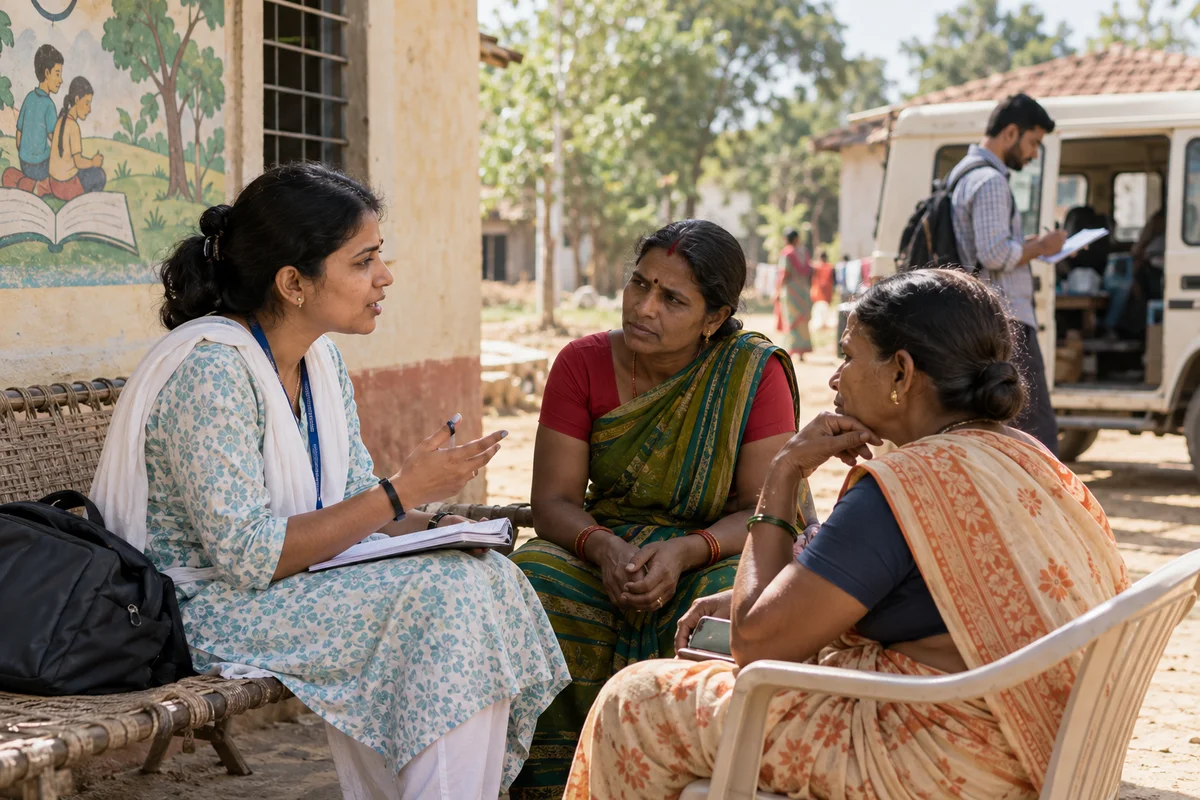
Staff at NGOs and social enterprises leave for funding, field and workload reasons as well as pay. How to understand why, listen early and act.
7 min readRead article
A flat structure works until the founder becomes the only route to a decision. How to tell when you have passed that point, and how to redesign without a reorganisation.
8 min readRead article
How to design incentives for operators, setters and inspectors in fastener, gear, spring and valve units so that accepted lots, not piece counts, earn the bonus.
7 min readRead article
A two-hour exercise that names the roles you could not fill quickly, who could cover them, and what readiness would actually require.
7 min readRead articleMore on the GullyHR blog.
Trustees set direction and hold the chief executive to account, and staff take instructions through the chief executive. Write it down so a keen trustee does not instruct a junior officer directly.
Compare with similar foundations, NGOs and CSR teams, look at the range for each role and decide where you wish to sit. Record the reason, so that pay can be explained later.
Naming who could step into the few key roles, what they need to learn and how knowledge is passed on. It matters most when the leader has held the post for many years.
Give a sample proposal or a real dilemma and ask the candidate to talk through it. Listen for questions asked, risks spotted and respect shown for the applicant.
They need a named guide, a clear project and a handover note at the end. A light touch without structure wastes their time and leaves nothing behind for the team.
We would ask how trustees and staff share decisions, how pay was last set and who could step in for the chief executive. A good opening project is a short roles note plus a pay review. The scope is written down for you to accept or change.
All 6 business types in NGOs & foundations · Find another business type
See all HR topics for ngos and social enterprises, or another industry.
Tell us what is slowing your team down. We’ll help you find a practical way forward, starting with a conversation.