

Industries
Why agribusiness workers leave and how to understand why
Seasonal crews, field officers and processing staff leave for different reasons. How to ask what shaped their decision and act before next season.
7 min readRead articleLivestock equipment suppliers sell milking machines, cattle mats, feeders, fodder cutters, poultry cages and shed fittings to dairy, poultry and goat farmers. This is how to run sales staff, installers and service technicians around farm visits, demonstrations and breakdown calls.
Not sure what you need? Tell us about your business in six short steps and we will come to the first meeting prepared.
Share your requirementsA livestock equipment supplier sells and fits what animals and farmers use every day: milking machines and chillers, fodder cutters and choppers, feeders and waterers, poultry cages and brooders, cattle mats, shed fans and misters, and fencing. The team includes sales executives who visit farms and attend fairs, designers who plan a shed layout, installation crews, service technicians for breakdowns, a spares store, a showroom counter and sometimes agents in districts. A milking machine that fails in the morning cannot wait for a week. Farmers judge by the demonstration, then by how fast service arrives. Travel is long on poor roads, and visits are scheduled around milking and feeding times. For the wider sector, read HR for agriculture and agribusiness.
These are the places the people side of this kind of business tends to give way. The rest of this page works through them.
HR here has to work for each of these groups, not only the office. The set-up below is written with all of them in mind.
GullyHR runs talent acquisition for permanent roles in livestock equipment suppliers. For each role we agree the job description with you, find and screen candidates against it, and support the offer through to joining. Tell us the role and the number of people, and we start there.
We recruit permanent employees. We do not supply contract or temporary staff.
Every business interviews, but few have a written process that works the same way for every role and every interviewer. GullyHR designs yours, from the role brief to the offer, trains your managers to run it, and can run it for you on the roles you hand us.
We agree what the role must deliver, the must-have and nice-to-have skills, and how each will be scored.
Screening call, assessment, interview rounds and decision points, sized to the role and the number of people you hire.
Structured questions for each role family and a rating guide, so two interviewers judge the same answer the same way.
A short briefing for your managers on what to ask, what to avoid and how to give a clear yes or no.
Who approves, how the offer is made, and how candidates are kept informed from first call to joining.
A dead milking machine or failed brooder fan costs the farmer money by the hour, and technicians face angry calls at odd hours.
Crews work in sheds and yards far from the office, with no one to check quality or safety.
Sales staff show best-case performance, and technicians deal with the gap when the farm differs.
A common part is not in stock, and the technician returns twice to a farm that is a long way off.
Poor roads, long distances and vehicle breakdowns shorten the workday and tire staff.
Payment depends on the milk cheque or the flock sale, and sales staff chase balances they did not expect.
Manufacturers and rival dealers hire trained technicians with offers and better brand names.
District agents sell on commission with little guidance and make claims that the company must honour.
Start with the topics that matter most here: Employee Administration; Learning and Development; Retention and Attrition Management. Then work through the rest. Each topic is written for agriculture and agribusiness, not in general.
Records, attendance, leave and the day-to-day HR that must simply work.
Training planned from need rather than from the calendar.
Who leaves, when, why — and which of them mattered.
How many people, in which roles, by when — and what they will cost.
Structure, reporting lines and who is allowed to decide what.
Requisition to joining, the same way every time.
A first day that is the same for the fifth joiner as the first.
Salary structure, payroll inputs and a month that closes on time.
Goals, reviews and ratings that hold up in a conversation.
Named backups for the roles that cannot be vacant.
Communication, recognition and the conditions people actually work in.
Two routes — one for complaints, one for conduct — kept separate.
Policies a manager can apply, and obligations with owners and dates.
Induction, records, incident reporting and follow-through.
Resignation to relieving letter, in a defined order.
Records that survive people, and approvals that do not queue.
A short monthly pack management actually reads.
An HR function that runs the same way every month.
The pieces a livestock equipment suppliers business puts in place, in an order that makes each easier. Open any card for the detail.
A written target for call acknowledgement and visit time by farm type, with a duty technician roster.
A written target for call acknowledgement and visit time by farm type, with a duty technician roster. Rules go in attendance, shifts and leave.
Site check, fitting steps, test run, handover to farmer and photo record, signed by the leader.
Site check, fitting steps, test run, handover to farmer and photo record, signed by the leader. Keep it in documentation.
Sales staff attend a demo script review with technicians, and share what the farm really needs before quoting.
Sales staff attend a demo script review with technicians, and share what the farm really needs before quoting.
A short list of fast-moving spares by machine, reviewed monthly by the store and technicians.
A short list of fast-moving spares by machine, reviewed monthly by the store and technicians.
Cluster visits by district, share vehicle costs fairly and protect rest after long drives.
Cluster visits by district, share vehicle costs fairly and protect rest after long drives. See health, safety and wellbeing.
Helper, technician and senior technician, with manufacturer training and a pay step.
Helper, technician and senior technician, with manufacturer training and a pay step. See learning and development.
Before changing anything, find out what is true today. These checks take an afternoon and tell you which of the topics above to start with.
Share your requirementsConfirm with a qualified professional. What applies to you depends on your business, your state and your arrangements, and it changes. This page describes practice. It does not state a legal position.
The services below fit this kind of business best. Each starts by recording where you stand, and every later report compares against that. We do not promise outcomes.
A technician pathway with manufacturer training.
Duty rosters and rest for breakdown cover.
Installation and service records farmers can see.
Technician and sales pay against nearby dealers.
Start with a free conversation, or see the paid HR Diagnostic.
Understand the business, its workforce, current processes and HR challenges.
Find the missing, weak, inconsistent or person-dependent processes.
Create the structure, processes, policies, SOPs, dashboards and systems needed.
Help HR and department managers actually adopt the new system.
Digitise repetitive and approval-based workflows where it is worth doing.
Track hiring, attendance, employee cost, performance, training and attrition.
Strengthen the people-management system continuously, not once.
From the GullyHR blog: one on HR in agriculture and agribusiness, and one on each of the topics this page points to.
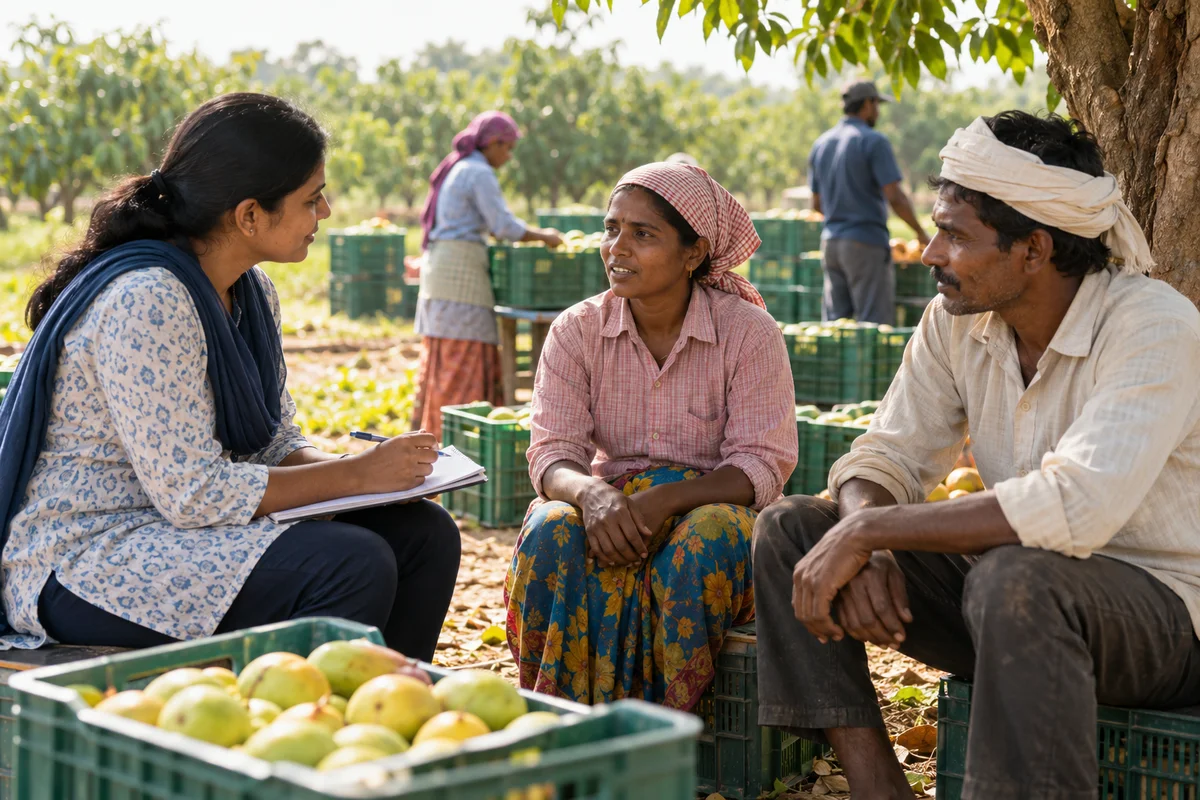
Seasonal crews, field officers and processing staff leave for different reasons. How to ask what shaped their decision and act before next season.
7 min readRead article
Payroll says one joining date, the personal file says another and the manager remembers a third. How to establish a single trustworthy employee record and keep it that way.
7 min readRead article
A founder's guide to hiring freshers and running a first-year programme: campus or open drives, a screening round, a training plan by quarter, mentors and checkpoints.
6 min readRead article
What really keeps mobile app and web developers in a small firm: stay conversations, growth paths, fair release rules and a risk sheet an owner can use this month.
6 min readRead articleMore on the GullyHR blog.
Use a duty roster with fair extra pay and rest, and a clear call route. Do not rely on one hero technician.
Give training, a visible ladder and fair pay steps. Technicians leave when no next step exists.
Review demos together, share farm detail before quoting and track repeat breakdowns by sale. Both sides own the farmer's experience.
Write clear terms on claims, commission and conduct, and check complaints. Confirm legal status with a qualified professional.
Agree payment terms before sale and keep a clear follow-up owner. Sales staff should not be surprised.
We would ride along on a service call and an installation, then draft a duty roster, checklist and technician ladder. We do not do legal advice or payroll filings, and scope is written down after we talk.
All 58 business types in agriculture and agribusiness · Find another business type
See all HR topics for agriculture and agribusiness, or another industry.
Tell us what is slowing your team down. We’ll help you find a practical way forward, starting with a conversation.