
HR Management Solutions for Agriculture and Agribusiness
Build HR for a workforce that follows the season and works across villages, fields and processing units.
Not sure what you need? Tell us about your business in six short steps and we will come to the first meeting prepared.
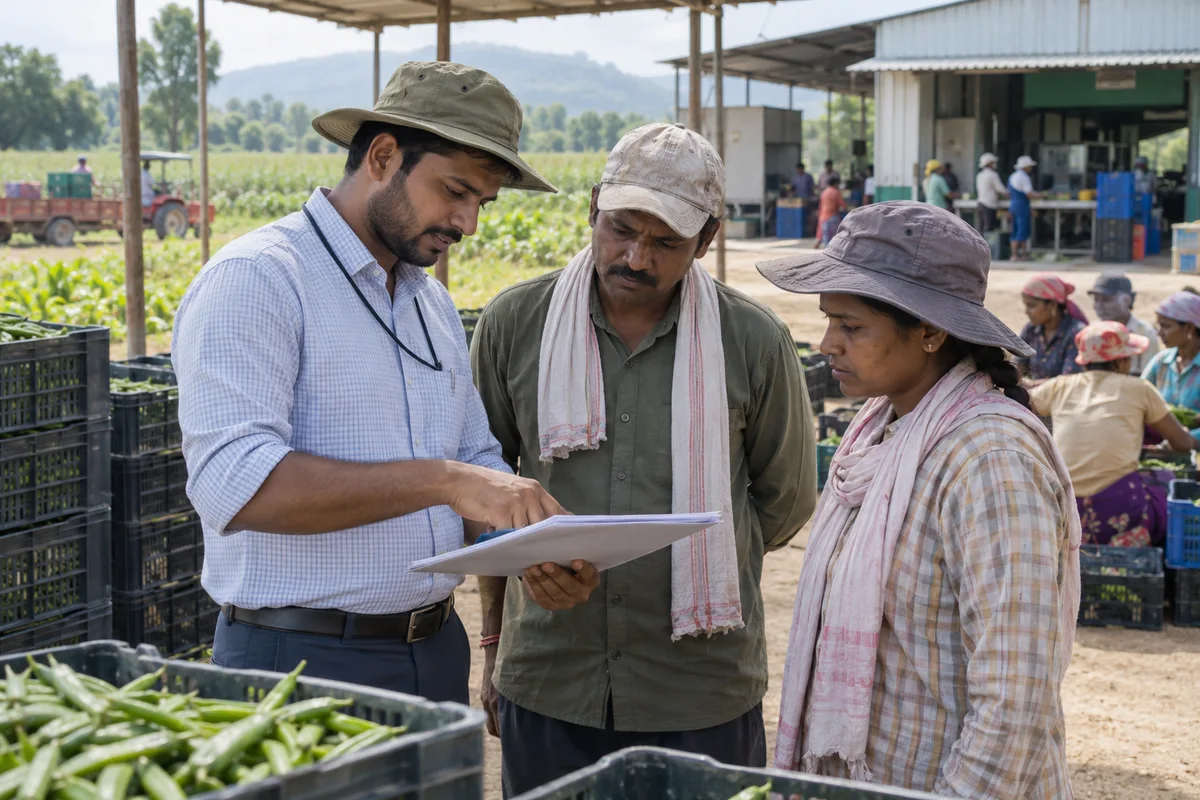
Share your requirementsAgribusinesses employ field officers, procurement teams, processing-unit workers, quality staff and a large seasonal workforce. Work concentrates around harvest and processing windows, and much of the workforce is distributed and temporary.
- Plan
- Hire
- Onboard
- Manage
- Develop
- Perform
- Engage
- Retain
- Exit
- Improve
When HR processes are weak, you may see
- Seasonal labour planning
- Distributed field staff attendance
- Processing-unit shift coverage during season
- Contractor and seasonal worker records
- Field officer attrition
- Procurement-team accountability
- Training records for seasonal intake
- No consolidated workforce view
We help agribusinesses build seasonal workforce planning, field attendance and processing-unit people processes.
Who we work with
Adapted to crop cycle, processing footprint, procurement model and the scale of the seasonal workforce.
- Agriculture Companies
- AgriTech Companies
- Seed Companies
- Fertilizer Companies
- Dairy Companies
- Poultry Companies
- Farm Management Companies
- Food Processing Companies
Roles we help you hire in agriculture and agribusiness
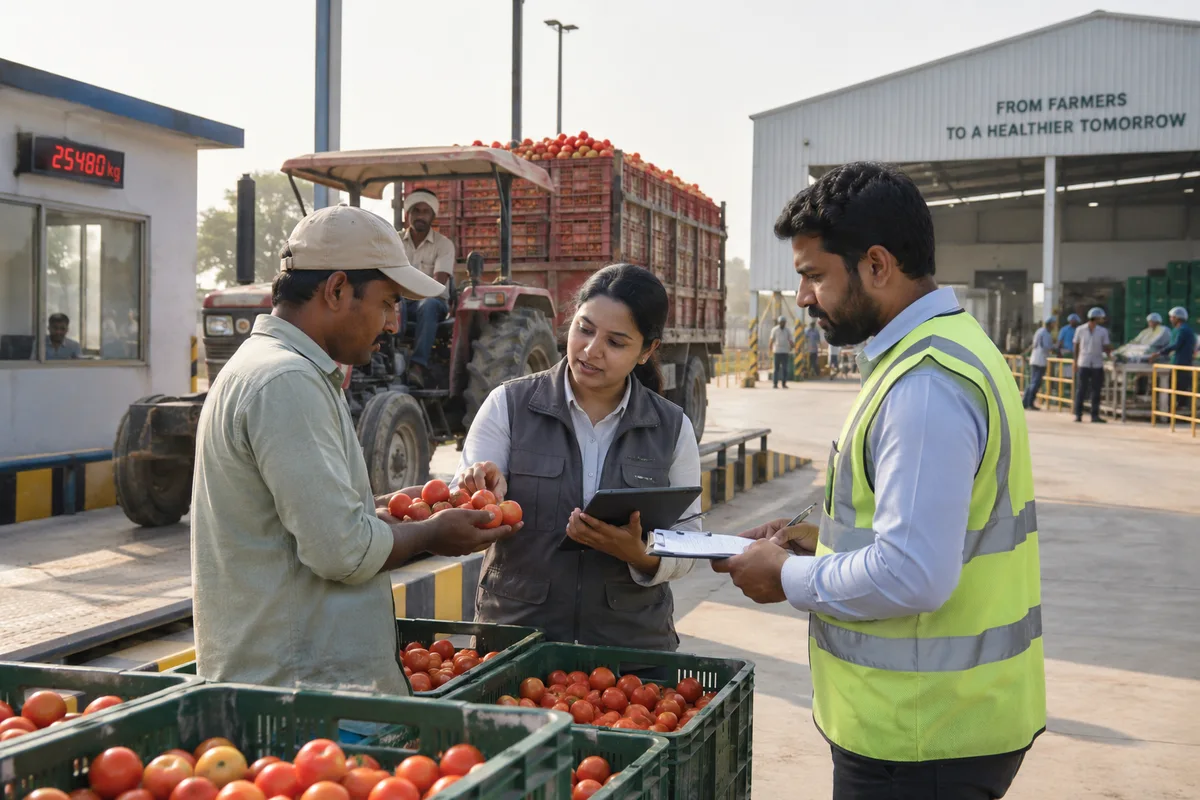
GullyHR runs talent acquisition for permanent roles in agriculture and agribusiness. For each role we agree the job description with you, find and screen candidates against it, and support the offer through to joining. Tell us the role and the number of people, and we start there.
- Veterinary assistants
- Farm manager
- Spares counter staff
- Herd supervisors
- Farm managers
- Field supervisors and gang leaders
- Pruning and weeding gangs
- Maintenance fitters
- Quality inspectors
- Milkers
- Field supervisors
- Sorting and grading staff
- Stores and dispatch staff
- Design draftsmen
- Route supervisors
- Plant managers
- Village field sales executives
- Finance and subsidy documentation staff
- Tractor workshop mechanics and technicians
- Service engineers and field mechanics
- Demonstration and delivery drivers
- Branch and workshop managers
- Counter salesmen
- Godown and tractor-loading hands
- Billing and accounts clerks
- Field representatives
- Delivery drivers
- Seasonal helpers
Job descriptions for this sector
We recruit permanent employees. We do not supply contract or temporary staff.
We set up the interview and hiring process for agriculture and agribusiness
Every business interviews, but few have a written process that works the same way for every role and every interviewer. GullyHR designs yours, from the role brief to the offer, trains your managers to run it, and can run it for you on the roles you hand us.
1. Role brief and scorecard
We agree what the role must deliver, the must-have and nice-to-have skills, and how each will be scored.
2. Stages and sequence
Screening call, assessment, interview rounds and decision points, sized to the role and the number of people you hire.
3. Question bank and scoring
Structured questions for each role family and a rating guide, so two interviewers judge the same answer the same way.
4. Interviewer readiness
A short briefing for your managers on what to ask, what to avoid and how to give a clear yes or no.
5. Offer and follow-up
Who approves, how the offer is made, and how candidates are kept informed from first call to joining.
Businesses we work with in agriculture and agribusiness
The same sector looks different from the inside of each kind of business. These pages are written for one kind at a time.
Agricultural Equipment6About this group →
Agricultural Equipment & Agri-Services6About this group →
Poultry, Livestock & Fisheries6About this group →
Farms & Agribusinesses7About this group →
Dairy & Milk Businesses5About this group →
Other business types9
HR topics for agriculture and agribusiness
The same areas, written for this sector rather than in general.
HR Strategy and Workforce Planning
How many people, in which roles, by when — and what they will cost.
Organisation Design
Structure, reporting lines and who is allowed to decide what.
Recruitment and Talent Acquisition
Requisition to joining, the same way every time.
Onboarding and Probation
A first day that is the same for the fifth joiner as the first.
Employee Administration
Records, attendance, leave and the day-to-day HR that must simply work.
Compensation, Payroll and Benefits
Salary structure, payroll inputs and a month that closes on time.
Performance Management
Goals, reviews and ratings that hold up in a conversation.
Learning and Development
Training planned from need rather than from the calendar.
Career and Succession Management
Named backups for the roles that cannot be vacant.
Employee Engagement and Experience
Communication, recognition and the conditions people actually work in.
Employee Relations
Two routes — one for complaints, one for conduct — kept separate.
Policies, Compliance and Governance
Policies a manager can apply, and obligations with owners and dates.
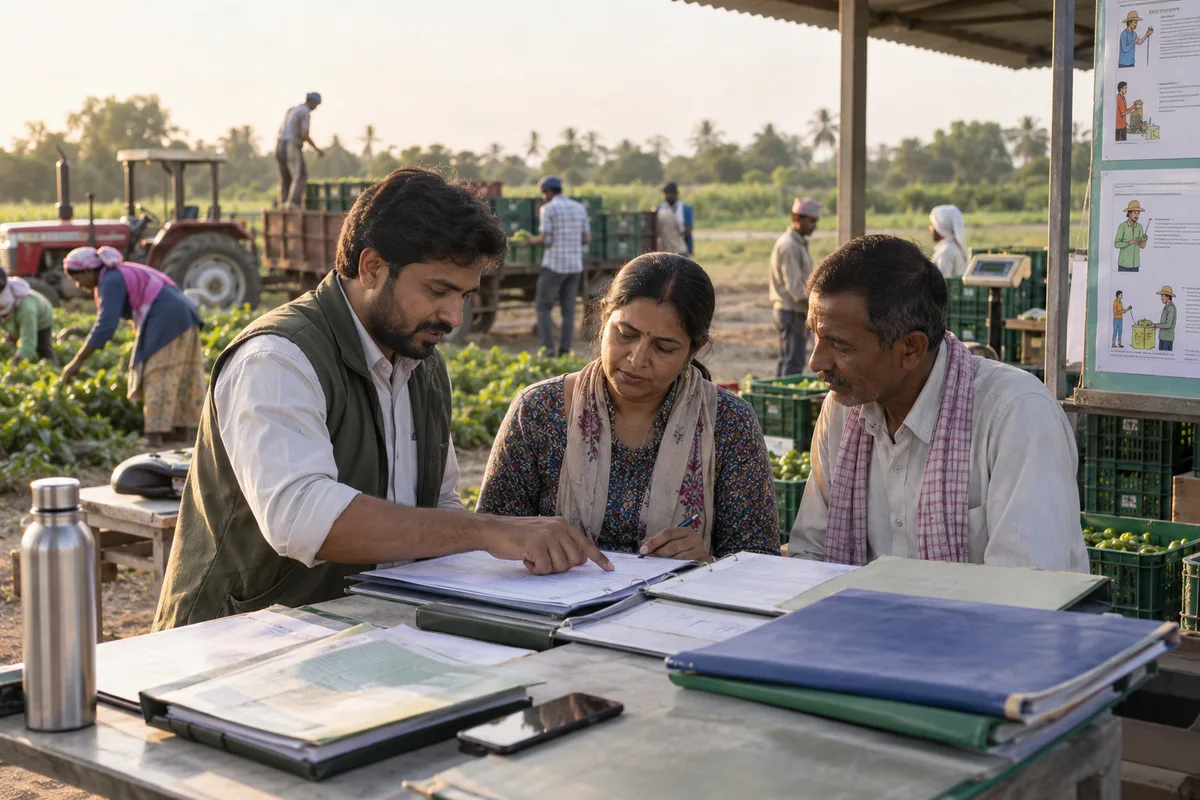
Health, Safety and Wellbeing
Induction, records, incident reporting and follow-through.
Retention and Attrition Management
Who leaves, when, why — and which of them mattered.
Exit and Alumni Management
Resignation to relieving letter, in a defined order.
HR Technology and Automation
Records that survive people, and approvals that do not queue.
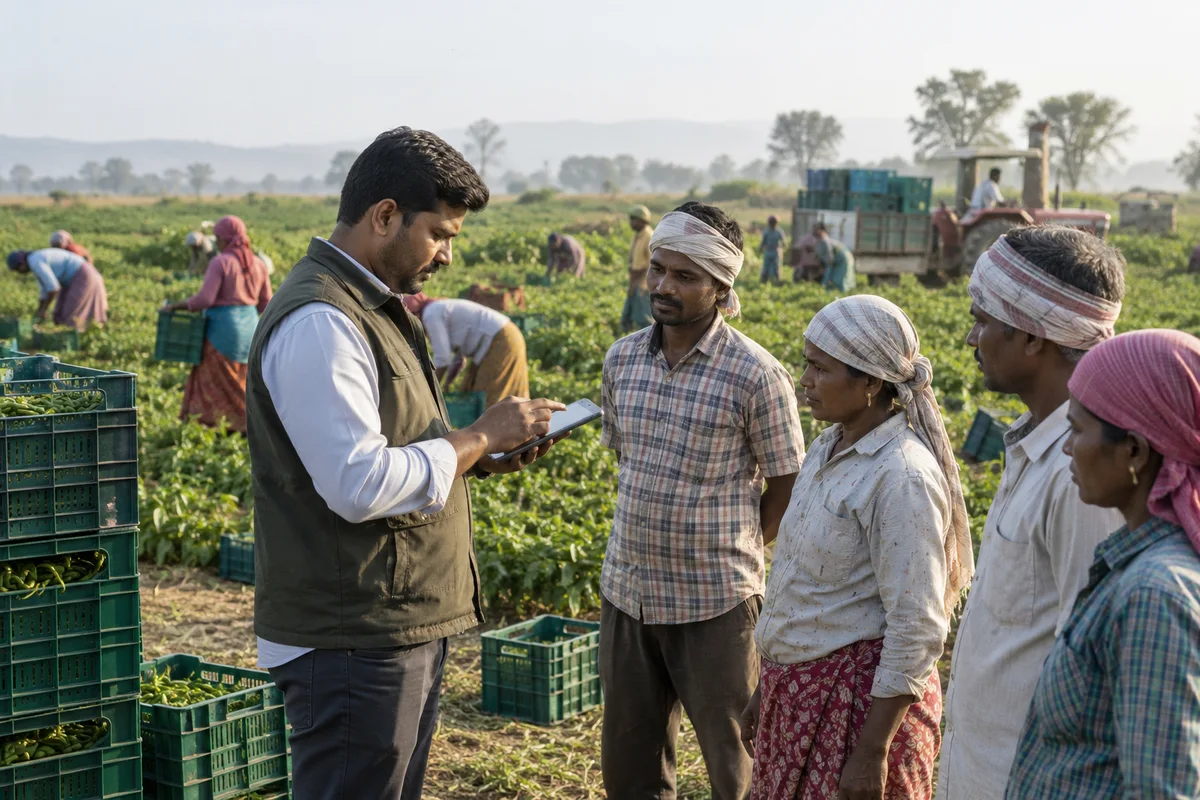
HR Analytics and Management Reporting
A short monthly pack management actually reads.
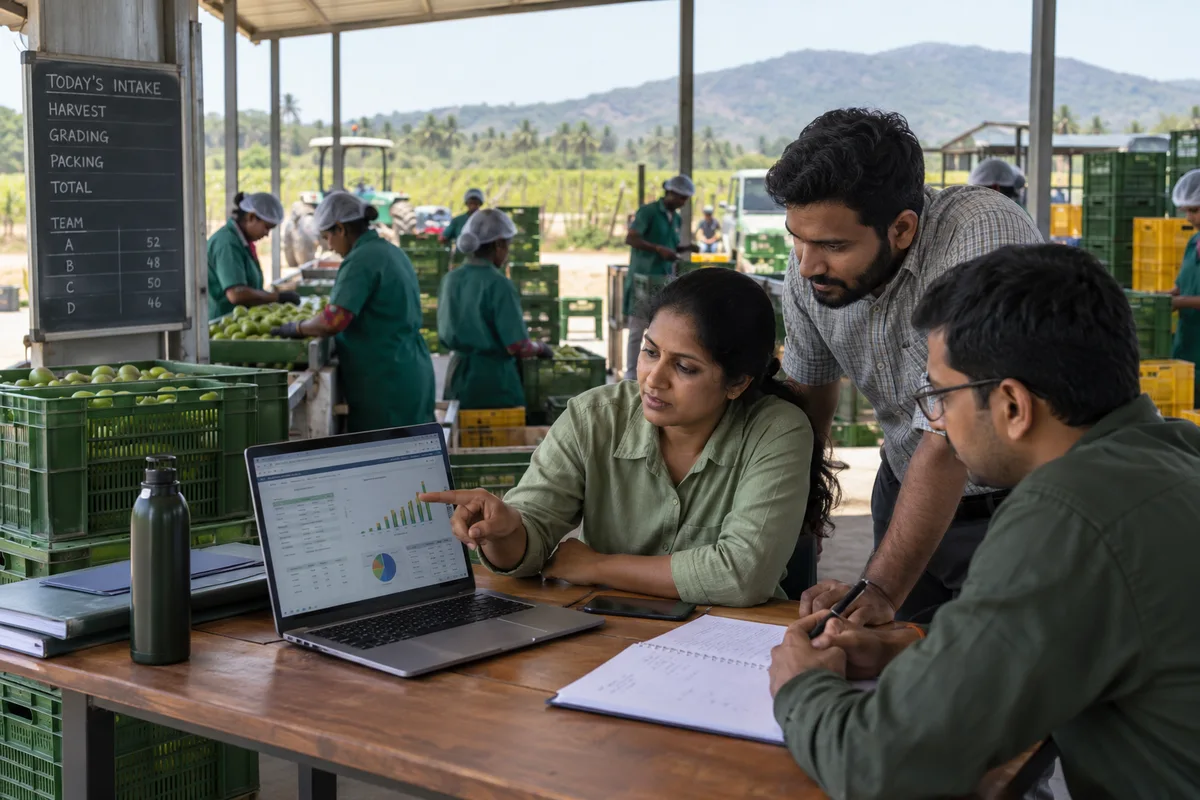
HR Operations and Governance
An HR function that runs the same way every month.
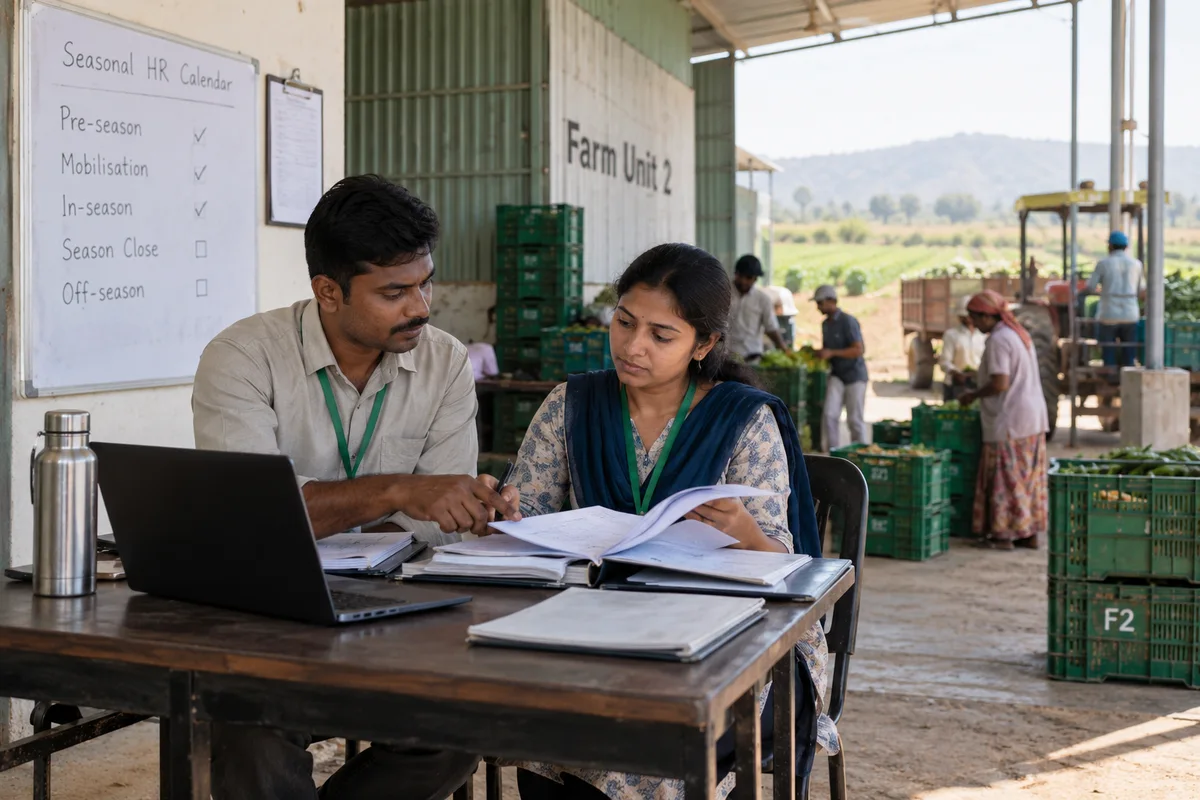
What the HR system covers
Most businesses take a few of these at a time, in an order decided by what is costing them most. Open any area to see what it includes.
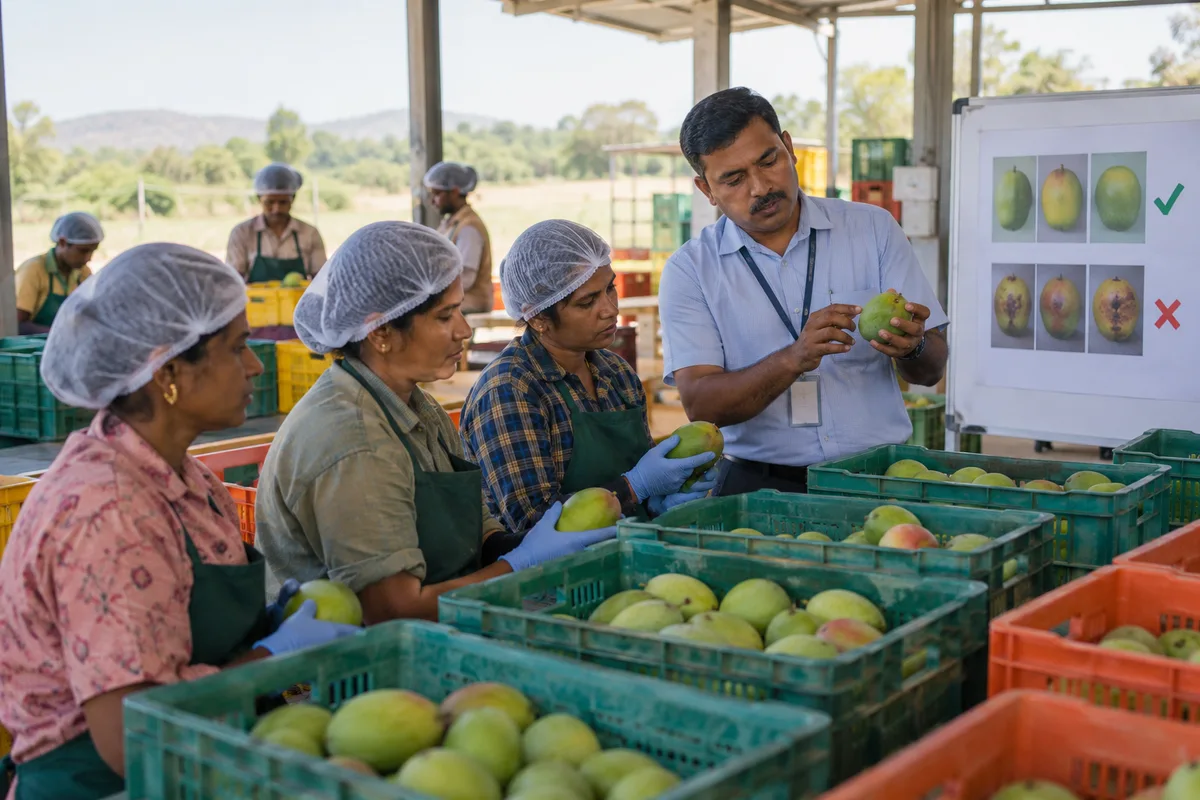
Field, Procurement and Processing Structure
Three workforces on one calendar.
What this coversHideOpen the full page →
Field, Procurement and Processing Structure
Three workforces on one calendar.
Field and procurement
- Field Officers
- Agronomists
- Procurement Officers
- Quality Inspectors
- Field Advisory Staff
- Area Managers
Processing and support
- Plant Operators
- Processing Workers
- Packing
- Quality Lab
- Stores
- Logistics
- HR
- Finance
- Admin
- Organisation structure
- Field hierarchy by region
- Processing-unit structure
- Reporting lines
- Approval matrix
- Staffing norms by season
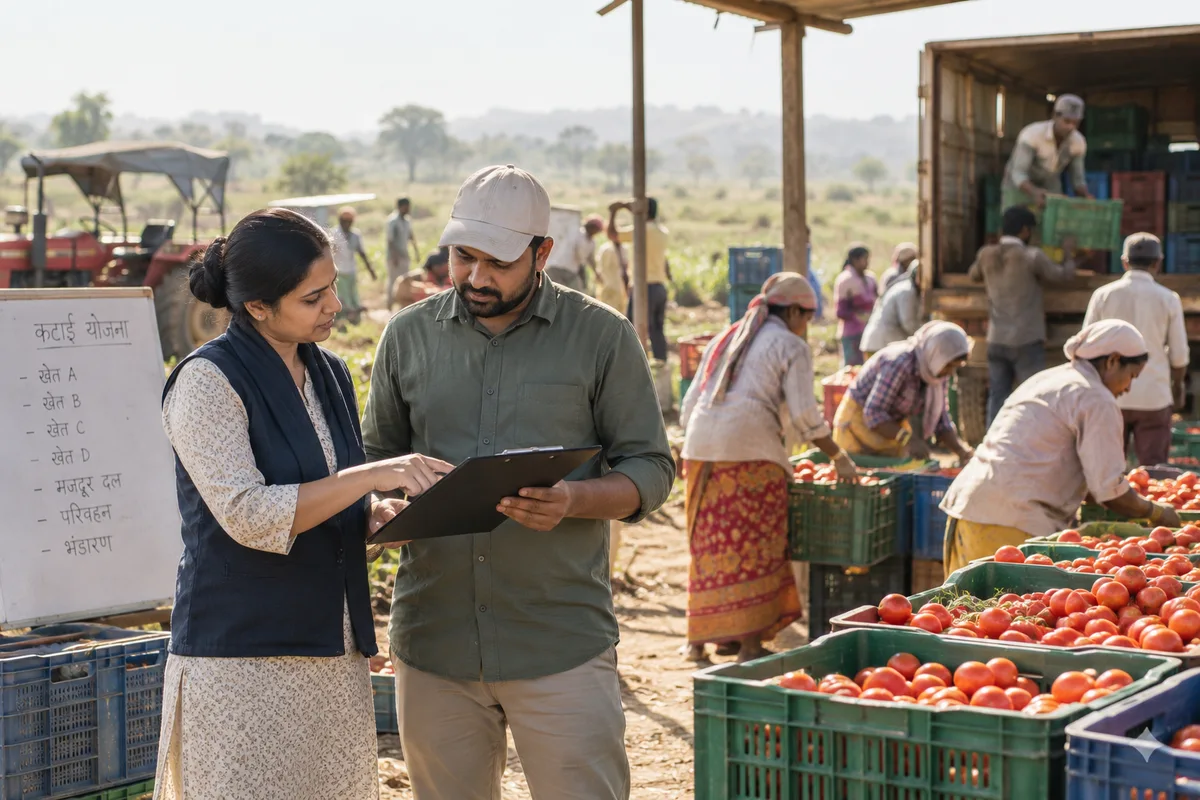
Seasonal Workforce Planning
Planning against the crop calendar.
What this coversHideOpen the full page →
Seasonal Workforce Planning
Planning against the crop calendar.
- Crop and season calendar
- Peak manpower requirement
- Ramp-up timeline
- Seasonal worker pool
- Rehire list from previous season
- Rapid induction
- Ramp-down plan
- Records for seasonal intake
- Conversion of reliable workers
- How many people does this season need?
- When do they start and finish?
- Who returns from last season?
Field Staff Attendance
Attendance across villages and collection points.
What this coversHideOpen the full page →
Field Staff Attendance
Attendance across villages and collection points.
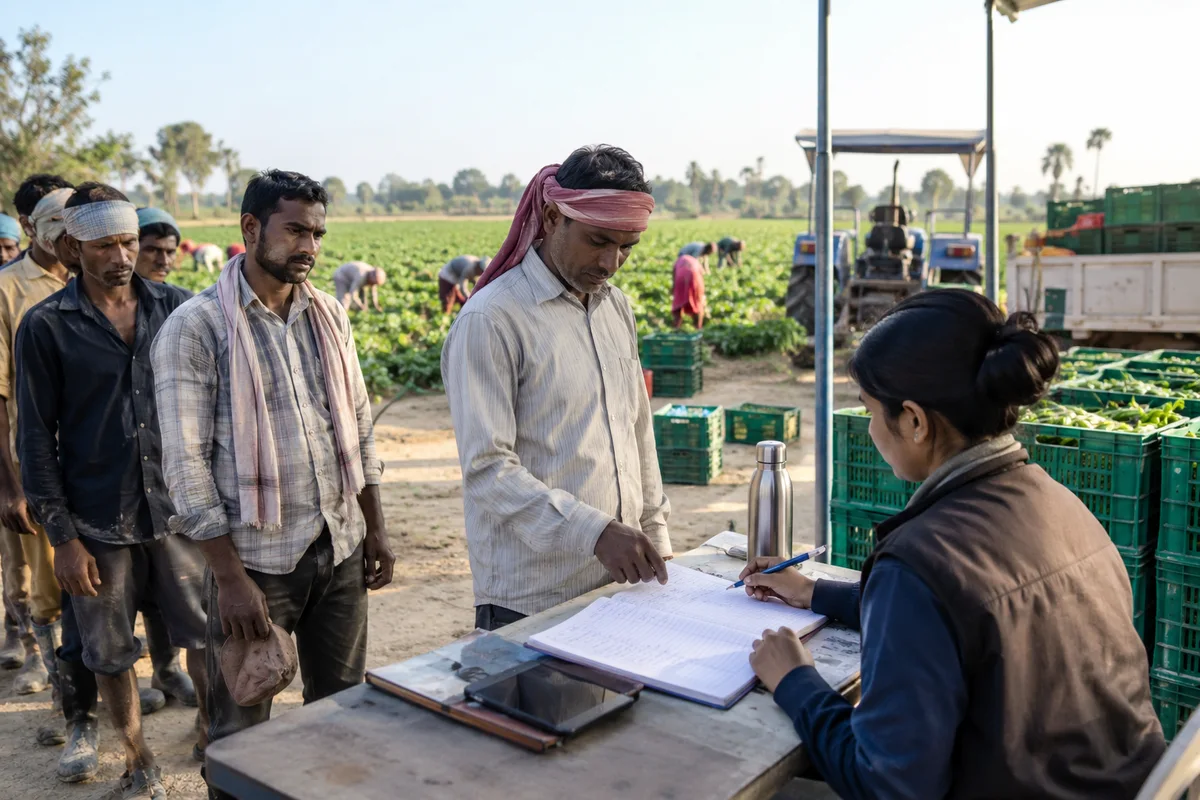
- Mobile attendance
- Geo-tagged reporting where used
- Village and route coverage
- Daily reporting discipline
- Travel and allowance rules
- Leave approval in the field
- Missed reporting escalation
- Attendance cut-off
Processing-Unit Shifts
Continuous processing during the season.
What this coversHideOpen the full page →
Processing-Unit Shifts
Continuous processing during the season.
- Shift patterns during season
- Staffing norms by line
- Seasonal overtime
- Relief and standby
- Weekly off rotation
- Attendance capture
- Safety induction
- Contract manpower deployment
- Attendance cut-off
Contractor and Seasonal Records
The workforce that arrives with the season.
What this coversHideOpen the full page →
Contractor and Seasonal Records
The workforce that arrives with the season.
- Contractor register
- Worker register by contractor
- Deployment records
- Age and document verification
- Induction and safety records
- Attendance reconciliation
- Payment reconciliation
- Records retention after season
Field and procurement
- Area covered
- Farmer engagement
- Procurement volume
- Quality at intake
- Reporting discipline
- Attendance
- Cost per unit procured
Processing
- Throughput
- Output yield and wastage
- Quality rejections
- Safety observance
- Attendance
- Training completion
Training for Seasonal Intake
Compressed training that still counts.
What this coversHideOpen the full page →
Training for Seasonal Intake
Compressed training that still counts.
- Rapid induction format
- Safety training before work
- Hygiene training where applicable
- Machine and tool training
- Quality standards briefing
- Refresher for returning workers
- Training records by season
Agribusiness HR Dashboard
Season readiness and workforce cost.
What this coversHideOpen the full page →
Agribusiness HR Dashboard
Season readiness and workforce cost.
- Headcount by function and region
- Seasonal vs permanent
- Ramp status against plan
- Field attendance
- Processing-unit manning
- Contractor deployment
- Attrition of field officers
- Open positions
- Training completion
- Employee cost per unit
Season End and Exit
Closing out a season without losing the people you want back.
What this coversHideOpen the full page →
Season End and Exit
Closing out a season without losing the people you want back.
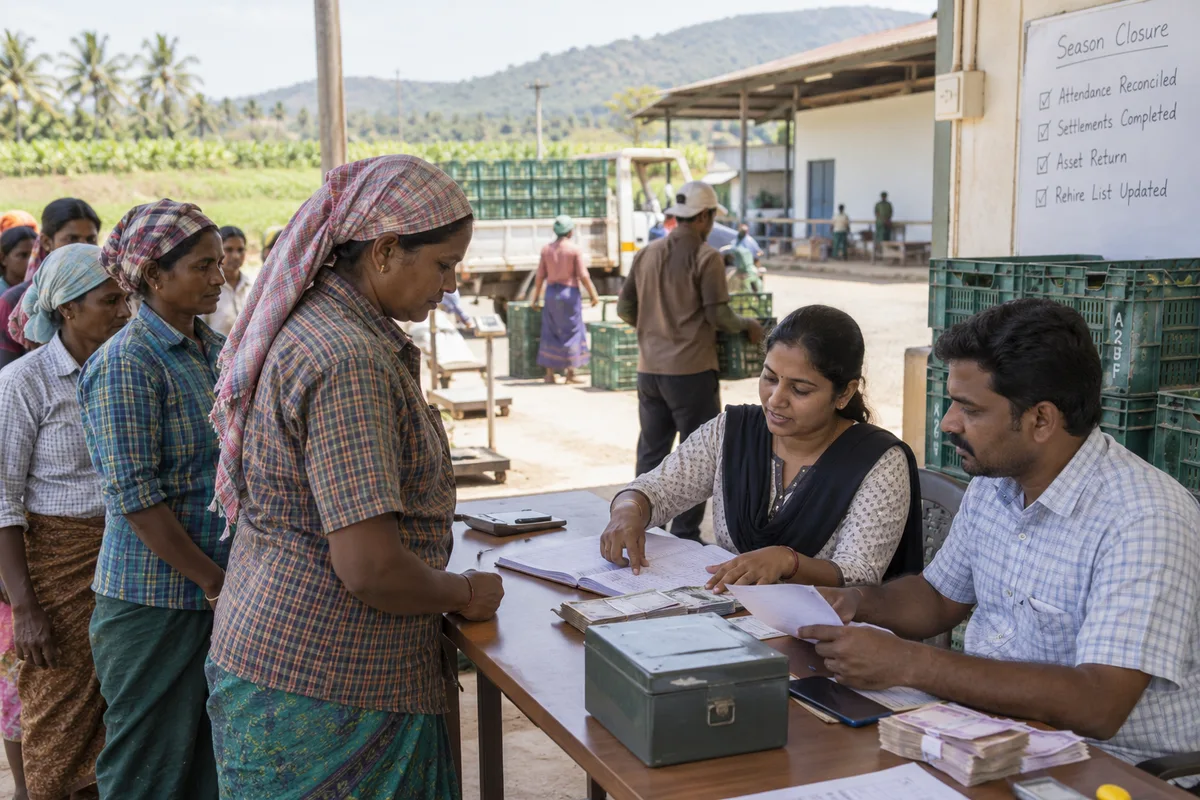
Most agricultural exits are not resignations. A season ends, work stops, and the same people are needed again in four months — so the exit process has to leave the door open rather than close a file.
- Season-end release list by village and crew
- Final wage settlement before crews disperse
- Attendance and piece-rate reconciliation
- Advance and deduction settlement
- Tools, equipment and PPE return
- Contact details captured for the next season
- Crew leader and supervisor feedback per worker
- Rehire eligibility marked at release
The single most valuable output is a rehire list — who to call first next season, by skill and by village. Most agribusinesses recruit from scratch every year because nobody wrote it down.
- Season ends
- Reconcile and settle
- Return assets
- Record rehire eligibility
- Call list for next season
Engaging a Dispersed Seasonal Workforce
Engagement when your people are in fields and villages, not offices.
What this coversHideOpen the full page →
Engaging a Dispersed Seasonal Workforce
Engagement when your people are in fields and villages, not offices.
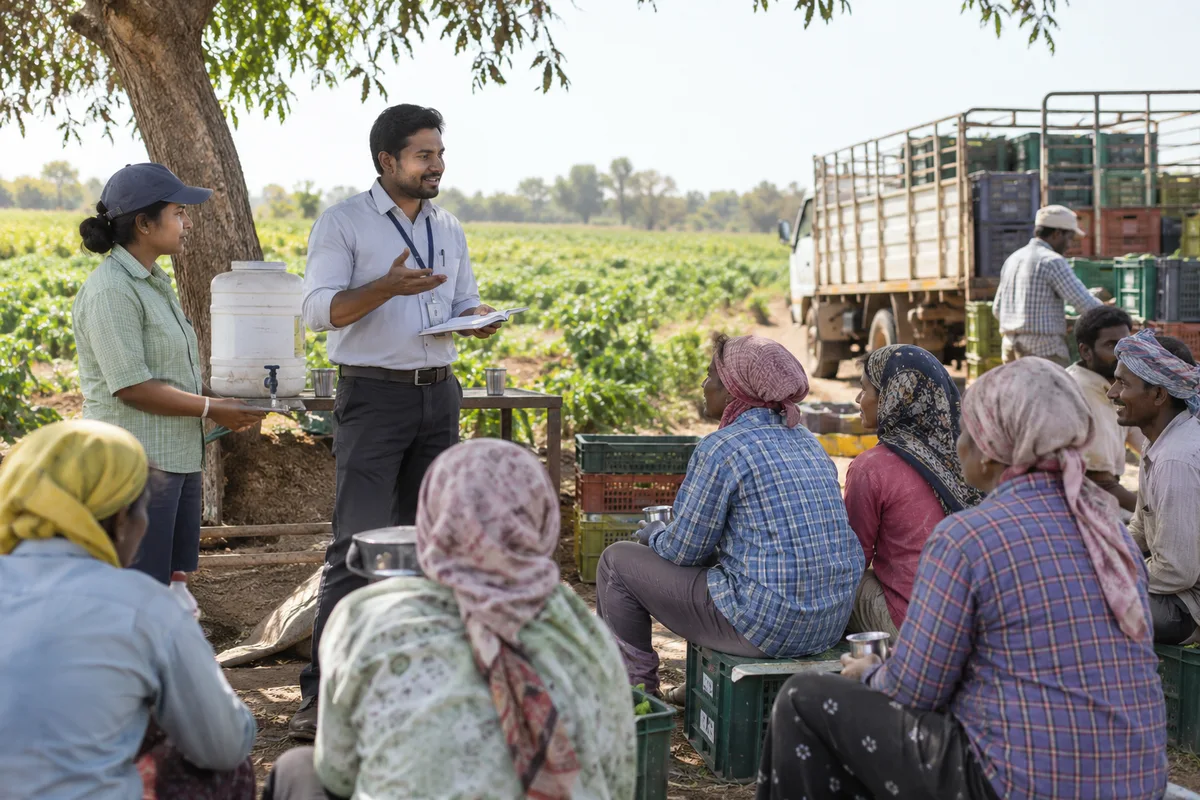
Standard engagement practice assumes people who read email and attend town halls. A crew working across villages on a seasonal contract experiences the organisation through one person: their crew leader.
- Crew leader capability treated as the primary engagement lever
- Wage payment on the promised day, every time - the single strongest signal
- Grievance route that works without literacy or a smartphone
- Transport, drinking water and rest arrangements at the worksite
- Recognition at crew level rather than individual awards
- Communication in the local language, verbally, through supervisors
- Return-next-season intent asked before crews disperse
Payment reliability outranks everything else in this workforce. Where wages arrive on the stated day without chasing, most other engagement problems become manageable; where they do not, nothing else compensates.
Progression From Field to Supervision
Building crew leaders and unit supervisors from the workforce you already have.
What this coversHideOpen the full page →
Progression From Field to Supervision
Building crew leaders and unit supervisors from the workforce you already have.
Agribusiness rarely has a career ladder written down, and yet every operation depends on crew leaders who were once field workers and learnt the role by watching someone else do it.
- Field worker
- Experienced hand
- Crew leader
- Unit supervisor
- Farm or processing manager
- Criteria for each step, stated in observable terms
- Crew leader capability built deliberately, not assumed
- Literacy and record-keeping support where the step requires it
- Seasonal workers tracked across years so progression is possible
- Processing unit roles as a route out of seasonality
- Successor identified for every supervisor and unit manager
Naming the ladder matters more than formalising it. Workers who can see a route stay across seasons; those who cannot treat the work as temporary regardless of how long they have done it.
Technology for a Workforce Without Desks
What works when crews have basic phones and patchy network.
What this coversHideOpen the full page →
Technology for a Workforce Without Desks
What works when crews have basic phones and patchy network.
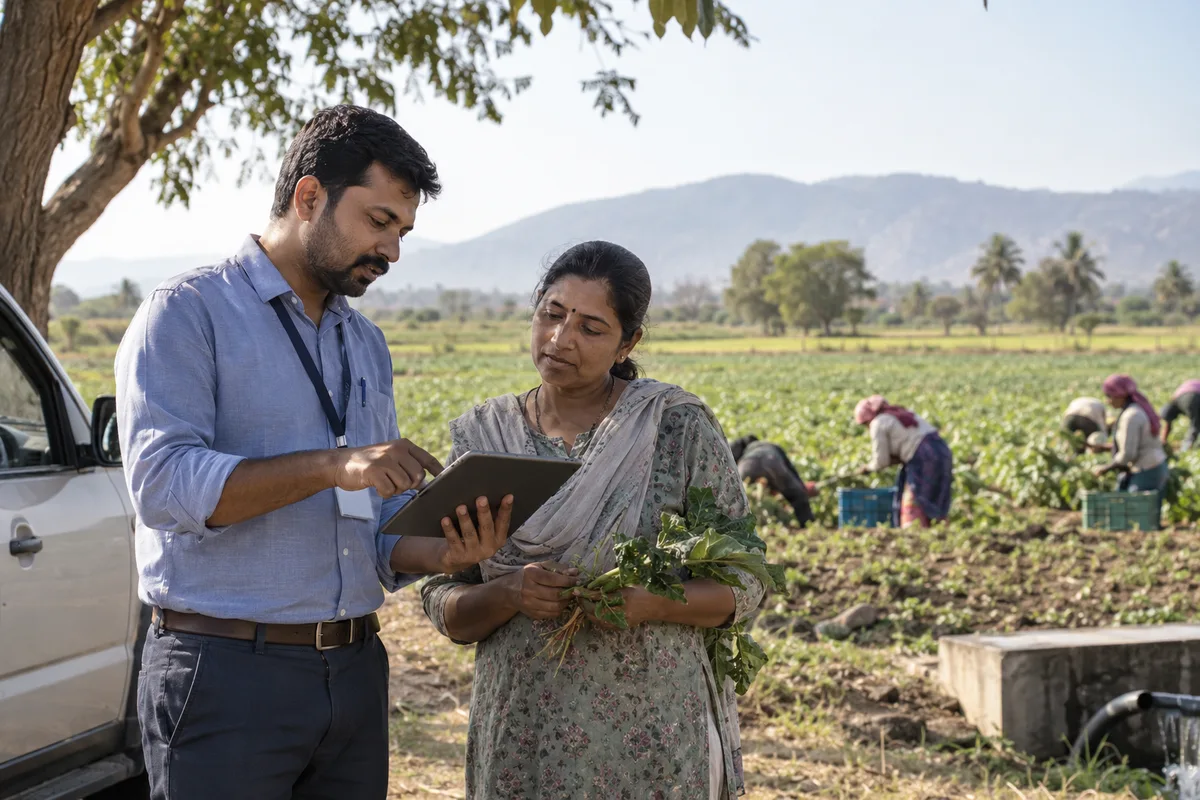
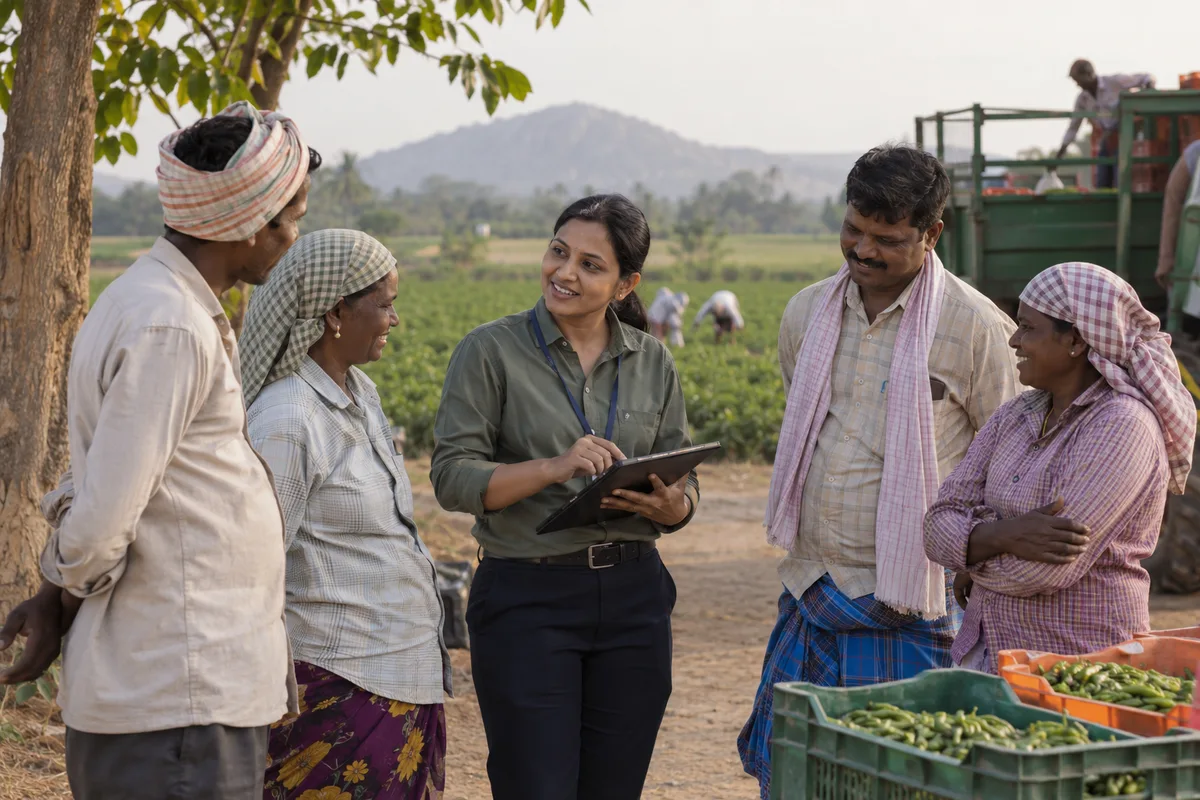
Most HR technology assumes smartphones, connectivity and literacy. An agribusiness workforce frequently has none of the three reliably, so the design question is what the supervisor carries rather than what the worker installs.
- Supervisor-operated attendance capture, offline-capable
- Crew and piece-rate recording at the worksite
- Wage calculation from crew records without re-entry
- Worker master with village, skill and rehire history
- Advance and deduction tracking against the individual
- Season-over-season rehire lists generated automatically
- Reports that work from a unit office, not only head office
Offline capability is not a nice-to-have here. A system that requires connectivity at the point of capture will be replaced by a paper register within a fortnight.
- Supervisor captures offline
- Syncs at the unit
- Wages calculated
- Records retained
Season Start and Crew Induction
Inducting a large crew in a day, not a week.
What this coversHideOpen the full page →
Season Start and Crew Induction
Inducting a large crew in a day, not a week.
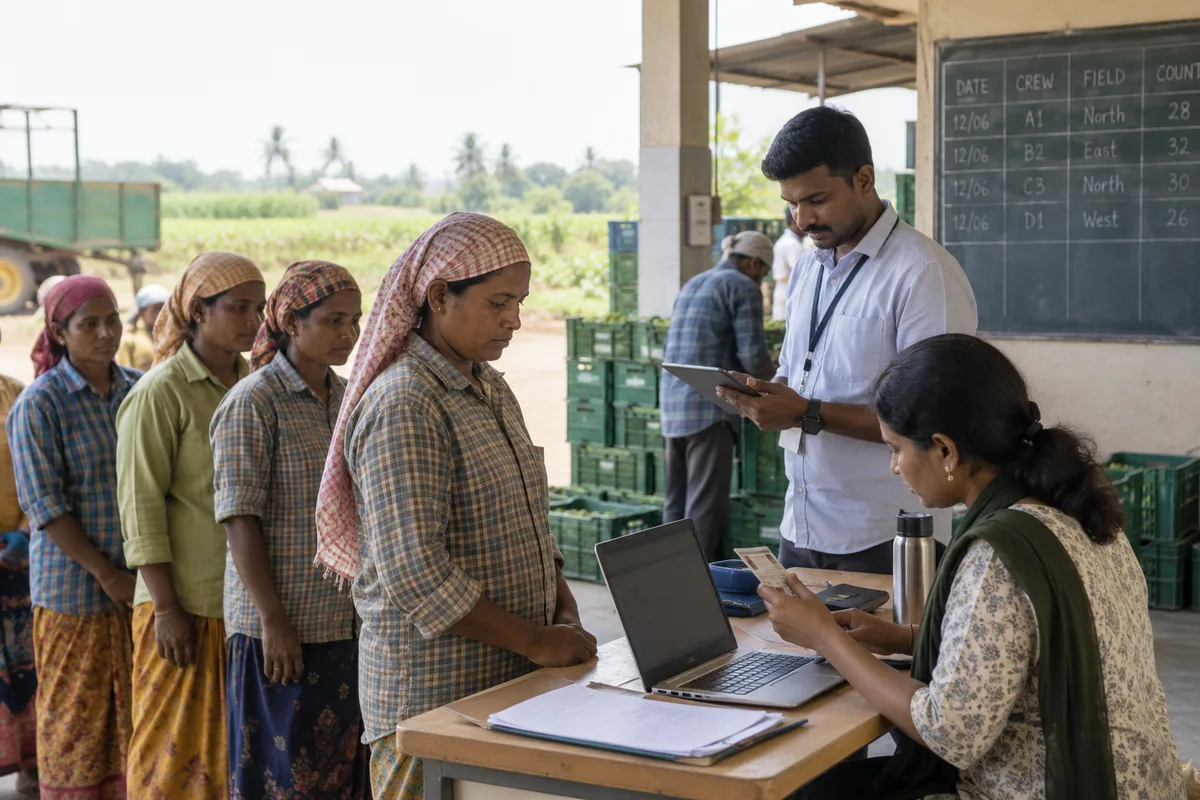
Agricultural onboarding happens in bulk at the start of a season, in the field, for people who may not return to any office afterwards. It has to be fast and it still has to produce a record.
- Bulk enrolment at the worksite with identity capture
- Crew and village assignment recorded at joining
- Wage rate, piece rate and payment date stated verbally and recorded
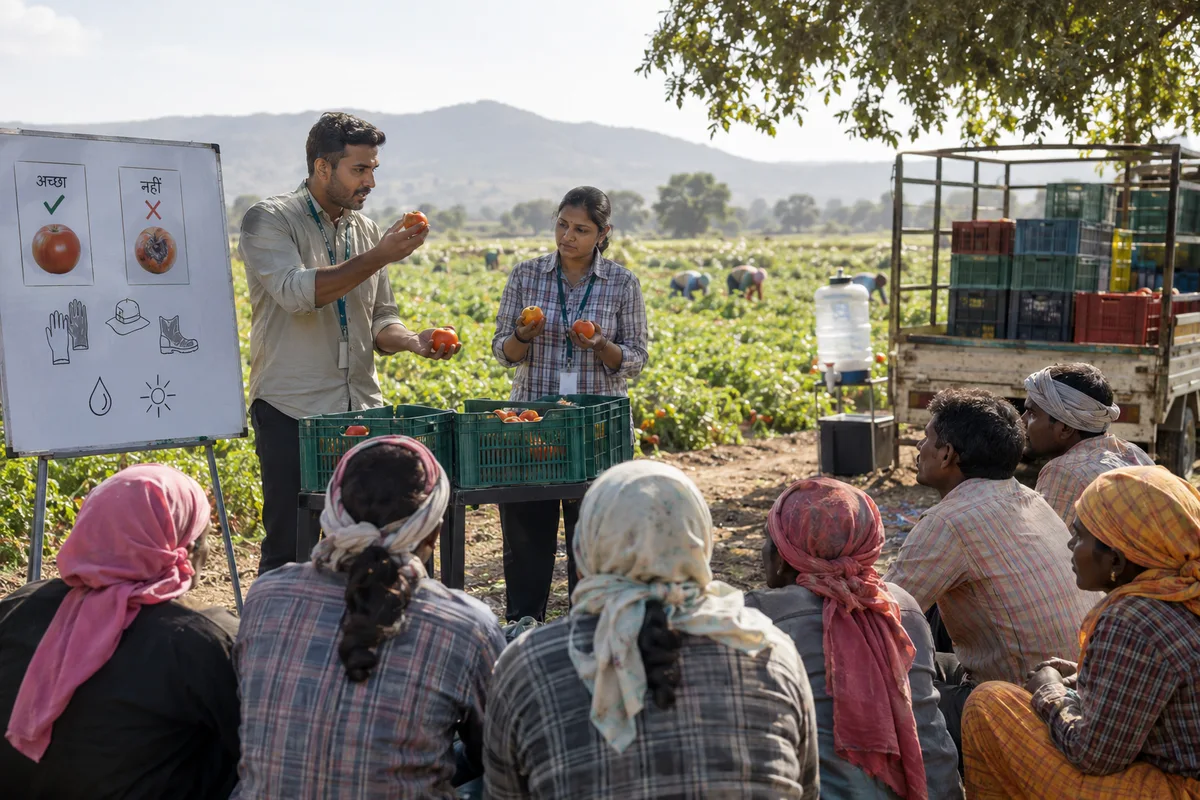
- Safety briefing for tools, chemicals and machinery
- PPE issued and recorded on day one
- Supervisor introduction - the person they will actually deal with
- Advance policy explained before anyone asks
- Rehire history checked so returning workers skip re-induction
Checking rehire history at enrolment is the step that saves the most time. A worker returning for a fourth season should not be inducted as though they were new.
Relations With Crews and Communities
Where the grievance route has to work without paperwork.
What this coversHideOpen the full page →
Relations With Crews and Communities
Where the grievance route has to work without paperwork.
An agricultural workforce raises concerns verbally, through a crew leader, often in a language head office does not use. A written grievance process is not a route; it is a barrier.
- Verbal grievance route through a named person who is not the crew leader
- Local-language handling with a supervisor who can escalate
- Wage and measurement disputes resolved at the unit, quickly
- Advance and deduction disagreements handled transparently
- Community and village-level relationships managed deliberately
- Consistent handling across units so precedent does not vary by location
- Record kept centrally even where the complaint was verbal
- Crew leader conduct monitored, since most issues involve them
Recording verbal grievances centrally is the discipline that makes the process real. Without it, a recurring problem at one unit is never visible beyond that unit.
Safety in Fields and Processing Units
Chemicals, machinery and heat, across dispersed worksites.
What this coversHideOpen the full page →
Safety in Fields and Processing Units
Chemicals, machinery and heat, across dispersed worksites.
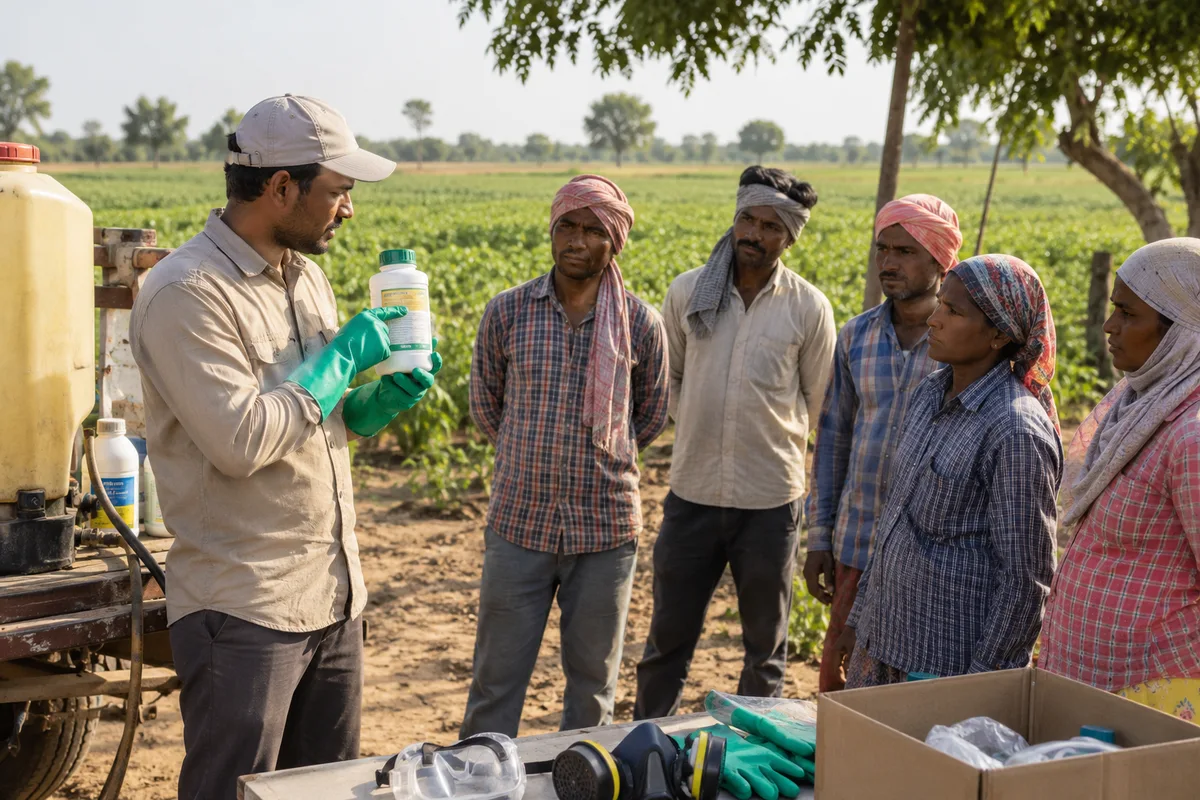
Agricultural safety is dispersed by nature. Risk sits in chemical handling, machinery, transport and heat, and the supervisor at each worksite is the only control present when something happens.
- Chemical handling, storage and application training per worker
- PPE issued and replaced, recorded against the individual
- Machinery and implement safety briefing before use
- Heat exposure and hydration arrangements during peak season
- Transport safety for crews moving between sites
- First aid availability at each worksite
- Incident and near-miss reporting that works verbally
- Supervisor accountability for worksite conditions
Near-miss reporting has to be verbal and consequence-free to function in this workforce. A written form at a field worksite records nothing.
Running HR Across Units and Seasons
Where the calendar, not the month, sets the rhythm.
What this coversHideOpen the full page →
Running HR Across Units and Seasons
Where the calendar, not the month, sets the rhythm.
Agribusiness HR operations run on a seasonal cycle. The peak of activity is mobilisation and wage settlement, and the quiet months are when the record-keeping either gets done or does not.
- Pre-season planning
- Mobilisation and enrolment
- In-season wage cycles
- Season close and settlement
- Off-season record and rehire work
- A named owner for HR at each unit, not only at head office
- Calendar of recurring obligations with dates and owners
- Wage cycle discipline maintained across all units
- Worker master maintained between seasons, not rebuilt
- Unit-level and consolidated headcount reporting
- Contractor and crew-leader arrangements documented
- Audit trail retained for wage and attendance records
The off-season is the only window in which the record can be put right, and businesses that treat it as downtime start every season from an inaccurate base.
Seasonal Recruitment at Village Level
Hiring crews through networks, not job boards.
What this coversHideOpen the full page →
Seasonal Recruitment at Village Level
Hiring crews through networks, not job boards.
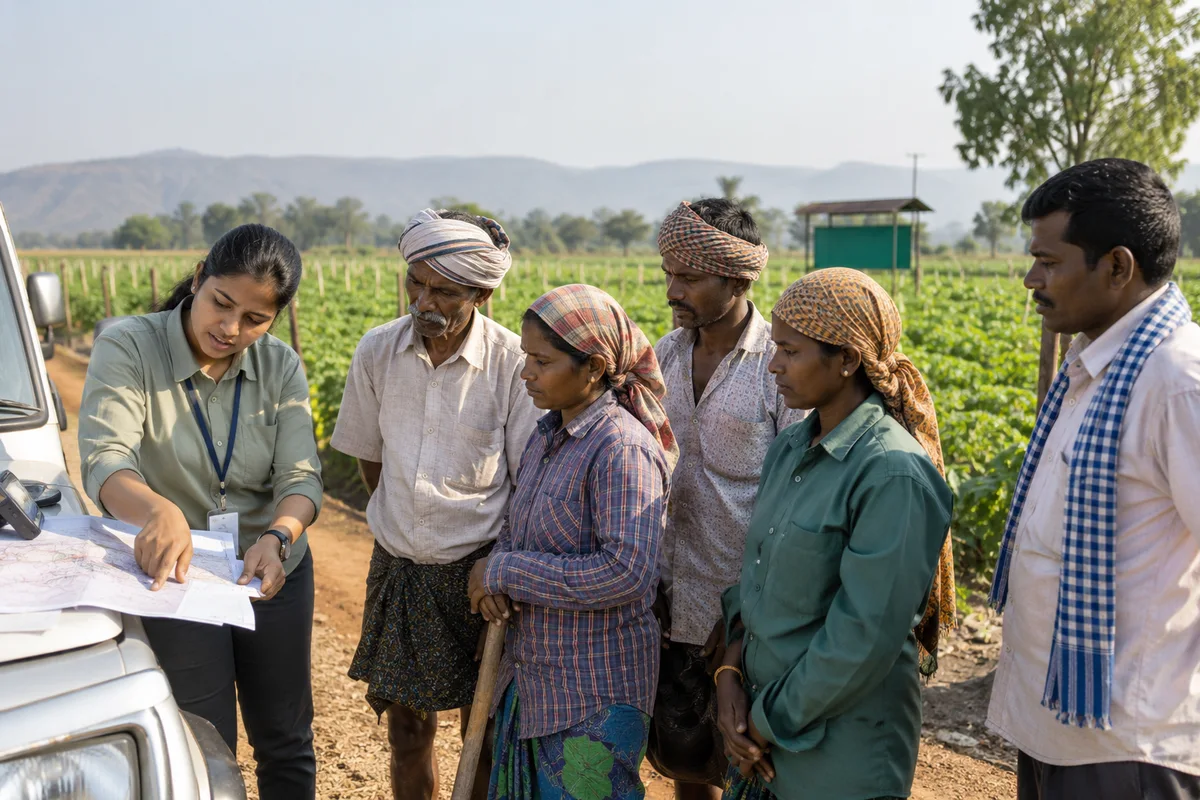
Agricultural recruitment runs through village networks, crew leaders and returning workers. Formal channels reach almost none of the people you need, and the season will not wait.
- Rehire list from last season
- Crew leader networks
- Village-level mobilisation
- Enrolment at the worksite
- Skill allocation to crews
- Rehire list built at last season's close and used first
- Crew leader networks as the primary channel, managed deliberately
- Village-level relationships maintained between seasons
- Skill and task history recorded so allocation is informed
- Wage rates communicated clearly before mobilisation
- Transport and accommodation arrangements stated upfront
- Enrolment capable of handling large batches in a day
- Contractor-supplied labour arranged and recorded distinctly
The rehire list is the recruitment strategy. Businesses that maintain one fill a season in days; those that do not compete for the same workers every year at rising cost.
Wages Across Piece Rate and Day Rate
Paying a seasonal crew accurately, on the promised day.
What this coversHideOpen the full page →
Wages Across Piece Rate and Day Rate
Paying a seasonal crew accurately, on the promised day.
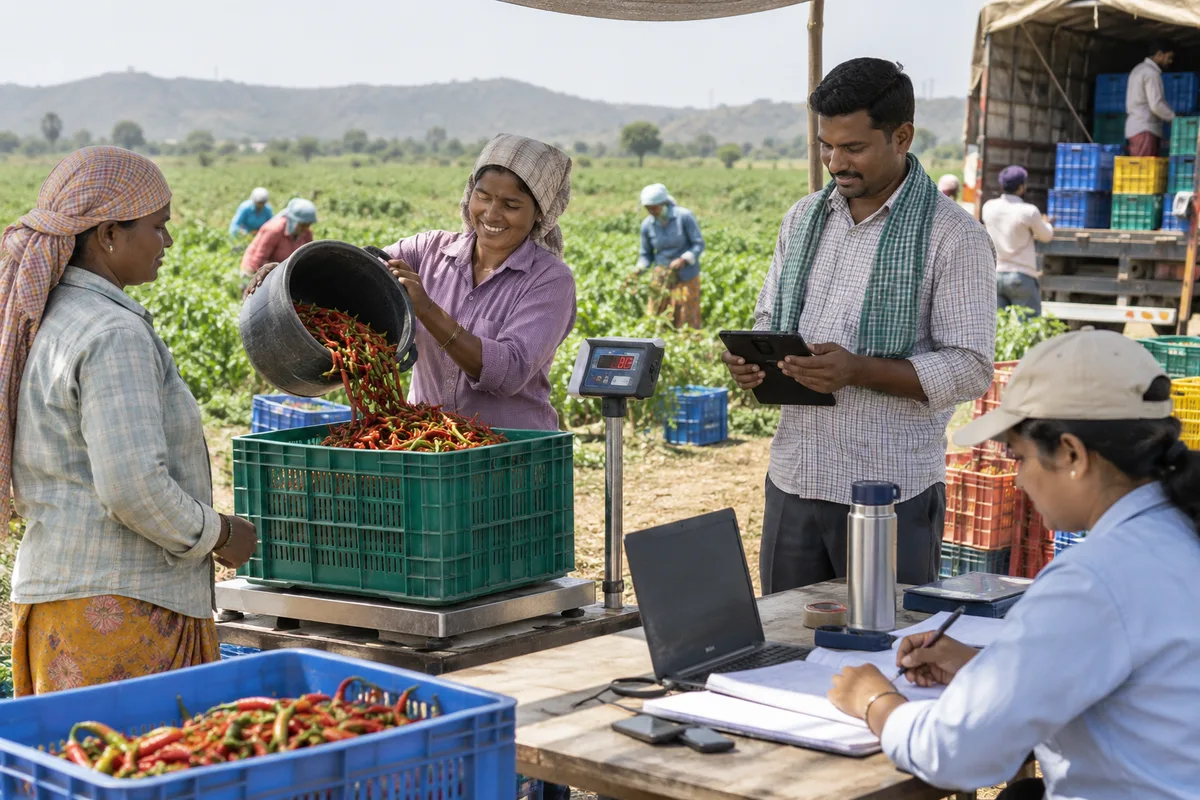
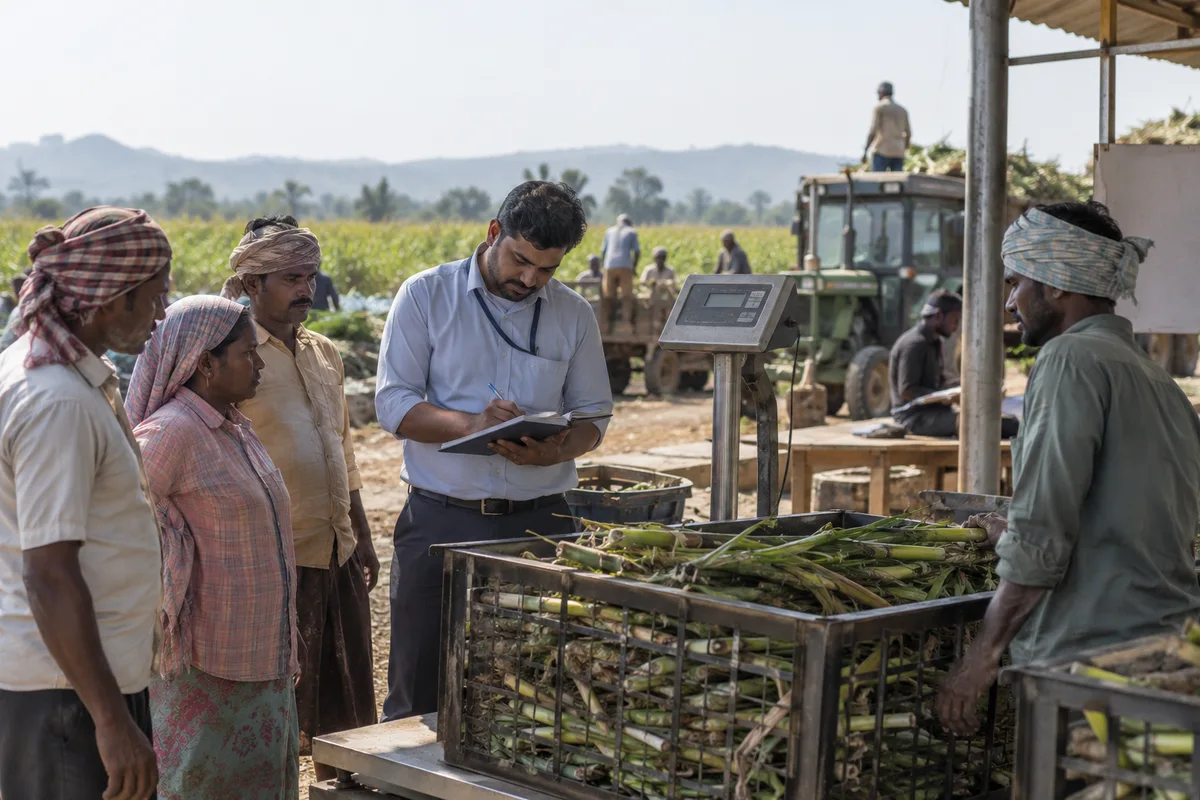
Agricultural wages mix day rates, piece rates and advances, calculated at unit level for a workforce that expects payment on a stated day and will leave if it slips.
- Day rate and piece rate structures defined per task and crop
- Measurement and recording method agreed before the season
- Advance issue and recovery tracked per worker
- Crew-level reconciliation before disbursement
- Payment on the stated day as an operational commitment
- Payment mode - cash, bank, or both - decided per location
- Deduction transparency explained to crews
- Seasonal settlement at release, not at month end
Measurement disputes are the most common wage grievance in agriculture. Agreeing the method before the season, and recording it consistently, removes most of them.
Retention Across Seasons
Getting the same people back, not new ones.
What this coversHideOpen the full page →
Retention Across Seasons
Getting the same people back, not new ones.
Retention in agribusiness is measured season to season rather than month to month. The question is not whether people stayed but whether they returned, and most operations never measure it.
- Return rate by village, crew and skill, measured each season
- Rehire list built before crews disperse
- Crew leader as the main retention variable, tracked accordingly
- Wage payment reliability as the primary lever
- Advance and deduction practices reviewed for fairness
- Worksite conditions compared between units
- Permanent and processing roles as a route out of seasonality
- Reasons for non-return captured through crew leaders
Return rate is the sector's real retention metric. A unit returning seventy per cent of its crew recruits a fraction of what one returning thirty per cent does.
Agriculture and Agribusiness HR maturity assessment
Each area is scored on the same five-level scale, so management can see where HR stands today and what to improve first.
Request an HR audit- 1
No defined process
Activities happen differently each time.
- 2
Informal, person dependent
Processes exist but depend heavily on individual employees.
- 3
Documented
Processes and responsibilities are written down.
- 4
Implemented and measured
Processes are followed and performance is measured.
- 5
Automated and continuously improved
Technology-enabled, measured and improved deliberately.
What you receive
Depending on the engagement. Scope and sequence are agreed after the audit.
- HR Audit
- HR Gap Analysis
- HR Improvement Roadmap
- Organisation Structure
- Manpower Plan
- Job Descriptions
- KRA and KPI Framework
- Competency Framework
- Recruitment Process
- Onboarding Framework
- Attendance and Leave Process
- Performance Management System
- Training Framework
- Employee Engagement Framework
- Retention Plan
- HR Policy Manual
- Employee Handbook
- HR SOPs
- HR Forms
- HR Templates
- HR Calendar
- HR Dashboard
- HR MIS
- HR Automation Roadmap
- HRMS Implementation Framework
Our HR transformation approach
- 1
Assess
Understand the business, its workforce, current processes and HR challenges.
- 2
Identify gaps
Find the missing, weak, inconsistent or person-dependent processes.
- 3
Design
Create the structure, processes, policies, SOPs, dashboards and systems needed.
- 4
Implement
Help HR and department managers actually adopt the new system.
- 5
Automate
Digitise repetitive and approval-based workflows where it is worth doing.
- 6
Measure
Track hiring, attendance, employee cost, performance, training and attrition.
- 7
Improve
Strengthen the people-management system continuously, not once.
Build an HR function that supports the business
A strong HR function here helps the business:
- Plan seasonal workforce ahead of the crop
- Keep field attendance visible
- Man processing units through the season
- Bring seasonal and contract workers into a record
- Train before deployment
- Retain field officers
- Build a returning-worker pool
- See the whole workforce in one view
- Support new regions and units
Build a better HR system for your agribusiness
Whether the pressure is seasonal labour or field-team visibility, we can help build the people system around it.
Looking for a different sector? See all industries.