












Industries
Why automotive employees leave and how to understand why
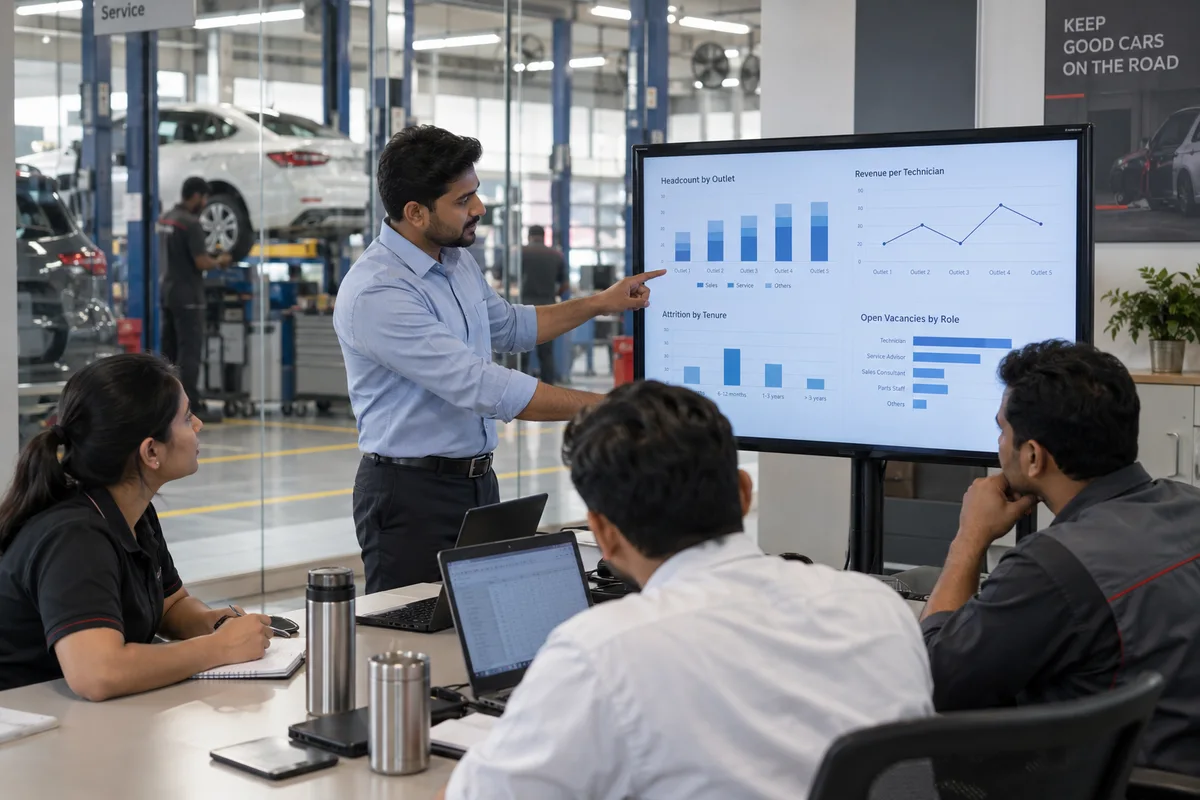
Technicians, service advisors and sales consultants leave for different reasons. How to ask what shaped their decision and act on it across every outlet.
8 min readRead articleBrake component makers produce discs, drums, pads, shoes or calipers that a driver trusts with their life. The people question is who checks what, and whether the checker is free to stop the line.

Not sure what you need? Tell us about your business in six short steps and we will come to the first meeting prepared.
Share your requirementsA brake component maker produces parts such as cast iron discs and drums, friction pads and linings, calipers or brake shoes. A disc or drum plant runs casting or bought-in blanks through turning, drilling, balancing and painting. A pad or lining plant mixes friction material, presses and cures it, then grinds, drills and packs. Because the product is safety critical, inspection and test records matter a great deal and customers expect quick answers when a lot is questioned. Mixing and pressing crews handle fine dust and heat, the grinding area is noisy and dusty, and an inspector who finds a fault must be able to hold a lot without pressure. Vehicle makers and the replacement market both demand steady supply. See also HR for automotive businesses.
These are the places the people side of this kind of business tends to give way. The rest of this page works through them.
HR here has to work for each of these groups, not only the office. The set-up below is written with all of them in mind.
When dispatch is due, an inspector who wants to hold a lot may be pushed to pass it, and the plant has no rule that protects the call.
Friction material dust gets into the air in mixing and finishing, and mask use slips as the shift tires.
A rushed cycle gives a weak pad that fails later, yet crews are measured on daily output.
Only a handful of people can run the dynamometer or material tests, so leave or illness stops release of lots.
Demand rises before festivals and heavy road seasons, so the plant is stretched at some times and slow at others.
Mix recipes, cure times and balancing limits are passed on verbally, so new people learn them unevenly.
Start with the topics that matter most here: Health, Safety and Wellbeing; Performance Management; Organisation Design. Then work through the rest. Each topic is written for automotive, not in general.
Induction, records, incident reporting and follow-through.
Goals, reviews and ratings that hold up in a conversation.
Structure, reporting lines and who is allowed to decide what.
How many people, in which roles, by when — and what they will cost.
Requisition to joining, the same way every time.
A first day that is the same for the fifth joiner as the first.
Records, attendance, leave and the day-to-day HR that must simply work.
Salary structure, payroll inputs and a month that closes on time.
Training planned from need rather than from the calendar.
Named backups for the roles that cannot be vacant.
Communication, recognition and the conditions people actually work in.
Two routes — one for complaints, one for conduct — kept separate.
Policies a manager can apply, and obligations with owners and dates.
Who leaves, when, why — and which of them mattered.
Resignation to relieving letter, in a defined order.
Records that survive people, and approvals that do not queue.
A short monthly pack management actually reads.
An HR function that runs the same way every month.
The pieces a brake component makers business puts in place, in an order that makes each easier. Open any card for the detail.
A one-page rule saying who can hold a lot, who is told, and that no manager can overrule a hold without a written record.
What this coversHideA one-page rule saying who can hold a lot, who is told, and that no manager can overrule a hold without a written record. See role design and job descriptions.
Masks fitted and checked at the start of the shift, vacuum cleaning in place of sweeping, and a regular health review for mixing and grinding crews.
What this coversHideMasks fitted and checked at the start of the shift, vacuum cleaning in place of sweeping, and a regular health review for mixing and grinding crews. See health, safety and wellbeing.
Replace pure output targets with a measure that counts lots passed at test, so slower, correct cycles are not punished.
What this coversHideReplace pure output targets with a measure that counts lots passed at test, so slower, correct cycles are not punished. The performance management work shows how.
Teach a second and third person each key test so release does not depend on one technician, with a skills record for each.
What this coversHideTeach a second and third person each key test so release does not depend on one technician, with a skills record for each.
Agree expected peaks early so overtime, temporary people and leave dates are planned together.
What this coversHideAgree expected peaks early so overtime, temporary people and leave dates are planned together.
Before changing anything, find out what is true today. These checks take an afternoon and tell you which of the topics above to start with.
Share your requirementsConfirm with a qualified professional. What applies to you depends on your business, your state and your arrangements, and it changes. This page describes practice. It does not state a legal position.
The services below fit this kind of business best. Each starts by recording where you stand, and every later report compares against that. We do not promise outcomes.
Clear roles for inspectors, lab staff and supervisors, including who may hold or release a lot.
Dust, noise and heat habits for mixing, pressing and grinding crews.
Measures that reward correct lots, not just output.
Cross-training plans so no test or process depends on one person.
Start with a free conversation, or see the paid HR Diagnostic.
Understand the business, its workforce, current processes and HR challenges.
Find the missing, weak, inconsistent or person-dependent processes.
Create the structure, processes, policies, SOPs, dashboards and systems needed.
Help HR and department managers actually adopt the new system.
Digitise repetitive and approval-based workflows where it is worth doing.
Track hiring, attendance, employee cost, performance, training and attrition.
Strengthen the people-management system continuously, not once.
From the GullyHR blog: one on HR in automotive, and one on each of the topics this page points to.
Technicians, service advisors and sales consultants leave for different reasons. How to ask what shaped their decision and act on it across every outlet.
8 min readRead article
A laminated notice, an annual drill, and an incident register with three entries in two years. What workplace health and safety looks like when it is real.
7 min readRead article
A review can only judge what was agreed beforehand. How to set expectations that are specific, written and revisited, so the review stops being a surprise.
5 min readRead article
A flat structure works until the founder becomes the only route to a decision. How to tell when you have passed that point, and how to redesign without a reorganisation.
8 min readRead articleMore on the GullyHR blog.
Write the authority down, tell dispatch and sales, and back the inspector when a hold is made. Record each hold and its outcome so the pattern is visible.
Provide fitted masks, check their use at shift start, reduce sweeping in favour of vacuum cleaning and arrange regular health checks. Involve the crew in what works.
Output matters, but pair it with a measure for lots that pass. Otherwise crews rush cure cycles, and weak pads show up later at test or in the field.
Teach a second and third person each key test, record who is cleared for what and review it every few months.
Get the sales view early, plan overtime and leave around it, and keep a list of past workers who can return for the busy weeks.
We would ask how an inspector's hold is handled, how many people can run each test, and how dust is controlled in mixing and grinding. A good first piece of work is a written hold authority and a cross-training plan for test staff. Scope is agreed in writing afterwards.
All 8 business types in automotive components · Find another business type
Identify payroll leaks, record gaps and hiring bottlenecks in a free first conversation, and leave knowing what to fix first.
Know what you need? Share your requirements in four short steps.
Want the full picture? See the paid HR Diagnostic.
Prefer a quick message? Chat on WhatsApp