








Industries
Why retail employees leave and how to understand why
Why store staff and managers leave retail jobs, and how to ask about rosters, weekends, targets and incentives in an exit conversation that leads to action.
7 min readRead articleA florist sells stems that wilt and works to a calendar with sharp spikes. The people side means skilled hands, pre-dawn market runs and surviving a few very heavy days.

Make this work for your business. Share your team size, priorities and what you need help with. We’ll use your brief to prepare for the first conversation.
Share your requirementsA florist may run a small shop, a market stall, an online delivery brand or an event decoration studio, and some run a mix. The team is small: floral designers who tie bouquets and dress stages, helpers who strip leaves and condition stems, someone who does the wholesale flower market run before dawn, counter staff, delivery riders and, for events, temporary crews. Trade peaks hard around Valentine's Day, Mother's Day, weddings, Diwali and local festivals, and sags in between. Cut flowers cannot be stored for long, so a late hand or an idle day costs money straight away. See also HR for retail.
These are the places the people side of this kind of business tends to give way. The rest of this page works through them.
Why GullyHR for florists
For florists whose designers, helpers and riders carry a few very heavy dates and a pre-dawn market run. GullyHR writes down who does what, so the year's peaks stop living in one head.
A step-by-step skills ladder moves a helper from conditioning stems to bouquets to stage work. A designer's eye then grows inside the shop instead of walking out with one resignation.
Valentine's Day, Mother's Day and wedding weeks get a plan months ahead, with each person's shift, leave block and cover written down. Nobody learns the rota the night before.
A written rota for the wholesale run covers who buys, who unloads, who checks stems and what time the shop must open. The same tired person stops going every morning.
A simple log marks where stems are lost: market, conditioning bench, counter or van. Habits become visible and coaching gets pointed at the stage where it matters.
Start with any one of these. Scope and fee are agreed in writing after a free first conversation.
We begin with the people who tie bouquets and dress stages, then work outward. Records for the pre-dawn market run, the conditioning bench, counter and phone orders and the delivery van are opened side by side. We speak to the owner, a designer, a helper and a rider separately, and compare the answers. Last year's busiest dates are laid against who actually worked them and who was away. The result is a plain picture of skills, hours and wastage, ranked by cost to the shop.
What you receive
An example, not a client storySuppose a studio loses a stage designer a fortnight before wedding season and finds that nobody else can dress a mandap. The audit would trace which skills sat with one person, who could learn them in time, and what to write down so the next gap is smaller and less of a shock.
How the hr audit works →Processes start where stems lose value fastest. We write the market-run routine, from buying list to unloading and counting, then the conditioning steps, covering stripping, cutting, water, cold space and rotation. Next comes the order path from phone or web order to designer to packing to rider, with a note on who signs off each bouquet. Event work gets its own checklist covering load-out, on-site dressing and strike. Each document is short, kept where the bench team can see it, and tested with the people who do the work before it is final.
What you receive
An example, not a client storyTake a shop where bouquets for a Mother's Day rush are made in whatever order orders arrive, and the oldest stems sit at the back. A written bench routine and hand-off sheet would set the order of work and move older stock to the front without anyone being told twice.
How the hr process design works →Week to week, we would own the rota and watch the dates ahead. That means early-shift cover for the market run, leave requests against the peak calendar, and rider scheduling for delivery days. We hold short check-ins with designers and helpers, record what was said, and flag the people who are stretched before a big date arrives. When an event crew is needed, we plan the briefing and the stand-down afterwards. Monthly, we give the owner a one-page view of hours, absences and wastage notes.
What you receive
An example, not a client storyPicture a shop with three heavy dates in a single month and two designers asking for leave in the same week. We would see it on the tracker early, talk to both, agree cover and brief the part-time helpers before the first date, not on the morning of it, with the owner kept informed.
How the hr management works →The hard roles to fill are the designer with a trained eye, the person trusted with the wholesale market run, and the coordinator who keeps online orders on time. For each, we write a role sheet and a scorecard before advertising. Designers are asked to make a simple bouquet at a bench with the same stems, so everyone is judged on the same task. Market buyers answer questions on stem quality, cost and timing. We run the shortlist, collect references and support the offer conversation. Roles are permanent only.
What you receive
An example, not a client storySay a shop needs a second designer before Valentine's week. We would write the scorecard, set one bench task with the same stems for each candidate, mark them against the same criteria and give the owner a ranked shortlist, so the choice rests on the bouquet and not the first impression.
How the recruitment for permanent roles works →Training starts with the people who lead the bench. The senior designer learns how to teach technique, give feedback and share bouquets fairly across the team. The shop lead practises the early briefing, rota conversations and handling a late or tired colleague. Counter and phone staff work through taking an order accurately, repeating back card messages and dealing with an upset customer. Riders cover packing, carrying and timing. Sessions are short, held well before the peak dates, and followed by a check on the floor to see what stuck.
What you receive
An example, not a client storySuppose new helpers join a fortnight before Mother's Day and the senior designer has never trained anyone. We would run a short coaching session, give a checklist for the first week and agree who checks their conditioning work each day, so the shop is not teaching on the busiest morning of the season.
How the manager and team training works →The handbook is short and plain. It covers early-shift start times and transport, peak-date leave rules, how stem wastage is recorded and discussed, delivery conduct, and how event crews are briefed and sent home. We build the same rules into simple software or sheets: shift records, a leave calendar, a skills record per designer and a wastage log. Where registration, record-keeping or employment duties arise, we list the questions and your own adviser confirms the answers. Each rule is read aloud with staff before it goes live.
What you receive
An example, not a client storyTake a shop where leave around Valentine's Day is agreed by word of mouth and two people feel it was unfair. A written peak-date leave rule, a visible calendar and a record of requests would settle the question next season, before anyone feels passed over and before resentment builds in a small team.
How the policies, handbook and hr software works →Yes. We would write a market-run rota that names who buys, who unloads and who checks stems, then rotate the early starts between trained people. We would also set a clear rule on when the next-day shift begins and how rest is protected. Transport and working-hour points depend on where you operate, so your own adviser confirms those before the rota goes live.
We build a peak-date calendar months ahead, with each person's shift, leave block and backup written down. Part-time helpers and event crews are briefed before the first date, not during it. We also plan a lighter week afterwards so people recover. Your own adviser confirms any rest or overtime rules that apply where you trade.
We cannot stop anyone leaving, but we can reduce the damage. A skills ladder grows second designers, signature styles are photographed and written into a style book, and client preferences live in a shop record rather than a phone. We also review how designers are recognised and paid. Contract terms are confirmed by your adviser.
We recruit permanent staff only, so we do not supply crews for a single weekend. What we do is write the crew briefing, the load-out checklist and the conduct rules, and train your senior designer to lead the team on site. If you hire event helpers yourself, your adviser confirms how they should be engaged.
GullyHR runs talent acquisition for permanent roles in florists. For each role we agree the job description with you, find and screen candidates against it, and support the offer through to joining. Tell us the role and the number of people, and we start there.
We recruit permanent employees. We do not supply contract or temporary staff.
A good designer has an eye that is hard to teach. If they move to another shop or start alone, quality dips.
The market run and stem conditioning begin before sunrise, so travel, safety and tiredness need thought, and people quit over timings.
Orders crowd into a short window. The shop needs extra hands for days, not months.
Stems left out of water, wrong cooler storage and over-buying cost real money, and nobody tracks who handled what.
A late or crushed bouquet is blamed on the shop, yet some riders are engaged informally and thinly briefed.
Start with the topics that matter most here: Learning and Development; HR Strategy and Workforce Planning; Employee Engagement and Experience. Then work through the rest. Each topic is written for retail, not in general.
Training planned from need rather than from the calendar.
How many people, in which roles, by when, and what they will cost.
Communication, recognition and the conditions people actually work in.
Structure, reporting lines and who is allowed to decide what.
Requisition to joining, the same way every time.
A first day that is the same for the fifth joiner as the first.
Records, attendance, leave and the day-to-day HR that must simply work.
Salary structure, payroll inputs and a month that closes on time.
Goals, reviews and ratings that hold up in a conversation.
Named backups for the roles that cannot be vacant.
Two routes, one for complaints, one for conduct, kept separate.
Policies a manager can apply, and obligations with owners and dates.
Induction, records, incident reporting and follow-through.
Who leaves, when, why, and which of them mattered.
Resignation to relieving letter, in a defined order.
Records that survive people, and approvals that do not queue.
A short monthly pack management actually reads.
An HR function that runs the same way every month.
The pieces a florists business puts in place, in an order that makes each easier. Open any card for the detail.
A simple apprenticeship from helper to designer, with set tasks and a review at each step, so skill does not rest on one person.
A simple apprenticeship from helper to designer, with set tasks and a review at each step, so skill does not rest on one person. The learning and development process sets this out.
A calendar of peak days with named extra hands, briefed early and given clear tasks and pay terms.
A calendar of peak days with named extra hands, briefed early and given clear tasks and pay terms.
Agreed start times, rotation of the earliest market slots and a plan for safe travel, so the burden is shared.
Agreed start times, rotation of the earliest market slots and a plan for safe travel, so the burden is shared.
A short daily note of stems discarded and why, so the team learns where the loss happens.
A short daily note of stems discarded and why, so the team learns where the loss happens. The HR reporting and analytics work shows how to read such data.
Short rules on boxing, handover and what to do if an order cannot be delivered, with a named contact.
Short rules on boxing, handover and what to do if an order cannot be delivered, with a named contact.
Confirm with a qualified professional. What applies to you depends on your business, your state and your arrangements, and it changes. This page describes practice. It does not state a legal position.
A route from helper to designer so skill stays in the shop.
A fair way to rotate pre-dawn starts and cover peak dates.
A short routine so a new helper or rider learns cooler storage, handling and timings.
A look at why designers and helpers leave and what a fairer routine could change.
Start with a free conversation, or see the paid HR Diagnostic.
Understand the business, its workforce, current processes and HR challenges.
Find the missing, weak, inconsistent or person-dependent processes.
Create the structure, processes, policies, SOPs, dashboards and systems needed.
Help HR and department managers actually adopt the new system.
Digitise repetitive and approval-based workflows where it is worth doing.
Track hiring, attendance, employee cost, performance, training and attrition.
Strengthen the people-management system continuously, not once.
From the GullyHR blog: one on HR in retail, and one on each of the topics this page points to.
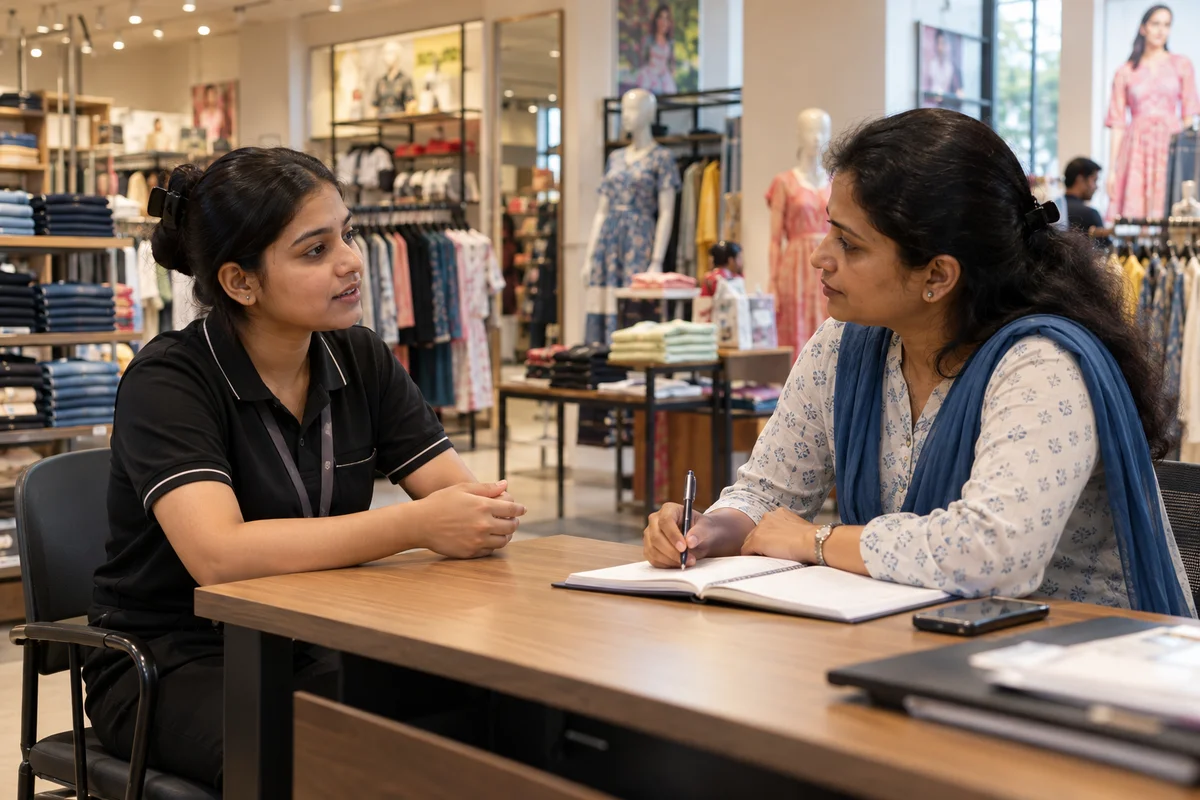
Why store staff and managers leave retail jobs, and how to ask about rosters, weekends, targets and incentives in an exit conversation that leads to action.
7 min readRead article
A founder's guide to hiring freshers and running a first-year programme: campus or open drives, a screening round, a training plan by quarter, mentors and checkpoints.
6 min readRead article
How a D2C founder can decide which digital marketing work to hire for, which to buy from an agency, and which to split, with a worksheet and a five step plan.
6 min readRead article
Eighty per cent responded, the report was thorough, and six months later trust was lower than before. What went wrong between the survey and the silence.
8 min readRead articleMore on the GullyHR blog.
Give room to grow, a fair share of peak-day earnings and credit for their work. Plan for the day they go by training a second person.
Start from last year's orders and each designer's daily capacity, then add conditioning and delivery help. Brief them early and fix pay terms in writing.
That depends on how you engage them and the rules that apply. Confirm it with a qualified professional and keep a clear record either way.
Teach storage and care once, put a short routine on the cooler door and review discards weekly. Fixing the routine works better than blaming people.
Yes, and we would start with plain questions. How many bouquets can each designer finish in a day, and who covers the market run? Which five dates carry your year? A first task might be an early-shift rule plus a peak-date staffing calendar. We agree scope in writing after we talk.
All 128 business types in retail · Find another business type
See all HR topics for retail, or another industry.
Tell us your industry, team size and the issue you want to address. Bring one example of where work gets delayed or ownership is unclear, and the deadline or decision you are working towards.