

















Industries
Why hospital staff leave and how to understand why
Nurses, doctors, technicians and support staff leave hospitals for different reasons. How to run a respectful exit conversation, spot patterns and act.
7 min readRead articleA diagnostic centre is paid for accurate reports, on time, from equipment that needs qualified hands. Here is how to run shifts, skills and sample flow with the right people.
Not sure what you need? Tell us about your business in six short steps and we will come to the first meeting prepared.
Share your requirementsA diagnostic or imaging centre runs laboratories, scanners and X-ray equipment, with collection staff, technicians, radiographers, pathologists and radiologists, and a front desk and reporting team. Patients come at set times, samples flow through the day and reports are expected within promised times. Many centres are part of a network with collection points, with staff in several locations. Radiologists and some pathologists are visiting, paid per report. Equipment needs qualified operators, and calibration, safety and sample handling are part of the work. See also HR for healthcare. What makes HR different here is that output is judged by turnaround and accuracy, so credentials, shift cover and records for each person and machine must be right, and a missing technician stops a line. What makes HR different here is that the product is a report, and every step to it has a person and a clock. A scanner without a qualified operator, a sample that is mislabelled or a reporter who is late each shows up as a delay the patient and the doctor can see. Credentials, rosters by machine and a record of who handled what are the foundations.
These are the places the people side of this kind of business tends to give way. The rest of this page works through them.
HR here has to work for each of these groups, not only the office. The set-up below is written with all of them in mind.
Technician qualifications and radiation safety training have dates, and alerts are rare.
Fees and turnaround depend on informal arrangements.
A missing technician stops a machine, and early and late shifts are the hardest to fill.
Phlebotomists and collection staff work at distant points with little supervision.
Labelling, storage and transport follow personal habit.
Delays are known and the roster behind them is not examined.
The next step beyond senior technician is unclear, so people move to larger labs.
Start with the topics that matter most here: Employee Administration; HR Analytics and Management Reporting; Retention and Attrition Management. Then work through the rest. Each topic is written for healthcare, not in general.
Records, attendance, leave and the day-to-day HR that must simply work.
A short monthly pack management actually reads.
Who leaves, when, why — and which of them mattered.
How many people, in which roles, by when — and what they will cost.
Structure, reporting lines and who is allowed to decide what.
Requisition to joining, the same way every time.
A first day that is the same for the fifth joiner as the first.
Salary structure, payroll inputs and a month that closes on time.
Goals, reviews and ratings that hold up in a conversation.
Training planned from need rather than from the calendar.
Named backups for the roles that cannot be vacant.
Communication, recognition and the conditions people actually work in.
Two routes — one for complaints, one for conduct — kept separate.
Policies a manager can apply, and obligations with owners and dates.
Induction, records, incident reporting and follow-through.
Resignation to relieving letter, in a defined order.
Records that survive people, and approvals that do not queue.
An HR function that runs the same way every month.
The pieces a diagnostic and imaging centres business puts in place, in an order that makes each easier. Open any card for the detail.
Qualification, registration, radiation safety and equipment training with dates and alerts.
What this coversHideQualification, registration, radiation safety and equipment training with dates and alerts. The employee information management holds it.
Fees per report or session, turnaround expectations, notice and cover, with payment from the record.
What this coversHideFees per report or session, turnaround expectations, notice and cover, with payment from the record.
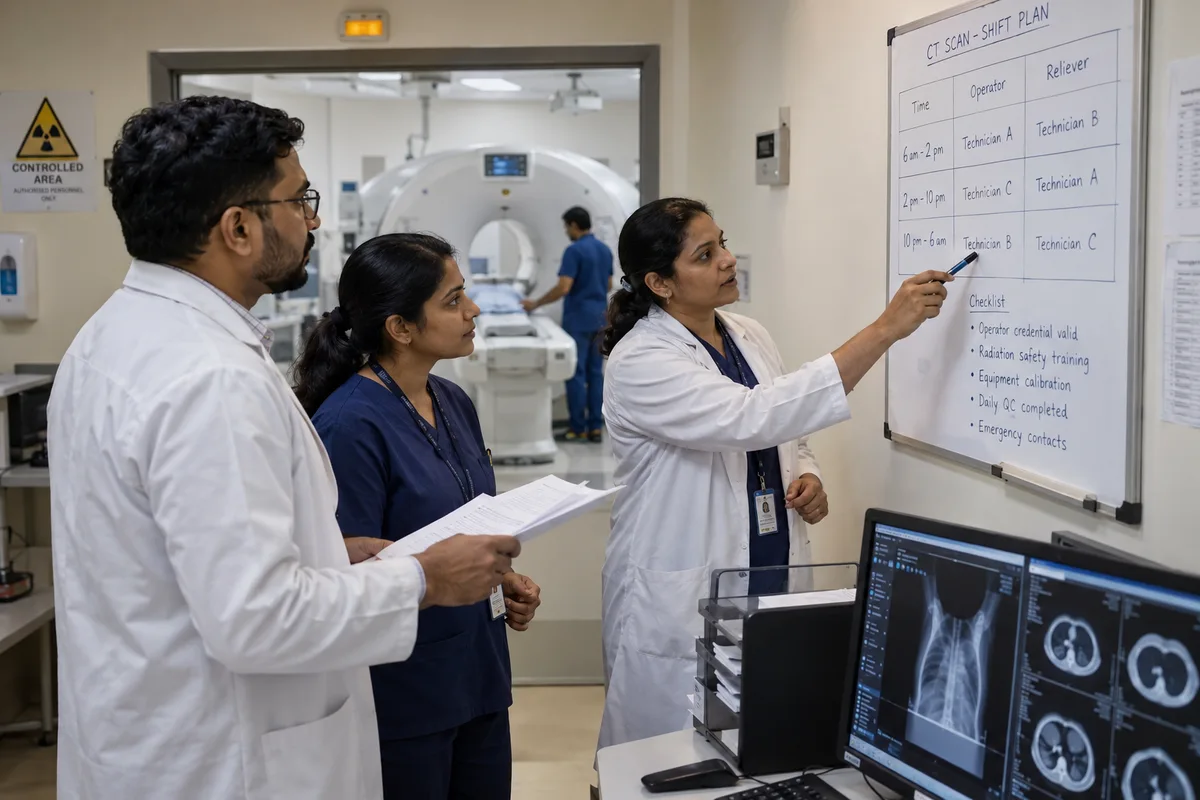
Each machine and each shift with a named operator and reliever.
What this coversHideEach machine and each shift with a named operator and reliever. The attendance and shift process defines it.
Visit schedules, a check on labelling and transport, and a simple record of each round.
What this coversHideVisit schedules, a check on labelling and transport, and a simple record of each round.
Labelling, storage, transport and handover steps with a check and a record.
What this coversHideLabelling, storage, transport and handover steps with a check and a record.
Report delays by shift and staffing level, to see whether people or process are the cause.
What this coversHideReport delays by shift and staffing level, to see whether people or process are the cause. The reporting and analytics work shows how.
Before changing anything, find out what is true today. These checks take an afternoon and tell you which of the topics above to start with.
Share your requirementsConfirm with a qualified professional. What applies to you depends on your business, your state and your arrangements, and it changes. This page describes practice. It does not state a legal position.
The services below fit this kind of business best. Each starts by recording where you stand, and every later report compares against that. We do not promise outcomes.
A credential and training record for every technician and visiting reporter.
A roster by machine and shift with named relievers.
A view of turnaround against staffing, by shift and centre.
A look at why technicians leave for larger labs and what would keep them.
Start with a free conversation, or see the paid HR Diagnostic.
Understand the hospital, its workforce, current processes and HR challenges.
Find the missing, weak, inconsistent or person-dependent processes.
Create the structure, processes, policies, SOPs, dashboards and systems needed.
Help HR and department managers actually adopt the new system.
Digitise repetitive and approval-based workflows where it is worth doing.
Track hiring, attendance, employee cost, performance, training and attrition.
Strengthen the people-management system continuously, not once.
From the GullyHR blog: one on HR in healthcare, and one on each of the topics this page points to.

Nurses, doctors, technicians and support staff leave hospitals for different reasons. How to run a respectful exit conversation, spot patterns and act.
7 min readRead article
Payroll says one joining date, the personal file says another and the manager remembers a third. How to establish a single trustworthy employee record and keep it that way.
7 min readRead article
Six numbers, one page, same format each month. What they are, how to define them so they mean the same thing twice, and what each one tells you.
8 min readRead article
How to spot an unmanageable workload before it becomes an exit or an error, what to look at, how to talk about it and what to change, without guessing.
5 min readRead articleMore on the GullyHR blog.
Qualification, registration, radiation safety and equipment training, with dates and alerts. Which apply depends on your equipment and the rules, so confirm them with a qualified professional.
With a written arrangement on fees, turnaround, notice and cover, and a record of reports and payment. Informal arrangements cause delays and disputes.
A named operator and reliever for each machine and shift, planned in advance. A missing technician stops a line.
A visit schedule, a daily record of rounds and checks on labelling and transport. Distance without a routine leads to drift.
Compare delays with staffing by shift and by step, to see whether people, process or equipment is the cause.
Show a path beyond senior technician, pay fairly, and invest in training. Larger labs attract those who see no step.
We would go through who holds which technician qualification and safety-training date, how your visiting reporters are engaged and paid, and which machine has no named operator on late shifts. A practical first step is a credentials record and a written reporter arrangement. Once we have talked, the scope and fee are put in writing for you to agree.
Look at the booking pattern by hour and day, roster operators and collection staff to it and keep named relievers. Peaks that are staffed on the day produce queues and errors.
Who collected, from whom, at what time, how samples were labelled and when they were handed over. A simple record makes it possible to trace a problem.
All 29 business types in healthcare · Find another business type
Identify payroll leaks, record gaps and hiring bottlenecks in a free first conversation, and leave knowing what to fix first.
Know what you need? Share your requirements in four short steps.
Want the full picture? See the paid HR Diagnostic.
Prefer a quick message? Chat on WhatsApp