
Industries
Why hospitality employees leave and how to understand why
Hotel, restaurant and banquet staff leave for reasons that vary by department and season. How to ask what sits behind the first answer and act on it.
7 min readRead articleA campsite or glamping property sells a night outdoors, run by a small crew far from town. This is about remote teams, seasonal swings and safety around fire, water and open country.
Not sure what you need? Tell us about your business in six short steps and we will come to the first meeting prepared.
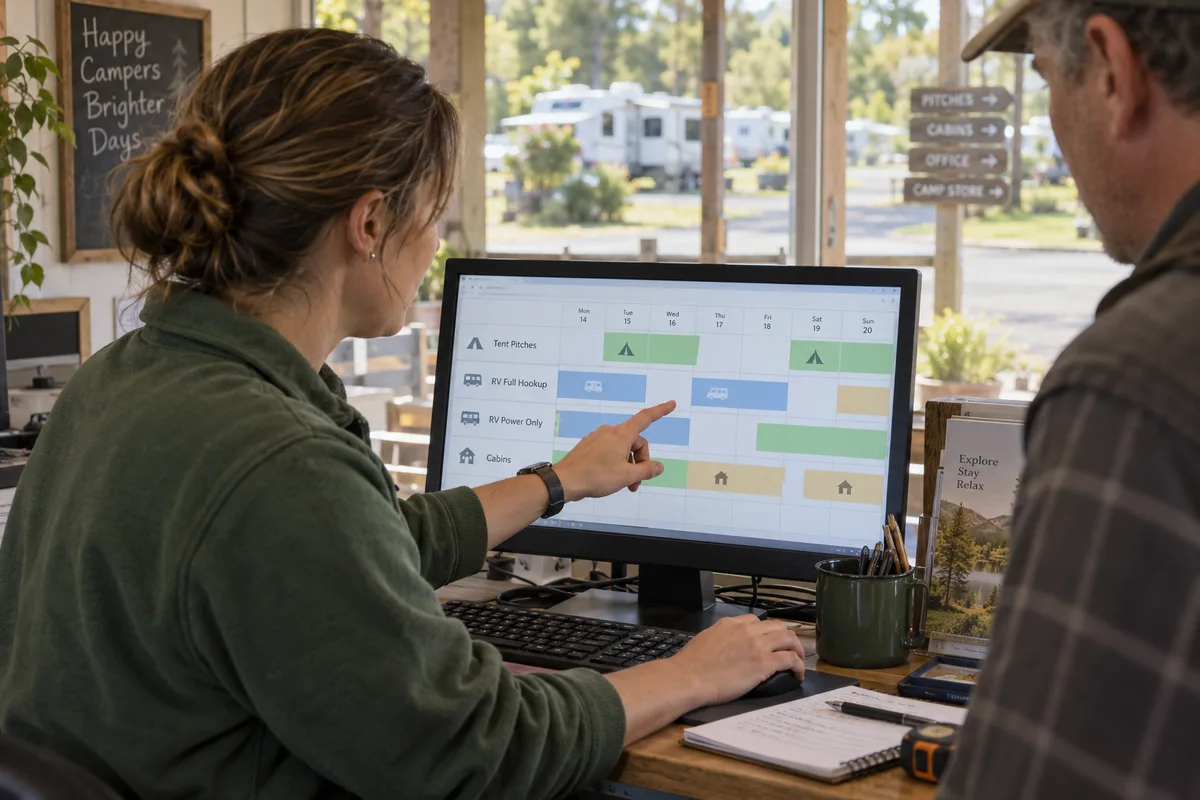
Share your requirementsA campground, caravan park or glamping site rents tents, cabins, pods or pitches in a setting that can be remote: a hillside, lakeshore, forest edge or stretch of desert. Guests come for weekends, festivals and holidays and expect clean bedding, a hot meal, a bonfire evening and someone who knows the trails. The crew has a site manager, reception and booking staff, tent attendants, a cook and kitchen helpers, activity guides, drivers, caretakers and night watch. Most come from nearby villages, while managers and chefs may arrive from elsewhere and live on the property. Bookings follow school holidays and long weekends, with winter or monsoon peaks by region, and some nights have few guests. Staff work long days outdoors around fire, water and wildlife, and may be the only help a guest has in an emergency.
These are the places the people side of this kind of business tends to give way. The rest of this page works through them.
HR here has to work for each of these groups, not only the office. The set-up below is written with all of them in mind.
GullyHR runs talent acquisition for permanent roles in campgrounds, RV parks and glamping sites. For each role we agree the job description with you, find and screen candidates against it, and support the offer through to joining. Tell us the role and the number of people, and we start there.
We recruit permanent employees. We do not supply contract or temporary staff.
Every business interviews, but few have a written process that works the same way for every role and every interviewer. GullyHR designs yours, from the role brief to the offer, trains your managers to run it, and can run it for you on the roles you hand us.
We agree what the role must deliver, the must-have and nice-to-have skills, and how each will be scored.
Screening call, assessment, interview rounds and decision points, sized to the role and the number of people you hire.
Structured questions for each role family and a rating guide, so two interviewers judge the same answer the same way.
A short briefing for your managers on what to ask, what to avoid and how to give a clear yes or no.
Who approves, how the offer is made, and how candidates are kept informed from first call to joining.
Quarters, meals and free time are all on site, so a quarrel at the kitchen follows people to their bunks and rest never fully begins.
A sold-out weekend needs twice the crew for three days, then almost none, and casual helpers get hired and paid in a scramble.
Trek leaders, bonfire hosts and water-activity staff decide on safety in the open with little formal teaching or record of what they were shown.
They differ in language, pay expectations and habits, and no one has agreed a common way of working at the site.
One sick caretaker or an absent driver cannot be replaced from the next shift, so the manager covers and burns out.
Start with the topics that matter most here: HR Strategy and Workforce Planning; Health, Safety and Wellbeing; Retention and Attrition Management. Then work through the rest. Each topic is written for hospitality, not in general.
How many people, in which roles, by when, and what they will cost.
Induction, records, incident reporting and follow-through.
Who leaves, when, why, and which of them mattered.
Structure, reporting lines and who is allowed to decide what.
Requisition to joining, the same way every time.
A first day that is the same for the fifth joiner as the first.
Records, attendance, leave and the day-to-day HR that must simply work.
Salary structure, payroll inputs and a month that closes on time.
Goals, reviews and ratings that hold up in a conversation.
Training planned from need rather than from the calendar.
Named backups for the roles that cannot be vacant.
Communication, recognition and the conditions people actually work in.
Two routes, one for complaints, one for conduct, kept separate.
Policies a manager can apply, and obligations with owners and dates.
Resignation to relieving letter, in a defined order.
Records that survive people, and approvals that do not queue.
A short monthly pack management actually reads.
An HR function that runs the same way every month.
The pieces a campgrounds, RV parks and glamping sites business puts in place, in an order that makes each easier. Open any card for the detail.
A simple link from forecast occupancy to the housekeeping, kitchen and guide numbers needed, plus a list of village helpers to call early.
A simple link from forecast occupancy to the housekeeping, kitchen and guide numbers needed, plus a list of village helpers to call early. The HR strategy and workforce planning work shows how.
Who sleeps where, shared-space conduct, visitors, meals, curfew and what happens at exit, agreed in writing at joining.
Who sleeps where, shared-space conduct, visitors, meals, curfew and what happens at exit, agreed in writing at joining. The HR policies work covers the format.
A practical briefing per activity, an emergency drill the whole crew has rehearsed and a note against each name.
A practical briefing per activity, an emergency drill the whole crew has rehearsed and a note against each name. Ask a qualified professional which certifications apply. The health and safety work holds the routine.
At least two people able to drive, cook the standard menu, run reception and use the first-aid kit, so one absence does not halt the property.
At least two people able to drive, cook the standard menu, run reception and use the first-aid kit, so one absence does not halt the property.
Clear duty hours, weekly off, allowances and a way for pay to reach staff far from a bank.
Clear duty hours, weekly off, allowances and a way for pay to reach staff far from a bank. The attendance and leave process defines the record.
Before changing anything, find out what is true today. Work through the checks using a recent operating period. The time needed depends on the records you hold; note missing evidence and use the findings to choose a priority.
Share your requirementsConfirm with a qualified professional. What applies to you depends on your business, your state and your arrangements, and it changes. This page describes practice. It does not state a legal position.
The services below fit this kind of business best. Each starts by recording where you stand, and every later report compares against that. We do not promise outcomes.
A crew plan tied to booking seasons, so you hire ahead instead of scrambling every weekend.
Drills and training notes for guides and caretakers who work near fire, water and rough ground.
Written rules for staff quarters, conduct and duty hours that everyone on site can follow.
Why good guides and cooks leave remote properties and what would bring them back next season.
Start with a free conversation, or see the paid HR Diagnostic.
Understand the business, its workforce, current processes and HR challenges.
Find the missing, weak, inconsistent or person-dependent processes.
Create the structure, processes, policies, SOPs, dashboards and systems needed.
Help HR and department managers actually adopt the new system.
Digitise repetitive and approval-based workflows where it is worth doing.
Track hiring, attendance, employee cost, performance, training and attrition.
Strengthen the people-management system continuously, not once.
From the GullyHR blog: one on HR in hospitality, and one on each of the topics this page points to.
Hotel, restaurant and banquet staff leave for reasons that vary by department and season. How to ask what sits behind the first answer and act on it.
7 min readRead article
How a D2C founder can decide which digital marketing work to hire for, which to buy from an agency, and which to split, with a worksheet and a five step plan.
6 min readRead article
A shift, weekly and monthly safety routine for rubber plants that names who checks platen guards, mill trip bars, autoclave doors, burst-test cages and slings, and who acts on near misses.
7 min readRead article
What really keeps mobile app and web developers in a small firm: stay conversations, growth paths, fair release rules and a risk sheet an owner can use this month.
6 min readRead articleMore on the GullyHR blog.
Start with the nearby villages and people who worked a past season. Keep a contact list with a short note on each person, and ring them before the booking season opens.
Who shares rooms, meals, quiet hours, visitors, care of property, rest-day expectations and what a person does on leaving. Write it down and explain it in the language people speak.
Give each activity a written briefing, practise the emergency plan and record who was trained in what. Ask a qualified professional which certifications and permissions apply.
Agree common service standards and who decides what. Joint briefings before a peak weekend help more than separate instructions.
Cross-train key jobs, keep a call list of nearby helpers and decide beforehand which services you will trim. A plan made before the weekend beats improvising during it.
Yes, and we would keep it practical. We would ask who lives on site and under what rules, which jobs rest on one person and whether guides are trained and recorded. A booking-based crew plan with a one-page quarters sheet could start things. Scope is written down after we talk.
All 143 business types in hospitality · Find another business type
Tell us your industry, team size and the issue you want to address. Bring one example of where work gets delayed or ownership is unclear, and the deadline or decision you are working towards.