

















Industries
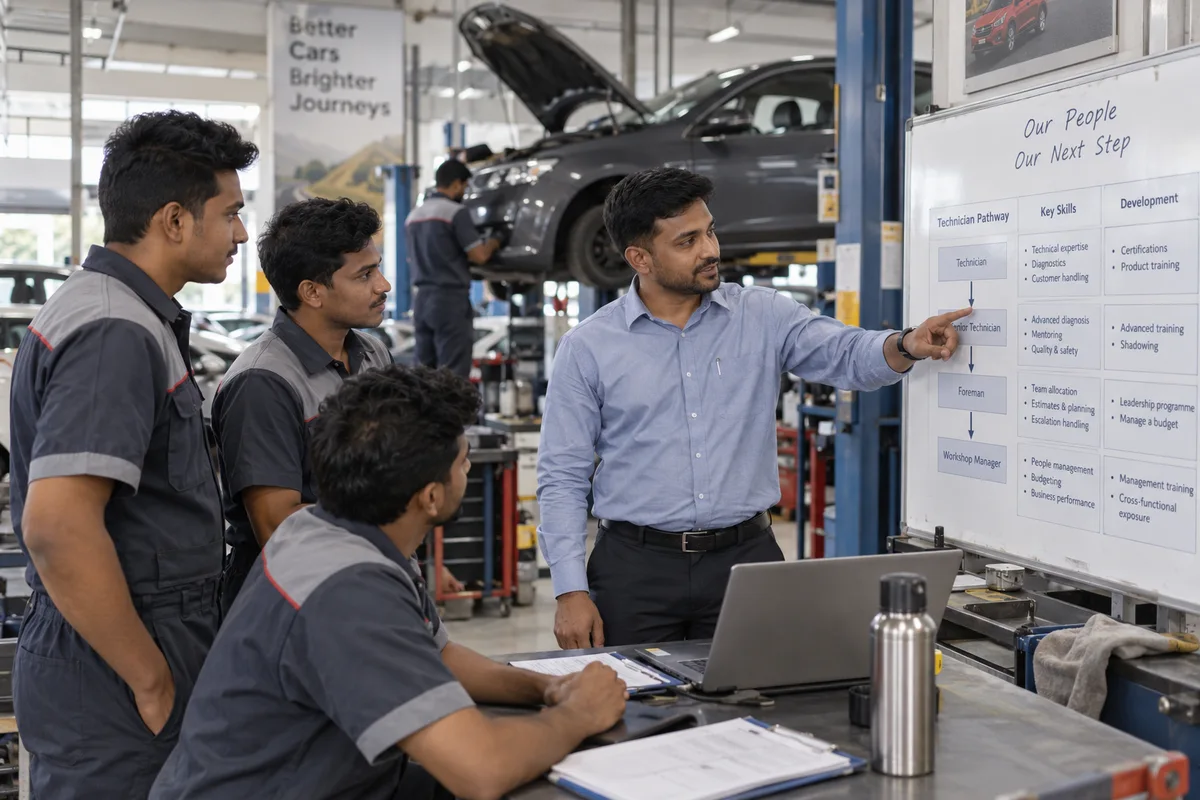
Why automotive employees leave and how to understand why
Technicians, service advisors and sales consultants leave for different reasons. How to ask what shaped their decision and act on it across every outlet.
7 min readRead articleA boat sale takes months, a buyer deals with one salesperson, and demand rises and falls with boat shows and the monsoon. The team that sells and services the boats is small, so each person counts.
Make this work for your business. Share your team size, priorities and what you need help with. We’ll use your brief to prepare for the first conversation.
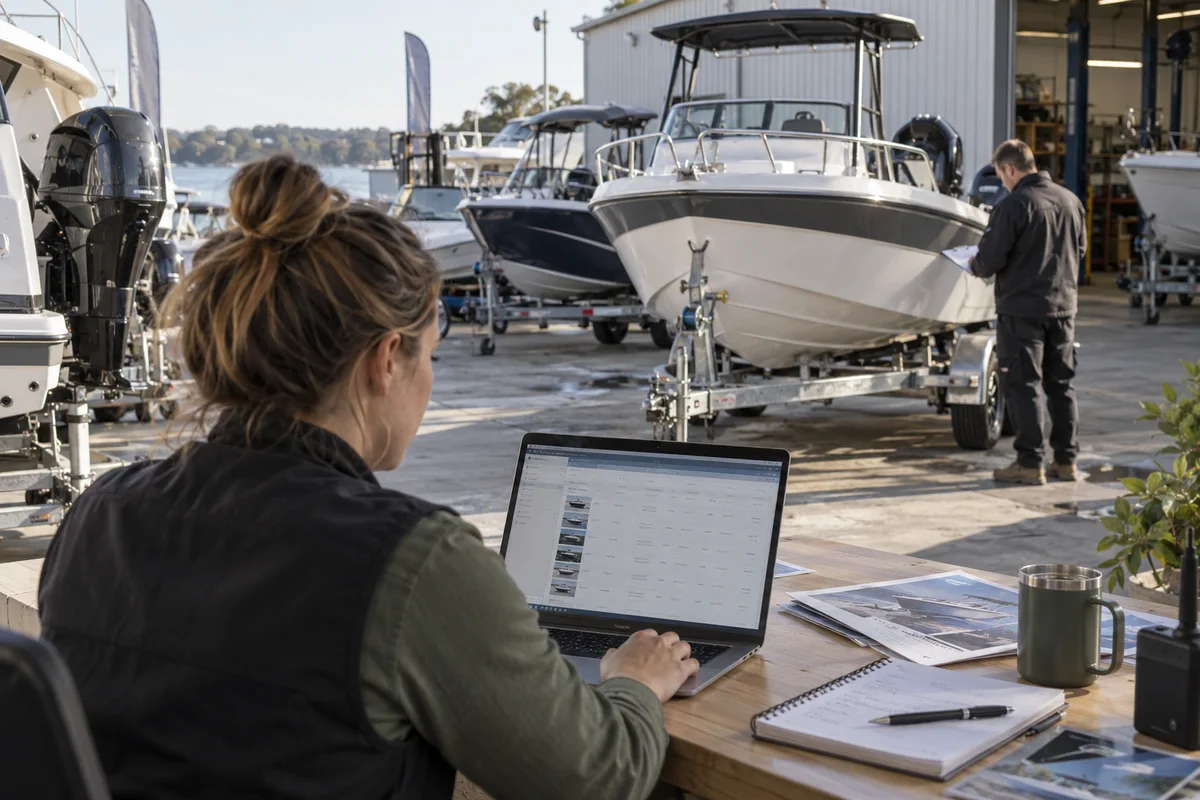
Share your requirementsA boat dealer sells leisure boats, fishing craft, speedboats or yachts, along with outboard engines, trailers and accessories, and services what it sells. The team is small: a few sales executives who spend weeks with each buyer, marine technicians for engines and electricals, fibreglass and finishing hands, a yard or marina handler and an office person for registration papers and accounts. Buyers are few and each sale is large. Orders cluster around boat shows, the monsoon break and holiday seasons, so the year has clear busy and quiet stretches. A technician who understands outboards and hull repair is not easily replaced, and in coastal towns or lake cities the pool is thin. See also HR for automotive businesses.
These are the places the people side of this kind of business tends to give way. The rest of this page works through them.
Why GullyHR for boat dealers
For boat dealers whose few sales executives and marine technicians carry long sales and a seasonal year. What changes: skills are shared across the team, buyer notes stay in the business and leave falls in quiet months.
A skills map and a short rota of who can cover which job, from engine service to launch day. It removes the weeks when one absence stops a delivery.
A simple record of each buyer's conversations, preferences and next step that anyone on the team can read. It stops the relationship leaving with one executive.
A yearly calendar that marks boat shows, the monsoon break and holiday peaks, with leave and courses set in the gaps. It protects the busy weeks and rests the team.
A checklist for launch, towing and sea trial, covering what is checked and who signs. It replaces a delivery that runs on remembered steps with a record.
Start with any one of these. Scope and fee are agreed in writing after a free first conversation.
The audit begins with a list of the jobs that only one person on your team can do, from outboard service to registration paperwork, and what happens when that person is away. We look at where notes on current buyers are kept and whether anyone else can read them. A calendar of boat shows, the monsoon break and holiday seasons is set beside leave and training taken. Launch, towing and sea-trial practice is observed, and we ask the yard handler what he does when no checklist exists.
What you receive
An example, not a client storyPicture a dealer whose only marine technician falls ill the week before a boat show delivery. The audit would have shown the gap, named a second person for outboard service and set a rule that nobody is the only one who knows a step. The delivery then goes ahead, and the owner is not forced to cancel a handover in front of a buyer.
How the hr audit works →The buyer record comes first, because a sale takes months and one executive holds the relationship: what was discussed, what was promised and what happens next. Second is the launch and sea-trial checklist, covering towing, trailer, engine start, fuel, safety gear and the person who signs. Third is the delivery handover, which sets what the buyer is taught about the engine and the boat before leaving. Fourth is the cross-cover rota, naming who covers engine service, hull repair, yard handling and paperwork when someone is away.
What you receive
An example, not a client storySay a buyer calls after the executive who handled his purchase has left, and nobody knows what was promised on the trailer. A buyer record kept in the business would give the next person the history, and the call would continue without an apology. The buyer feels known by the business, not only by a salesman who has left, and the sale is still safe.
How the hr process design works →Each week we review the buyer records, noting open conversations with no next step, and remind executives of follow-ups. The cross-cover rota is checked against leave, and the owner is told if a key job has no cover. Before boat shows and holiday peaks we plan staffing; in the quiet stretches we place leave and training courses. New starters get a short induction on launch and sea-trial checks. We also hold a monthly talk with each person, since in a small team a worry grows quietly.
What you receive
An example, not a client storySuppose the yard handler asks for a week off just as a boat show approaches. With the calendar and cover rota in front of us, we would suggest dates in the quiet stretch after the show, and the owner could say yes to the leave without risking a delivery. The handler rests.
How the hr management works →Marine skills are rare locally, so the search reaches beyond the coastal town or lake city, with a brief that states engine makes, hull work and any need for relocation support. Technicians take a practical task on an outboard fault; sales executives role-play a long conversation with a first-time buyer. Office candidates work through a registration paperwork exercise. Everyone is scored on one sheet with the same questions. Permanent roles only, and certificates are checked against the originals shown, since we do not run background verification.
What you receive
An example, not a client storyPicture a dealer who loses the only marine technician in a small lake town. We would widen the search to other coastal and lake cities, set the same practical task for each shortlisted person and talk through relocation with the owner. The dealer then has a technician chosen on a practical task, and a boat show delivery is not left waiting on a single borrowed mechanic.
How the recruitment for permanent roles works →Sales executives learn to explain running cost, maintenance and registration to a first-time buyer without overselling, and to write a buyer note the next person can use. Yard handlers and technicians practise the launch and towing checklist and what to do when something looks wrong. Fibreglass and hull repair hands share methods with outboard technicians so the team understands each other's work. The owner takes a session on delegating, since in a small team he is the one holding everything. All sessions are held in the quiet months.
What you receive
An example, not a client storySuppose a first-time buyer asks how frequently the outboard needs service and what it costs to keep a boat. An executive who has practised the answer would explain honestly, note the question and set a follow-up service reminder for the buyer. The buyer leaves with an honest picture, and the dealer gains a relationship that outlasts the sale.
How the manager and team training works →The handbook covers hours across busy and quiet months, leave rules around shows and holiday peaks, conduct with buyers and how concerns are raised. A buyer record rule says where notes are kept and who may read them. The launch safety rule covers towing, launching and sea trial. Your adviser confirms the marine-licence, workshop-safety and employment duties. A short section on seasonal hours and leave is written with the owner so the team knows what a quiet month means. In the software we hold the calendar, the cover rota and training dates, so a small team sees gaps early.
What you receive
An example, not a client storyPicture an executive who keeps buyer notes on his own phone and then leaves. A buyer record rule, read on joining, would make the notes the business's own and give the owner a clear way to ask for them back. The next executive picks up the buyer where the last one stopped, and nobody has to guess what was said.
How the policies, handbook and hr software works →We build a skills map and a cross-cover rota that names a second person for each key job, from outboard service to registration paperwork, and we plan short training so the cover is real. We also place leave in the quiet months. The aim is that no single absence stops a delivery in a small team, and that the owner is not the only cover for every job.
We introduce a simple buyer record that every executive fills in after each conversation: what was said, what was promised and the next step. A second person reads it weekly. Your adviser confirms how records held about buyers must be treated, and we write the rule to match that advice. This also means a leaver cannot take the only copy.
We would search beyond the local pool, including other coastal and lake cities, with a brief that names engine makes, hull work and any relocation support. Each candidate takes the same practical task and questions, and scores go on one sheet. We recruit permanent roles only, and certificates are checked against the originals shown to you.
We observe a real launch and delivery, then write a short checklist with the yard handler and technician, so it reflects what they actually do and where they take risks. The checklist has a signature line, so everyone knows who checked what. Your adviser confirms the marine and workshop duties that apply, and we match the checklist to that advice.
GullyHR runs talent acquisition for permanent roles in boat dealers. For each role we agree the job description with you, find and screen candidates against it, and support the offer through to joining. Tell us the role and the number of people, and we start there.
We recruit permanent employees. We do not supply contract or temporary staff.
A technician who knows both outboard and inboard engines is hard to find nearby, and the post can stay empty for months.
A buyer who has spent weeks with one salesperson may walk if that person leaves mid-negotiation.
The team is stretched before a boat show or the holiday weeks and idle through a rough-sea month.
Each person covers several roles, so one absence stops an engine service or a viewing.
Slipway launches, trailer towing and sea trials can injure people, and the routines are mostly learnt by watching.
Registration, transport and the handover briefing each depend on one person remembering to do them.
Start with the topics that matter most here: Recruitment and Talent Acquisition; Health, Safety and Wellbeing; HR Strategy and Workforce Planning. Then work through the rest. Each topic is written for automotive, not in general.
Requisition to joining, the same way every time.
Induction, records, incident reporting and follow-through.
How many people, in which roles, by when, and what they will cost.
Structure, reporting lines and who is allowed to decide what.
A first day that is the same for the fifth joiner as the first.
Records, attendance, leave and the day-to-day HR that must simply work.
Salary structure, payroll inputs and a month that closes on time.
Goals, reviews and ratings that hold up in a conversation.
Training planned from need rather than from the calendar.
Named backups for the roles that cannot be vacant.
Communication, recognition and the conditions people actually work in.
Two routes, one for complaints, one for conduct, kept separate.
Policies a manager can apply, and obligations with owners and dates.
Who leaves, when, why, and which of them mattered.
Resignation to relieving letter, in a defined order.
Records that survive people, and approvals that do not queue.
A short monthly pack management actually reads.
An HR function that runs the same way every month.
The pieces a boat dealers business puts in place, in an order that makes each easier. Open any card for the detail.
Name a second person for each key task, such as an engine service or a viewing, and rotate them in so cover is real.
Name a second person for each key task, such as an engine service or a viewing, and rotate them in so cover is real. The competency and talent management work helps map it.
Look for marine-trained technicians through diesel and marine institutes and the wider trade, and plan their relocation.
Look for marine-trained technicians through diesel and marine institutes and the wider trade, and plan their relocation. The recruitment process can be built for a rare skill.
A shared log of every enquiry, viewing and call, so a sale survives a change of executive.
A shared log of every enquiry, viewing and call, so a sale survives a change of executive.
A calendar of boat shows, peak weeks and slack weeks, with leave, courses and refit work set in the slack ones.
A calendar of boat shows, peak weeks and slack weeks, with leave, courses and refit work set in the slack ones. See the attendance and leave process.
Who inspects what before a boat goes in the water, who is on board and what is done if something fails.
Who inspects what before a boat goes in the water, who is on board and what is done if something fails. The health, safety and wellbeing work covers it.
Confirm with a qualified professional. What applies to you depends on your business, your state and your arrangements, and it changes. This page describes practice. It does not state a legal position.
A skills map for a very small team, so cover and training are planned.
A way to find and assess rare marine skills beyond the local pool.
Written routines for launching, towing and sea trials that the whole team follows.
Part-time HR support sized for a team of a dozen or fewer people.
Start with a free conversation, or see the paid HR Diagnostic.
Understand the business, its workforce, current processes and HR challenges.
Find the missing, weak, inconsistent or person-dependent processes.
Create the structure, processes, policies, SOPs, dashboards and systems needed.
Help HR and department managers actually adopt the new system.
Digitise repetitive and approval-based workflows where it is worth doing.
Track hiring, attendance, employee cost, performance, training and attrition.
Strengthen the people-management system continuously, not once.
From the GullyHR blog: one on HR in automotive, and one on each of the topics this page points to.

Technicians, service advisors and sales consultants leave for different reasons. How to ask what shaped their decision and act on it across every outlet.
7 min readRead article
How a D2C founder can test a performance marketing hire on real work, ignore weak signals such as dashboard screenshots, and run a fair process.
7 min readRead article
A shift, weekly and monthly safety routine for rubber plants that names who checks platen guards, mill trip bars, autoclave doors, burst-test cages and slings, and who acts on near misses.
7 min readRead article
How a D2C founder can decide which digital marketing work to hire for, which to buy from an agency, and which to split, with a worksheet and a five step plan.
6 min readRead articleMore on the GullyHR blog.
Look at marine and diesel engineering institutes, boatyards and engine service firms, and be ready to pay for relocation. Hire for a base of skill and train for your product range.
Keep every buyer conversation in a shared log and bring a second person into each serious buyer's visits early. The relationship then belongs to the dealership.
Place leave, training, stock work and refits in quiet months. Plan pay so people are not penalised for a season they cannot control.
A few: a written offer, a plain pay and leave policy, a safety routine and a place for records. Keep each to a page.
Product knowledge, listening, patience through a long decision and a good boat handover. Practical training in communication and selling skills is useful.
With a tiny team in mind, we would ask who can cover which task, where marine skills come from and where buyer notes are kept. Slack-month planning and launch routines would come up too. A realistic opening piece is cross-training and a shared buyer log. We would not load five people with heavy process. Scope goes into writing after we have spoken.
All 48 business types in automotive · Find another business type
Tell us your industry, team size and the issue you want to address. Bring one example of where work gets delayed or ownership is unclear, and the deadline or decision you are working towards.