













Industries
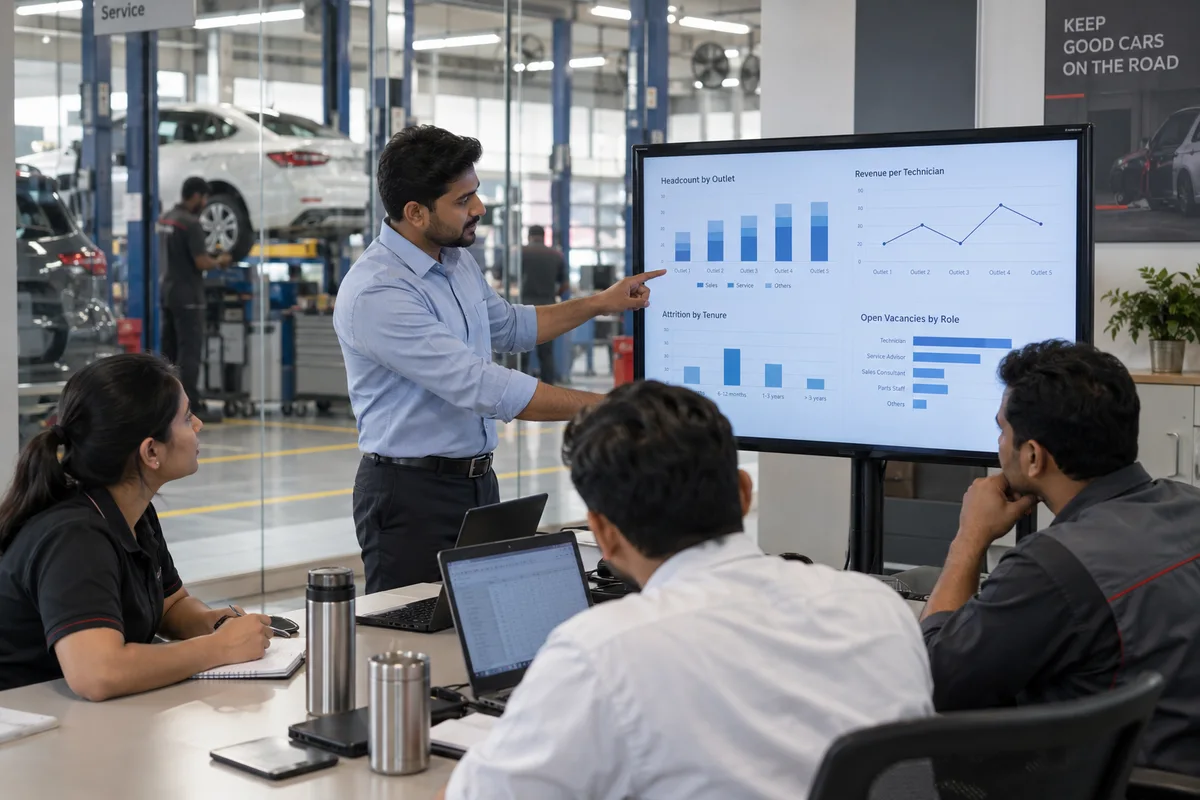
Why automotive employees leave and how to understand why
Technicians, service advisors and sales consultants leave for different reasons. How to ask what shaped their decision and act on it across every outlet.
8 min readRead articleAn auto component plant ships against a customer's call-off schedule, part after part, to drawing. The people side is about who is cleared to run which station, on every shift.
Not sure what you need? Tell us about your business in six short steps and we will come to the first meeting prepared.
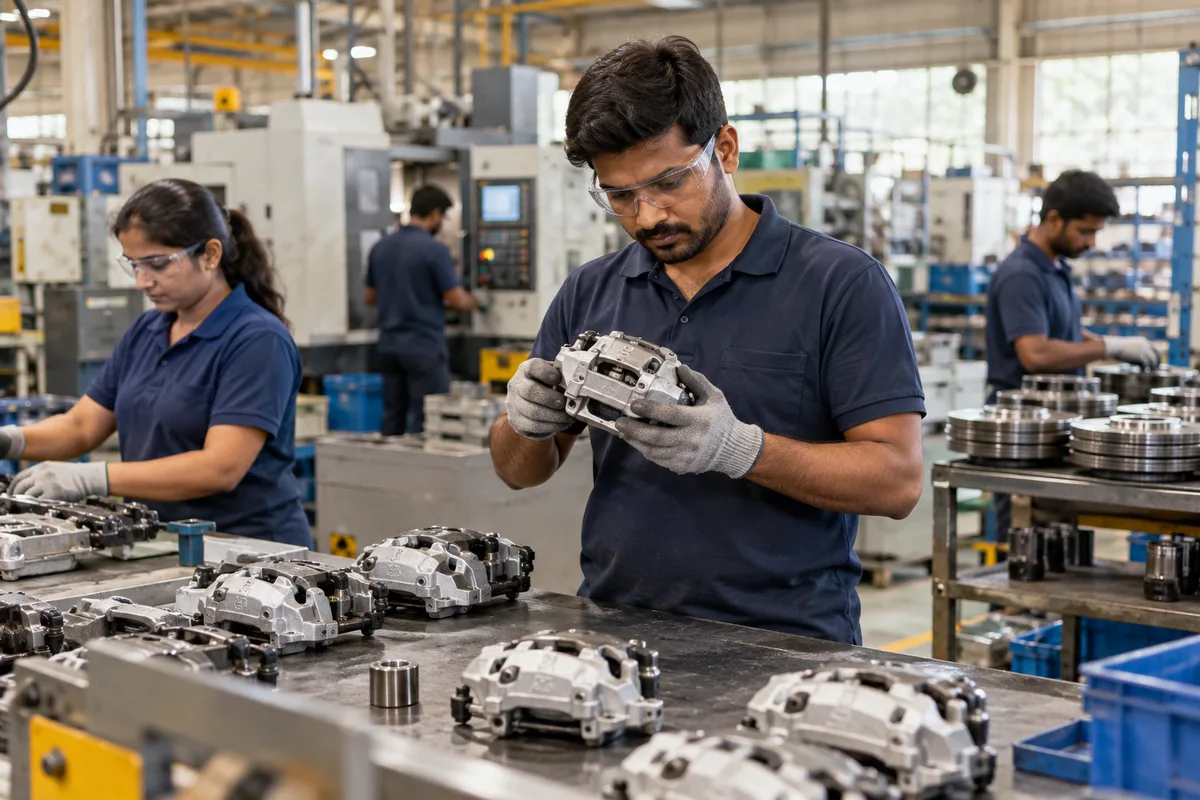
Share your requirementsAn auto component maker or assembly plant supplies vehicle makers who release call-off schedules and expect every part to match the drawing. Work runs in two or three shifts: press operators, weld-shop hands, assemblers, final inspectors, maintenance fitters and line supervisors, with planners and engineers behind them. Some units also carry apprentices, diploma trainees and contractor-placed workers beside permanent staff. If one station has nobody cleared to run it, the line slows and a dispatch slips. Skill is learnt at the station, so who may run which one has to be written down and not carried in the supervisor's head. Related reading: manufacturing HR.
These are the places the people side of this kind of business tends to give way. The rest of this page works through them.
HR here has to work for each of these groups, not only the office. The set-up below is written with all of them in mind.
GullyHR runs talent acquisition for permanent roles in auto manufacturing plants and component makers. For each role we agree the job description with you, find and screen candidates against it, and support the offer through to joining. Tell us the role and the number of people, and we start there.
We recruit permanent employees. We do not supply contract or temporary staff.
Every business interviews, but few have a written process that works the same way for every role and every interviewer. GullyHR designs yours, from the role brief to the offer, trains your managers to run it, and can run it for you on the roles you hand us.
We agree what the role must deliver, the must-have and nice-to-have skills, and how each will be scored.
Screening call, assessment, interview rounds and decision points, sized to the role and the number of people you hire.
Structured questions for each role family and a rating guide, so two interviewers judge the same answer the same way.
A short briefing for your managers on what to ask, what to avoid and how to give a clear yes or no.
Who approves, how the offer is made, and how candidates are kept informed from first call to joining.
After a festival or on a Monday, a critical press or weld station stands idle because nobody else is approved to run it.
Your best die-setter or welder holds settings that appear in no document, so a single resignation can stop a customer line.
A defect spotted on the night shift reaches the morning shift only as a remark at the gate, and the same fault returns.
Every schedule change from the customer is met by stretching shifts, which tires crews and pushes up rejection and injury risk.
You teach them the line, then a bigger plant offers a little more and they go.
Self-inspection steps are unclear, and supervisors correct the same lapse differently from one shift to the next.
Promotion rewards speed at the station, with no training in giving instructions, settling a quarrel or writing up a warning.
Permanent staff, trainees and contractor-placed workers share a station on different pay and rules, and resentment builds.
Start with the topics that matter most here: Learning and Development; Health, Safety and Wellbeing; Retention and Attrition Management. Then work through the rest. Each topic is written for automotive, not in general.
Training planned from need rather than from the calendar.
Induction, records, incident reporting and follow-through.
Who leaves, when, why, and which of them mattered.
How many people, in which roles, by when, and what they will cost.
Structure, reporting lines and who is allowed to decide what.
Requisition to joining, the same way every time.
A first day that is the same for the fifth joiner as the first.
Records, attendance, leave and the day-to-day HR that must simply work.
Salary structure, payroll inputs and a month that closes on time.
Goals, reviews and ratings that hold up in a conversation.
Named backups for the roles that cannot be vacant.
Communication, recognition and the conditions people actually work in.
Two routes, one for complaints, one for conduct, kept separate.
Policies a manager can apply, and obligations with owners and dates.
Resignation to relieving letter, in a defined order.
Records that survive people, and approvals that do not queue.
A short monthly pack management actually reads.
An HR function that runs the same way every month.
The pieces a auto manufacturing plants and component makers business puts in place, in an order that makes each easier. Open any card for the detail.
A grid of names against stations, marked for who is cleared, who is learning and who can teach, reviewed monthly.
A grid of names against stations, marked for who is cleared, who is learning and who can teach, reviewed monthly. Cover is then planned in advance. The competency and talent management work builds it with your supervisors.
Weekly offs and an overtime ceiling are fixed from the production plan, and attendance reaches payroll the same day.
Weekly offs and an overtime ceiling are fixed from the production plan, and attendance reaches payroll the same day. The attendance and leave rules put it on paper.
A fixed format and a five-minute overlap at the line: rejections, machines running on a workaround, material shortfalls and what the next shift does first.
A fixed format and a five-minute overlap at the line: rejections, machines running on a workaround, material shortfalls and what the next shift does first.
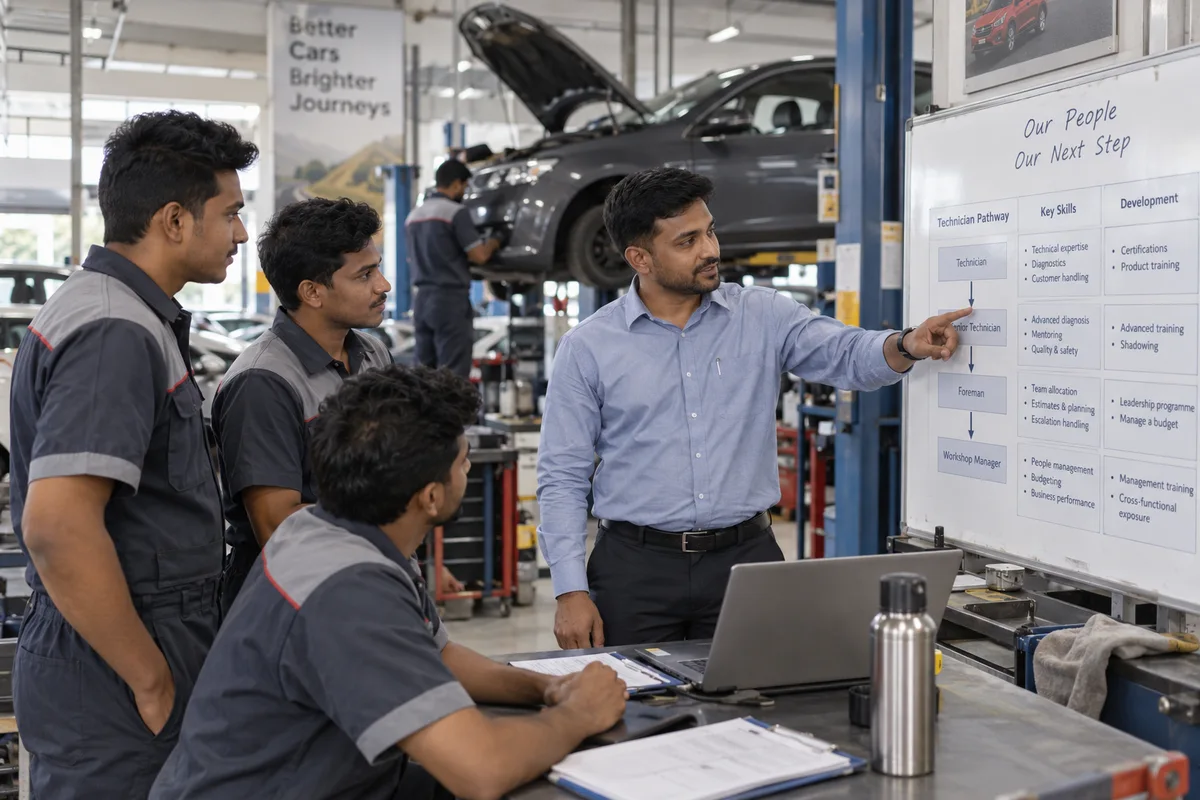
A named sequence of stations, a mentor at each and a confirmation review date, so a trainee can see a future in your plant.
A named sequence of stations, a mentor at each and a confirmation review date, so a trainee can see a future in your plant. The probation and onboarding process can carry the steps.
Short sessions on giving an instruction, giving feedback and recording a warning, so every shift is treated alike.
Short sessions on giving an instruction, giving feedback and recording a warning, so every shift is treated alike. See people management training.
Before changing anything, find out what is true today. Work through the checks using a recent operating period. The time needed depends on the records you hold; note missing evidence and use the findings to choose a priority.
Share your requirementsConfirm with a qualified professional. What applies to you depends on your business, your state and your arrangements, and it changes. This page describes practice. It does not state a legal position.
The services below fit this kind of business best. Each starts by recording where you stand, and every later report compares against that. We do not promise outcomes.
A station-wise skill matrix and a learning plan, so one resignation does not halt a customer line.
Rosters and attendance records built from the production plan that reach payroll without rework.
Routines for fatigue, long shifts and safe habits at presses, weld stations and the assembly line.
A study of who leaves, from which station and after how many months, so skill stays on your floor.
Start with a free conversation, or see the paid HR Diagnostic.
Understand the business, its workforce, current processes and HR challenges.
Find the missing, weak, inconsistent or person-dependent processes.
Create the structure, processes, policies, SOPs, dashboards and systems needed.
Help HR and department managers actually adopt the new system.
Digitise repetitive and approval-based workflows where it is worth doing.
Track hiring, attendance, employee cost, performance, training and attrition.
Strengthen the people-management system continuously, not once.
From the GullyHR blog: one on HR in automotive, and one on each of the topics this page points to.

Technicians, service advisors and sales consultants leave for different reasons. How to ask what shaped their decision and act on it across every outlet.
8 min readRead article
A founder's guide to hiring freshers and running a first-year programme: campus or open drives, a screening round, a training plan by quarter, mentors and checkpoints.
6 min readRead article
A shift, weekly and monthly safety routine for rubber plants that names who checks platen guards, mill trip bars, autoclave doors, burst-test cages and slings, and who acts on near misses.
7 min readRead article
What really keeps mobile app and web developers in a small firm: stay conversations, growth paths, fair release rules and a risk sheet an owner can use this month.
6 min readRead articleMore on the GullyHR blog.
Keep a skill matrix, train one more person at each critical station and review it monthly. Cover then becomes a plan made last week, not a scramble at the gate.
At times it is a planning problem that appears as an HR one. Set overtime beside the customer schedule and the absence record. If it never falls, headcount or the roster needs another look.
Give each a path, a mentor and a date for the confirmation decision. People stay where they can see the next step. Check the apprentice rules that apply to you with a qualified professional.
Defects found, machines down or on a workaround, material shortages and the first job for the incoming shift. One page, filled in by the outgoing supervisor, is enough.
Terms will differ, but safety training, line discipline and conduct should be identical for everyone at the station. Where contract arrangements touch you, ask a qualified professional.
A first conversation covers your shifts, station skills and exits. If a closer look helps, the HR Diagnostic reads your own records, and we then build the routines with your supervisors. We agree the scope with you in writing.
All 48 business types in automotive · Find another business type
Tell us your industry, team size and the issue you want to address. Bring one example of where work gets delayed or ownership is unclear, and the deadline or decision you are working towards.