












Industries
Why automotive employees leave and how to understand why
Technicians, service advisors and sales consultants leave for different reasons. How to ask what shaped their decision and act on it across every outlet.
8 min readRead articleCaravans and motorhomes are a young market in India, sold by explaining a way of travelling and fitted out to order on a base vehicle. This is how to organise the small crew behind each build.
Not sure what you need? Tell us about your business in six short steps and we will come to the first meeting prepared.
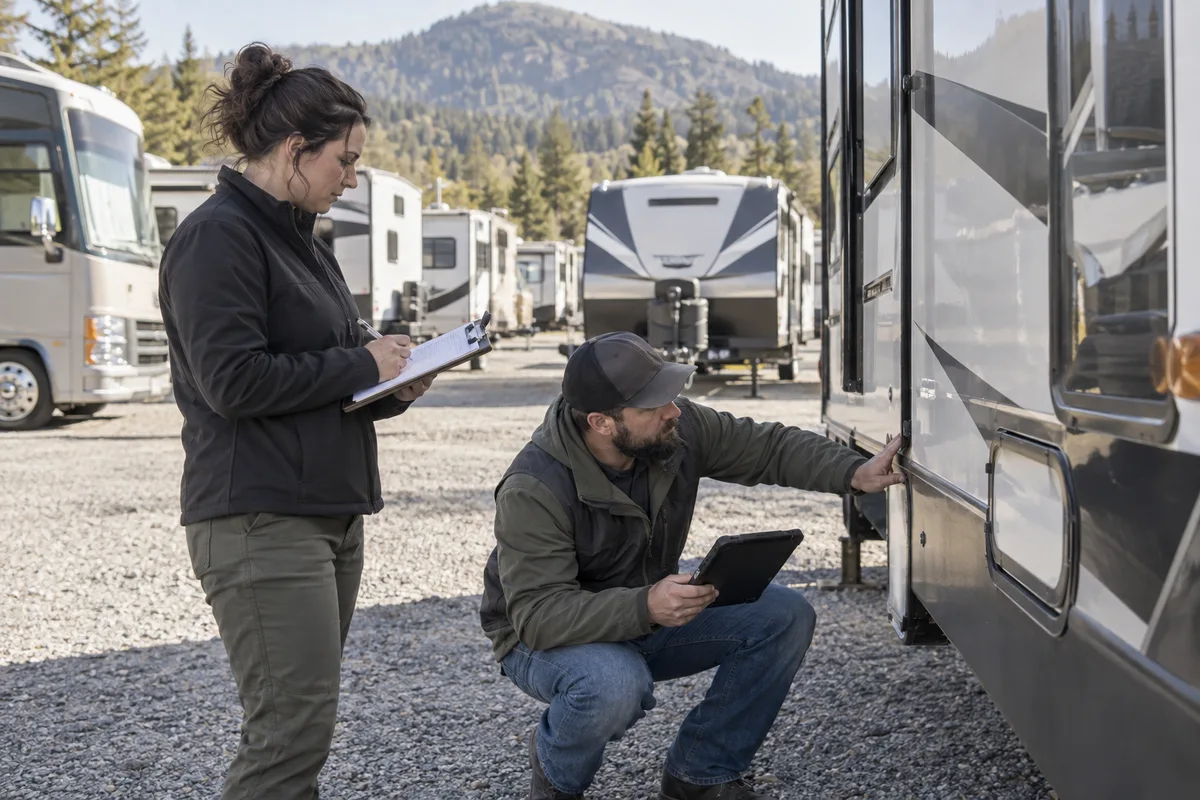
Share your requirementsAn RV and caravan dealer sells motorhomes, camper vans and towable caravans, some of them fitted out on a base chassis in its own shed or by a partner builder. Advisors explain use, running cost and registration to first-time buyers. Fabricators cut and weld the body, carpenters build cabinetry, electricians wire batteries and inverters, plumbers fit water tanks, and upholsterers finish the interior. One person hands over the keys and teaches the buyer every system, and an office hand keeps paperwork and bookings. Each order follows the buyer's own layout, and enquiries rise around holiday seasons and travel shows. These trades rarely share a floor in an ordinary garage. Related reading: HR for automotive businesses.
These are the places the people side of this kind of business tends to give way. The rest of this page works through them.
HR here has to work for each of these groups, not only the office. The set-up below is written with all of them in mind.
GullyHR runs talent acquisition for permanent roles in RV and caravan dealers. For each role we agree the job description with you, find and screen candidates against it, and support the offer through to joining. Tell us the role and the number of people, and we start there.
We recruit permanent employees. We do not supply contract or temporary staff.
Every business interviews, but few have a written process that works the same way for every role and every interviewer. GullyHR designs yours, from the role brief to the offer, trains your managers to run it, and can run it for you on the roles you hand us.
We agree what the role must deliver, the must-have and nice-to-have skills, and how each will be scored.
Screening call, assessment, interview rounds and decision points, sized to the role and the number of people you hire.
Structured questions for each role family and a rating guide, so two interviewers judge the same answer the same way.
A short briefing for your managers on what to ask, what to avoid and how to give a clear yes or no.
Who approves, how the offer is made, and how candidates are kept informed from first call to joining.
Cabinets wait for the wiring, wiring waits for the chassis work, and one late trade holds up the whole vehicle.
Custom layouts live in individual heads, so a changed bunk or galley position is found out only when the finishing hands reach it.
Advisors must explain solar load, fresh and grey water, towing limits, registration and costs, yet some were trained only on features.
A rushed key handover leaves the owner with unanswered questions, and the first complaint lands straight on the founder's phone.
People who can work on body panels and interior joinery are hard to find, and nobody pays them for the mix.
Crews are crowded before the travel season and idle after it, and there is no plan for the empty weeks.
The founder holds every build in mind, and the team waits at the bay for the founder's decision on each change.
Start with the topics that matter most here: Organisation Design; Learning and Development; HR Operations and Governance. Then work through the rest. Each topic is written for automotive, not in general.
Structure, reporting lines and who is allowed to decide what.
Training planned from need rather than from the calendar.
An HR function that runs the same way every month.
How many people, in which roles, by when, and what they will cost.
Requisition to joining, the same way every time.
A first day that is the same for the fifth joiner as the first.
Records, attendance, leave and the day-to-day HR that must simply work.
Salary structure, payroll inputs and a month that closes on time.
Goals, reviews and ratings that hold up in a conversation.
Named backups for the roles that cannot be vacant.
Communication, recognition and the conditions people actually work in.
Two routes, one for complaints, one for conduct, kept separate.
Policies a manager can apply, and obligations with owners and dates.
Induction, records, incident reporting and follow-through.
Who leaves, when, why, and which of them mattered.
Resignation to relieving letter, in a defined order.
Records that survive people, and approvals that do not queue.
A short monthly pack management actually reads.
The pieces a RV and caravan dealers business puts in place, in an order that makes each easier. Open any card for the detail.
One sheet with the layout, materials, trade sequence and the buyer's changes, signed before work begins and updated as things move.
One sheet with the layout, materials, trade sequence and the buyer's changes, signed before work begins and updated as things move. The HR documentation process shows how to keep such records tidy.
A weekly board showing which trade is on which vehicle on which day, with one named supervisor to settle clashes.
A weekly board showing which trade is on which vehicle on which day, with one named supervisor to settle clashes.
A short course on describing power, water, towing and running costs to a first-time buyer, using plain examples.
A short course on describing power, water, towing and running costs to a first-time buyer, using plain examples. See communication skills.
A checklist covering every system, one practical hour with the buyer at the vehicle and a call after the first trip.
A checklist covering every system, one practical hour with the buyer at the vehicle and a call after the first trip.
Grades that recognise fitters who work across trades, with a pay step that follows.
Grades that recognise fitters who work across trades, with a pay step that follows. See role design and job descriptions.
Before changing anything, find out what is true today. Work through the checks using a recent operating period. The time needed depends on the records you hold; note missing evidence and use the findings to choose a priority.
Share your requirementsConfirm with a qualified professional. What applies to you depends on your business, your state and your arrangements, and it changes. This page describes practice. It does not state a legal position.
The services below fit this kind of business best. Each starts by recording where you stand, and every later report compares against that. We do not promise outcomes.
Clear roles and grades for a mixed-trade shed, including pay for fitters who span trades.
Training for advisors and handover staff on explaining a new way of travelling to first-time buyers.
A structure that moves build decisions from the founder to supervisors who run the schedule.
Simple offer letters, role notes and records for a small workshop team.
Start with a free conversation, or see the paid HR Diagnostic.
Understand the business, its workforce, current processes and HR challenges.
Find the missing, weak, inconsistent or person-dependent processes.
Create the structure, processes, policies, SOPs, dashboards and systems needed.
Help HR and department managers actually adopt the new system.
Digitise repetitive and approval-based workflows where it is worth doing.
Track hiring, attendance, employee cost, performance, training and attrition.
Strengthen the people-management system continuously, not once.
From the GullyHR blog: one on HR in automotive, and one on each of the topics this page points to.
Technicians, service advisors and sales consultants leave for different reasons. How to ask what shaped their decision and act on it across every outlet.
8 min readRead article
A founder's guide to building job grades, titles and billing levels for a growing IT services firm, with a step-by-step method and a grade description outline.
6 min readRead article
A founder's guide to hiring freshers and running a first-year programme: campus or open drives, a screening round, a training plan by quarter, mentors and checkpoints.
6 min readRead article
Every growing company reaches a point where the founder approving everything stops being speed and starts being the bottleneck. Twelve signs it has happened, and what to fix first.
8 min readRead articleMore on the GullyHR blog.
Post a weekly sequence board with a named supervisor and give every trade a build sheet it can read. Most delays trace to unclear order and late changes.
Every system in the vehicle, how to use and maintain it, registration and insurance basics, and whom to call. Ring the owner after the first trip.
Hire for one base skill such as welding or joinery and train across it. Mark the extra skill with a grade and pay step so the person stays.
Use the quiet months for stock builds, maintenance, training and leave. Steady pay through them helps keep skilled hands.
Write down the build, pricing and handover routines, name a supervisor for each and let them decide within set limits. See founder dependency and succession planning.
How a build passes through the trades, who records what the buyer ordered, and how advisors explain the lifestyle. The handover and the owner's own load would follow. A build sheet with sequenced trades is a likely first job, and once we have spoken we set out the scope on paper for you to approve.
All 48 business types in automotive · Find another business type
Tell us your industry, team size and the issue you want to address. Bring one example of where work gets delayed or ownership is unclear, and the deadline or decision you are working towards.