














Industries
Why automotive employees leave and how to understand why
Technicians, service advisors and sales consultants leave for different reasons. How to ask what shaped their decision and act on it across every outlet.
8 min readRead articleA body shop repairs crash-damaged cars, with denters, painters and fitters passing each car along a line. One skilled painter or panel beater can hold up the whole flow, and insurance deadlines leave little room for delay.

Not sure what you need? Tell us about your business in six short steps and we will come to the first meeting prepared.
Share your requirementsA body shop repairs vehicles after accidents, from small dents to major structural work. A car arrives after an estimate, often through an insurer, then moves through stripping, panel beating, filling, priming, painting, polishing and refitting. Each stage needs different hands, and a delay at one stage holds up the rest. Painters and panel beaters carry years of skill that is hard to replace, and they are well aware of it. Insurers and customers press for dates, and the owner has to balance quality, speed and cost. See also the automotive sector page and the vehicle service centres hub.
These are the places the people side of this kind of business tends to give way. The rest of this page works through them.
HR here has to work for each of these groups, not only the office. The set-up below is written with all of them in mind.
One senior painter or panel beater sets the pace for the shop, and his absence or exit stops the flow.
Colour matching and panel work take a long time to build, so replacing a master is slow and expensive.
Dates are set by survey approvals and customer pressure, and the shop feels it in overtime and sloppy handovers.
Craftsmen paid by the job fight over which cars come to them and what the hours are worth.
Painting and grinding areas are hard on health, and experienced hands often leave for lighter work.
When a panel or paint job is faulty, the shop is unsure who bears the cost, and tempers rise.
Start with the topics that matter most here: Career and Succession Management; Compensation, Payroll and Benefits; Employee Relations. Then work through the rest. Each topic is written for automotive, not in general.
Named backups for the roles that cannot be vacant.
Salary structure, payroll inputs and a month that closes on time.
Two routes — one for complaints, one for conduct — kept separate.
How many people, in which roles, by when — and what they will cost.
Structure, reporting lines and who is allowed to decide what.
Requisition to joining, the same way every time.
A first day that is the same for the fifth joiner as the first.
Records, attendance, leave and the day-to-day HR that must simply work.
Goals, reviews and ratings that hold up in a conversation.
Training planned from need rather than from the calendar.
Communication, recognition and the conditions people actually work in.
Policies a manager can apply, and obligations with owners and dates.
Induction, records, incident reporting and follow-through.
Who leaves, when, why — and which of them mattered.
Resignation to relieving letter, in a defined order.
Records that survive people, and approvals that do not queue.
A short monthly pack management actually reads.
An HR function that runs the same way every month.
The pieces a body shops business puts in place, in an order that makes each easier. Open any card for the detail.
Panel work, filling, painting and colour matching, graded by what each person can do alone.
What this coversHidePanel work, filling, painting and colour matching, graded by what each person can do alone. See competency and talent management.
For each key trade, name a person to learn alongside the master and a path for him to step up.
What this coversHideFor each key trade, name a person to learn alongside the master and a path for him to step up. Succession planning guides this.
Rates for panel beaters, painters and polishers set against other body shops, so key hands are not lost for a small gap.
What this coversHideRates for panel beaters, painters and polishers set against other body shops, so key hands are not lost for a small gap. Benchmarking shows how.
A fair and plain way to decide who bears the cost of redo work, and how it is recorded.
What this coversHideA fair and plain way to decide who bears the cost of redo work, and how it is recorded.
A place and a person for craftsmen to raise concerns before quarrels reach the floor.
What this coversHideA place and a person for craftsmen to raise concerns before quarrels reach the floor. The grievance and disciplinary process sets the steps.
Before changing anything, find out what is true today. These checks take an afternoon and tell you which of the topics above to start with.
Share your requirementsConfirm with a qualified professional. What applies to you depends on your business, your state and your arrangements, and it changes. This page describes practice. It does not state a legal position.
The services below fit this kind of business best. Each starts by recording where you stand, and every later report compares against that. We do not promise outcomes.
A skill record by trade, so work goes to the right hands and gaps are visible.
A named learner beside each master painter or panel beater.
Piece rates and wages for key trades set against nearby body shops.
A fair route for complaints and for dealing with conduct on the floor.
Start with a free conversation, or see the paid HR Diagnostic.
Understand the business, its workforce, current processes and HR challenges.
Find the missing, weak, inconsistent or person-dependent processes.
Create the structure, processes, policies, SOPs, dashboards and systems needed.
Help HR and department managers actually adopt the new system.
Digitise repetitive and approval-based workflows where it is worth doing.
Track hiring, attendance, employee cost, performance, training and attrition.
Strengthen the people-management system continuously, not once.
From the GullyHR blog: one on HR in automotive, and one on each of the topics this page points to.
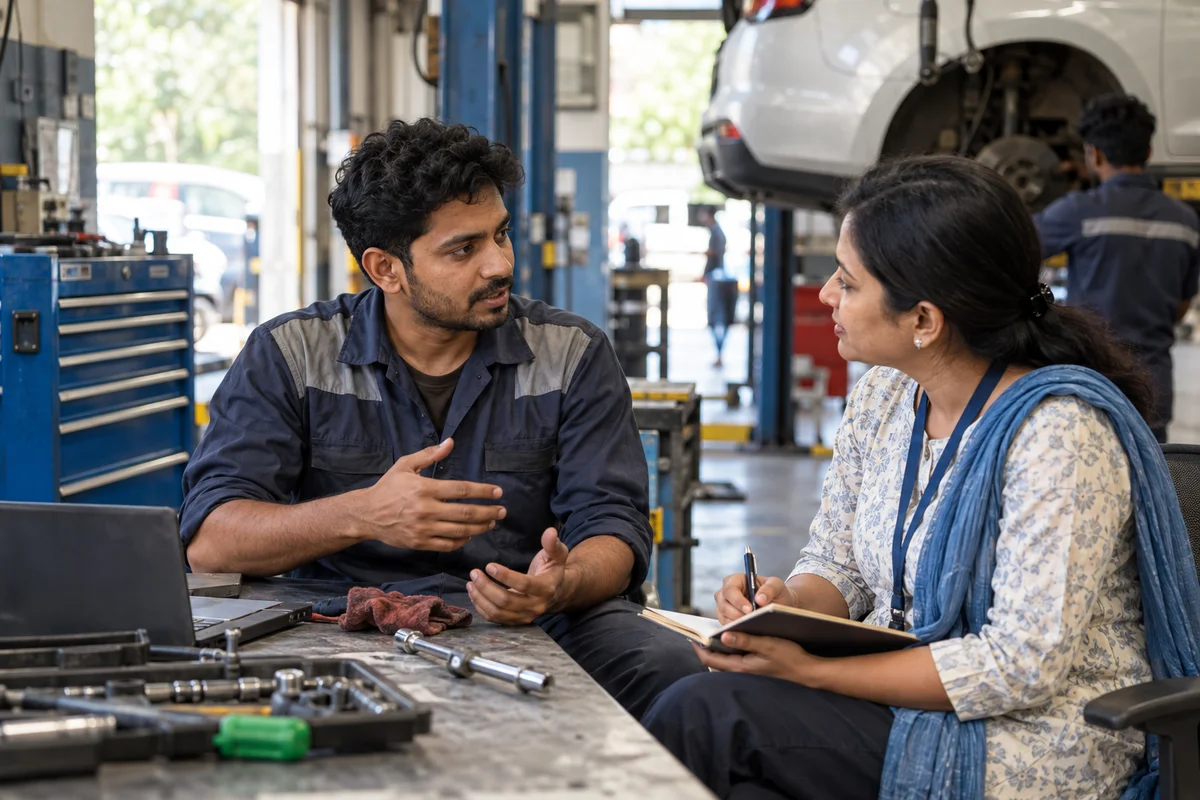
Technicians, service advisors and sales consultants leave for different reasons. How to ask what shaped their decision and act on it across every outlet.
8 min readRead article
A two-hour exercise that names the roles you could not fill quickly, who could cover them, and what readiness would actually require.
7 min readRead article
How to design incentives for operators, setters and inspectors in fastener, gear, spring and valve units so that accepted lots, not piece counts, earn the bonus.
7 min readRead article
An employee brings you a complaint about their supervisor. What happens next should not depend on who is in the room. A grievance procedure a small company can actually run.
8 min readRead articleMore on the GullyHR blog.
Pair him with a learner early, record his methods in simple notes and show a path for the learner. Treat the master well, since the best protection is a reason to stay.
Job rates reward output but cause quarrels over allocation. A base with a job-linked part is common. Publish the rates, explain the working and spot check quality so speed does not cost finish.
Agree a written rule in advance covering how faults are traced, who decides and how cost is shared. Record each case the same way. A known rule prevents most arguments on the day.
Ask craftsmen what bothers them, review the equipment and routines, plan breaks and rotate tasks where possible. Confirm what rules apply to your premises with a qualified professional.
Share the dates with the floor early, plan the line around them and keep a margin for rework. Talk to the insurance coordinator regularly so supervisors are not surprised by approvals.
We would ask your senior painter and panel beater what is hardest to pass on, list trades held by one person and compare your rates with nearby shops. A skill record with a succession plan is a good first job, and scope is written for your approval.
All 7 business types in vehicle service centres · Find another business type
Tell us what is slowing your team down. We’ll help you find a practical way forward, starting with a conversation.