







Industries
Why NGO and social enterprise employees leave and how to understand why
Staff at NGOs and social enterprises leave for funding, field and workload reasons as well as pay. How to understand why, listen early and act.
7 min readRead articleAn education NGO runs classrooms, learning centres and tutoring programmes on grants that end on a fixed date. The people issues are teacher quality in remote places, volunteer turnover and staff whose roles follow the funding.
Make this work for your business. Share your team size, priorities and what you need help with. We’ll use your brief to prepare for the first conversation.
Share your requirementsAn education NGO may run after-school centres in urban settlements, bridge classes for out-of-school children, teacher training for government schools or a digital learning programme. The workforce is a mix: salaried programme managers, young fellows on fixed terms, community teachers paid a modest monthly sum, part-time tutors and a rotating group of volunteers. Each programme has its own donor, its own targets and its own reporting date, and staff can be charged to more than one grant. The head of HR, or the founder, handles all of it between school terms. See also HR for NGOs and social enterprises and the wider NGO and foundation group.
These are the places the people side of this kind of business tends to give way. The rest of this page works through them.
Why GullyHR for education NGOs
For education NGOs running learning centres, bridge classes and teacher training on grants with fixed end dates. Hiring starts from the first day of class, and every fellow leaves with a handover.
We plan recruitment backwards from the first day of class, so community teachers and fellows are in place before children arrive, not weeks after the grant starts.
A written ladder from community teacher to mentor to trainer gives a good teacher a reason to stay before a government post tempts them away.
Each fellowship closes with a handover pack covering classes, children's records and contacts, so the next fellow does not start from a blank register.
Coordinators log hours per programme, so salary charged to a grant matches the work done and the donor report holds up.
Start with any one of these. Scope and fee are agreed in writing after a free first conversation.
We begin with a map of every programme, its donor, its start and end dates and the staff who depend on it. Then we open teacher files, fellowship letters, volunteer forms and safeguarding records. We interview field coordinators, community teachers, a few fellows and the person who handles reimbursements. We compare the time a coordinator actually spends on each programme with how the salary is charged. We also read what teachers said when they left in the last twelve months and look for a pattern. The findings are ranked by risk to children and to funding.
What you receive
An example, not a client storyPicture an NGO whose bridge-class grant ends in spring while teacher training continues under a second donor, with two coordinators charged to both. We would map the time they truly spend, show the founder where salary and work do not match, and prepare the notes before the next donor review.
How the hr audit works →Hiring comes first, planned backwards from the first day of class so teachers are recruited, briefed and placed before children arrive. Next is the fellowship cycle, from welcome to handover pack. We then write the one-page volunteer process: what they are told on the first day, who supervises, how attendance and safeguarding are recorded. Finally we design time recording across grants so the finance person and the programme director see the same figures. We test each process on one programme before spreading it, with the founder or head of HR approving the final steps.
What you receive
An example, not a client storySuppose a new after-school programme must open the week schools reopen, and the grant letter arrived late. With a hiring calendar already written, we would see which weeks are lost, move the community teacher search first and tell the founder what can open on day one, and what must wait until the donor confirms.
How the hr process design works →Each week we track which fellowships close soon and prepare handover packs, welcome new volunteers with the one-page briefing, and collect the time sheets that charge staff to grants. We check in with community teachers who work far from a coordinator, since they spend every day with children. We watch teacher resignations and run exit conversations so the pattern is visible. Safeguarding files are kept current for each person. Before every donor report we assemble the people section, so the founder is not building it late at night.
What you receive
An example, not a client storySay several fellows are due to finish within the same fortnight and the next cohort has not arrived. We would already hold their handover packs, brief the coordinator on which centres lose cover, and ask volunteers to bridge the weeks, with a named supervisor in each centre, and a note for the founder on who covers which centre.
How the hr management works →The hard roles are community teachers who are respected locally and still want to grow, teacher trainers who can coach adults, and monitoring officers who are comfortable with both data and classrooms. We search through teacher training colleges, other NGOs and local networks, and tell candidates plainly that the programme follows a grant. Each shortlisted person does a short task: a mini lesson, a coaching role play or a data exercise. Questions are identical, notes are written the same day, and the panel includes someone from the community served. Fellowships remain your own scheme; we recruit permanent staff only.
What you receive
An example, not a client storyPicture a programme that needs a state lead who can speak to officials and also sit in a classroom. Two strong candidates arrive. We would score both on the same policy briefing and the same classroom visit task, and show the director which strengths each brings, and agree in advance what weighs more.
How the recruitment for permanent roles works →Field coordinators cover more centres than they can visit well, so their session covers planning visits, observing a class, giving feedback to a community teacher and recording what they saw. Fellows join a short orientation on classroom routines, child protection and how to hand over. Volunteers receive the one-page briefing and a practice scenario about speaking to children. Programme directors work on feedback conversations and on how to describe a realistic workload to a donor. Sessions are timed between school terms, and each one ends with a task to try in the next week.
What you receive
An example, not a client storyTake a coordinator who visits several centres and leaves each visit with only a nod. We would run a session where she observes a recorded lesson, writes three lines of feedback, and practises giving it kindly to a community teacher. The next visit then ends with a note the teacher can use.
How the manager and team training works →The handbook explains each type of worker: salaried staff, fellows, community teachers, tutors and volunteers, and what each can expect. The child protection policy has a place to record concerns and a named person who receives them. A volunteer policy covers conduct, supervision and photographs. In the HR system, each person has a file with start and end dates, the grants they are charged to, training done and safeguarding checks completed by the NGO's own process. Reimbursement rules for field travel are written for the admin and accounts staff. Wording on contracts and child protection is confirmed by your own adviser.
What you receive
An example, not a client storySuppose a donor asks to see how a volunteer was briefed and supervised during a holiday camp. With the one-page briefing, the signed conduct page and the attendance sheet in the person's file, the answer is a single printout and not an evening spent searching, and nobody has to reconstruct the camp from memory.
How the policies, handbook and hr software works →We cannot match a government post, but we can write a ladder from community teacher to mentor to trainer, hold a review conversation each term, and record what leavers say. That shows whether pay, status or distance is driving exits. Pay decisions stay with your founder and trustees, and your own adviser confirms the terms of any new role.
We design a simple time record for each person who works across programmes and compare it with how salary is charged today. Programme directors and finance then read the same figures before a donor report. We do not file reports or give accounting opinions; your own accountant or adviser confirms what each donor accepts. We would also keep each leaver's reasons on one page.
A one-page briefing: who supervises them, what they may and may not do with children, how to sign in and out, where to take a concern and who to thank at the end. We also write what a college or company group receives in advance. Your adviser confirms how child protection rules apply to volunteers in your registration.
We prepare a handover pack for every fellow due to finish, covering classes, children's records and contacts, and a bridge plan with a named supervisor so volunteers can hold the weeks between. We also show the founder which centres lose cover first. Fellowship terms are confirmed by your own adviser before any change is made.
GullyHR runs talent acquisition for permanent roles in education NGOs. For each role we agree the job description with you, find and screen candidates against it, and support the offer through to joining. Tell us the role and the number of people, and we start there.
We recruit permanent employees. We do not supply contract or temporary staff.
Teachers must be in place before classes start in June, but a grant may be sanctioned in August. Hiring either starts too late or happens at risk.
Community teachers who do well can be offered a better paid job within a year, and the centre they ran loses its continuity mid-term.
A two year fellowship ends whether or not the work is finished. The knowledge goes with them unless someone writes it down.
College groups arrive in term breaks and CSR volunteers come for one day. Without a simple induction, children meet a different stranger each week.
One coordinator may be charged half to one donor and half to another, and the split has to match what they actually did.
A coordinator with fifteen centres across a district cannot coach teachers, so quality depends on who happens to be strongest.
Everyone knows children must be protected, yet training dates, signed codes of conduct and reference checks are scattered across files.
Start with the topics that matter most here: Recruitment and Talent Acquisition; Learning and Development; Retention and Attrition Management. Then work through the rest. Each topic is written for ngos and social enterprises, not in general.
Requisition to joining, the same way every time.
Training planned from need rather than from the calendar.
Who leaves, when, why, and which of them mattered.
How many people, in which roles, by when, and what they will cost.
Structure, reporting lines and who is allowed to decide what.
A first day that is the same for the fifth joiner as the first.
Records, attendance, leave and the day-to-day HR that must simply work.
Salary structure, payroll inputs and a month that closes on time.
Goals, reviews and ratings that hold up in a conversation.
Named backups for the roles that cannot be vacant.
Communication, recognition and the conditions people actually work in.
Two routes, one for complaints, one for conduct, kept separate.
Policies a manager can apply, and obligations with owners and dates.
Induction, records, incident reporting and follow-through.
Resignation to relieving letter, in a defined order.
Records that survive people, and approvals that do not queue.
A short monthly pack management actually reads.
An HR function that runs the same way every month.
The pieces a education NGOs business puts in place, in an order that makes each easier. Open any card for the detail.
Work out the date teachers must be in front of children, then count back for advertising, selection and induction.
Work out the date teachers must be in front of children, then count back for advertising, selection and induction. The recruitment process can be built around that calendar, with a standing list of shortlisted people to call on when a grant is confirmed.
A community teacher who can see a step to lead teacher, then mentor, then trainer is more likely to stay.
A community teacher who can see a step to lead teacher, then mentor, then trainer is more likely to stay. Write the steps and what each needs, using role design.
A short document of centres, children, contacts and what was learnt, written in the last month and read by the successor before the fellow goes.
A short document of centres, children, contacts and what was learnt, written in the last month and read by the successor before the fellow goes.
Who they are, what they may do, who supervises them and what they must not do.
Who they are, what they may do, who supervises them and what they must not do. Signed before the first session, kept in one place.
A simple monthly sheet where staff note how their days were spent.
A simple monthly sheet where staff note how their days were spent. Finance can then match the charge to the work. The attendance and leave process covers the base record.
Signed code of conduct, training date, reference notes and the date of the next refresher, all in one folder per person.
Signed code of conduct, training date, reference notes and the date of the next refresher, all in one folder per person.
Confirm with a qualified professional. What applies to you depends on your business, your state and your arrangements, and it changes. This page describes practice. It does not state a legal position.
A hiring calendar tied to the school year, so teachers and fellows are in place when classes begin.
Practical training for community teachers and tutors, with coaching that field coordinators can really deliver.
A first week for new teachers, fellows and volunteers that covers the children, the centre and the code of conduct.
A clear look at why teachers leave after a year and what a visible career step would change.
Start with a free conversation, or see the paid HR Diagnostic.
Understand the business, its workforce, current processes and HR challenges.
Find the missing, weak, inconsistent or person-dependent processes.
Create the structure, processes, policies, SOPs, dashboards and systems needed.
Help HR and department managers actually adopt the new system.
Digitise repetitive and approval-based workflows where it is worth doing.
Track hiring, attendance, employee cost, performance, training and attrition.
Strengthen the people-management system continuously, not once.
From the GullyHR blog: one on HR in ngos and social enterprises, and one on each of the topics this page points to.
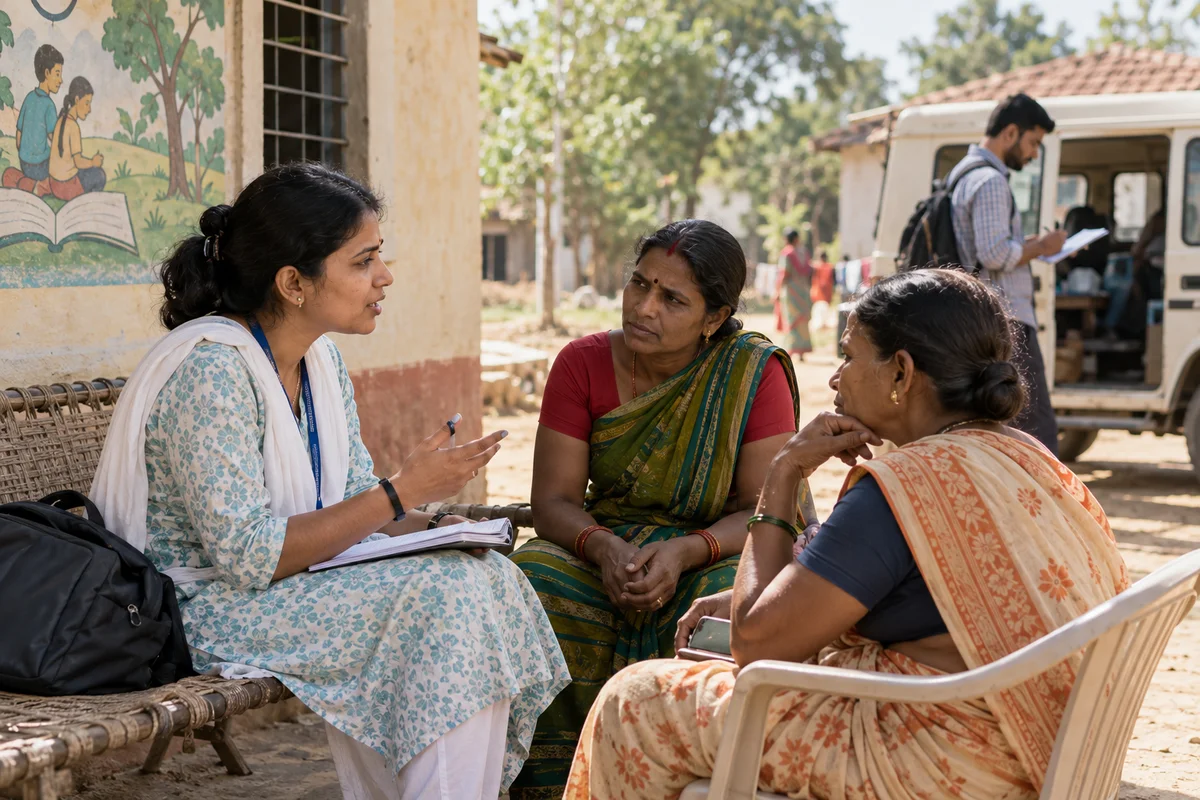
Staff at NGOs and social enterprises leave for funding, field and workload reasons as well as pay. How to understand why, listen early and act.
7 min readRead article
How a D2C founder can test a performance marketing hire on real work, ignore weak signals such as dashboard screenshots, and run a fair process.
7 min readRead article
A founder's guide to hiring freshers and running a first-year programme: campus or open drives, a screening round, a training plan by quarter, mentors and checkpoints.
6 min readRead article
What really keeps mobile app and web developers in a small firm: stay conversations, growth paths, fair release rules and a risk sheet an owner can use this month.
6 min readRead articleMore on the GullyHR blog.
Pay on time, show a path from teacher to mentor to trainer, and give them real coaching. Some leave for security, so a clear step and recognition from the programme head matter alongside the monthly sum.
Yes, a short one. It says what they may do with children, who supervises, when they come and what is off limits. It protects the children, the volunteer and the NGO.
Agree the split at the start, then keep a monthly record of how time was spent. If the two differ much, the programme head and finance should talk early rather than at report time.
The centres and classes, children needing attention, partner contacts, materials and where they are kept, and what the fellow would do next. Written in the last month and read by the next person.
That is a board and finance decision about risk. HR's part is keeping a shortlist ready, so that once funds are confirmed the offers can go out quickly.
We would ask when classes start, when the grants are confirmed and how many teachers left last year. A good opening project is a hiring calendar tied to the school year plus a handover pack for fellows.
All 6 business types in NGOs & foundations · Find another business type
See all HR topics for ngos and social enterprises, or another industry.
Tell us your industry, team size and the issue you want to address. Bring one example of where work gets delayed or ownership is unclear, and the deadline or decision you are working towards.