Industrial Automation and Robotics · Industrial Sensor Makers
HR for Industrial Sensor Makers: Clean Assembly, Calibration, Testing and Small Batches
Proximity, pressure, temperature and level sensors are assembled, potted, calibrated and tested in small batches with a wide range of variants. The calibration bench, the test crew and the few engineers who know the sensing element carry the quality.
Make this work for your business. Share your team size, priorities and what you need help with. We’ll use your brief to prepare for the first conversation.
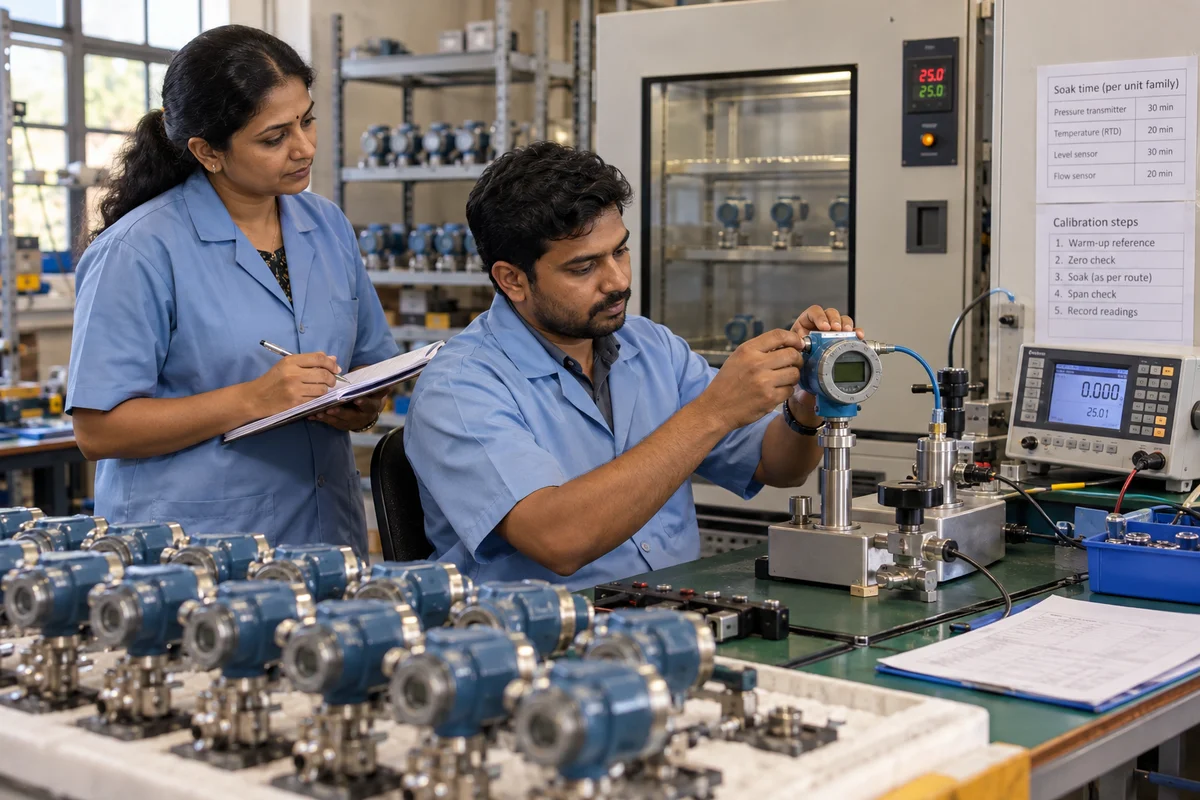
An industrial sensor maker produces devices that detect position, pressure, temperature, flow or level and send a signal to a controller. The plant assembles boards, seats sensing elements in housings, pots or seals them, then calibrates and tests each unit before labelling and packing. Batches are small and variants are numerous, so kitting and line changes come with each batch. Calibration and test benches decide whether a unit is accurate, and the technicians there need patience and clean records. Design engineers shape the sensing element and electronics, and only a few know why a design behaves as it does. Work is fine and seated, and learning takes time. Customers include machine builders and process plants, and some ask for custom versions. See also HR for manufacturing.
Plan→
Hire→
Onboard→
Manage→
Develop→
Perform→
Engage→
Retain→
Exit→
Improve
When HR is weak in industrial sensor makers, you may see
A hurried calibration drifts later
Variant changeovers cause wrong-part fits
Sensing know-how sits with a few designers
Fine soldering is slow to learn
Custom orders cut across the standard run
Long seated hours dull the eyes
These are the places the people side of this kind of business tends to give way. The rest of this page works through them.
Why GullyHR for industrial sensor makers
Calibration benches certified by unit family, with records that hold up.
For sensor plants where small batches and fine work decide accuracy. GullyHR certifies bench technicians, protects assemblers' eyes and names owners for custom orders.
01
Bench certification by unit family
Each calibration technician is certified for named unit types, with a sign-off by a senior engineer. Nobody calibrates an unfamiliar family because they happened to be free.
02
Practice boards before live work
New assemblers solder and seat elements on practice boards, with a scored check, before touching a customer batch. Fine work is learnt on scrap, not on product.
03
An owner for every custom order
Each custom version has a named person who holds the drawing, the test limits and the customer contact. Custom work stops cutting across the standard run unseen.
04
Rest and rotation in fine work
A rule sets breaks, task rotation and lighting checks for soldering and inspection seats. Long seated hours stop dulling eyes and calibration notes.
Our services for industrial sensor makers
Start with any one of these. Scope and fee are agreed in writing after a free first conversation.
HR audit
The audit starts with the last warranty returns: which trace to calibration, to a wrong-part fit or to a solder joint. We then read calibration records for completeness and see which technicians are trusted with which unit families. We watch kitting and a variant changeover. Design engineers tell us which choices only they could explain. Assemblers describe long seated hours and breaks actually taken. The report ranks the findings by how directly each links to accuracy and returns. We read this from the files and from the technicians' own accounts.
What you receive
Warranty return trace showing calibration, fit or soldering cause for each unit
Bench certification gap list by unit family, with the names left uncovered
Findings on kitting, changeovers and breaks at fine work stations, ranked by risk
An example, not a client storySuppose several returned units show drift after a hurried calibration on a busy week. The owner asks why. We would read the bench records, the batch schedule and the technician notes, and show how the schedule squeezed the bench. A short written trace would go to the owner within the week.
Process design follows a unit from kitting to labelling. We write a kitting check that stops a wrong part reaching the line, a changeover routine with a clear-down and a first-off check, and a bench certification process with sign-offs by unit family. A custom order routine names an owner and keeps limits and drawings in one folder. A design reasoning record asks engineers to note why a choice was made, so others can read it later. Each is a short page for the floor. Each routine is trialled on one batch before it is issued to the whole line.
What you receive
Kitting and variant changeover checklist with a first-off check before any batch runs
Bench certification procedure by unit family, signed by a senior engineer
Custom order routine and a short design reasoning record for each engineer
An example, not a client storyPicture a custom order that arrives mid-run, with test limits only the designer remembers. The bench uses the standard limits. We would write a routine that gives each custom order an owner and a limits sheet at the bench. The owner would hold the limits and the customer contact for that batch.
Each week we check that every calibration bench has a certified technician on the roster for the families scheduled. We meet production control about the variants planned so changeovers do not pile up on one day. Certification dates are tracked, and refresher sessions booked. We visit the fine work seats and note whether breaks and rotation are happening. Custom order owners report on progress. A monthly summary goes to the owner with open people issues. Refresher dates for certification are booked early, well before any certification lapses.
What you receive
Weekly bench cover and certification tracker, showing certified names for each unit family
Variant plan note agreed with production control, to avoid piled-up changeovers
Monthly summary of break checks and custom order progress for the owner
An example, not a client storySay the schedule puts several variants through one bench on the same day while the senior technician is away. We would raise it with production control, move one batch and record who covered the bench. We would write down the decision and tell the bench lead before the shift starts.
Patience and clean records matter more than speed on the bench. We search among electronics assembly, instrument technician and metrology backgrounds. A practical task asks candidates to follow a calibration sheet and record readings, scored by your senior technician. Soldering candidates complete a sample board. Design engineers talk through why a past sensing design behaved as it did. We brief the long seated hours honestly. Questions are the same for every candidate. Your senior technician scores the bench task, so patience and clean records are judged by someone who knows the work. We brief candidates plainly on the long seated hours.
What you receive
Role briefs for calibration technician and assembler, stating seated hours plainly
Calibration and soldering tasks with scoring sheets for your senior technician
Shortlist pack with scored answers and notes for the hiring lead
An example, not a client storyTake a plant that needs two calibration technicians and finds that applicants rush the record sheet. We would set a scored task where careful recording earns marks, and give the owner a ranked shortlist. The owner would then choose who to meet, with training needs noted beside each name on the shortlist.
Bench technicians practise a drift check and a recorded reading on live families. Assemblers learn on practice boards, with scored checks and breaks built in. Supervisors rehearse a changeover review and a first-off check. Engineers practise writing a design reasoning note in a page. Kitting staff learn to spot a wrong-part fit before it reaches the line. All sessions use your own units and run between batches, so benches are not left without cover. Refreshers are booked when a new unit family enters production, and before any long layoff.
What you receive
Calibration record and drift check session on live unit families
Practice board soldering course with scored checks and built-in breaks
Supervisor changeover review workshop and engineer design reasoning note session
An example, not a client storySuppose a new assembler seats a sensing element slightly off and the unit passes final test but drifts later. We would run a practice board course where seating is checked under magnification and the check is scored. The practice score would be recorded, and the assembler would go onto live work only after sign-off.
The handbook covers clean area conduct, tool care and record discipline. A certification policy states who signs and how frequently a technician is re-checked. A fine work rest rule sets breaks, rotation and lighting checks. A custom order rule names the owner and the files. HR software holds certifications, training sign-offs and acknowledgements. Your own adviser confirms the registration, record-keeping and employment duties that apply to a sensor assembly and calibration unit before anything is issued. Each rule is a page with an owner and a review date.
What you receive
Bench certification policy with named signatories and re-check dates
Fine work rest and rotation rule posted at every soldering and inspection seat
Custom order rule, and HR software records for certifications and acknowledgements
An example, not a client storyPicture a plant where breaks at the soldering benches depend on the supervisor's mood. We would draft a rest rule, post it at the benches and record the checks, so the practice no longer depends on the person. The owner would see the checks recorded, and assemblers would see that the rule is real.
Questions owners of industrial sensor makers ask us
We would write a certification sheet by unit family. A senior engineer watches each technician calibrate a live unit, checks the record and signs. Dates for re-checks are set in the system. Rosters then use the sheet, so a technician is not given an unfamiliar family just because they were free. Pay decisions on the grades remain with you.
We would build a practice board course with scored checks, breaks and a senior assembler as buddy, then move to live batches in steps. Each stage is signed off. Learning on scrap boards costs a little time and protects the product. We cannot give a duration, as it depends on the person. Your senior assembler signs each stage.
We would name an owner for every custom order, who holds the drawing, test limits and customer contact. A short routine tells the bench and production control when the custom batch will run. It will not remove the disruption, but it stops the bench using standard limits by mistake. Your own adviser confirms any customer or record duties.
We would write a rest and rotation rule with breaks, task changes and lighting checks, then watch the benches to see whether it is followed. We would also ask the assemblers what helps. Your own adviser confirms the safety and employment duties that apply to your plant. It also gives you a record to show a visitor or an auditor.
Who does the work in industrial sensor makers
Board assembly and soldering staff
Sensor assembly and housing operators
Potting and sealing operators
Calibration bench technicians
Final test and inspection staff
Design and application engineers
Quality and process engineers
Kitting, stores and dispatch staff
Roles we help you hire in industrial sensor makers
GullyHR runs talent acquisition for permanent roles in industrial sensor makers. For each role we agree the job description with you, find and screen candidates against it, and support the offer through to joining. Tell us the role and the number of people, and we start there.
We recruit permanent employees. We do not supply contract or temporary staff.
Where HR strains in industrial sensor makers
A hurried calibration drifts later
A technician who rushes the bench ships a unit that drifts in service, and the fault returns as a warranty claim.
Variant changeovers cause wrong-part fits
Switching between variants strains kitting, and the wrong housing or element can end up in a unit.
Sensing know-how sits with a few designers
Only a handful know why an element behaves as it does, and they field every question from the floor.
Fine soldering is slow to learn
A new assembler needs weeks of practice to reach clean joints, and early boards come back for rework.
Custom orders cut across the standard run
A special version for one buyer disturbs the line, and nobody owns its parts and time plan.
Long seated hours dull the eyes
Hours of fine work tire eyes and attention, and slips appear late in the shift.
HR topics for industrial sensor makers
Start with the topics that matter most here: Learning and Development; Onboarding and Probation; Employee Administration. Then work through the rest. Each topic is written for manufacturing, not in general.
The pieces a industrial sensor makers business puts in place, in an order that makes each easier. Open any card for the detail.
Certify benches by unit family
A short practical check for each unit family, repeated yearly, with a record of who is cleared for which calibration and test.
What this coversHide
A short practical check for each unit family, repeated yearly, with a record of who is cleared for which calibration and test. See competency and talent management.
Give new assemblers practice boards first
A set of practice exercises and joint checks, signed by a senior before the newcomer touches live units.
What this coversHide
A set of practice exercises and joint checks, signed by a senior before the newcomer touches live units. See employee onboarding process.
Name an owner for every custom order
One coordinator plans parts, time and who builds it.
What this coversHide
One coordinator plans parts, time and who builds it. The role design work can define the role.
Write down the design reasoning
Short notes from senior engineers on why key choices were made, stored where others can find them.
What this coversHide
Short notes from senior engineers on why key choices were made, stored where others can find them. See hr documentation process.
Build rest and rotation into fine work
Short breaks, lighting checks and task rotation for assemblers and testers, reviewed with the team.
What this coversHide
Short breaks, lighting checks and task rotation for assemblers and testers, reviewed with the team. See health, safety and wellbeing.
List your calibration technicians and mark which unit types each is trusted with.
Read the last warranty returns and see whether they trace back to calibration.
Count how many variants ran on the line last week.
Ask a senior engineer which design choices only they could explain.
Watch the soldering benches for an hour and note the breaks actually taken.
Confirm with a qualified professional the registration, record-keeping and employment duties that bind a sensor assembly and calibration unit like yours.
Confirm with a qualified professional. What applies to you depends on your business, your state and your arrangements, and it changes. This page describes practice. It does not state a legal position.
Why the best operator can struggle as shift supervisor, what it costs the line, and a practical way to choose, prepare and back new supervisors in any kind of plant.
A founder's guide to hiring freshers and running a first-year programme: campus or open drives, a screening round, a training plan by quarter, mentors and checkpoints.
A first-week plan for bringing in an outside specialist: what access to give, how to protect client data, and the confidentiality steps to settle on day one.
Payroll says one joining date, the personal file says another and the manager remembers a third. How to establish a single trustworthy employee record and keep it that way.
Certify technicians by unit type, record each calibration and check a sample later. Give them time, since rushed work returns as warranty claims.
Group similar variants in the schedule, kit parts per order and check the kit before assembly. Name who is accountable for the kit.
Ask them for short design notes, bring a second engineer into reviews and spread floor questions across a small group.
It depends on the unit, but weeks of supervised practice are normal. Exercises and a senior sign-off before live work protect quality.
Give each a named coordinator, a parts plan and a defined slot in the schedule, so the standard flow stays undisturbed.
We would list calibration technicians by unit type, read recent warranty returns and see how custom orders get planned. A calibration certification scheme and a path for new assemblers make a fair first job. Terms go in writing after we have talked.
Tell us your industry, team size and the issue you want to address. Bring one example of where work gets delayed or ownership is unclear, and the deadline or decision you are working towards.