
Competency and talent management for Industrial Sensor Makers: calibration, assembly and design skill by level
Sensor accuracy depends on a few skilled hands at the bench and a few engineers who know why a design behaves as it does. A skill map shows where cover is thin.
Not sure what you need? Tell us about your business in six short steps and we will come to the first meeting prepared.
Share your requirementsWhy competency and talent management matters in industrial sensor makers
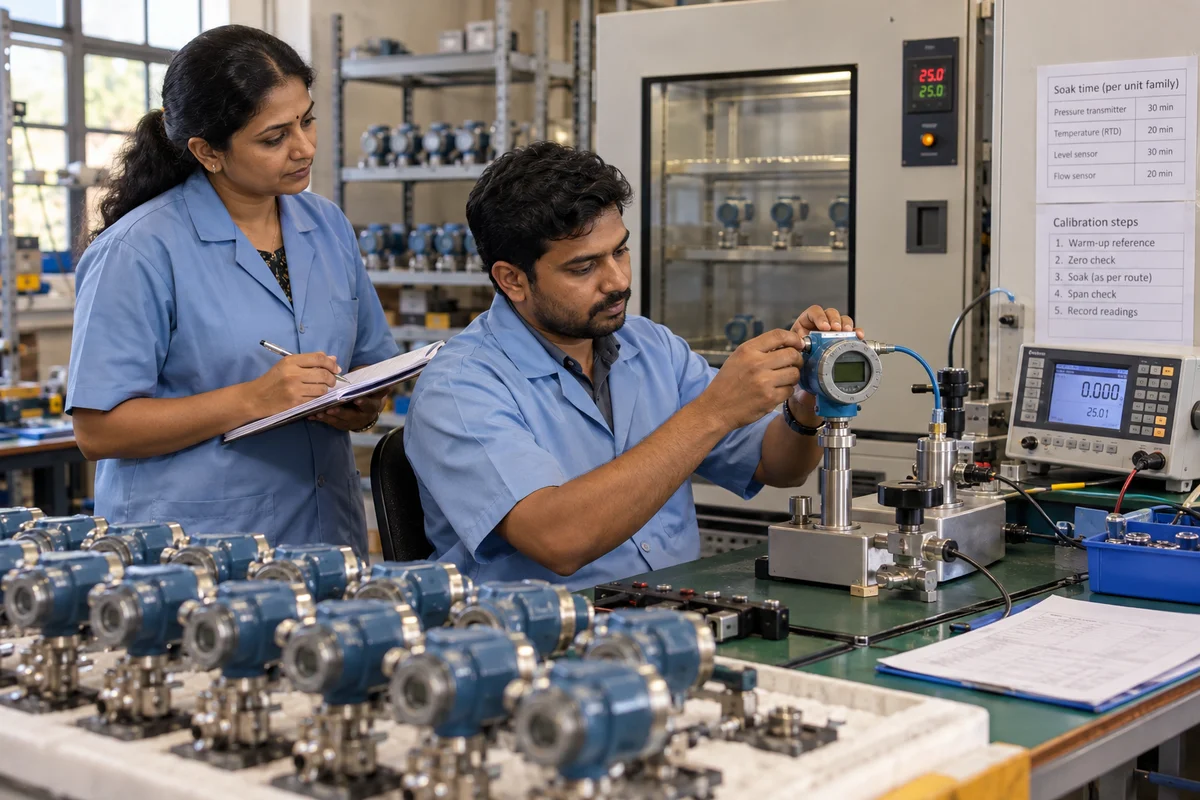
Soldering, potting, calibration and final test each need practice and patience. A sensor maker can name its best calibrator but has no record of that skill. When that person is absent, units wait or are calibrated by someone less sure. Design engineers who understand the sensing element are even fewer, and the plant learns this only when one resigns.
A competency map lists each person against the steps they can do alone, the variants they can handle and the level of checking needed. It shows who can calibrate which family, who can solder fine pitch and who can diagnose a drifting unit. Plans for training, cover and promotion then follow from facts.
How to set it up
1. List the skills by step
Write the main steps: board assembly, soldering, fitting the sensing element, potting, calibration, final test and design support. Add the variant families.
2. Rate each person
Use three levels per skill: working with checks, alone, and able to teach. Ask the supervisor and the person to agree each rating.
3. Mark the thin spots
Highlight any family or step where only one person is rated alone. These need cover first. See our competency and talent management approach.
4. Plan growth and cover
For each thin spot, pick a learner and a coach and set a target date. Add a course or practice task where needed.
5. Keep the map alive
Update it every quarter and after any resignation or new variant. Share it with the team so growth is visible.
Check these first
Before changing anything, find out what is true today. Use your own records for a defined period and note gaps in the evidence. The review may take longer if records are incomplete or spread across teams.
- Families of sensors with only one calibrator rated alone
- Technicians able to solder fine work without rework
- Design engineers who can explain why a design behaves as it does
- People ready for the next step but not yet given a chance
GullyHR can do this with you. Read how we approach competency and talent management in general, or share your requirements and we will tell you where to start.
Questions owners ask
Look at records: rework rate, calibration repeats and neatness of logs. Ask supervisors for examples. Avoid labels, and rate what the person has shown.
Yes, since errors cost more there. Base it on skill and record quality, not on title alone, and make the route to calibration visible to assemblers.
Pair engineers on each variant, record design reasons in short notes and hold a review where the author explains drift or failure cases to others.
We set up the interview and hiring process for industrial sensor makers
Every business interviews, but few have a written process that works the same way for every role and every interviewer. GullyHR designs yours, from the role brief to the offer, trains your managers to run it, and can run it for you on the roles you hand us.